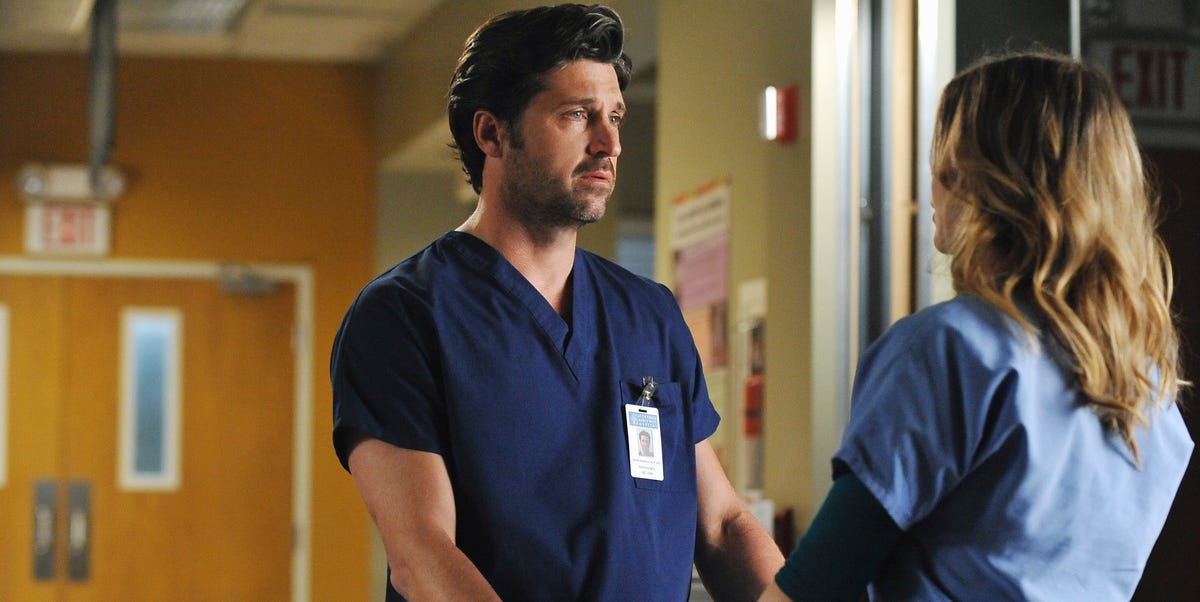
For 11 seasons, Patrick Dempsey played Dr. Derek Shepherd, the brilliant neurosurgeon whose excellent hair apparently required no medical maintenance whatsoever. Then, in April 2015, Grey’s Anatomy did the unthinkable: it killed McDreamy.
Derek survived a major car crash, helped several injured strangers, and then was struck by a truck. At the hospital, delayed treatment and a missed head CT led led to his death. Meredith Grey ultimately had to remove her husband from life support, while viewers collectively wondered whether emotional damages could be billed to ABC.
So, why did Patrick Dempsey leave Grey’s Anatomy? The most accurate answer is not a single juicy revelation. His departure appears to have resulted from several overlapping factors: exhaustion from the show’s demanding production schedule, a desire to spend more time with his family, his growing commitment to professional auto racing, and reported tension behind the scenes.
The Short Answer: Patrick Dempsey Was Ready to Move On
Patrick Dempsey left Grey’s Anatomy in 2015 because both he and series creator Shonda Rhimes concluded that his time as Derek Shepherd should end. Dempsey later described the departure as a joint decision and said it had become clear that both sides were ready for a change.
At the time, ABC issued a carefully polished statement saying Dempsey was moving on to pursue other interests. Those interests were real. He wanted more freedom for racing, family life, producing, and acting projects that did not require him to spend most of the year inside a fictional Seattle hospital.
However, later reporting added a more complicated layer. People who worked on the series described fatigue, frustration, and workplace tension during Dempsey’s final season. Consequently, the honest explanation sits somewhere between an amicable career change and a professional relationship that had reached its expiration date.
A Decade-Long Television Schedule Took Its Toll
Dempsey joined Grey’s Anatomy when the medical drama premiered in 2005. Derek Shepherd quickly became central to the show, especially through his romance with Meredith Grey. The chemistry between Dempsey and Ellen Pompeo turned “MerDer” into one of television’s defining couples.
That success came with a punishing workload. Network dramas traditionally produce far more episodes per season than many cable or streaming series. Dempsey has described the job as lasting roughly 10 months a year, with filming days sometimes stretching to 15 hours. Actors could receive unpredictable schedules while memorizing new pages of dialogue filled with medical terminology.
Doing that for one season is demanding. Doing it for more than a decade can make even an internationally famous role feel like a particularly glamorous treadmill.
Dempsey later acknowledged feeling frustrated by the schedule and the lack of control over his time. It became difficult to tell his children when he would be home or to make reliable plans outside work. Although playing McDreamy provided financial security and worldwide recognition, the commitment limited nearly everything else he wanted to pursue.
Why Leaving Was Still Complicated
Dempsey did not simply dislike the show. He repeatedly expressed gratitude for the opportunity, the loyal audience, and the relationships he developed during production. He also understood that Derek Shepherd had transformed his career.
That created a familiar problem: a successful job can be rewarding and exhausting at the same time. Leaving meant giving up stability, a beloved character, and close colleagues. Staying meant continuing a schedule that no longer fit his priorities.
Auto Racing Was More Than Patrick Dempsey’s Hobby
One major reason Patrick Dempsey wanted greater control of his schedule was auto racing. Calling racing his “hobby” would be like calling surgery Derek Shepherd’s weekend craft project. Dempsey became a serious competitive driver, team owner, and participant in international endurance racing.
He competed in major events such as the Rolex 24 at Daytona and the 24 Hours of Le Mans. In 2015, the same year he exited Grey’s Anatomy, Dempsey competed in the FIA World Endurance Championship and earned a second-place class finish at Le Mans with his teammates.
Racing required physical conditioning, extensive preparation, travel, sponsorship obligations, and total concentration. It could not be squeezed casually between long television shoots. Dempsey had said even before his departure that he wanted to make motorsports a greater priority.
In his original exit interviews, he specifically identified racing, developing new projects, and fatherhood as his immediate priorities. That does not erase the reported workplace difficulties, but it confirms that he had meaningful goals pulling him away from the series.
Family Life Also Influenced His Decision
Dempsey and his wife, Jillian Fink, share three children. By 2015, he had spent much of their childhood working extremely long days on one of television’s busiest productions.
When discussing his departure, he emphasized his desire to be more present as a father. An unpredictable production schedule made ordinary family planning surprisingly difficult. A simple question about what he would be doing the following Monday could be impossible to answer.
His personal life was also under pressure around the time of his exit. Fink filed for divorce in early 2015, although the couple later reconciled and the filing was dismissed. It would be speculative to claim that the marital situation directly caused his departure. Still, it is reasonable to recognize that Dempsey was reassessing how he divided his time among work, racing, and family.
Were There Problems Behind the Scenes?
This is where the explanation becomes less dreamy and more complicated.
When Dempsey initially left, public statements remained respectful. Shonda Rhimes described Derek as an enormously important character, while Dempsey spoke warmly about his years on the series. In 2016, he said the decision had been made with Rhimes and that both were ready.
In 2021, however, journalist Lynette Rice’s oral history, How to Save a Life: The Inside Story of Grey’s Anatomy, included accounts from former producers who described serious tension during Dempsey’s final period on the show.
Former executive producer James D. Parriott said the production had dealt with human-resources concerns connected to Dempsey’s behavior, while stressing that the issues were not sexual. Other accounts suggested that Dempsey had grown unhappy with the working hours and sometimes clashed with colleagues, including Rhimes and Pompeo.
Former producer Jeannine Renshaw described friction over scheduling and fairness. According to her account, Pompeo became frustrated when Dempsey complained about his hours even though she frequently carried a heavier workload as the show’s title character.
Allegations Should Not Be Treated as Proven Facts
These claims came from named former members of the production team, so they are more substantial than anonymous internet gossip. Nevertheless, they remain individual accounts of a stressful workplace rather than a complete, independently proven record of every interaction.
Dempsey participated in Rice’s book and admitted that he resented the relentless schedule. That admission supports the conclusion that he had become unhappy with the demands of the job. It does not automatically confirm every characterization made by other interviewees.
The safest conclusion is that there was genuine behind-the-scenes tension, but racing, family, creative fatigue, and scheduling concerns were also genuine. Patrick Dempsey did not leave Grey’s Anatomy for only one reason. By Season 11, both the actor and the production had reasons to end the arrangement.
Why Did Grey’s Anatomy Kill Derek Shepherd?
Once Dempsey was leaving, the writers faced a formidable storytelling problem. Derek and Meredith had survived breakups, rival careers, a shooting, a plane crash, parenthood, and enough emotional turbulence to keep several therapists fully booked.
Sending Derek to another city permanently would have damaged the central romance. Viewers would be asked to believe that he willingly abandoned Meredith and their children, contradicting years of character development. A divorce would also weaken the idea that Meredith and Derek remained deeply in love.
Rhimes explained that death preserved the integrity of their relationship. Derek did not stop loving Meredith or choose another life; he was taken from her. It was brutal, but it allowed their love story to remain emotionally intact.
The episode, titled “How to Save a Life,” also used bitter dramatic irony. Derek successfully treated victims at the scene of an accident, only to become a patient at an inadequately prepared hospital. Because he was unable to speak, viewers heard his internal thoughts as he recognized the doctors’ mistakes. A world-class neurosurgeon knew how he could be saved, yet no one could hear him. Subtle? No. Effective? Judging by the tear-soaked couches, absolutely.
Did Patrick Dempsey Break His Contract?
Dempsey’s exit was surprising partly because he and Ellen Pompeo had signed new two-year agreements in 2014, potentially keeping them through Season 12. Derek nevertheless died during Season 11.
The early exit indicates that ABC, the producers, and Dempsey reached an agreement that allowed him to leave before completing the anticipated term. The exact contractual negotiations were not publicly disclosed. There is no reliable public basis for claiming that he simply walked away without authorization.
Television contracts can be renegotiated or terminated when all necessary parties agree. The official statement, the completed farewell episode, and Dempsey’s later description of a joint decision all point to an arranged departure rather than an actor suddenly vanishing between operating rooms.
Why Patrick Dempsey Returned in Season 17
Dempsey’s relationship with Grey’s Anatomy did not end forever in 2015. He returned during Season 17, when Meredith was hospitalized with COVID-19 and encountered Derek in dreamlike scenes on a beach.
Ellen Pompeo helped initiate the reunion after reconnecting with Dempsey. The idea was to offer comfort and hope during the pandemic, when both the show’s characters and its viewers were dealing with grief and uncertainty.
Dempsey described the return as healing, and the reunion showed that whatever difficulties surrounded his original departure, collaboration was possible again. Derek remained dead in the show’s reality, but the beach scenes gave Meredithand the audiencea gentler form of closure.
The comeback also makes the most sensational versions of the exit story less convincing. It does not prove that the original tension was imaginary. It does demonstrate that professional relationships can recover after time, distance, and considerably fewer 15-hour hospital shifts.
The Viewer Experience: Why McDreamy’s Exit Still Feels Personal
Watching Derek Shepherd leave was a different experience from reading that an actor had changed jobs. Long-running television creates a peculiar kind of familiarity. Viewers invite characters into their homes every week, follow them through years of fictional life, and gradually connect episodes with their own memories.
Someone who began watching Grey’s Anatomy in college might have reached Season 11 with a career, a marriage, or children. Derek and Meredith’s relationship had been present through those transitions. When Derek died, the loss therefore landed with the emotional weight of a shared era ending.
The episode intensified that experience by giving audiences more information than the characters possessed. Viewers heard Derek identify the treatment he needed while watching doctors fail to provide it. That perspective created helplessness: the audience could diagnose the problem but could not enter the screen and order the CT scan. It was the television equivalent of shouting directions at someone in a horror movie, except this time the handsome neurosurgeon knew the monster was medical incompetence.
Fans also experienced the departure differently depending on when they watched. Original viewers encountered a shocking weekly television event, accompanied by leaked spoilers, online petitions, and immediate social-media outrage. Later viewers often begin the series already knowing Derek dies. For them, the suspense is not whether it happens but whenand whether they can emotionally prepare. Usually, they cannot.
Learning why Patrick Dempsey left can produce another emotional adjustment. The public version presents a respected actor ready for family, racing, and new opportunities. Later backstage accounts describe a workplace strained by fatigue and conflict. Holding both versions at once can feel uncomfortable, but it is also realistic. Professional endings rarely fit into the tidy categories of “friendly choice” or “dramatic firing.” People can appreciate one another’s work while being unable to continue working together under the same conditions.
Dempsey’s Season 17 return changed the viewing experience again. The beach reunion did not undo Derek’s death, yet it softened its finality. Meredith could speak to him, audiences could see the familiar chemistry again, and the show could acknowledge how important the character remained without rewriting its history.
That is why Patrick Dempsey’s departure still inspires questions. Fans are not merely investigating a contract dispute from 2015. They are trying to reconcile the graceful official farewell, the painful fictional death, the later allegations, and the affectionate reunion. The answer is complicated because the experience was complicated: gratitude and burnout, love and frustration, endings and second chances all existed together.
Final Verdict: Why Patrick Dempsey Really Left Grey’s Anatomy
Patrick Dempsey left Grey’s Anatomy because the role’s demanding schedule no longer matched the life he wanted. After 11 seasons, he was ready to devote more attention to his children, professional racing, and new creative opportunities. Shonda Rhimes and the production were also ready to conclude Derek Shepherd’s story.
Reported workplace friction likely accelerated that conclusion. Former producers have described scheduling disputes, deteriorating morale, and human-resources concerns, while Dempsey acknowledged his own frustration with the workload. Those reports deserve careful consideration, but they should not be inflated into unverified scandal.
Ultimately, McDreamy’s exit was not caused by one dramatic incident that can be wrapped up like a 42-minute episode. It was the culmination of burnout, changing priorities, professional tension, and a mutual recognition that the arrangement had run its course.
Derek had to die because simply leaving Meredith would have betrayed their love story. Patrick Dempsey, however, was free to move forwardand eventually free to return long enough to give fans one more walk on the beach.
Editorial note: This article distinguishes Dempsey’s public statements from later accounts supplied by former producers. Reports of behind-the-scenes conflict are presented as attributed claims, not as independently established facts.