Winter has a special talent for turning ordinary inconveniences into full-blown adventures nobody asked for. A harmless-looking snowfall can become an icy power outage. A short drive can become a roadside waiting game with frozen toes. A cozy evening at home can suddenly require flashlights, extra blankets, and a serious conversation about why the phone charger is somehow always in the wrong room.
That is why a winter emergency kit matters. It is not just a box of random supplies shoved into a closet like a guilty New Year’s resolution. A good winter emergency kit helps you stay warm, fed, safe, and connected when cold weather knocks out power, closes roads, or strands you away from home. The best part is that building one does not require survival-school swagger. It just requires some planning, a little common sense, and the discipline to stop pretending that six ketchup packets count as emergency food.
In this guide, you will learn what to keep in your winter emergency kit, how to separate a home kit from a car kit, which items families often forget, and how to make your supplies work for real life. Because when the weather gets dramatic, your emergency kit should be the calm one in the room.
Why a Winter Emergency Kit Is Different
Not all emergency kits are built for cold-weather trouble. Winter adds a few nasty plot twists: freezing temperatures, dangerous roads, power failures, frozen pipes, reduced access to stores, and the risk of carbon monoxide poisoning if people use generators or heaters the wrong way. A summer storm kit might get you through a blackout. A winter emergency kit needs to help you survive the blackout while staying warm, protecting medication, handling snow and ice, and avoiding unsafe heating mistakes.
That means your winter preparedness plan should include two versions of the kit: one for home and one for your vehicle. Think of them as siblings, not twins. They share the same values, but they dress very differently.
The Core Supplies Every Winter Emergency Kit Needs
1. Water and Food
Start with the basics. Every emergency kit needs enough water and shelf-stable food to last several days. Choose items that are easy to store, easy to eat, and unlikely to cause family mutiny. Bottled water, nut butter, crackers, protein bars, canned soup, canned beans, dried fruit, instant oatmeal, and ready-to-eat meals all make sense. A manual can opener belongs in the kit too, unless your plan is to glare at the cans until they open out of respect.
Winter storms can shut down travel and store access fast. At home, it is smart to keep a deeper supply than you think you need, especially if roads in your area become unreliable after snow or ice. In the car, keep snacks that can handle temperature swings without turning into a science experiment.
2. Light, Power, and Information
A winter blackout is annoying in July and serious in January. Pack flashlights, extra batteries, a battery-powered or hand-crank radio, portable power banks, charging cables, and a car charger. A weather radio is especially useful because winter warnings matter more when roads are closing and temperatures are dropping.
Battery-powered lanterns are also excellent for lighting a room safely. They are a better choice than candles, which increase fire risk when everyone is already stressed, sleepy, and walking around in thick socks.
3. Warmth and Shelter
This is where winter kits earn their keep. Include warm blankets, sleeping bags if you have them, extra hats, gloves, wool socks, thermal layers, and a change of clothes. Warmth is not just about comfort. It is about keeping body temperature stable if heat goes out or if you are stuck in a vehicle.
At home, keep extra blankets in an easy-to-reach place. In the car, add compact emergency blankets, insulated gloves, and a warm hat. Most people underestimate how fast they can get cold when the engine is off and the wind is doing its villain speech outside.
4. First Aid, Medications, and Health Needs
A winter emergency kit should always include a first aid kit, prescription medications, over-the-counter basics, and any personal medical supplies you rely on. If someone in your household uses insulin, inhalers, CPAP equipment, hearing aids, mobility aids, or other medical devices, plan around that now, not halfway through a power outage.
Keep a written list of medications, dosages, allergies, doctors, and emergency contacts. Add spare eyeglasses, hearing aid batteries, and backup chargers for medical devices where appropriate. Small items can become a huge problem when stores are closed and the weather says, “Good luck with that.”
5. Hygiene and Sanitation
Winter weather emergencies often become utility problems. If water service is interrupted or pipes freeze, basic hygiene gets harder in a hurry. Pack moist towelettes, hand sanitizer, tissues, trash bags, toilet paper, soap, menstrual products, diapers if needed, and paper towels. These are not glamorous items, but neither is discovering that the last roll of toilet paper disappeared during a storm.
6. Important Documents and Cash
Keep copies of IDs, insurance cards, medical information, emergency contacts, and key household records in a waterproof pouch. Add some cash in small bills. Card readers, ATMs, and gas station systems can fail during storms and outages. Your debit card is impressive, but it is not helpful if the machine is down.
What To Keep in Your Winter Home Emergency Kit
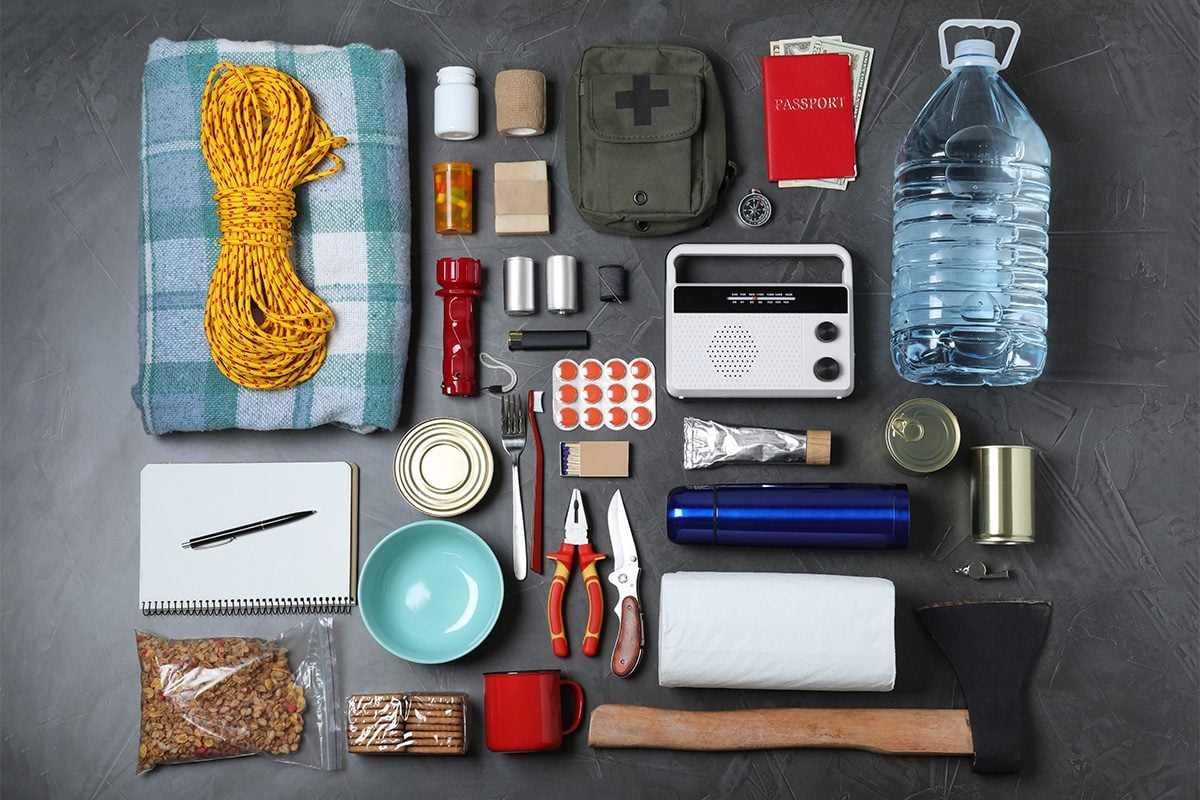
Your home kit should help you stay safe for several days, and ideally longer. Keep it in one main location, but do not be afraid to create mini-stations for the most important items. A practical winter home emergency kit should include:
- Water and nonperishable food
- Manual can opener
- Flashlights, lanterns, and extra batteries
- Battery-powered or hand-crank radio
- Portable chargers and fully charged power banks
- Warm blankets, sleeping bags, and cold-weather clothing
- First aid kit and prescription medications
- Hygiene supplies and trash bags
- Important documents in a waterproof bag
- Snow shovel and ice melt for walkways
- Fire extinguisher
- Smoke alarms and carbon monoxide alarms with working batteries
- Pet food, pet medications, and pet supplies
- Baby supplies such as formula, bottles, diapers, and wipes
If you use a generator, treat it with respect. Never run it indoors or in an attached garage. Never use a stove or oven to heat your home. Those are not clever winter hacks; they are how emergencies become tragedies. Safe heating and carbon monoxide precautions belong in your winter plan just as much as blankets and batteries do.
What To Keep in Your Winter Car Emergency Kit
A winter car emergency kit should assume one ugly truth: help may take longer than you want. Roads can close, traffic can stop, and tow trucks can get swamped. Your vehicle kit should focus on staying visible, warm, and self-sufficient until help arrives.
- Cell phone charger and backup battery
- Blankets or a sleeping bag
- Extra gloves, hat, socks, and warm layers
- Water and compact snacks
- First aid kit
- Ice scraper and snow brush
- Small shovel
- Jumper cables or a jump starter
- Flashlight and extra batteries
- Reflective triangles, flares, or emergency markers
- Sand, road salt, or kitty litter for traction
- Tow strap or rope if appropriate
- Windshield washer fluid
- Paper map in case service dies
- Basic toolkit and work gloves
If you drive an electric vehicle, winter planning should also include charging discipline. Cold weather can affect range, so do not treat your battery like a dare. Keep the charge healthier than usual before storms, and do the same with your phone.
Do Not Forget Family-Specific Items
The best winter emergency kit is personal. A generic checklist is a starting point, not the finish line. Build around the actual humans and animals in your household.
For babies and young kids
Pack formula, baby food, bottles, diapers, wipes, extra clothing, comfort items, and any medications your child may need. A storm is not the moment to learn that your toddler’s emotional support giraffe was accidentally donated.
For older adults
Add spare eyeglasses, hearing aid batteries, mobility aids, extra medications, warm layers, and printed health information. Cold weather and disrupted routines can hit older adults harder, so the kit should reduce friction wherever possible.
For people with medical needs
Plan for refrigeration, backup power, extra supplies, and written instructions. If a device requires electricity, think through what happens if the power is out for more than a few hours.
For pets
Keep pet food, water, medications, bowls, waste bags, carrier or leash, ID information, and vaccination records in your winter kit. If it is not safe for you to be outside or displaced, it is not safe for your pet either.
The Most Overlooked Winter Emergency Kit Items
Some items are skipped so often they deserve their own hall of fame:
- Manual can opener: A pantry full of canned food is less useful if your opener is electric.
- Extra chargers and cables: One charger for a family of four is not a system. It is a conflict.
- Gloves and hats: People remember blankets and forget extremities.
- Medication lists: In stressful situations, details disappear from memory fast.
- Pet supplies: Pets are family, not afterthoughts.
- Cash: Storms love taking down payment systems at the exact wrong time.
- CO alarm batteries: A carbon monoxide alarm is only helpful when it actually works.
How To Store and Maintain Your Kit
A perfect kit that nobody checks is just expensive optimism. Store supplies in waterproof containers or sturdy bins. Keep the home kit somewhere easy to access. Keep the car kit secured so it does not slide around like a bowling ball auditioning for action-movie work.
Review your winter emergency kit at least once before the cold season starts and again mid-season. Replace expired food, medications, and batteries. Refresh clothes for growing kids. Recharge power banks. Check flashlights. Refill pet items. Update documents. Preparedness is less about buying everything once and more about keeping useful things useful.
Experience-Based Lessons: What People Learn the Hard Way in Winter Emergencies
Ask people who have actually dealt with a winter outage, whiteout commute, or icy roadside breakdown, and you will hear the same theme again and again: the emergency kit matters most in the first few hours, when everything feels confusing and help is not immediate.
One common experience is the “short trip” mistake. Someone heads out for groceries, school pickup, or a quick drive across town and assumes they will be home in 20 minutes. Then freezing rain turns the roads into a slow-motion parking lot. Suddenly that quick trip becomes two hours in a cold vehicle with a half-charged phone and no snacks. In those moments, a blanket, water, portable charger, and a few energy bars feel less like supplies and more like civilization itself.
Another lesson comes from home outages. People often imagine that the main problem will be darkness, but the real challenge is usually the cascade of smaller hassles. The house gets colder by the hour. Phones need charging. The fridge becomes a question mark. Children get bored. Pets get restless. Someone cannot find the flashlight. Someone else cannot find the medicine. This is why organized kits beat random drawers every single time. In a stressful winter emergency, you do not want to assemble supplies like you are competing in a scavenger hunt hosted by chaos.
Families also learn quickly that warmth is about layering and zoning, not just piling on one giant blanket and hoping for the best. People who prepare well usually gather blankets, hats, socks, and extra clothing in one place and stay together in the safest, warmest part of the home. They keep battery-powered lights nearby, conserve phone batteries, and avoid unsafe heating shortcuts. The experienced voices are usually the ones saying, “Do not use the oven for heat,” because they know winter emergencies punish bad improvisation.
Then there is the pet problem. During storms, people suddenly realize the dog still needs food, the cat still needs litter, and anxious animals do not care that the roads are closed. Households that plan for pets ahead of time avoid a lot of panic. The same goes for babies, older relatives, and anyone with regular medications. In real life, emergency preparedness is rarely about dramatic heroics. It is about having the exact boring item that becomes wildly important at 2:13 a.m.
Even small wins matter. A scraper in the trunk. Dry gloves in a bag. A backup battery that is actually charged. A paper list of emergency numbers. These are the details people remember afterward, because in a winter emergency, convenience becomes safety with surprising speed.
The biggest lesson of all is simple: a winter emergency kit does not need to be fancy. It needs to be realistic. The best kit is the one built for your household, stored where you can reach it, and maintained before the forecast starts sounding ominous. Winter weather will always try to be dramatic. Your kit should be the calm adult in the story.
Final Thoughts
If you have been wondering what to keep in your winter emergency kit, the answer is not one magical item. It is a smart combination of basics: water, food, warmth, light, power, medical essentials, documents, and family-specific supplies for kids, pets, and older adults. Build one kit for home, one for your car, and review both before winter gets serious.
Preparedness is not paranoia. It is practical comfort. It means when the storm arrives, you are not racing through a picked-over store aisle looking for batteries and soup like you are starring in a low-budget disaster movie. You already handled it. And future you, wrapped in a blanket with a charged phone and working flashlight, will be extremely grateful.