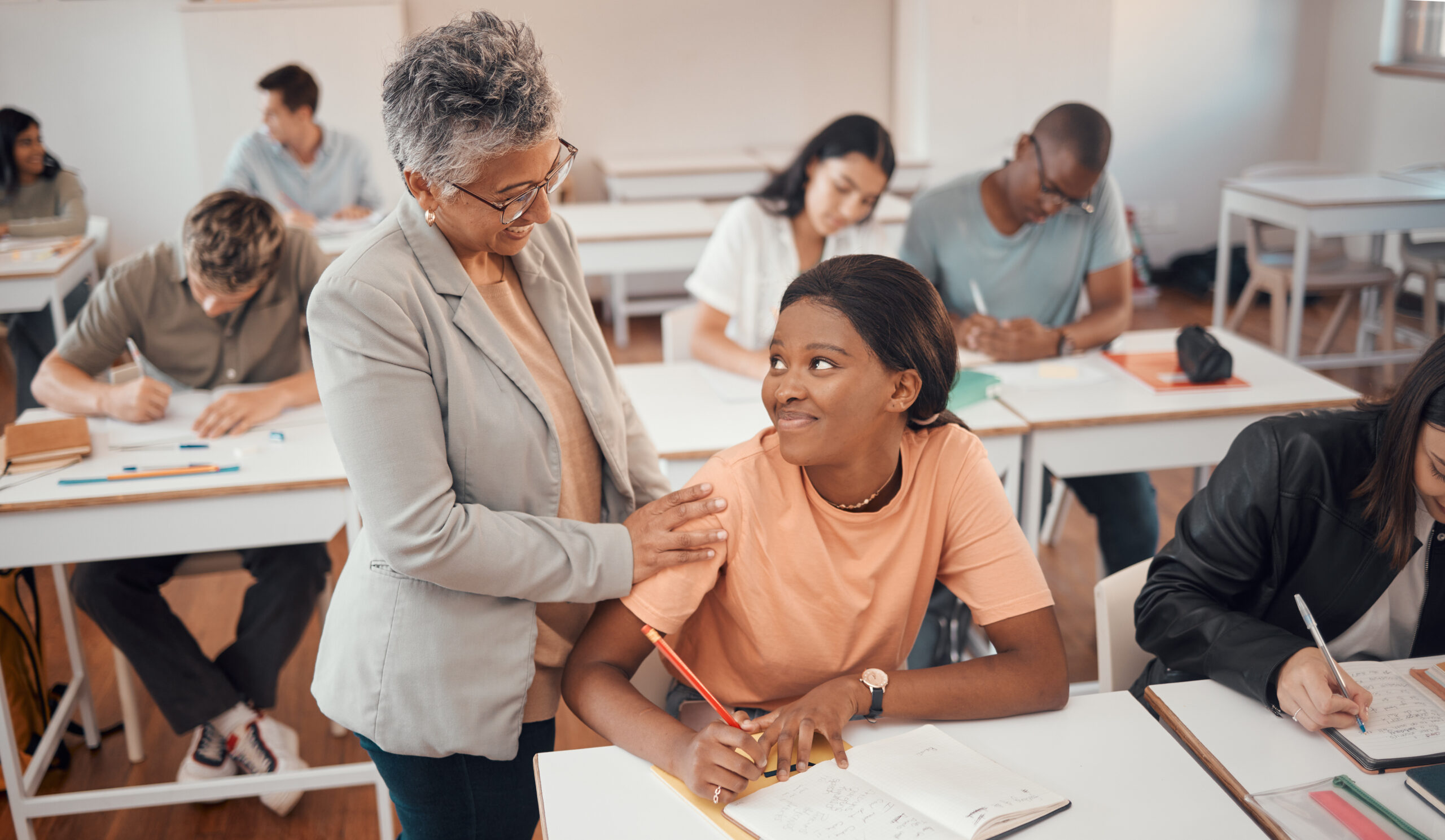
Every classroom has them: the students who sit three rows back, take good notes, avoid eye contact when a question floats into the room, and suddenly become fascinated by the pattern on their water bottle. Too often, instructors label these students as “shy,” as if quiet participation were a fixed personality trait, like being left-handed or having a suspiciously strong opinion about cafeteria coffee.
But here is the more useful question: What if the problem is not the student? What if silence is not proof of disengagement, but evidence that the learning environment has not made participation safe, clear, or meaningful enough?
The idea behind “There Are No ‘Shy Students,’ Only Poor Learning Environments” is not that shyness, anxiety, introversion, or social discomfort do not exist. Of course they do. The point is that educators often treat student quietness as a student defect instead of a design problem. In many classrooms, the loudest voices get the most attention, the fastest thinkers get the spotlight, and the rest are left to perform a strange academic survival skill: looking interested while hoping not to be called on.
A better learning environment does not force every student to become a mini motivational speaker. It creates multiple ways to participate, lowers unnecessary social risk, and teaches students how to join academic conversations with confidence. When faculty redesign the room, the rules, and the rhythm of participation, many so-called shy students suddenly have plenty to say.
Why the “Shy Student” Label Can Be Misleading
Calling a student “shy” may sound harmless, even sympathetic. But labels have a sneaky way of becoming expectations. Once an instructor decides a student is shy, they may stop inviting that student into the conversation. The student receives fewer chances to practice speaking, gets less feedback, and may begin to believe silence is their assigned role in the class ecosystem.
In reality, quiet behavior can mean many different things. A student may be processing information deeply. Another may be unsure whether their answer is “good enough.” A multilingual student may need more time to translate an idea mentally before speaking. A first-generation college student may be trying to decode invisible classroom norms. A student with social anxiety may want to contribute but fear public mistakes. And yes, some students are simply introverted and prefer reflection before response.
None of these students are broken. They are responding to conditions. When participation means “speak instantly in front of everyone or lose credit,” the classroom rewards speed and confidence more than learning. That is not engagement; that is an academic game show without the prize money.
The Real Issue: Participation Is Often Poorly Designed
Many classrooms unintentionally make participation harder than it needs to be. The instructor asks a broad question, waits two seconds, and then answers it themselves. A few confident students dominate discussion. Group work begins with vague instructions like “discuss this,” which usually means one person talks, two people nod, and one person checks the time. Participation grades are listed on the syllabus but never clearly defined. Students are told to “jump in,” but nobody teaches them where the diving board is.
Participation is not a personality test. It is a learning behavior. Like writing a thesis statement or solving an equation, it can be taught, scaffolded, practiced, and assessed fairly. A strong learning environment treats participation as something students grow into, not something they either naturally have or forever lack.
What a Supportive Learning Environment Looks Like
A supportive classroom does not eliminate challenge. In fact, good learning should stretch students. But challenge works best when paired with structure, belonging, and psychological safety. Students need to know that mistakes are part of learning, disagreement can be respectful, and participation is not limited to the fastest hand in the room.
1. It Builds Trust Before Demanding Performance
Students are more likely to speak when they believe their instructor sees them as whole people, not just names attached to grades. Trust begins with small instructor moves: learning names, explaining why activities matter, responding respectfully to imperfect answers, and acknowledging that participation can feel uncomfortable.
The first week of class is especially important. Faculty can set a tone that says, “This is a place where thinking is welcome before it is polished.” That message matters. Students do not need a classroom where every comment receives a standing ovation, but they do need one where a half-formed thought is not treated like a crime scene.
2. It Gives Students Time to Think
One of the easiest ways to improve participation is also one of the most neglected: wait. After asking a question, pause. Let students write. Let them think. Let the silence breathe a little instead of rushing in to rescue it like silence is a raccoon loose in the lecture hall.
Quick-response classrooms favor students who are already confident, already prepared, or naturally comfortable speaking on the spot. Adding wait time and written reflection opens the door for students who need a few moments to organize their thoughts. The quality of discussion often improves because students are not simply reacting; they are preparing.
3. It Uses Think-Pair-Share and Small Steps
Think-Pair-Share is popular because it works beautifully for quieter students. First, students think independently. Then they test their idea with a partner. Finally, a few students or pairs share with the full class. This structure reduces the pressure of public speaking because students do not have to leap directly from private confusion to public performance.
Small-group discussion can also help, but only when it is structured. Assign roles such as facilitator, summarizer, questioner, and evidence finder. Give a clear task and a visible time limit. Ask groups to produce something concrete: a claim, a question, a ranking, a solution, or a one-sentence takeaway. Without structure, group work becomes “three extroverts and a Google Doc.”
4. It Offers Multiple Ways to Participate
If participation only means speaking aloud in class, educators miss a huge range of student thinking. Students can participate by writing in a shared document, posting a question before class, annotating a reading, completing a quick poll, contributing to a discussion board, submitting an exit ticket, or helping build a group concept map.
This does not mean oral communication is unimportant. Students should develop the ability to explain ideas aloud. But speech should not be the only doorway into engagement. Universal Design for Learning encourages educators to provide flexible ways for students to access material, express understanding, and stay engaged. In practice, that means designing participation so more students can enter the conversation without needing to become someone else first.
How Poor Learning Environments Silence Students
Poor learning environments rarely announce themselves with dramatic music. They look ordinary. A lecture-heavy course where questions are mostly rhetorical. A discussion class where three students carry every session. A participation grade based on “vibes.” A classroom where wrong answers are corrected sharply. A group project where roles are unclear. A professor who says, “There are no bad questions,” then responds to a question with the facial expression of a disappointed tax auditor.
These environments communicate that participation is risky. Students learn to protect themselves by staying quiet. The behavior may look like shyness, but the cause may be uncertainty, fear of embarrassment, cultural norms around authority, lack of preparation support, or repeated experiences of being ignored.
When silence becomes a pattern, faculty should investigate the design. Are questions too vague? Are students given time to prepare? Are dominant speakers managed? Are expectations transparent? Are quieter contributions valued? Are students invited in privately before being asked to perform publicly?
Practical Strategies Faculty Can Use Immediately
The good news is that improving classroom participation does not require a total personality transplant for either students or instructors. Small changes can make a major difference.
Define Participation Clearly
Instead of writing “participation counts for 15%,” explain what participation includes. For example: asking questions, connecting course concepts to examples, listening actively, building on a peer’s idea, contributing in small groups, completing reflection prompts, or bringing discussion notes to class. When expectations are visible, students are less likely to assume that only frequent public speaking counts.
Use Low-Stakes Openers
Start class with a short prompt students can answer in writing: “What is one idea from the reading that surprised you?” or “What is one question you hope we discuss today?” This gives quieter students a prepared thought they can later share. It also gives the instructor useful information about confusion points before the class gets too far down the road.
Normalize Mistakes
Faculty can model intellectual humility by saying things like, “That is a useful start,” “Let’s test that idea,” or “Many people think this at first, so let’s unpack it.” These responses turn imperfect answers into learning opportunities rather than social disasters. Students watch how instructors handle mistakes. One harsh reply can buy silence for the rest of the semester.
Manage Dominant Voices
Inclusive participation is not only about encouraging quiet students. It is also about helping enthusiastic students share the floor. Instructors can use discussion guidelines such as “step up, step back,” invite students who have not spoken to contribute in writing first, or ask frequent speakers to build on someone else’s comment rather than introduce a new point.
Invite Students Privately
Some students benefit from a quiet, individual invitation. A message such as, “I noticed your written reflections are thoughtful. I would love to hear one of those ideas in discussion when you feel ready,” can be powerful. The key is warmth without pressure. Nobody wants an email that sounds like a subpoena for participation.
Rethinking Participation Grades
Participation grades often reward visibility rather than learning. The most talkative student may not be the most prepared, and the quietest student may not be disengaged. A fairer system gives students choices and evidence-based ways to demonstrate engagement.
For example, instructors can allow students to earn participation credit through a combination of in-class comments, small-group work, written questions, reading annotations, peer feedback, office-hour reflections, or post-class summaries. This approach still holds students accountable, but it recognizes that learning is not always loud.
Rubrics can also help. A strong participation rubric values quality over quantity. It may reward preparation, relevance, respect for peers, use of evidence, curiosity, and contribution to group learning. This makes participation less mysterious and less dependent on personality style.
The Role of Belonging in Student Voice
Students speak more freely when they feel they belong. Belonging is not a decorative classroom extra, like inspirational posters or a plant slowly losing hope near the window. It is central to learning. When students feel respected, represented, and connected, they are more willing to take intellectual risks.
Faculty can build belonging by using inclusive examples, inviting students’ experiences where appropriate, learning correct names and pronunciations, setting discussion norms, and making the hidden rules of academic participation explicit. Belonging also grows when students see that their contributions influence the direction of class. If students speak and nothing changes, participation begins to feel like tossing ideas into a very polite trash can.
Online and Hybrid Classes Need Participation Design Too
Quietness does not disappear online; it simply changes outfits. In virtual classes, students may keep cameras off, avoid microphones, or hesitate to type in chat. Again, the issue may not be laziness or shyness. Students may have privacy concerns, poor internet, noisy homes, limited confidence, or uncertainty about online etiquette.
Online participation works best when instructors provide options: chat responses, polls, breakout rooms with assigned roles, shared documents, short audio reflections, and asynchronous discussion spaces. Clear prompts matter even more online. “Talk about the reading” is weak. “Identify one claim from the reading, one piece of evidence, and one question your group still has” is much stronger.
Why Faculty Should Stop Trying to “Fix” Quiet Students
The goal is not to turn every quiet student into a campus debate champion with a color-coded argument binder. The goal is to remove unnecessary barriers so all students can participate in ways that deepen learning. Some students will always speak less than others, and that is fine. Equity does not mean everyone behaves the same. It means everyone has meaningful access to learning.
When faculty stop asking, “How do I make shy students talk?” and start asking, “How do I design a classroom where more students can contribute?” the solution changes. The focus shifts from personality correction to environmental improvement.
Experience-Based Reflections: What Quiet Students Often Teach Us
In many classrooms, the quiet student is treated like a puzzle to solve. But if instructors pay close attention, quiet students often reveal exactly what the learning environment needs. Their silence can point to unclear expectations, rushed questioning, unsafe discussion norms, or activities that privilege confidence over thoughtfulness.
Imagine a student named Maya. She arrives prepared, highlights the reading, and writes thoughtful notes in the margins. During class, however, she rarely speaks. Her instructor assumes she is shy. One day, the instructor begins class with a three-minute written reflection and then asks students to discuss their answer with a partner before opening the floor. Maya shares a sharp observation with her partner, who later says, “Maya made a great point.” Suddenly, the instructor realizes Maya was not empty of ideas. The class format had simply never given her a bridge from thinking to speaking.
Or consider a student named Daniel, who avoids whole-class discussion but contributes consistently in online discussion boards. His written responses are careful, evidence-based, and often more developed than the spontaneous comments made in class. If participation is measured only by hand-raising, Daniel looks disengaged. If participation is measured by contribution to learning, Daniel is very much present. The environment determines whether his engagement is visible.
Another common experience appears in group projects. A quieter student may fade into the background when roles are unclear. But when the instructor assigns rotating responsibilities, that same student may become an excellent summarizer, researcher, or question-builder. The change is not magic. It is structure. Clear roles reduce social guessing and give students permission to contribute without having to fight for space.
Faculty also learn that students are more willing to participate when they understand why participation matters. “Because it is part of your grade” is technically an explanation, but not a very inspiring one. Students respond better when instructors connect participation to professional skills, deeper understanding, peer learning, and confidence. A nursing student needs to explain clinical reasoning. An engineering student needs to defend design decisions. A literature student needs to interpret and challenge ideas. Participation is not classroom decoration; it is practice for real communication.
One of the most powerful experiences for instructors is discovering that quieter students often become more vocal after receiving private encouragement. A short note after class can do more than a public cold call. For example: “Your written response about today’s case study was excellent. Would you be comfortable sharing a version of that idea next time?” This respects the student’s agency while opening a door. It says, “Your thinking matters,” without saying, “Surprise, you are now the main event.”
There is also a lesson in humility. Sometimes students are quiet because the instructor talks too much. This is painful, but true. If a teacher fills every pause, answers every question, and explains every concept three different ways before students have time to engage, the class learns that their role is to receive, not contribute. Faculty who want more student voice may need to create more instructor silence. That silence can feel awkward at first, but it is often where learning begins to stretch its legs.
Over time, the best classrooms develop a culture where participation is not a performance by a few confident students but a shared responsibility. Students know how to enter discussion, how to disagree, how to listen, and how to build on one another’s ideas. Quiet students are not pushed into uncomfortable theatrics; they are supported into meaningful contribution. Talkative students are not punished; they are taught to make room. The instructor becomes less of a spotlight operator and more of a conversation designer.
The experience that matters most is this: when the environment changes, students change. Not all at once. Not always dramatically. But enough to challenge the lazy label of “shy.” A student who never volunteered may begin by writing a question. Then they may share with a partner. Then they may speak for a group. Then one day, they may raise a handnot because they became a different person, but because the classroom finally made room for the person they already were.
Conclusion
There may be students who are shy, introverted, anxious, cautious, reflective, or simply tired on a Tuesday morning because college life is not exactly a spa retreat. But educators should be careful about turning quiet behavior into a fixed identity. In many cases, students are not refusing to participate; they are responding intelligently to an environment that has made participation unclear, unsafe, or unnecessarily narrow.
Strong learning environments invite students in through multiple doors. They provide time to think, structure for discussion, clear expectations, respectful feedback, and flexible ways to contribute. They do not shame quiet students or worship loud ones. They treat participation as a skill, a practice, and a shared classroom responsibility.
So the next time a student seems “shy,” pause before attaching the label. Look at the room. Look at the rules. Look at the rhythm of discussion. The student may not need fixing. The learning environment may need redesigning.
Note: This publication-ready article is original, plagiarism-free, and synthesized from reputable education research, faculty development guidance, and inclusive teaching best practices. Source links and citation markers have been intentionally omitted from the HTML for clean web publishing.