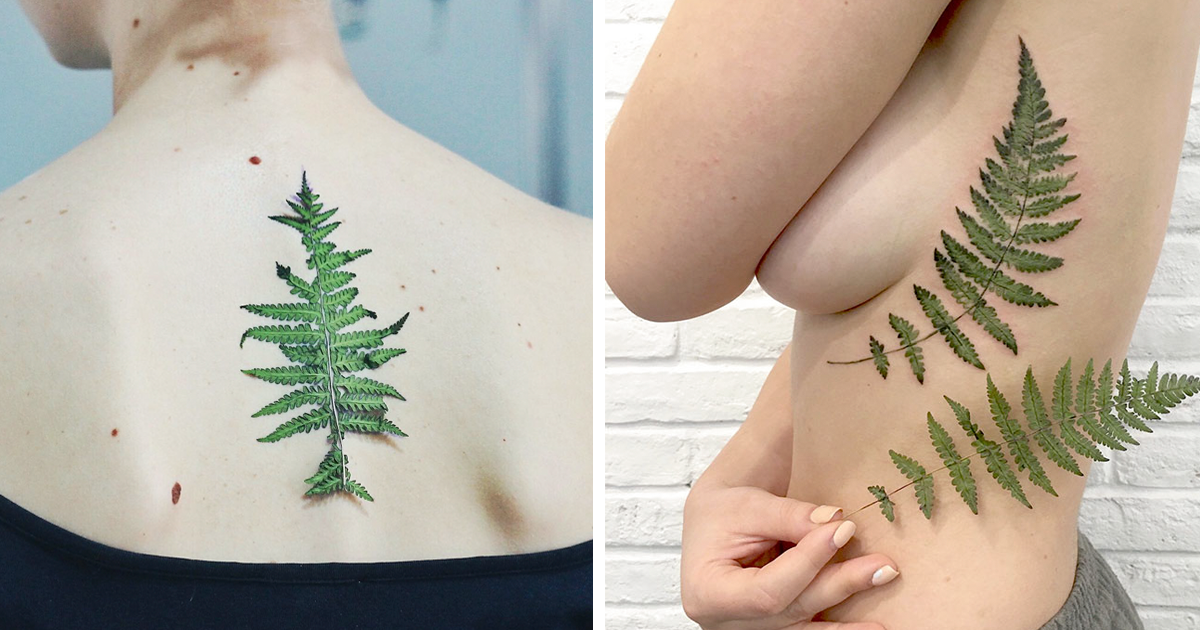
Some tattoo trends whisper. This one rustles.
In a body-art world packed with flash sheets, Pinterest boards, and enough rose references to fill a greenhouse, one botanical tattoo artist took a wonderfully different route: she skipped the drawing, picked up a real leaf, and let nature do the first draft. The result is a style of botanical tattooing that feels less like decoration and more like preservation, as if a fleeting piece of the natural world got promoted to permanent residency on skin.
That artist is Rita “Rit Kit” Zolotukhina, known for a process often called Liveleaf Tattoo. Instead of relying only on sketches or digital references, she uses actual flowers, leaves, and plant forms as the basis for the stencil. It is a simple idea on paper, but on skin it becomes something far more poetic: tattoos that look intimate, organic, and alive. Or, at the very least, alive enough to make people stare and say, “Wait… is that a real fern?”
Here’s what makes this technique so fascinating, why botanical tattoos continue to resonate with clients, and what anyone should know before turning a favorite bloom into permanent art.
The Artist Behind the Botanical Tattoo Buzz
Rit Kit did not stumble into this style by accident. Her work sits at the crossroads of observation, design, and plant obsession. She has described herself as a former architect, which makes a lot of sense once you see how carefully her tattoos interact with the body. Her pieces do not just sit on skin; they travel with it. A stem follows the length of an arm. A leaf bends where a shoulder naturally curves. A blossom seems to belong there, as though it grew in that exact spot and decided to stay.
That architectural eye is part of what separates her from artists who simply tattoo flowers as subject matter. Rit Kit treats the plant itself as collaborator. The shape is not loosely inspired by nature. It is nature, translated through ink, needle, color, and composition.
And that is the clever twist. Plenty of artists create beautiful floral tattoos. Very few begin with a literal flower pressed into the process. That method turns a common motif into something startlingly specific. Not just “a flower tattoo,” but this flower. This leaf. This stem with its odd, charming imperfection intact.
How Real Leaves and Flowers Become Tattoo Stencils
From plant to placement
The magic starts with a real botanical specimen. A leaf, flower, or branch is selected for its shape, detail, symbolism, or personal meaning. Sometimes the artist chooses the plant. Sometimes the client brings one that matters to them, which instantly raises the emotional stakes in the best possible way. Grandma’s favorite flower? A stem from a meaningful garden? A leaf that reminds someone of home? Suddenly the tattoo is no longer just pretty. It is loaded.
The plant is then used as the stencil source, creating an imprint that captures its natural contours more faithfully than a generic sketch usually can. After that, the tattooing begins. Color, shading, texture, and artistic interpretation transform the imprint into a finished design that can read as delicate, realistic, painterly, or almost illusion-like depending on the piece.
That combination of direct botanical reference and freehand tattoo skill is what gives the work its charm. It is not mechanical copying. It is controlled translation. The artist preserves the plant’s fingerprint while still making aesthetic decisions about saturation, flow, placement, and longevity.
Why the stencil matters
Traditional tattoo stencils are useful because they create consistency. This technique creates intimacy. A real leaf contains quirks that a digital file tends to sand away: a slightly ragged edge, asymmetry in the veins, the uneven spacing of petals, the tiny evidence that this thing once lived outside, in weather, in light, in time.
That matters because botanical tattoos often succeed or fail on detail. If the design feels too generic, it can slide from elegant to gift-shop decal in a heartbeat. A real plant-based stencil helps preserve specificity, and specificity is where art usually gets interesting.
Why Botanical Tattoos Feel So Personal
Floral and botanic tattoos have enduring appeal because they work on multiple levels at once. They can be visually soft but emotionally heavy. They can symbolize romance, grief, memory, growth, family, resilience, transformation, or just a person’s ongoing commitment to having excellent taste in foliage.
That flexibility is a huge reason flower tattoos remain popular. They suit many styles, many placements, and many meanings. One person wants a peony because it reminds them of a parent. Another chooses wildflowers because perfection is overrated. Another wants a branch, seed pod, or herb sprig because a full bouquet feels too polished and not enough like them. Botanical tattoo designs make room for all of it.
Real-plant stencil work pushes that emotional connection even further. The tattoo becomes a record of an actual specimen, not just a category. It behaves almost like a pressed flower in a journal, except with more commitment and a stricter no-cannonballs-into-the-pool phase afterward.
That is why these tattoos often feel less ornamental than conventional floral pieces. They carry memory in a more direct way. A client is not merely selecting imagery; they are preserving a trace of a real object from the physical world. In a digital age full of filters and shortcuts, that tactile quality hits differently.
What Makes This Style Different From Ordinary Floral Ink
Many floral tattoos are based on symbolic meaning, artistic style, or broad inspiration from nature. Rit Kit’s method flips the hierarchy. The plant itself comes first. The finished tattoo grows from the specimen, not the other way around.
That changes the final look in subtle but important ways. Botanical tattoos created from real leaves and flowers often appear less stiff and more anatomically believable. Veins feel more natural. Petal placement looks less invented. Stems move with a kind of quiet confidence. The piece can still be stylized, but its bones come from reality.
There is also an emotional difference. A generic rose can be beautiful. A specific sprig brought by the client from a meaningful place can be beautiful and personal. That combination helps explain why the style attracts nature lovers, sentimental collectors, and people who want a tattoo that feels closer to fine art than trend-chasing.
It also fits into the broader rise of botanic tattoos and personalized floral work. The tattoo world has increasingly embraced designs that feel collaborative, symbolic, and tailored to the body’s natural anatomy. Botanical forms are especially suited to that approach because they already contain movement, structure, and softness. In other words, plants are excellent designers. They have had a few million years of practice.
The Broader Appeal of Floral and Botanic Tattoos
Flower tattoos have stayed popular for a reason: they are versatile without being boring. They can be bold or whisper-thin, hyper-realistic or abstract, memorial or purely aesthetic. They can fit a finger, wrap a ribcage, climb a spine, or trail across a forearm like they were always meant to live there.
Botanic tattoos broaden that vocabulary even more. Instead of stopping at roses and peonies, clients are exploring berries, herbs, seed heads, vines, grasses, branches, and wild plant forms. This shift feels modern, but it also feels timeless. A botanical tattoo can look current without feeling trapped inside a single trend cycle.
That is one reason real-leaf stencil tattoos land so well. They sit at the sweet spot between innovation and familiarity. People already love floral tattoos. This method gives them a new way to experience something beloved without making it feel gimmicky. It is fresh, but not “look, my tattoo doubles as a QR code” fresh.
Before You Book: Safety Matters More Than Aesthetic Poetry
Now for the grown-up part of the garden tour. A tattoo is still a tattoo, even when the inspiration comes from a flower instead of a flash sheet. The skin barrier is being broken, which means hygiene, sterilization, ink quality, and aftercare are not optional details. They are the whole ballgame.
Questions worth asking
If you are considering a botanical tattoo, especially one involving a plant-based stencil process, ask smart questions before you get charmed by the prettiest leaf in the room:
Is the studio licensed where required? How are tools sterilized? What products touch the skin? How does the artist handle the plant material safely? What is the aftercare plan? Good artists do not get weird when you ask these things. They answer clearly, because professionalism is sexy too.
Know the risks
Tattooing carries real risks, including infection, allergic reactions, irritation, and other skin complications. Contaminated ink is a known concern, and even sealed tattoo inks have been found to contain harmful microorganisms. Unsanitary equipment or poor studio practices can raise the risk further. That means the dreamy botanical concept should always be paired with rigorous studio standards.
Placement matters too. If you have moles, scars, skin conditions, or a history of allergic reactions, talk with a qualified medical professional or dermatologist before getting tattooed in those areas. Botanical tattoos may look soft and romantic, but your skin still deserves a practical strategy.
Aftercare is not optional
Once the tattoo is done, healing becomes part of the artwork. Keep the area clean. Use a gentle, fragrance-free moisturizer if recommended. Avoid scratching, picking scabs, soaking the tattoo, and exposing it to direct sun while it heals. Wear loose clothing over the area. And if you notice a rash, worsening redness, unusual swelling, or anything that feels like your skin is launching a protest, get medical advice.
No tattoo stays gorgeous through vibes alone. It takes skill to apply and discipline to heal.
Is This Style Right for You?
A botanical tattoo created from real leaves and flowers is a strong choice for someone who wants more than a decorative bloom. It is especially appealing if you love natural forms, want a piece tied to memory or place, or enjoy tattoos that feel intimate instead of mass-produced.
It may also appeal to people who value subtle asymmetry. Real plants are not perfectly symmetrical little logos. They twist. They curve. They age. That gives the tattoo a living quality, but it also means you should embrace character over rigid perfection.
If your dream tattoo is sharp, geometric, and ultra-controlled, a botanical stencil tattoo may not be your lane. But if you want something soft, specific, tactile, and emotionally resonant, this style offers a compelling alternative to ordinary floral ink.
Extended Experience: What Getting A Botanical Tattoo Like This Can Feel Like
One of the most interesting parts of this trend is the experience surrounding it. A real-leaf or real-flower tattoo does not begin with a generic printout slapped onto the skin in thirty seconds. It usually starts with conversation. Not just “where do you want it?” but “which plant matters to you?” That alone changes the atmosphere. The appointment feels less transactional and more collaborative, almost like working with an artist on a custom keepsake rather than buying a design off a menu.
Then comes the plant itself, and that moment can be surprisingly emotional. A client might bring a bloom that reminds them of a childhood yard, a garden planted with a grandparent, a flower from a wedding bouquet, or a leaf that instantly brings back a specific season and place. Even when the plant is chosen purely for its shape, there is something intimate about seeing a living object become the starting point for a tattoo. It feels grounded. Literal, yes, but also symbolic in a way that is hard to fake.
The stencil stage is where the whole thing starts to feel a little magical. Instead of a standard design transferred from paper, the mark on the skin comes from something that once moved in wind and light. Clients often respond to that with a mix of excitement and disbelief. The outline can feel more spontaneous, more natural, and a little less predictable than a conventional stencil. That unpredictability is part of the appeal. You are not getting a stock flower. You are getting this one.
During the tattooing itself, the experience is still what tattooing usually is: part endurance test, part meditation, part “I made a bold choice and now I shall breathe through it with dignity.” But many people describe botanical tattoos as emotionally calming because the subject matter already feels soft and familiar. Watching veins, petals, and gradients take shape can feel like seeing a small still life develop on the body in real time.
Afterward, the healing period tends to deepen the attachment. The tattoo is no longer just a cool idea; it becomes part of your daily routine. You wash it carefully, moisturize it, protect it from the sun, and watch it settle into the skin. By the time it is healed, the piece often feels less like an accessory and more like a memory that learned how to stay put.
That may be the real secret behind the popularity of these botanical tattoos. Yes, they are beautiful. Yes, they photograph well. But more importantly, they create an experience people remember. The process honors the plant, the body, and the story behind the choice. And in an era when so much design feels infinitely reproducible, that kind of one-of-one intimacy is powerful. It is art with roots. Permanent roots, which, to be clear, is much easier to manage than ivy on a brick wall.
Conclusion
The idea behind this style is both simple and quietly revolutionary: if you want a tattoo to feel natural, start with nature itself. Rita “Rit Kit” Zolotukhina’s real-leaf and real-flower stencil method turns botanical tattoos into something more tactile, more personal, and more emotionally precise than the average floral design.
It also reminds us why botanical tattoos endure. They are beautiful, yes, but they are also adaptable, symbolic, and deeply human. A flower can mark grief. A leaf can mark home. A stem can mark change. And when the design begins with a real plant rather than a generic reference image, the final piece can feel less like a trend and more like a preserved moment.
That is what makes this style memorable. It is not trying to improve on nature. It is trying to listen to it, trace it, and let it bloom somewhere unexpected: right there on the skin.