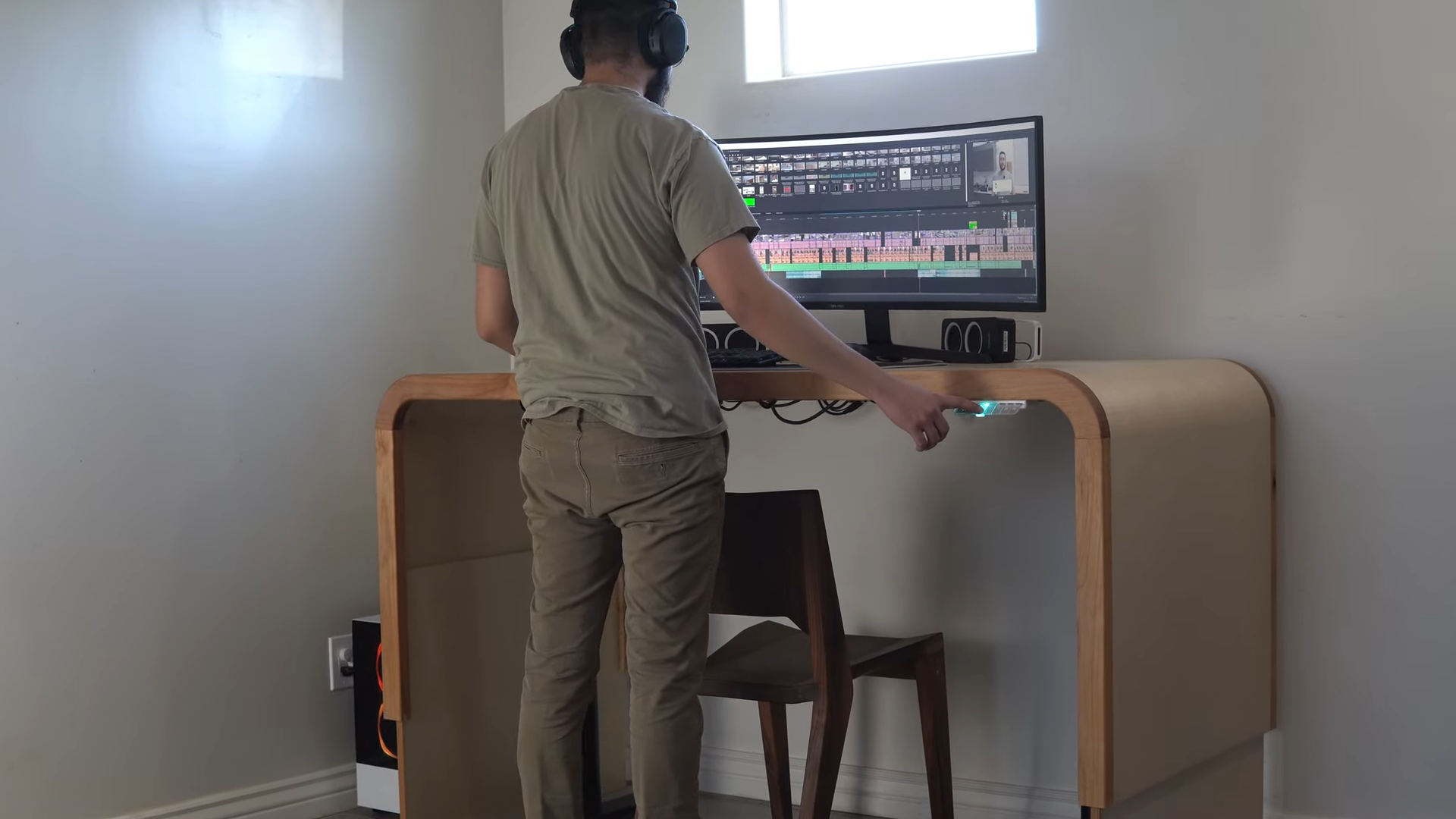
A standing desk used to sound like something only a Silicon Valley founder, a chiropractor, or that one coworker with a suspiciously perfect water bottle would own. Today, it has become a practical upgrade for home offices, creative studios, gaming corners, dorm rooms, and corporate workstations. But here is the fun part: the best standing desk is not just a slab of wood riding on metal legs. A truly useful standing desk has clever flairsmart details that make your workday smoother, healthier, neater, and maybe even a little less like a spreadsheet wearing shoes.
“Standing Desk With A Clever Flair” is more than a catchy phrase. It describes a new generation of height-adjustable desks built around movement, comfort, cable control, presets, accessories, stability, and design personality. Instead of forcing you to choose between “professional” and “interesting,” modern standing desks can be both. They lift, lower, remember your favorite heights, hide cable chaos, support multiple monitors, and give your workspace a polished look without requiring an engineering degree or a ritual sacrifice to the Allen wrench gods.
Still, a standing desk is not magic furniture. It will not turn eight hours of emails into a wellness retreat. The real benefit comes from alternating between sitting, standing, and moving. Ergonomic experts consistently emphasize neutral posture, comfortable monitor height, relaxed shoulders, elbows close to a right angle, wrists aligned with the forearms, and frequent position changes. In other words, the desk is the tool; your habits are the secret sauce.
What Makes a Standing Desk “Clever”?
A clever standing desk solves real problems before they become daily annoyances. It does not merely go up and down. It helps you work better while looking like it belongs in your room. The cleverness usually shows up in five areas: height control, stability, cable management, storage, and customization.
1. Smooth height adjustment
The main keyword here is simple: adjustable standing desk. A good model should move smoothly between seated and standing positions without wobbling like a cafeteria table with one dramatic leg. Electric standing desks often include dual motors, programmable height presets, anti-collision features, and digital controls. Manual crank desks and desktop converters can still be useful, especially for tighter budgets, but electric desks usually win for convenience.
2. Memory presets that save your back and your patience
Memory presets are one of those features that sound boring until you use them. Then suddenly you wonder why every object in your life does not remember your preferences. A clever standing desk lets you save your ideal sitting height, standing height, and maybe even a “video call posture” height where you look confident instead of folded like laundry.
3. Cable management that prevents spaghetti syndrome
Modern workstations often involve a laptop, monitor, keyboard, mouse, webcam, phone charger, speakers, desk lamp, and at least one mysterious cable no one can identify but everyone is afraid to unplug. Standing desks with built-in cable trays, magnetic accessories, rear channels, grommets, or under-desk power solutions make the entire setup safer and cleaner. This is where “clever flair” becomes very practical: the desk rises, but the cable disaster does not rise with it.
4. Stability at every height
A standing desk may feel rock-solid while seated but shaky when fully raised. That matters, especially if you use large monitors, a microphone arm, drawing tablet, or heavy desktop computer. Reviews from major consumer and tech publications frequently evaluate standing desks by stability, weight capacity, smooth motor performance, ease of assembly, height range, and customization. The best standing desk for a minimalist laptop user may not be the best standing desk for a multi-monitor command center.
5. Design personality
Flair does not mean glitter. Although, honestly, if your desk has glitter and makes you happy, carry on. For most people, flair means thoughtful design: a bamboo top, rounded corners, integrated drawers, a compact footprint, a rich walnut finish, a magnetic cable tray, a curved desktop, or accessories that make the desk feel intentional. A standing desk should not look like medical equipment unless your personal style is “urgent care but make it ergonomic.”
The Ergonomic Truth: Standing Is Good, Movement Is Better
Here is where many standing desk articles get a little too excited. They make standing sound like a cure for everything except printer jams. The reality is more balanced. Research and health guidance suggest that long periods of sitting are associated with health risks, and standing desks can help reduce sedentary time. However, simply standing all day is not the goal. Prolonged standing can also lead to discomfort, tired legs, or circulation issues.
The smarter approach is to rotate between sitting, standing, and moving. Cornell Ergonomics has popularized a practical rhythm often summarized as 20 minutes sitting, 8 minutes standing, and 2 minutes moving. Other workplace guidance recommends switching positions every 30 to 60 minutes and taking brief movement breaks. The exact schedule does not have to be perfect. The point is to avoid becoming a statue, whether seated or standing.
Neutral posture matters more than heroic standing
When standing, your desk height should allow your elbows to rest near a 90-degree angle while typing. Your shoulders should stay relaxed, your wrists should remain straight, and your monitor should be around eye level so your neck does not spend the day auditioning for a question mark. Your feet should feel supported, ideally with an anti-fatigue mat if you stand often. Some people also benefit from a small footrest to alternate weight from one leg to the other.
When sitting, the same basic ergonomic rules apply. Keep your feet flat on the floor or on a footrest, support your lower back, keep the monitor at a comfortable distance, and avoid hunching over the keyboard like you are protecting state secrets. A standing desk does not replace a good chair; it partners with one.
Benefits of a Standing Desk With Clever Flair
It encourages movement without interrupting your workflow
The best sit-stand desk makes movement almost effortless. You press a button, the desk glides up, and you keep working. That tiny reduction in friction matters. If changing posture requires clearing the desk, stacking books, moving cables, or performing furniture yoga, you probably will not do it often. Clever design turns healthy behavior into a habit instead of a project.
It can reduce everyday discomfort
Many office workers experience back, neck, shoulder, or wrist discomfort from poor workstation setup. A height-adjustable desk can help because it lets you bring the work surface to your body instead of forcing your body to adapt to a fixed-height desk. That said, the desk must be adjusted correctly. A poorly positioned standing desk is just a regular bad desk with ambition.
It improves workspace organization
A desk with smart cable management, monitor arms, hooks, drawers, or modular accessories can make your space feel calmer. This is not just about aesthetics. A clean workstation reduces distractions and makes it easier to focus. Your brain does not need to spend energy wondering why your charging cable is wrapped around your coffee mug like a tiny electronic snake.
It supports different work modes
One height may be best for typing. Another may be better for reading, sketching, recording videos, taking calls, or reviewing documents. A clever standing desk supports those shifts. Creative professionals may want a deeper surface for drawing tablets. Gamers may want strong cable control and monitor support. Students may need a compact desk that fits in a bedroom. Remote workers may prefer a desk that looks good on camera because, yes, your background is now part of your personal brand.
How to Choose the Best Standing Desk for Your Space
Measure your ideal sitting and standing heights
Before buying, check the desk’s minimum and maximum height range. This is especially important if you are shorter or taller than average. A desk that cannot go low enough may make your shoulders rise while typing. A desk that cannot go high enough may make you lean forward when standing. Neither is ideal, unless your goal is to slowly become a human paperclip.
Look for stability and weight capacity
If your setup includes multiple monitors, a desktop computer, speakers, or a heavy monitor arm, weight capacity matters. So does frame design. Dual-motor desks are common in higher-quality models, and four-leg frames may offer extra stability for heavier setups. However, a simple two-leg desk may be more than enough for a laptop, keyboard, and single monitor.
Prioritize cable management
Cable management is not a luxury feature. It is a sanity feature. Look for a desk with a tray, clips, routing holes, or compatible accessories. Remember that cables need enough slack to move safely when the desk rises. A clever cable setup prevents pulled plugs, dangling wires, and the terrifying moment when your monitor flickers because the power cord has joined a resistance movement.
Think about desktop size and shape
A 48-inch desktop may work for a small room or laptop-based setup. A 60-inch or 72-inch desktop gives more room for multiple monitors, notebooks, lighting, and accessories. L-shaped standing desks are excellent for corner offices and multitaskers, but they require more space. Curved front edges can feel more comfortable for long typing sessions. Rounded corners are also a small but appreciated feature, especially for anyone who has ever lost a battle with sharp furniture.
Check assembly and warranty
Standing desks are furniture plus machinery. That means assembly quality, motor reliability, and warranty coverage matter. Product reviewers often pay attention to setup difficulty, included tools, frame alignment, noise level, and long-term durability. A desk that is cheap but frustrating may not feel cheap after your third hour of trying to identify Bolt G.
Clever Flair Ideas That Make a Standing Desk Feel Custom
Add a monitor arm
A monitor arm frees desktop space and makes it easier to position your screen at eye level. It also gives your setup a clean, professional look. Make sure the arm is compatible with your monitor size, weight, and desk thickness.
Use an anti-fatigue mat
An anti-fatigue mat can make standing more comfortable, especially during longer sessions. It provides cushioning and encourages subtle movement. Choose one that is supportive but not so soft that you feel like you are typing from a marshmallow.
Create zones on your desktop
Divide your desk into zones: screen zone, writing zone, charging zone, and personal zone. Your personal zone might include a plant, photo, small lamp, or object that gives the desk character. Flair is not clutter. Flair is personality with boundaries.
Use lighting wisely
Good lighting reduces eye strain and makes your workspace more inviting. A desk lamp with adjustable brightness can help, especially if you work in the evening. Position lights to avoid glare on your screen. Natural light is wonderful, but direct sun on a monitor can turn your screen into a mirror that reflects your tired expression back at you.
Save presets for real activities
Instead of saving only “sit” and “stand,” consider presets for writing, calls, reading, and quick review. This turns the desk into a flexible workstation. It also makes you more likely to use the height adjustment regularly.
Common Standing Desk Mistakes to Avoid
Standing all day on day one
Many new users get excited and stand for hours immediately. Then their feet, calves, and lower back file a formal complaint. Start slowly. Use short standing sessions and increase gradually. The goal is sustainable movement, not proving your furniture loyalty.
Ignoring your chair
A standing desk does not mean your chair can be terrible. You still need a supportive chair for seated work. Adjust the chair height, lumbar support, and armrests so your seated posture stays neutral.
Keeping the monitor too low
If the monitor is too low, you will bend your neck downward. This can lead to discomfort over time. Use a monitor arm, riser, or laptop stand to bring the screen closer to eye level. If you use a laptop for long sessions, pair it with an external keyboard and mouse.
Forgetting to move
Standing is not the same as moving. Walk around, stretch, shift your weight, and take short breaks. Your body likes variety. Your inbox may not care, but your spine certainly does.
Who Should Consider a Standing Desk With Clever Flair?
A standing desk is a strong choice for remote workers, students, designers, writers, programmers, gamers, executives, teachers, and anyone who spends long periods at a computer. It is especially useful for people who want a more flexible workspace without rebuilding the entire room. If your desk currently feels cramped, chaotic, or physically uncomfortable, a sit-stand desk with smart features may be worth considering.
However, people with existing medical conditions, pain, circulation issues, or mobility concerns should approach major workstation changes thoughtfully. Ergonomics is personal. What works beautifully for one person may feel wrong for another. A good desk gives you adjustability, but you still need to listen to your body.
Experience Notes: Living With a Standing Desk With Clever Flair
The first week with a standing desk can feel oddly exciting, like your office furniture has entered its motivational speaker era. You press the button, the desk rises, and suddenly you are not just answering emailsyou are conquering them vertically. Then, after forty-five minutes, your feet remind you that they were not consulted during this productivity revolution. That is when the real lesson begins: a standing desk is best used with rhythm, not enthusiasm alone.
In daily use, the clever features become more valuable than the headline specs. Memory presets save time every single day. Instead of guessing the perfect height, you tap a button and land exactly where your elbows, wrists, and shoulders feel right. Cable management also matters more than expected. When the desk moves, every wire becomes part of the furniture’s choreography. A clean cable tray keeps the movement smooth and prevents the dramatic unplugging of a monitor during a video meeting, which is funny only if it happens to someone else.
The biggest experience upgrade is mental. A standing desk creates natural transitions in the workday. Sitting may feel better for deep writing, reading, or detailed spreadsheet work. Standing can feel great for calls, brainstorming, quick edits, and afternoon focus dips. A two-minute walk between height changes can refresh the brain more effectively than staring harder at the same paragraph. The desk becomes a reminder that work does not have to happen in one frozen posture.
Flair also changes how the workspace feels. A warm wood top, a tidy monitor arm, a small plant, and soft lighting can turn a basic desk into a place you actually want to use. That matters because comfort is not only physical. A workspace that feels organized and personal can reduce friction at the start of the day. You sit downor stand upand the room quietly says, “You’ve got this.” Much better than a messy desk saying, “Good luck finding your charger, champion.”
Over time, the best habit is moderation. Stand for a bit, sit for a bit, move often, and adjust the setup whenever something feels off. The cleverest standing desk is not the one with the most features. It is the one that helps you work comfortably, move naturally, and keep your space looking sharp without turning your office into a cable jungle. That is the real flair: practical design that makes healthy habits easier to repeat.
Conclusion
A standing desk with clever flair is not just a trendy office upgrade. It is a flexible workstation that supports better posture, smoother movement, cleaner organization, and a more enjoyable work environment. The best standing desk is adjustable, stable, easy to use, and designed around your real habits. Look for height presets, strong construction, cable management, enough surface area, and accessories that match your workflow. Most importantly, remember that the goal is not to stand all day. The goal is to change positions, move regularly, and build a workspace that helps your body and brain stay engaged.
Whether you are building a home office, upgrading a study corner, or finally declaring war on cable clutter, a clever standing desk can make the workday feel less stiff and more intentional. Choose one that fits your height, room, equipment, and personality. Then use it the smart way: sit, stand, move, repeat. Your desk should work for younot the other way around.
Note: This article is written in original American English for web publishing and is based on real ergonomic guidance, workplace wellness recommendations, and current standing desk review trends without inserting source links into the article body.