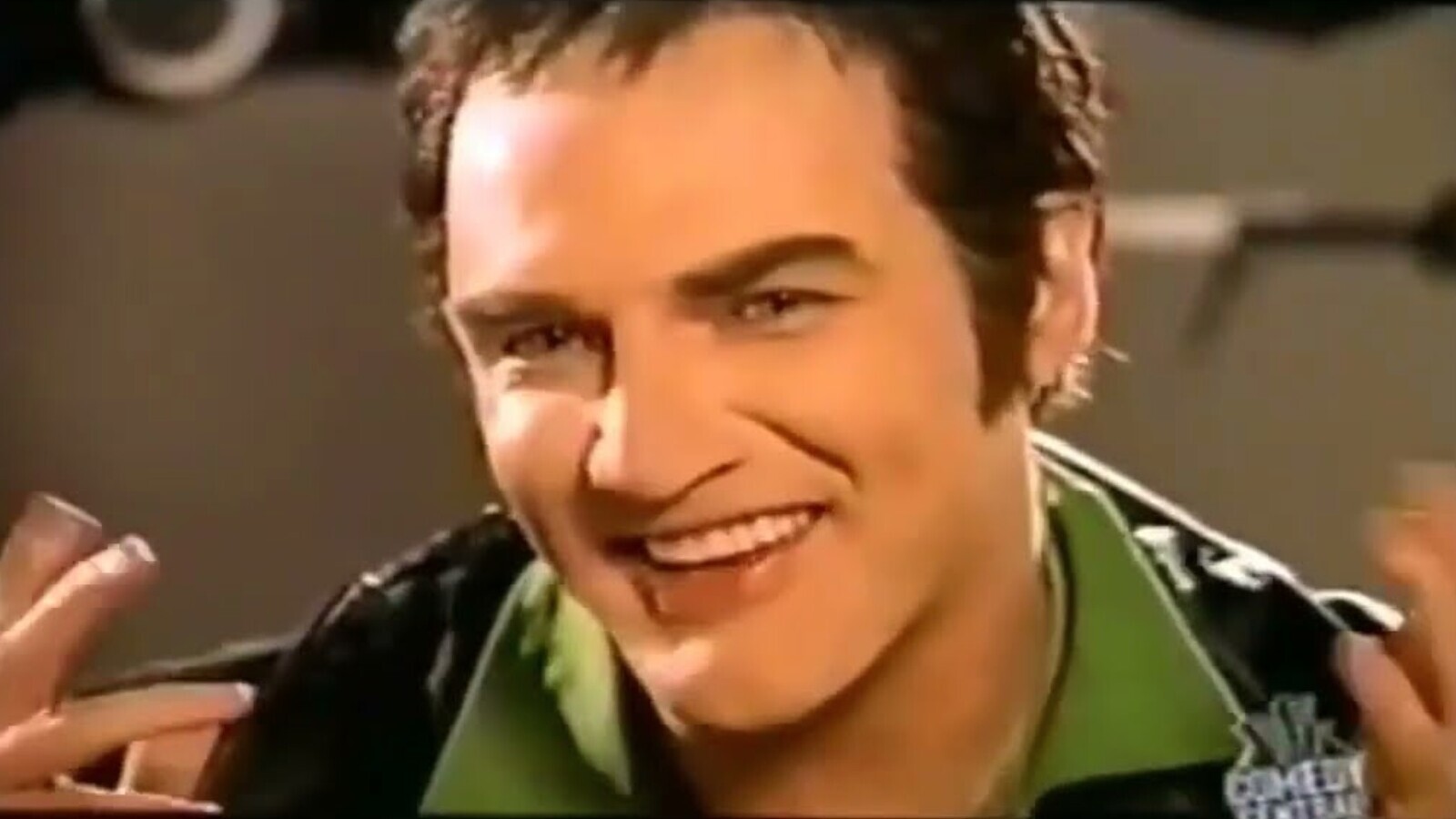
Note: This article discusses a fan theory, not a proven personal feud. Publicly available information suggests Norm Macdonald admired Quentin Tarantino’s work, even if his impression was so sharp it looked like a comedy crime scene.
Why This Odd Comedy Theory Keeps Coming Back
Every so often, the internet digs up an old comedy clip, squints at it like a detective in a raincoat, and decides it has discovered a hidden emotional truth. That is exactly what happened with Norm Macdonald’s Quentin Tarantino impression. Some Norm Macdonald fans are positive that he absolutely hated Quentin Tarantino, mostly because the impression is not merely accurate. It is surgical. It captures the rapid-fire talking, the restless head movements, the movie-obsessed excitement, the slightly chaotic charm, and the sense that Tarantino might explain a cheeseburger for 45 minutes and somehow make you want to hear hour two.
The theory is funny because it sounds plausible at first. Macdonald was famous for a dry, deadpan style that could make admiration sound like contempt and contempt sound like a bedtime story. He had a gift for appearing detached while doing something extremely specific. When he impersonated Tarantino on Saturday Night Live, he did not just throw on a wig and say “Pulp Fiction” in a funny voice. He built a whole comic machine out of Tarantino’s rhythms, gestures, and cultural reputation.
But the more interesting question is not whether Norm Macdonald truly hated Quentin Tarantino. There is no strong public evidence that he did. The better question is why the impression feels so pointed that fans keep reading it as personal. The answer says a lot about Macdonald’s comedy, Tarantino’s public persona, and the internet’s favorite hobby: turning a joke into a courtroom exhibit.
The SNL Sketch That Started the Suspicion
The clip that fuels the fan theory comes from the January 10, 1998 episode of Saturday Night Live, hosted by Samuel L. Jackson with musical guest Ben Folds Five. In the pre-taped sketch often remembered as “Quentin Tarantino: A Profile,” Macdonald plays Tarantino presenting fake screen tests for Pulp Fiction. The setup is already a perfect SNL idea: take one of the most influential movies of the 1990s and imagine absurd celebrity auditions for its famous roles.
Macdonald’s Tarantino impression lands because it is not broad in the usual sketch-comedy way. He does not reduce Tarantino to one obvious catchphrase. Instead, he exaggerates the director’s speed, enthusiasm, posture, and verbal clutter. The joke is not simply “Quentin Tarantino talks a lot.” The joke is that Tarantino talks as if every sentence is sprinting away from the previous sentence, and Macdonald somehow runs beside it wearing loafers.
Fans watching the clip decades later often say the same thing: Norm had the mannerisms. The voice was close, but the body language is what made people lean forward. The little movements. The head bobbing. The odd bursts of intensity. The slightly nerdy confidence of a filmmaker who had gone from video-store obsessive to Hollywood tastemaker in just a few years. Macdonald caught the whole package, and that level of precision can look suspiciously like either deep affection or deep irritation.
Did Norm Macdonald Actually Hate Quentin Tarantino?
The simple answer is: probably not. At least, there is no reliable public record showing that Norm Macdonald had a genuine dislike for Quentin Tarantino. In fact, the record points in the other direction. Macdonald spoke warmly about Tarantino’s cool factor and praised Pulp Fiction, which he described as a favorite. That does not sound like a man grinding his teeth in the dark while whispering “Reservoir Dogs” into a pillow.
So why do fans insist there was hatred behind the impression? Because Macdonald’s comedy often turned affection into a roast and a roast into affection. He was not the kind of performer who signaled, “Don’t worry, everyone, this is friendly.” His tone was often so flat that audiences had to do the emotional math themselves. That was part of the thrill. Was he joking? Was he annoyed? Was he bored? Was he secretly delighted? With Norm, the answer was often yes.
His Tarantino impression works the same way. It is mean enough to feel dangerous, accurate enough to feel earned, and silly enough to avoid becoming cruel. That is a hard balance. A weaker comedian might have made Tarantino into a shouting cartoon. Macdonald made him into a person you recognize, then tilted the mirror just enough to make the reflection hilarious.
Why the Impression Feels So Brutal
1. It Targets Tarantino’s Most Famous Public Traits
Quentin Tarantino has always had a highly recognizable public persona. Long before podcasts and viral interviews made every filmmaker into a content machine, Tarantino was already a talk-show event. He spoke quickly, enthusiastically, and with the energy of someone trying to explain ten movie references before the commercial break. His films, especially Reservoir Dogs, Pulp Fiction, and Jackie Brown, made him one of the defining directors of the 1990s.
That made him ideal material for parody. A great impression usually needs recognizable hooks: a voice, a posture, a rhythm, a worldview. Tarantino had all four. Macdonald understood that the funniest version of Tarantino was not a monster or a fool. It was a man so excited about movies that his own body could barely keep up with the commentary.
2. Norm’s Comedy Rarely Winked at the Audience
Many comedians soften impressions with obvious affection. They smile, wink, or make the imitation so absurd that nobody could mistake it for hostility. Macdonald did not need that safety net. He often delivered jokes as if he had just found them on the floor and was mildly disappointed in them. That gave his comedy a strangely aggressive calm.
When applied to Tarantino, that calm becomes deadly funny. Macdonald does not beg the audience to laugh. He simply becomes this twitchy, talkative version of the director and lets the awkwardness breathe. For viewers who love Norm’s style, that restraint is the whole joke. For viewers trying to diagnose his feelings, it looks like evidence.
3. The Impression Is Too Good to Feel Casual
People often assume that a devastating impression must come from obsession. Sometimes that obsession is admiration. Sometimes it is annoyance. With Macdonald, it may have been both, but in the ordinary artistic sense: he noticed what was funny. That is not hatred. That is craft.
Norm Macdonald’s Brand of Comic Precision
Norm Macdonald was best known as a stand-up comedian, writer, and Saturday Night Live cast member. His time anchoring “Weekend Update” helped define his reputation: dry delivery, dark jokes, strange pauses, and a willingness to let silence become part of the punchline. He could make a joke funnier by seeming less interested in whether anyone laughed.
That style matters when talking about the Tarantino impression. Macdonald was not an impressionist in the hyper-polished, Las Vegas showroom sense. He was not trying to disappear completely into another person. His impressions were filtered through the Norm machine. Burt Reynolds became a swaggering rascal. Larry King became a set of odd rhythms. Bob Dole became a comic structure. Tarantino became a film-school volcano wearing human clothes.
The result was less “Here is exactly Quentin Tarantino” and more “Here is what Quentin Tarantino feels like after Norm Macdonald has stared at him for a while.” That is why the sketch keeps traveling online. It captures not only a person, but the cultural mood around that person.
Why Tarantino Was Such a Perfect Target in the 1990s
To understand the joke, you have to remember how large Tarantino loomed in the 1990s. Reservoir Dogs made him a cult name. Pulp Fiction made him a phenomenon. The film’s nonlinear storytelling, pop-culture-heavy dialogue, stylized violence, and unforgettable performances turned it into one of the decade’s defining movies. It won the Academy Award for original screenplay and made Tarantino a symbol of the new indie-film cool.
By the time SNL parodied him, Tarantino was not just a director. He was a type. Suddenly every young writer with a diner scene, a gun, and a soundtrack thought he had reinvented cinema. Tarantino’s influence was everywhere, which made him both admired and easy to tease. That is the sweet spot for parody. People have to know the target well enough to recognize the details, but the target has to be big enough that poking fun feels fair.
Macdonald’s impression understood that Tarantino was not boring. The joke works because Tarantino himself is vivid. A dull public figure cannot be parodied this well. You need color, motion, rhythm, and a little excess. Tarantino had plenty. Norm simply held up a magnifying glass and, because he was Norm, somehow made the magnifying glass look sarcastic.
The Fan Theory Says More About Fans Than About Norm
The idea that Norm Macdonald hated Quentin Tarantino is less a biography than a fan reading. It is comedy criticism in meme form. Viewers see the precision of the impression and interpret it emotionally. Some say, “He must have loved Tarantino to study him that closely.” Others say, “No one goes that hard unless there is real contempt.” Both readings can feel convincing because great parody often contains both warmth and violence.
The internet also loves hidden motives. A joke is rarely allowed to remain just a joke. It becomes a clue, then a theory, then a confident declaration typed by someone named “FilmGoblin1978” who has watched the clip nine times and now considers himself a legal witness. This is part of the fun. Fans are not always trying to be historians. Sometimes they are building a mythology around a performer they miss.
That is especially true with Macdonald. Since his death in 2021, clips of his talk-show appearances, stand-up sets, interviews, and SNL sketches have circulated constantly. Fans revisit them not only for laughs, but for the pleasure of decoding him. Norm’s persona invites that. He often seemed to be hiding the real joke behind the visible joke. When a performer makes ambiguity part of the act, fans will keep searching for secret meanings.
What Recent Tarantino Controversies Added to the Conversation
The fan theory gained extra energy because Tarantino himself remains a magnet for debate. In recent years, he has continued to make headlines for blunt opinions about movies, actors, and the state of cinema. His public criticism of actors such as Paul Dano, Owen Wilson, and Matthew Lillard sparked backlash, with fans and industry voices defending the performers. Tarantino has never been shy about strong opinions, which is one reason people both admire and argue with him.
That modern context changes how old clips are received. A 1998 impression can suddenly feel like a prophecy when the person being parodied is again at the center of a heated online conversation. Viewers watch Norm’s Tarantino and think, “He saw it all along.” But that is hindsight wearing a fake mustache. Macdonald was parodying the Tarantino of the 1990s: the fast-talking auteur, the pop-culture preacher, the director whose personality was nearly as recognizable as his films.
Still, the connection is irresistible. Tarantino’s confidence and Macdonald’s deadpan skepticism make a perfect imaginary rivalry. One man talks like cinema is a holy war. The other talks like he wandered into the room looking for a sandwich and accidentally destroyed everyone’s ego.
Admiration and Mockery Can Live in the Same Joke
The mistake in the “Norm hated Tarantino” theory is assuming that mockery and admiration cannot coexist. Comedy is often built from affectionate exaggeration. You can love someone’s work and still find their habits hilarious. In fact, the things we love most are often the easiest to imitate because we have paid attention.
Macdonald’s comments about liking Pulp Fiction suggest he was not coming from a place of pure dislike. But his impression also shows that admiration does not require politeness. A comic can admire a filmmaker and still notice that the filmmaker talks like a man trying to outrun his own DVD commentary. That is not hatred. That is a punchline with homework.
Good parody is rarely neutral. It has teeth. Without teeth, it becomes cosplay. Norm’s Tarantino had teeth, but it also had knowledge. He knew what made the director funny as a public figure. He knew what audiences recognized. Most importantly, he knew when to stop explaining and let the impression do the work.
Why the Clip Still Works Decades Later
The clip survives because it is not dependent on a single topical reference. Yes, it belongs to the era when Pulp Fiction was still fresh enough to parody as a current cultural force. But the core joke remains understandable: Quentin Tarantino has a distinct style, and Norm Macdonald could compress that style into a few seconds of comic behavior.
It also survives because both men remain culturally relevant. Tarantino’s filmography continues to inspire debate, rankings, screenings, podcasts, and arguments that begin politely and end with someone yelling about Jackie Brown. Macdonald’s comedy continues to grow online because his timing feels strangely modern. His anti-slick delivery fits the internet better than many comedians who were more famous in traditional television formats.
Together, they create a perfect clip for modern fandom: recognizable celebrity, brilliant impression, uncertain emotional subtext, and just enough ambiguity for everyone to argue. That is internet gasoline.
Experiences and Reflections: Watching the Norm-Tarantino Theory Spread
One of the funniest experiences related to this topic is watching people encounter the impression for the first time. The reaction usually comes in stages. First, they laugh because Norm looks ridiculous. Then they realize the voice is closer than expected. Then they notice the head movement, and the room changes. Suddenly everyone becomes a body-language expert. Someone pauses the video. Someone says, “Wait, he really got him.” Another person says, “This is not an impression; this is a psychological profile.” At that point, the clip has won.
That is the charm of old comedy resurfacing online. It no longer arrives as part of a full SNL episode watched late on a Saturday night. It arrives as a short clip, detached from its original context, ready to be judged like a newly discovered artifact. A viewer in 2026 may not remember the exact temperature of Tarantino’s fame in 1998. They may not know that Samuel L. Jackson hosted the episode or that Jackie Brown had recently added another chapter to Tarantino’s career. They simply see Norm Macdonald doing something weirdly precise and decide there must be a story behind it.
For longtime Norm fans, the experience is different. They recognize the pattern. Norm could make praise sound like an insult and an insult sound like a compliment accidentally dropped down a flight of stairs. His comedy often refused to tell you how to feel. That is why the Tarantino impression feels alive. It is not sealed in one meaning. It can be read as admiration, mockery, irritation, affection, or simply a comedian noticing a funny thing and refusing to sand down the edges.
There is also something relatable about the way fans build these theories. Everyone has done a private impression of someone they find fascinating or mildly unbearable. A teacher with a dramatic sigh. A boss who says “circle back” as if summoning a demon. A friend who tells stories with three prologues and no ending. Sometimes the impression comes from love. Sometimes it comes from annoyance. Usually, it comes from attention. Norm’s Tarantino impression feels powerful because it comes from attention so intense that viewers mistake it for emotional evidence.
The best way to enjoy the theory is not to treat it as fact, but as part of the joke’s afterlife. Maybe Norm admired Tarantino. Maybe he found him funny. Maybe he thought Pulp Fiction was great and also thought Tarantino’s interview style was a gift from the comedy gods. Those ideas can all be true at once. The internet wants a verdict: love or hate. Norm’s comedy, thankfully, was never that tidy. It lived in the uncomfortable middle, where a man could imitate another man so perfectly that decades later people still ask, “Was that a tribute or a hit job?” And somewhere, you suspect, Norm would enjoy that question more than any answer.
Conclusion
So, did Norm Macdonald absolutely hate Quentin Tarantino? The evidence says no. The comedy says maybe, but only because comedy is a liar with excellent timing. What fans are really responding to is the sharpness of Macdonald’s observation. His Tarantino impression is funny because it is specific, fearless, and just mean enough to feel honest. It captures a filmmaker whose personality was already cinematic and filters him through a comedian whose greatest weapon was uncertainty.
That is why the theory keeps circulating. It gives fans another way to celebrate Norm Macdonald’s genius while laughing at Quentin Tarantino’s larger-than-life persona. The real story is not hatred. It is craft. And in classic Norm fashion, the funniest answer is the one that refuses to explain itself too neatly.