Note: This article keeps the original headline topic but reflects the latest public context: Russia’s planned 2024 flight of its new heavy bomber, widely associated with the PAK DA program, has not been publicly confirmed as a completed milestone.
Russia’s New Heavy Bomber: Big Promise, Bigger Questions
Russia has spent years promising a new heavy bomber that would carry its long-range aviation force into the future. The aircraft is commonly known as the PAK DA, short for a Russian phrase meaning “prospective aviation complex for long-range aviation.” In less polite English, that translates roughly to “the bomber that has been coming soon for a very long time.”
The headline claim that Russia planned to fly a new heavy bomber in 2024 refers to expectations surrounding the PAK DA’s first test flight. The aircraft was described as a next-generation strategic bomber intended to complement and eventually replace aging Soviet-era aircraft such as the Tu-95 “Bear” and, over time, reduce dependence on modernized Tu-160 “Blackjack” bombers.
On paper, the idea makes sense. Russia’s bomber fleet is old, expensive to maintain, and increasingly vulnerable in a world of long-range sensors, drones, precision missiles, and modern air defenses. A stealthier, long-range bomber would give Moscow a more survivable platform for nuclear deterrence and conventional cruise missile strikes. But aviation history has a wicked sense of humor: the more futuristic an aircraft looks in official statements, the more likely it is to spend years living mostly in PowerPoint, wind tunnels, and carefully worded press releases.
What Is the PAK DA?
The PAK DA is Russia’s proposed next-generation heavy bomber. It is expected to be a subsonic, long-range, stealth-focused aircraft with a flying-wing design, somewhat conceptually similar to the U.S. B-2 Spirit and B-21 Raider. That does not mean it is a copy, but it does suggest Russia is moving away from the Cold War obsession with raw speed and toward the modern bomber formula: fly far, stay hard to detect, launch weapons from distance, and avoid becoming a very expensive radar blip.
A Different Philosophy From the Tu-160
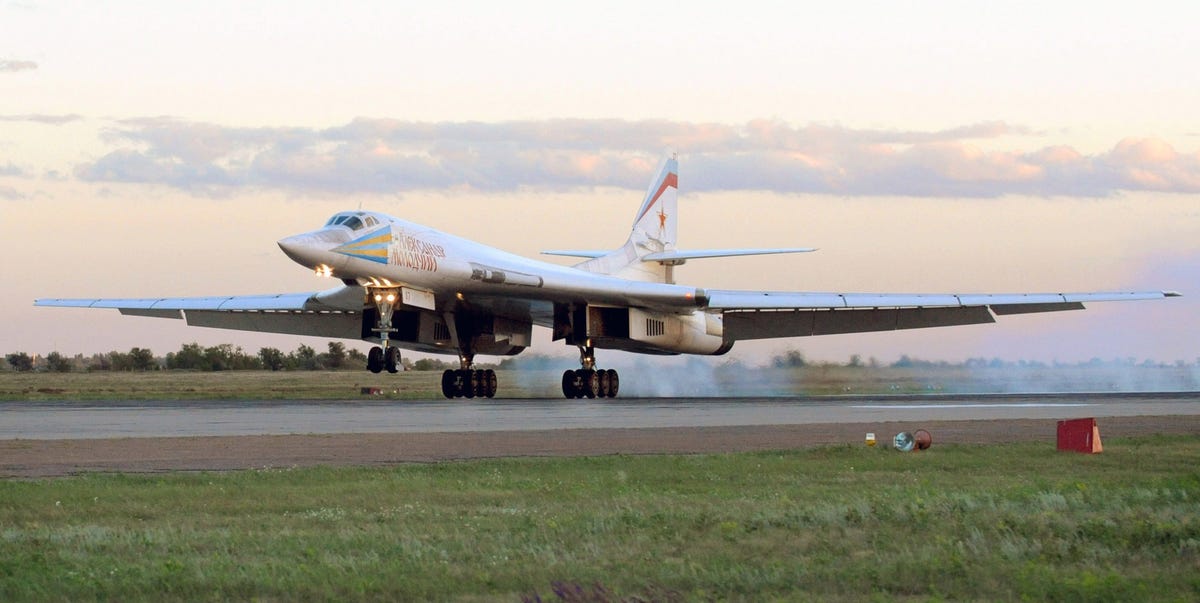
The Tu-160 is huge, fast, loud, and dramatic. It is the kind of aircraft that looks as if it should enter the runway with theme music. The PAK DA is expected to take a different approach. Instead of relying on supersonic dash speed, it would emphasize lower radar visibility, fuel efficiency, internal weapons carriage, and long-duration missions.
This matters because modern strategic bombers are not simply “big planes that drop big things.” They are flying nodes in a much larger system involving satellites, command networks, electronic warfare, long-range missiles, aerial refueling, and nuclear command-and-control. A bomber’s value is not only in what it carries, but in whether it can survive long enough to matter.
Why Russia Wanted a 2024 Flight
A first flight in 2024 would have been politically useful and militarily symbolic. It would have shown that Russia could still design and build a modern strategic aircraft despite sanctions, wartime pressure, and the long shadow of Soviet-era manufacturing. It also would have signaled that Moscow’s long-range aviation branch had a credible path beyond upgraded legacy aircraft.
For Russia, timing was especially important. The United States had already unveiled the B-21 Raider, a new stealth bomber designed to replace portions of the B-1 and B-2 fleets while working alongside the B-52. China has also been associated with development of a next-generation bomber, often discussed under the H-20 name. In that environment, Russia did not want to look like the only major military power arriving at the stealth bomber party after the snacks were gone.
The Problem: Planning a Flight Is Not the Same as Flying
Military aviation programs often live in the gap between “scheduled” and “achieved.” A planned first flight can slip because of engines, avionics, materials, software, structural testing, funding, or politics. In the PAK DA’s case, public reporting has repeatedly pointed to delays, shifting timelines, and uncertainty over whether Russia’s defense industry can move from component production to a flying prototype on schedule.
As of the latest public information, there has been no widely verified confirmation that the PAK DA completed a first flight in 2024. Later reporting and analysis have suggested state testing and production goals moved beyond that date. That does not prove the program is dead, but it does mean readers should treat the 2024 flight claim as an ambition rather than a confirmed accomplishment.
Why the PAK DA Matters to Russia’s Bomber Fleet
Russia’s long-range aviation force still relies heavily on aircraft with Soviet roots. The Tu-95 is a turboprop strategic bomber with a distinctive sound and a very long service history. The Tu-160 is faster and more modern in appearance, but its original design also dates to the Soviet period. Russia has upgraded these aircraft, added new weapons, and restarted or continued limited Tu-160M production efforts, but modernization is not the same as a clean-sheet future.
The PAK DA is meant to solve several problems at once. It could provide a stealthier platform, carry modern cruise missiles, reduce reliance on old airframes, and preserve Russia’s status as a country with a full nuclear triad: land-based missiles, submarine-launched missiles, and strategic bombers. That triad is central to Moscow’s defense identity. In simple terms, Russia likes having multiple ways to say, “Please do not test us.”
The Tu-95 Replacement Challenge
The Tu-95 has endured because it does its job: carrying long-range missiles over great distances. But old aircraft require intense maintenance, and there are limits to how long any airframe can be stretched, patched, upgraded, and lovingly threatened with a wrench. Replacing such aircraft is not easy because strategic bombers are among the most complex machines a country can build.
A successful PAK DA would give Russia a modern successor. A delayed PAK DA means Russia must keep squeezing capability from aircraft designed in a very different technological era.
Design Expectations: Stealth, Range, and Heavy Payload
Most public descriptions of the PAK DA point to a flying-wing layout. This type of design can reduce radar signature by smoothing the aircraft’s shape and minimizing vertical surfaces. It can also offer internal volume for fuel and weapons. The tradeoff is complexity: flying wings require advanced flight-control systems, careful aerodynamic design, and precise manufacturing.
The aircraft is expected to be subsonic, which may sound less exciting than “supersonic,” but excitement is not always the mission. Subsonic aircraft can be more fuel-efficient, easier to optimize for stealth, and better suited to long patrols. In the strategic bomber world, sneaky and patient often beats fast and flashy.
What Weapons Could It Carry?
The PAK DA is expected to carry long-range cruise missiles and potentially future hypersonic or advanced standoff weapons. The main point is that it would not necessarily need to fly directly over a target. Modern bombers increasingly act as missile trucks with wings, launching precision weapons from outside the densest air-defense zones.
This is one reason the bomber remains relevant in the missile age. Ballistic missiles are fast, but bombers are flexible. They can be launched, recalled, repositioned, signaled publicly, or held in reserve. In a crisis, that flexibility can be strategically valuable.
Sanctions and Supply Chains: The Invisible Headwind
Building a stealth bomber is hard in normal conditions. Building one while under heavy sanctions is like assembling a Swiss watch during an earthquake while someone keeps hiding the screwdrivers. Russia’s defense industry has experience improvising around restrictions, but advanced aircraft require specialized electronics, materials, machine tools, coatings, sensors, and manufacturing processes.
Western sanctions imposed after Russia’s invasion of Ukraine have increased pressure on Russian aerospace production. Even when an aircraft is advertised as domestically sourced, supply-chain reality can be more complicated. Components, production equipment, and industrial expertise often depend on global networks. A shortage in one small area can slow an entire program.
The Ukraine War Changed the Bomber Conversation
The war in Ukraine has made Russia’s bomber force both more important and more exposed. Russian long-range bombers have launched cruise missiles against Ukrainian targets, often from far outside Ukrainian airspace. At the same time, attacks on Russian air bases have shown that large aircraft parked on the ground are vulnerable, even deep inside Russian territory.
This creates a strategic headache. A bomber is valuable because it can project power over long distances. But when aircraft are expensive, scarce, and difficult to replace, every damaged airframe hurts. A new bomber program like the PAK DA becomes more urgentbut urgency does not automatically create factory capacity, trained workers, stealth materials, or reliable engines.
How the PAK DA Compares With America’s B-21 Raider
The U.S. B-21 Raider provides the most obvious comparison. Like the expected PAK DA, the B-21 is a stealth bomber designed for long-range missions and both conventional and nuclear roles. Unlike the PAK DA, the B-21 has been publicly unveiled and has entered flight testing. That difference matters.
The comparison is not only about technology. It is about program execution. The United States has its own defense acquisition headaches, and nobody should pretend American aircraft programs are magically free of cost overruns or delays. Still, the B-21 demonstrates that a next-generation stealth bomber can move from concept to visible aircraft. Russia’s PAK DA still has to prove that it can make the same leap.
Could Russia Still Build It?
Yes, Russia could still build the PAK DA. It has a deep aviation tradition, experienced design bureaus, and a strategic reason to keep the program alive. The country has produced advanced aircraft, missiles, and air-defense systems under difficult conditions before. Writing off Russian aerospace engineering entirely would be lazy analysis.
However, building one prototype is not the same as producing a reliable operational fleet. The bigger question is not, “Can Russia eventually fly a PAK DA?” The better question is, “Can Russia build enough of them, afford them, maintain them, train crews for them, integrate them with weapons and command systems, and protect them on the ground?” That is where the story gets much more complicated.
Why Heavy Bombers Still Matter
Some readers may wonder why countries still bother with heavy bombers when missiles exist. The answer is flexibility. A missile is mostly a one-way message. A bomber is a reusable tool that can patrol, signal, threaten, withdraw, or strike. It can carry different weapons for different missions and adapt to changing orders.
Heavy bombers also serve political purposes. When a country sends bombers near an adversary’s airspace, it is making a statement without necessarily firing a shot. These flights are part military training, part diplomacy, and part very expensive theater. The aircraft may carry missiles, but the message often arrives first.
Experience Section: What the PAK DA Story Teaches Aviation Watchers
Following the PAK DA story is a useful lesson in how to read military technology news without getting dizzy. The first experience many readers have with programs like this is excitement. A headline says a new heavy bomber may fly soon, the artwork looks dramatic, and suddenly the internet is filled with confident claims. The aircraft is stealthy. It is powerful. It is revolutionary. It may also, inconveniently, not exist yet in flying form.
The second experience is learning to separate official ambition from operational reality. Governments announce timelines for many reasons. Sometimes they are giving a real progress update. Sometimes they are motivating industry. Sometimes they are signaling strength to rivals. Sometimes they are feeding patriotic media. A planned 2024 flight sounds precise, but precision in a headline does not guarantee precision in a factory.
The third experience is understanding that delays are normal in advanced aviation. The B-2, F-35, Su-57, B-21, and many other programs all show that cutting-edge aircraft development is rarely smooth. Stealth shaping, engines, radar-absorbent materials, software, weapons integration, and testing can each become a swamp. Add sanctions, war demands, and budget pressure, and the swamp grows teeth.
The fourth experience is noticing how old platforms remain relevant. The Tu-95 looks like a Cold War museum exhibit that escaped its velvet rope, yet it still carries modern missiles. The Tu-160 looks more futuristic, but it too depends on modernization to remain useful. This is common in military aviation. Old aircraft can stay dangerous if their sensors, weapons, and mission systems are updated. The airframe may be vintage; the missile under the wing is not.
The fifth experience is humility. Public observers rarely see the full picture. Classified programs hide failures and successes alike. A lack of public evidence does not always mean nothing is happening. At the same time, secrecy can also cover delay, shortage, or embarrassment. The safest approach is to watch confirmed milestones: rollout, taxi tests, first flight, state trials, production contracts, unit deliveries, and operational deployment. Until then, every “coming soon” should be handled with oven mitts.
For readers, the PAK DA is less a simple story about one bomber and more a window into modern military power. It shows how technology, economics, sanctions, war, prestige, and deterrence all meet on the runway. Or, in this case, near the runway, waiting for a first flight that has been discussed far more than it has been seen.
Conclusion: A Bomber Program Still Waiting for Liftoff
Russia’s plan to fly a new heavy bomber in 2024 was an important marker in the long-running PAK DA story. If achieved, it would have suggested that Moscow’s next-generation bomber had finally moved from development rumor to flying hardware. But public evidence has not confirmed that such a flight occurred in 2024, and later assessments point to continued delays.
The PAK DA still matters because Russia needs a long-term answer to its aging bomber fleet. The aircraft promises stealth, range, payload, and a modern role in Russia’s nuclear and conventional strike posture. Yet the gap between promise and production remains wide. Heavy bombers are not built by slogans. They require money, materials, engines, testing, skilled labor, and timelots of time.
So the best reading is this: Russia wants the PAK DA, needs the PAK DA, and continues to discuss the PAK DA as a future pillar of long-range aviation. But until a prototype flies publicly and moves through testing, the new heavy bomber remains a powerful symbol wrapped in uncertainty. In aviation, the runway is where ambition meets gravity. Gravity, as usual, is not impressed by press releases.