Some chairs politely do their job. Others enter the room, quietly adjust the lighting, improve everyone’s posture, and somehow make the coffee taste more expensive. PP 503 The Chair, 1950, designed by Danish master Hans J. Wegner, belongs in the second category. Known simply as The Chair in the United States and as The Round Chair in Denmark, this mid-century modern icon proves that a piece of furniture does not need to shout to become unforgettable. It only needs perfect proportions, honest materials, and a backrest so beautifully curved it looks like a handshake between wood and air.
The PP503 is the upholstered-seat version of Wegner’s famous Round Chair. The original cane-seat version appeared in 1949, while the refined upholstered version followed in 1950. That small timeline detail matters because the PP503 represents a design evolution: the chair became cleaner, smoother, and more formal without losing the warmth that made it human. In other words, Wegner did not redesign the chair to make it louder. He redesigned it to make it more inevitable.
What Is PP 503 The Chair?
PP 503 The Chair is a wooden armchair with an upholstered seat, a sculptural semicircular back, and arms that appear to wrap gently around the sitter. The design is associated with Hans J. Wegner, one of the most important figures in Danish modern furniture. Today, the chair is produced by PP Møbler, a Danish workshop known for preserving demanding cabinetmaking traditions.
The chair is closely related to the PP501, which has a woven cane seat. The PP503, by contrast, features upholstery, often in leather or fabric. This change gives the chair a slightly more formal character, making it especially suitable for dining rooms, executive offices, galleries, and interiors where elegance is preferred over visual fuss. It is the sort of chair that can sit at a table, in a boardroom, or beside a reading lamp and never look as though it wandered into the wrong party.
The Design History: From Round Chair to “The Chair”
Hans Wegner first presented the Round Chair at the Copenhagen Cabinetmakers’ Guild Exhibition in 1949. At the time, Danish furniture was beginning to move from local cabinetmaker culture into international modern design. Wegner was already respected, but this chair helped push his reputation far beyond Denmark.
The chair was originally produced by Johannes Hansen, a Copenhagen cabinetmaker whose workshop collaborated with Wegner on several important designs. In early catalogues, the cane version was known as JH501, while the upholstered version became JH503. After Johannes Hansen’s company closed, PP Møbler eventually resumed production, and the chair became known through the PP501 and PP503 model numbers.
Its American nickname, The Chair, came from its international reception. That name sounds almost comically simple, but it is also a compliment. To call a design “The Chair” suggests that it has somehow distilled the idea of seating into its purest form. No extra ornament. No theatrical gimmick. Just a confident structure, generous curves, and a silhouette that refuses to expire.
Why the PP503 Became a Mid-Century Modern Icon
The PP503 became famous because it captures the essence of Danish modern design: simplicity, craftsmanship, function, and warmth. Unlike some modern furniture that feels as if it was designed to impress a geometry professor, Wegner’s chair feels practical and alive. It has clean lines, but it does not feel cold. It is minimal, but not empty. It is refined, but still friendly enough to host dinner.
The magic is in the curved back and arms. From the front, the chair appears calm and symmetrical. From the side, it reveals a quiet sense of movement. The top rail forms a continuous arc that supports the back and transitions into the arms. It looks effortless, but the construction is anything but easy. Each curve must be shaped, joined, sanded, and balanced with enormous precision. This is where the chair earns its reputation: it looks simple because the difficult work has been hidden in plain sight.
The Beauty of the Semicircular Back
The most recognizable feature of the PP503 is its rounded back rail. It gives the chair its nickname, The Round Chair, and creates the feeling that the seat is gently embracing the person using it. This curve is not merely decorative. It supports the body, defines the chair’s silhouette, and shows Wegner’s gift for combining engineering with grace.
Many chairs have arms and backs. The PP503 has a unified gesture. That distinction is important. Instead of assembling unrelated parts, Wegner made the chair feel like one continuous thought. The back and arms do not compete; they cooperate. The result is a chair that looks calm from every angle, which is one reason designers still admire it more than seven decades later.
Joinery That Deserves Its Own Applause
The PP503 is often praised for its visible joinery, especially the refined connection between the back rail and the arms. In the 1950 upholstered version, the construction became cleaner than the earlier cane-wrapped version. The exposed wood connections became part of the design language, proving that structure could be beautiful without disguise.
Wegner’s genius was not only in drawing elegant shapes. He understood how wood behaves. He knew grain direction, strength, tension, and touch. A chair is not a sculpture you sit near; it is a working object that must survive weight, movement, climate, and time. The PP503 balances all of this with unusual poise.
Materials, Dimensions, and Finishes
The PP503 is typically offered in high-quality woods such as oak, ash, cherry, and walnut, depending on production options. Finishes may include soap treatment, oil, lacquer, or other carefully selected surface treatments. The upholstered seat can be specified in leather or fabric, giving the chair flexibility for different interiors.
Typical dimensions are approximately 63 cm wide, 52 cm deep, and 76 cm high, with a seat height around 45 cm. In American measurements, that makes it compact enough for dining use but generous enough to feel substantial. The chair is not bulky, yet it has presence. It does not need oversized proportions to feel important; it has good manners and excellent tailoring.
PP501 vs. PP503: What Is the Difference?
The PP501 and PP503 are siblings, not strangers. The PP501 usually refers to the version with a cane seat. It feels lighter, more transparent, and slightly more casual. The PP503 has an upholstered seat, which gives it a richer, more formal appearance. If the PP501 is the breezy linen shirt of the family, the PP503 is the perfectly fitted blazer.
Both versions share the same essential design idea: a rounded wooden frame, elegant arms, and careful proportions. The decision between them often comes down to lifestyle and interior mood. Cane has a beautiful natural texture, but it requires care and can be delicate over time. Upholstery offers comfort, color choices, and a more tailored look. For dining rooms that need a touch of ceremony, PP503 is often the more practical and luxurious choice.
The Kennedy-Nixon Debate and American Fame
One reason The Chair became legendary in the United States is its connection to the first televised U.S. presidential debate between John F. Kennedy and Richard Nixon in 1960. Both candidates sat in Wegner’s chairs during the broadcast, placing Danish modern design directly in front of millions of American viewers.
That moment gave the chair a cultural afterlife. It was no longer only a masterpiece of Scandinavian craftsmanship; it became part of television history and political imagery. Of course, the chair did not win the debate. Chairs are influential, but they do not run campaign strategy. Still, its presence communicated confidence, restraint, and modernity. In a studio filled with cameras and national tension, The Chair looked calm. That may be the most Danish thing imaginable.
How PP503 Fits Into Danish Modern Design
Danish modern design is often described through words like “simple,” “functional,” and “organic.” Those words are accurate, but they can become bland if repeated too often. The PP503 gives those ideas real substance. It shows simplicity as discipline, not laziness. It shows function as comfort, not dullness. It shows organic form as a carefully edited curve, not a random wiggle.
Wegner belonged to a generation of Danish designers who respected traditional craftsmanship while embracing modern living. The goal was not to erase the past, but to refine it. The PP503 feels traditional in its woodwork and modern in its clarity. It has the soul of a cabinetmaker’s workshop and the silhouette of a design museum object.
Why Collectors Still Value the PP503
Collectors appreciate the PP503 because it offers rarity, historical importance, and everyday usability. Vintage examples by Johannes Hansen are highly sought after, especially when they retain original stamps, strong provenance, and well-preserved frames. Contemporary versions by PP Møbler are also valued because they continue the demanding production standards associated with the design.
Unlike trend-based furniture, the PP503 has a stable design identity. It does not rely on seasonal colors, fashionable curves, or novelty materials. Its value comes from proportion, construction, and history. This makes it attractive not only to collectors but also to architects, interior designers, and homeowners who want furniture that will still look intelligent in twenty years.
How to Style PP 503 The Chair in a Modern Home
The PP503 works beautifully in a dining room, especially around a wood, stone, or minimalist table. In oak or ash, it can soften a bright modern space. In walnut or darker wood, it brings richness and authority. With black leather, it becomes crisp and architectural. With warm brown leather, it feels more relaxed and library-like, as if it might recommend a good novel after dessert.
In a home office, the chair can serve as a guest chair or statement piece. It is not a rolling task chair, and it does not pretend to be one. Instead, it adds dignity to the room. In a living area, a single PP503 can work as an accent chair beside a low table or bookshelf. The key is to give it breathing space. This is not a chair that should be buried under laundry, although admittedly it would make even laundry look better.
Comfort and Everyday Use
The PP503 is admired for comfort because its proportions are carefully tuned. The curved back supports the sitter, while the arm height encourages a relaxed posture. The upholstered seat adds softness without turning the chair into a cushion fortress. It is still a dining or occasional armchair, not a lounge chair, so expectations should be realistic. You may not nap in it for three hours, but you can enjoy a long dinner without secretly plotting your escape.
For everyday use, the chair suits people who appreciate tactile materials and careful details. The wood invites touch. The seat feels tailored. The whole object has a quiet confidence that improves with age, especially when maintained properly.
Care and Maintenance Tips
Because PP503 is made from natural materials, care matters. Avoid placing it in direct sunlight for long periods, as strong light can fade upholstery and affect wood tone. Keep it away from extreme humidity or dry heat. Clean the wood with appropriate products based on the finish, and treat leather or fabric according to the manufacturer’s recommendations.
Most importantly, respect the joinery. Do not drag the chair aggressively across rough floors. Use felt pads if needed. Lift it when moving it. A chair like this is built to last, but “built to last” does not mean “built to survive being treated like gym equipment.” Good furniture rewards good manners.
Is PP503 Worth It?
For buyers who want inexpensive seating, the PP503 is not the practical choice. For those who value design history, craftsmanship, and long-term beauty, it can be deeply worthwhile. This is not fast furniture. It is closer to an heirloom object that happens to be useful every day.
The best argument for the PP503 is that it has already passed the hardest test in design: time. Many chairs from the 1950s look charming because they are old. The PP503 looks current because it was resolved so completely in the first place. It belongs to 1950, but it is not trapped there.
Experiences Related to PP 503 The Chair, 1950
Experiencing the PP503 in person is different from viewing it in photographs. Online images show the famous curve, but they rarely communicate the chair’s tactile intelligence. When you stand beside it, the first thing you notice is restraint. There is no loud design trick asking for applause. Instead, the details arrive gradually: the smooth transition of arm to back, the confident stance of the legs, the gentle dip of the upholstered seat, and the way the wood grain follows the form like a quiet map.
Sitting in the PP503 can feel surprisingly natural. Many iconic chairs are more photogenic than comfortable, which is a polite way of saying they belong in museums and not under actual humans. The PP503 avoids that problem. The backrest feels supportive without being stiff, and the arms give a sense of placement. You do not collapse into the chair; you settle into it. That difference matters, especially at a dining table or in a conversation setting where posture and comfort need to cooperate.
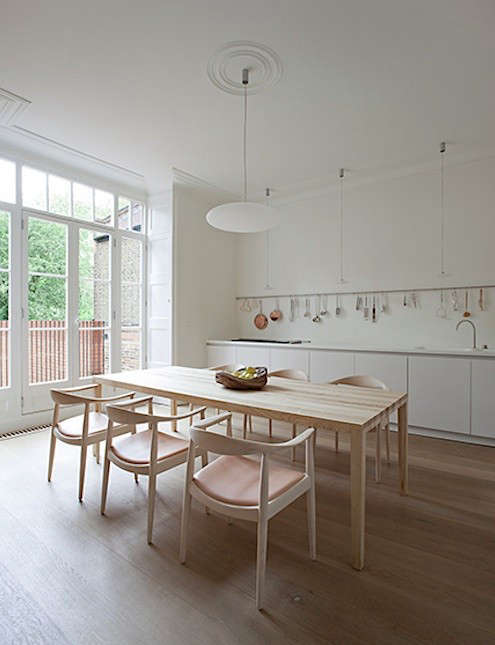
In a dining room, the chair changes the atmosphere immediately. A set of PP503 chairs around a table creates a feeling of calm order. The rounded backs make the room feel softer, while the craftsmanship adds seriousness. Guests may not know the model number, but they usually notice that the chairs feel special. Someone will eventually run a hand along the armrest and say, “This is nice,” which is furniture language for “I understand why design people talk so much.”
In an office or study, the PP503 creates a different experience. It suggests thoughtfulness rather than corporate power. A leather executive chair can sometimes look like it is preparing to negotiate a merger. The PP503 looks as if it is preparing to discuss architecture, literature, or where to find the best cinnamon roll in town. It brings authority, but with warmth.
Living with a chair like this also teaches patience. You begin to notice how light changes wood throughout the day. Morning sun may reveal grain patterns that were invisible the night before. Leather develops character. Small signs of use become part of the object’s story, not defects to panic over. That is one of the pleasures of well-made natural furniture: it does not remain frozen. It ages, and if treated kindly, it ages with grace.
The PP503 also encourages better interior decisions. Because it is so resolved, it makes clutter look less charming. Place it beside poor lighting, and suddenly you want a better lamp. Put it at a messy table, and you may feel personally judged by Danish modernism. This is not a bad thing. Great design often improves a room by quietly raising the standard around it.
Perhaps the most memorable experience of the PP503 is its modest confidence. It does not perform luxury in an obvious way. There are no gold details, exaggerated proportions, or dramatic upholstery stunts. Its luxury is in the curve that took years to perfect, the joinery that almost disappears because it is so well handled, and the comfort that comes from a designer who respected the human body. The chair is not asking to be admired every second. It simply remains excellent, which is much harder.
Conclusion
PP 503 The Chair, 1950 is more than a beautiful armchair. It is a landmark in Danish modern design, a study in craftsmanship, and a reminder that simplicity can be incredibly sophisticated when every detail has been considered. Hans J. Wegner took traditional woodworking and refined it into a modern icon that still feels fresh today. From its rounded back to its upholstered seat, from its debate-stage fame to its enduring place in collectors’ homes, the PP503 proves that great design does not age out of relevance. It simply becomes clearer with time.
For anyone interested in mid-century modern furniture, Scandinavian design, or the art of making wood look effortlessly alive, the PP503 remains essential. It is called The Chair for a reason. Not because it is the only chair that matters, but because it shows how much a chair can matter when designed with intelligence, humility, and just enough curve to make history comfortable.
SEO Tags
Note: This article is written in original American English for web publication and synthesizes verified design-history information without inserting source links or citation placeholders into the article body.