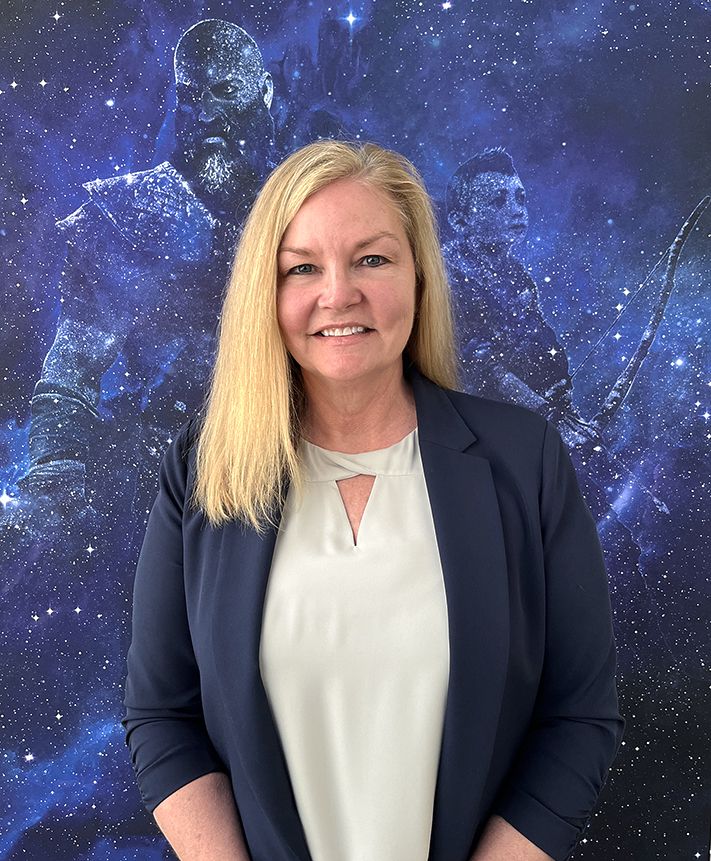
Some people work in tech because they love gadgets. Some because they love code. And some, like PlayStation executive Catherine Jensen, seem to be powered by a bigger idea: technology should make people’s lives better, safer, and more connected. That mission may sound simple, but in gaming and tech, where innovation moves fast and culture sometimes lags behind, it is a pretty bold hill to plant a flag on.
Jensen’s story matters because it does not fit the old stereotype of a woman in tech waiting politely for a seat at the table. She built influence by solving real problems, leading customer experience at a global scale, and helping shape how safety, trust, and human connection show up in the PlayStation ecosystem. In an industry that still talks a lot about inclusion while occasionally tripping over its own controller cable, Jensen represents the kind of leadership that makes inclusion feel practical instead of performative.
This is exactly why her career resonates with young women considering futures in gaming, software, digital policy, customer experience, product leadership, and online safety. She is proof that the future of tech is not limited to whoever can write the flashiest code in a dark room at 2 a.m. The future also belongs to leaders who can listen, build systems, protect communities, mentor others, and create products that work for real people in real life.
Who Is Catherine Jensen, And Why Is Her Story Resonating?
Catherine Jensen is widely recognized as a senior PlayStation leader whose work sits at the intersection of consumer experience, trust, and digital safety. At Sony Interactive Entertainment, she has been publicly identified as Vice President of Global Consumer Experience, a role that places her close to how millions of players actually experience PlayStation products and services. That alone gives her work weight. She is not operating in theory. She is working where community expectations, product decisions, support systems, and player behavior all meet.
That position is especially important in modern gaming. Gaming is no longer just about a console and a single-player campaign. It is about accounts, communities, chat, family settings, moderation, reporting tools, creator culture, mobile extensions, and a constant stream of social interaction. In other words, the modern gaming experience is part entertainment, part technology platform, part digital neighborhood. And every neighborhood needs thoughtful design if people are going to feel welcome there.
Jensen’s leadership stands out because she has not framed customer experience as a soft, secondary function. Instead, her work suggests that experience is strategy. Safety is strategy. Accessibility of support is strategy. Family tools are strategy. Trust is strategy. That mindset is increasingly relevant for a generation entering tech now, especially young women who want careers with both technical credibility and human impact.
From PlayStation Support To Industry Influence
One of the most compelling things about Jensen’s example is that it widens the definition of what a tech career can be. Too often, students imagine the industry through a narrow lens: software engineer, data scientist, maybe product manager if someone really loves sticky notes and whiteboards. But technology companies also need leaders in customer operations, trust and safety, policy design, moderation systems, cross-functional product planning, digital well-being, communications, and community stewardship.
Jensen’s public work with PlayStation shows how these areas are not side quests. They are central to the success of a platform. When PlayStation rolled out voice-chat reporting details and broader efforts to improve safety and player experience, Jensen was part of explaining how the company wanted online play to be more welcoming and accountable. That kind of leadership requires business judgment, technical fluency, communication skills, and the ability to anticipate how a product feature affects both individual users and the wider community.
That is one reason her story is so useful for aspiring women in tech. It tells them that there are many meaningful doors into the industry, and not all of them have the same label. A student who loves psychology, communication, systems thinking, digital ethics, or community-building might see Jensen’s path and realize, “Wait, I belong here too.” That moment matters. Sometimes inspiration is not a lightning bolt. Sometimes it is just finally seeing a map with your road on it.
Why Online Safety Is A Tech Leadership Issue, Not Just A PR Issue
Jensen’s influence is especially powerful because it is tied to online safety, an area that has become impossible for serious tech companies to ignore. The old internet fantasy that platforms could simply build tools and let culture sort itself out has aged about as well as milk left on a gaming PC. Today, companies are expected to think about harassment, abuse reporting, parental controls, moderation, and user well-being from the beginning.
In gaming, that responsibility is even more visible. Platforms serve adults, teens, and families. They include voice, chat, competition, identity, reputation, and social interaction. A single poor design choice can turn a fun experience into a hostile one. By contrast, smart safety design can help players feel protected without making the experience rigid or joyless.
That is where Jensen’s work has broader significance. She has helped position PlayStation not only as an entertainment brand, but also as a steward of digital experiences. Efforts tied to reporting systems, conduct standards, player education, family management, and safer play reflect a leadership philosophy that treats trust as a product feature, not an afterthought. For young women entering tech, this is deeply encouraging because it highlights an area where empathy, operational discipline, ethics, and systems design all matter. Those are not “nice to have” qualities. They are competitive advantages.
Representation Matters, But Mentorship Moves The Needle
Let’s be honest: representation is important, but it is only the opening level. Seeing a woman in leadership can be inspiring. Working with one, learning from one, and being actively sponsored by one is what changes careers.
That is why internal efforts such as Women@PlayStation matter so much. Programs that spotlight women role models, support career development, and create mentorship networks are not just morale boosters. They help build the infrastructure of belonging. They tell women at every stage, from interns to senior leaders, that advancement is something the company is willing to support intentionally.
Jensen’s public association with mentoring and women’s advancement gives her impact extra force. She is not simply a visible female executive; she is part of a larger culture-building effort inside a major gaming company. For young women considering careers in tech, that sends a valuable signal. It says the goal is not merely to “survive” the industry. The goal is to grow in it, lead in it, and help reshape it.
That distinction is huge. A young person deciding whether to pursue a technical degree or apply for a gaming internship is not only asking, “Can I get in?” They are also asking, “Will I have room to become who I want to be?” Mentorship programs, employee networks, early-career pathways, and visible leaders like Jensen help answer that second question with something far better than a corporate slogan.
The Bigger Context: Women In Tech Still Face A Real Gap
Jensen’s story is inspiring partly because the broader pipeline still needs work. Women remain underrepresented in many computing and technical roles, even as technology becomes more central to everyday life and the economy. That gap does not exist because women lack talent or interest. It persists because of longstanding barriers involving access, confidence, bias, limited networks, uneven support, and workplace cultures that have not always been designed with inclusion in mind.
That reality makes visible leaders especially important. They do more than symbolize success. They interrupt assumptions. When women see someone like Jensen leading in a global gaming environment, it challenges the old fiction that gaming and tech leadership are naturally male spaces. They are not. They have simply been shaped that way for a long time.
At the same time, the audience for games is already diverse. Women play games. Families play games. Adults across generations play games. The player base has expanded far beyond stale stereotypes, and the industry is gradually being pushed to reflect that broader reality in both its products and its workforce. In that context, Jensen’s leadership feels timely. She represents the kind of executive presence that aligns the business side of gaming with the actual diversity of the people holding the controllers.
What Young Women Can Learn From Catherine Jensen’s Example
1. You Do Not Need To Fit One Tech Archetype
Jensen’s story shows that impact in tech can come through customer experience, safety, operations, leadership, product understanding, and cross-functional execution. There is no single mold for success. If your strengths include communication, empathy, strategic thinking, systems design, or user advocacy, those are real tech skills. Please do not let anyone with three monitors and an inflated ego tell you otherwise.
2. Human-Centered Work Is Serious Work
There is sometimes a lazy assumption that the most important work in tech is the most visibly technical. But user trust, platform safety, parental controls, moderation systems, and consumer experience are all deeply complex. These are not decorative functions. They shape whether products are sustainable, scalable, and socially responsible.
3. Leadership Is Built Through Action, Not Just Titles
Jensen’s example suggests that leadership grows from consistently solving problems that matter. Young women entering tech do not need to wait until they have a senior title to lead. They can lead by mentoring peers, improving documentation, advocating for inclusion, raising thoughtful product concerns, and creating better team habits from day one.
4. Community Is Not Optional
Employee groups, mentors, managers, and professional networks matter. Careers are rarely built in isolation. One reason women-focused programs have impact is that they turn individual ambition into shared momentum. The person you meet at a workshop, scholarship program, or internal roundtable may later become the person who recommends you, teaches you, or reminds you not to give up after a brutal week.
How PlayStation’s Broader Ecosystem Strengthens The Message
Jensen’s influence does not stand alone. It is reinforced by a broader PlayStation ecosystem that includes women-centered employee communities, career pathways, apprenticeship models, family-facing tools, and youth-oriented initiatives connected to gaming education. That matters because role models are strongest when institutions back them up with real opportunities.
For example, a company can celebrate women in tech once a year with a cheerful panel and a tray of cookies that disappear in six minutes. Or it can invest in mentorship, scholarships, early-career pipelines, apprenticeship growth, and family-safe digital design. The second option is much less flashy, but much more powerful. It creates actual mobility.
That is why Jensen’s story lands so well with the next generation. She symbolizes more than personal success. She reflects a model of leadership connected to mentorship, inclusion, safer technology, and talent development. For a teenager choosing a major, a college student considering games, or an early-career professional wondering whether to stay in tech, that combination feels concrete. It says: there is space here for ambition and values at the same time.
Experiences That Make This Story Hit Home
For many women in tech, the most memorable career moments are not always the biggest public wins. They are the small turning points that quietly change everything. The first time a manager asks for your opinion and actually waits for the answer. The first time you realize the room has gone from intimidating to familiar. The first time another woman a few steps ahead of you says, “You can do this, and here’s how.”
That is why stories like Catherine Jensen’s travel so far. They do not just describe achievement. They mirror lived experience. A young woman studying computer science might read about a leader at PlayStation and think about the group project where she was the only woman on the team and had to fight to be heard. A junior analyst at a gaming company might see Jensen’s work in safety and customer experience and suddenly realize that her own instincts about people, behavior, communication, and systems are not side skills. They are exactly the kind of skills the industry needs more of.
There is also a powerful experience that comes from seeing tech leadership framed around responsibility instead of ego. Not every aspiring technologist dreams of becoming the loudest person in the room. Many want to build products that help people, create communities that feel fair, and design systems that reduce harm. Jensen’s public work speaks to that mindset. It tells future professionals that leadership can look thoughtful, steady, and deeply human. It does not have to look like a movie montage fueled by cold pizza and questionable decision-making.
Mentorship adds another layer to that experience. Plenty of women in tech can point to a moment when one conversation changed their path: a mentor reviewing a resume, an executive answering a candid question, a colleague recommending them for a stretch assignment, or a team lead saying, “I think you’re ready.” Those moments seem small from the outside, but they create momentum. They help turn uncertainty into direction. When a leader like Jensen is associated with mentoring and women’s advancement, the message becomes more powerful because it moves from symbolism to action.
There is also the experience of building confidence by seeing your interests connect in unexpected ways. Maybe someone loves gaming but assumes that means they need to become a game designer. Then they discover careers in trust and safety, customer operations, community policy, family products, or user advocacy. Suddenly the path opens up. The industry gets bigger. The future gets less intimidating. This is one of the most valuable things a role model can offer: not a single example to copy, but a wider horizon to explore.
And finally, there is the experience of hope, which sounds soft until you realize how practical it is. Hope keeps people in difficult majors. Hope helps someone apply for the internship they nearly talked themselves out of. Hope gives a young professional the nerve to raise a hand, ask a question, submit a project, or imagine a leadership role that once felt out of reach. When women in tech see leaders like Catherine Jensen shaping major platforms, advocating for safer digital spaces, and helping others rise too, that hope becomes grounded in evidence. It becomes believable. And believable hope is often where careers begin.
Conclusion
PlayStation’s Catherine Jensen is inspiring a new generation of women in tech because her career represents something the industry needs more of: leadership that is strategic, humane, and visibly committed to making technology better for the people who use it. She shows that tech is not just about building systems. It is also about shaping experiences, protecting communities, mentoring talent, and expanding who gets to belong.
For girls and women looking at gaming and technology from the outside, that message matters. It says there is room for technical skill and emotional intelligence. For product knowledge and people knowledge. For ambition and responsibility. And for the kind of leadership that makes an industry stronger not just because it grows faster, but because it grows wiser.
That is the real power of role models like Jensen. They do not simply inspire admiration. They expand possibility. And in tech, possibility is where the next generation starts building.