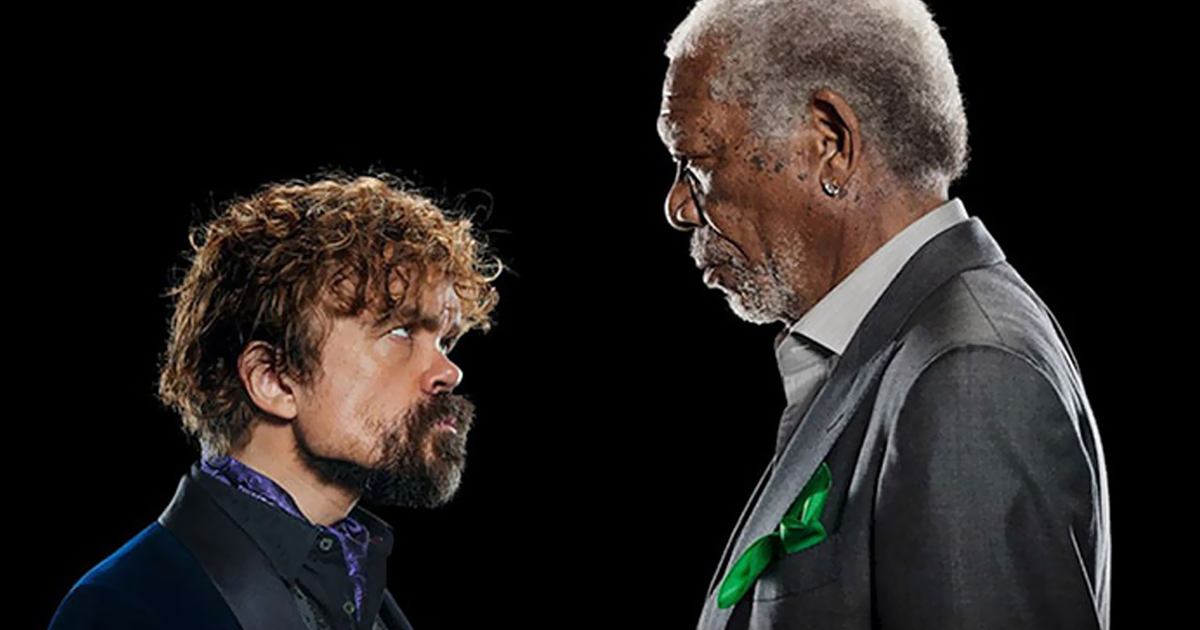
Peter Dinklage faces off Morgan Freeman in Super Bowl rap battle sounds like a sentence generated by a fever dream, a snack executive, and one extremely brave casting director. Yet in 2018, that is exactly what viewers got during Super Bowl LII: a high-gloss, fire-versus-ice commercial where Doritos Blaze and MTN DEW ICE turned two beloved actors into unlikely hip-hop gladiators.
The ad was technically a lip-sync battle, but let’s not ruin the magic with paperwork. Dinklage, best known to many fans as Tyrion Lannister from Game of Thrones, took the fiery side for Doritos Blaze and mouthed Busta Rhymes’ blistering verse from “Look at Me Now.” Morgan Freeman, the voice of calm authority in practically every universe, answered for MTN DEW ICE with Missy Elliott’s “Get Ur Freak On.” The result was not just funny. It was strange, polished, meme-ready, and weirdly satisfyinglike finding out your quiet neighbor has been secretly winning underground karaoke tournaments.
Why This Super Bowl Commercial Became Instant Pop-Culture Candy
Super Bowl commercials live in a brutal arena. They have about 30 to 60 seconds to be funnier than your group chat, louder than the snack table, and more memorable than the actual game. PepsiCo’s joint Doritos and Mountain Dew spot understood the assignment. Instead of simply saying, “Here are two new products,” it staged a dramatic showdown between two brands, two flavors, two temperatures, and two acting legends.
The concept was simple enough for distracted party guests to understand between nachos: Doritos Blaze brings the heat; MTN DEW ICE brings the chill. Dinklage is fire. Freeman is ice. Busta Rhymes and Missy Elliott are the hip-hop coaches in the corner. The commercial did not need a complicated plot, a talking animal, or a sentimental puppy with a tiny backpack. It had contrast, rhythm, and celebrities behaving just outside their normal lanes.
That surprise is the secret sauce. We expect Peter Dinklage to deliver sharp dialogue with dramatic timing. We expect Morgan Freeman to narrate galaxies, courtrooms, penguin migrations, and probably the internal life of a toaster if asked. We do not expect either of them to enter a Super Bowl ad and start “rapping” at warp speed. The humor comes from watching serious performers commit completely to a ridiculous premise without winking too hard at the camera.
The Setup: Doritos Blaze vs. MTN DEW ICE
The commercial was built around two product launches. Doritos Blaze was positioned as a spicy chip with heat that builds as you crunch, while MTN DEW ICE was introduced as a clear lemon-lime soda with a splash of real juice. In advertising language, this is a classic contrast: hot snack, cold drink; red-orange flames, blue-white frost; bold crunch, cool refreshment.
But PepsiCo did something smarter than a basic split-screen comparison. It turned the pairing into a battle. That matters because Super Bowl audiences are already primed for competition. They are watching teams collide, fans argue, and commercials fight for attention. A brand battle fits the room. It also gives people an easy reason to pick a side. Are you Team Doritos Blaze, all fire and chaos? Or Team MTN DEW ICE, smooth and frosty with Morgan Freeman energy?
Peter Dinklage Brings the Fire
Dinklage’s half of the commercial works because it leans into his screen presence. He walks through a fiery room like a man who knows the castle is already his. Flames flicker, the lighting glows, and the mood screams “fantasy villain’s kitchen remodel.” Then comes the punchline: he lip-syncs to Busta Rhymes’ rapid-fire verse from “Look at Me Now.”
That choice is not random. Busta Rhymes is famous for breathless speed, muscular delivery, and verbal acrobatics that make ordinary humans wonder whether oxygen is optional. Giving that verse to Dinklage creates instant comedy because the performance is both absurd and impressive. He does not play it cute. He attacks it with precision, attitude, and just enough menace to make the chip bag feel like it has a backstory.
The ad also winks at Game of Thrones without turning into a parody sketch. Dinklage’s association with Tyrion Lannister adds another layer to the fire imagery. Viewers who knew the show instantly caught the “song of ice and fire” flavor of the spot. Viewers who didn’t know the reference still understood the basics: this man is surrounded by flames, and the chips are spicy. Advertising does not get much cleaner than that.
Morgan Freeman Goes Ice Cold
Then Morgan Freeman enters the chat. Freeman’s side is cooler, calmer, and visually icy. Instead of fire, the ad gives him frost. Instead of Busta’s machine-gun flow, he gets Missy Elliott’s “Get Ur Freak On,” one of the most recognizable and playful hip-hop tracks of the early 2000s. The contrast is priceless: the dignified actor with the legendary voice suddenly becomes a cool, lip-syncing challenger in a soda campaign.
The comedy lands because Freeman does not perform like a confused tourist visiting rap for the first time. He commits. His face, timing, and icy confidence make the scene. The commercial understands that Morgan Freeman’s voice and public persona are cultural shortcuts. When he does something unexpected, the unexpected becomes the joke. It is not “Morgan Freeman tries to be funny.” It is “Morgan Freeman remains Morgan Freeman while doing something wildly not-Morgan-Freeman.” That is much funnier.
Missy Elliott’s presence also gives the spot real musical credibility. This was not a random jingle pretending to be hip-hop. The campaign borrowed from genuine rap icons and let them appear as mentors, almost like portraits in a mansion of musical spirits. That small creative detail makes the commercial feel bigger than a snack ad. It becomes a mini-event.
Why the Rap Battle Format Worked So Well
The best Super Bowl ads are built on instant recognition. This one had several layers of recognition working at once: recognizable actors, recognizable songs, recognizable brands, recognizable fire-and-ice visuals, and recognizable competitive energy. Even if a viewer missed the product names on first watch, they remembered the image: Peter Dinklage spitting fire for Doritos and Morgan Freeman going ice cold for Mountain Dew.
That is crucial because Super Bowl advertising is expensive, crowded, and noisy. Brands are not just buying airtime; they are buying a chance to become Monday morning conversation. This commercial gave people a sentence they wanted to repeat: “Did you see Morgan Freeman and Peter Dinklage rap battle?” That sentence alone is a marketing gift. It sounds too odd to ignore.
The Humor Was in the Casting
Many commercials try to be funny by stuffing jokes into every second. This one let the casting do the heavy lifting. Dinklage and Freeman are not comedians in the traditional Super Bowl-ad sense. They are respected actors with gravitas. Putting them into a lip-sync rap duel creates comedic tension before a single beat drops.
The ad trusts viewers to enjoy the mismatch. Dinklage’s intensity makes Busta’s verse feel like a royal decree. Freeman’s cool delivery makes Missy Elliott’s track feel like it has been narrated by the universe itself. Neither actor looks embarrassed to be there, which is why the ad works. The silliness is treated with luxury-commercial seriousness.
The Music Was Not Background Decoration
Music often gets tossed into commercials like confetti. Here, it is the engine. Busta Rhymes and Missy Elliott are not just soundtrack choices; they define the personalities of the two sides. Busta gives Doritos Blaze its aggressive heat. Missy gives MTN DEW ICE its confident swagger. The songs provide memory hooks, cultural credibility, and rhythm that keeps the 60-second spot moving.
What Brands Can Learn From the Dinklage-Freeman Super Bowl Rap Battle
First, contrast sells. Fire and ice is not complicated, but it is visually powerful. The human brain loves opposites: hot versus cold, loud versus quiet, chaos versus calm. A clear contrast helps audiences understand the product story instantly.
Second, celebrity casting works best when it creates surprise. A famous face alone is not enough. The audience has to see that famous person doing something fresh, funny, or slightly impossible. Dinklage and Freeman were not just present; they were used as characters in the brand story.
Third, a great commercial should be easy to describe. “Peter Dinklage and Morgan Freeman rap battle for Doritos and Mountain Dew” is a perfect post-game summary. It is short, absurd, and memorable. If people can retell your ad in one entertaining sentence, your campaign has already won half the battle.
Why the Result Is Still Hilarious Years Later
Some commercials age like unrefrigerated dip. This one holds up because it is not dependent on a narrow trend or a one-week joke. The core idea remains funny: two gravitas-heavy actors lip-syncing iconic rap songs as snack-and-soda champions. The visuals are bold, the performances are committed, and the premise is clean enough to understand even without remembering the product launch.
It also works because it respects the audience’s intelligence. The commercial does not pause to explain every reference. It lets Game of Thrones fans catch the fire-and-ice wink. It lets hip-hop fans recognize the song choices. It lets casual viewers simply enjoy the celebrity weirdness. Different audiences get different rewards, which is exactly how a broad Super Bowl spot should function.
The Experience: Watching This Ad at a Super Bowl Party
There is a special kind of silence that happens during a great Super Bowl commercial. It is not the polite silence of people paying attention in a museum. It is the snack-room silence of 12 people pausing mid-chew because something strange has appeared on the television. This Doritos and Mountain Dew ad was built for that moment.
Imagine the scene. Someone is balancing a paper plate that has too many wings and not enough structural engineering. Someone else is explaining football rules with the confidence of a person who learned them 11 minutes ago. Then Peter Dinklage appears in a fiery hallway, looking like he is about to negotiate a kingdom, and suddenly he is lip-syncing one of the fastest rap verses known to casual mankind. The room reacts in phases. First confusion. Then recognition. Then laughter. Then one person says, “Wait, is that actually Busta Rhymes?”
Before the group can recover, Morgan Freeman arrives with frost, calm, and the energy of a man who could make a grocery receipt sound like sacred scripture. He starts performing Missy Elliott, and the room loses whatever emotional stability remained. It is not just funny because Freeman is rapping. It is funny because he is doing it with that unmistakable Morgan Freeman composure, as if this rap battle has always been part of his professional destiny.
That is the kind of commercial people replay after the game. Not because they forgot what happened, but because they want to watch other people discover it. A good Super Bowl ad entertains you once. A great one turns you into a tour guide for the joke. You pull it up on your phone and say, “No, no, you have to see this.” Then you watch their face as Dinklage goes full fire mode and Freeman coolly answers back.
The ad also taps into a universal party experience: choosing sides for no serious reason. Someone becomes Team Dinklage because the Doritos side has flames and attitude. Someone else becomes Team Freeman because Morgan Freeman could read a parking ticket and make it sound wise. A third person refuses to choose because they are loyal to both chips and soda, which is probably the most honest position.
From a viewer’s perspective, the commercial is a reminder that advertising can be playful without feeling lazy. It does not simply throw celebrities on screen and hope fame does the work. It gives them a game to play, a visual world to inhabit, and music that adds real personality. The result is a tiny pop-culture collision: prestige television meets classic hip-hop, Hollywood gravitas meets snack chaos, fire meets ice, and somehow everyone wins.
That is why the commercial remains such a fun memory. It captured the Super Bowl mood perfectly: oversized, ridiculous, competitive, expensive-looking, and just self-aware enough to be charming. You did not need to care about Doritos Blaze or MTN DEW ICE to enjoy the performance. You only needed to appreciate the rare joy of watching two serious actors treat a snack-commercial rap battle like the fate of civilization depended on it.
Conclusion
Peter Dinklage faces off Morgan Freeman in Super Bowl rap battle is still one of those pop-culture headlines that sounds too good to be real. But the commercial worked because it combined a clean product contrast with unforgettable casting, iconic music, and a sense of humor that trusted the audience to enjoy the absurdity. Dinklage brought the heat for Doritos Blaze. Freeman cooled the room for MTN DEW ICE. Busta Rhymes and Missy Elliott supplied the musical backbone. The internet supplied the applause.
In a Super Bowl landscape full of celebrity cameos, this ad stood out because it gave its stars something genuinely funny to do. It was not just a commercial; it was a tiny spectacle. And like the best Super Bowl moments, it left viewers with one important question: who knew Morgan Freeman could look that comfortable going ice cold in a rap battle?