Paragon Kuba Cloth is one of those decor phrases that sounds simple at firstuntil you pull one thread and suddenly you are standing in the middle of African textile history, modern wall art, interior design trends, and the eternal question: “Will this look good above my sofa?” The answer is usually yes, provided the sofa does not already have twelve competing personalities.
In the home decor world, “Paragon Kuba Cloth” commonly refers to a discontinued framed art set once sold through Wayfair and highlighted by design publications as a set of four coordinating framed prints inspired by Kuba cloth patterns. But the real story behind the look goes much deeper than a product listing. Kuba cloth is a celebrated raffia textile tradition associated with the Kuba peoples of the Democratic Republic of the Congo. Its bold geometry, earthy palette, handworked texture, and almost jazz-like rhythm have made it a favorite among collectors, designers, museums, and anyone who believes a blank wall is simply a missed opportunity.
This article explores what Paragon Kuba Cloth is, where Kuba cloth design comes from, why its patterns feel so timeless, how it works in modern interiors, and what to consider before buying framed Kuba cloth art, prints, or authentic vintage textiles.
What Is Paragon Kuba Cloth?
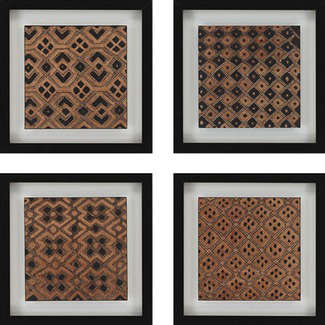
Paragon Kuba Cloth is best understood as a framed decorative art set inspired by traditional Kuba textile design. The referenced product was described as a four-piece deluxe framed art print set with a black wood frame, tan and black abstract styling, and a coordinated wall-art layout. It was not presented as an original handwoven Kuba textile but as framed artwork influenced by the visual language of Kuba cloth.
That distinction matters. Authentic Kuba cloth is handmade from raffia palm fiber and often includes embroidery, appliqué, cut-pile texture, dyeing, and pieced construction. Paragon Kuba Cloth, by contrast, belongs to the category of Kuba-inspired wall decor: accessible, framed, design-forward, and easier to hang than a delicate vintage textile. Think of it as the gallery-wall cousin of the real thinghandsome, polished, and ready for company.
The Cultural Roots of Kuba Cloth
Kuba cloth comes from Central Africa, especially the Kuba peoples of the Democratic Republic of the Congo. Traditional Kuba textiles are made from raffia palm fiber, a material that gives the cloth its organic stiffness, texture, and natural tan color. Historically, men prepared and wove the raffia into foundation cloth, while women often softened, dyed, stitched, appliquéd, and decorated the panels with elaborate surface designs.
These textiles were never merely “fabric.” They served as clothing, ceremonial dress, prestige objects, status markers, gifts, display pieces, and expressions of cultural identity. In museum collections, Kuba raffia panels, prestige cloths, skirts, and ceremonial textiles are often admired for their technical complexity and artistic sophistication. Their patterns may look modern to contemporary eyes, but they come from long traditions of skilled design, social meaning, and handmade labor.
Why Kuba Cloth Looks So Modern
One reason Kuba cloth remains popular in modern decor is that its patterns feel both ancient and avant-garde. The designs often include diamonds, lines, interlocking shapes, checkerboards, broken grids, zigzags, and irregular geometric forms. Unlike machine-perfect prints, Kuba patterns often have deliberate asymmetry. A line may shift. A shape may interrupt another shape. A repeated motif may suddenly change direction, as if the textile winked at the viewer and said, “Predictable? Not today.”
This controlled irregularity gives Kuba cloth its energy. It pairs beautifully with minimalist furniture, midcentury pieces, organic modern rooms, bohemian interiors, and Afrocentric design schemes. It can soften a space that feels too polished and add structure to a room that feels too casual.
Paragon Kuba Cloth as Wall Art
The Paragon Kuba Cloth set became attractive because it translated the Kuba textile look into framed wall decor. Instead of sourcing an original raffia textile, mounting it safely, and custom-framing it, buyers could purchase a coordinated set ready to hang. The tan and black palette made it versatile, while the abstract patterns gave it enough personality to anchor a room.
For homeowners, that is the magic formula: cultural texture, graphic punch, and no need to become a textile conservation expert before breakfast. A four-piece framed set also offers flexibility. It can be hung as a grid, stacked vertically, spread across a hallway, or used as separate accents in different rooms.
Best Rooms for Paragon Kuba Cloth Decor
Paragon Kuba Cloth-style art works especially well in living rooms, bedrooms, home offices, entryways, dining rooms, and reading corners. In a living room, it can sit above a sofa or console table. In a bedroom, it can add warmth above a headboard. In an office, it provides visual interest without screaming for attention like a neon motivational poster that says “Hustle harder.”
The key is balance. Kuba-inspired art already has strong pattern and movement, so it looks best near simpler shapes: clean-lined furniture, solid upholstery, natural wood, linen curtains, woven baskets, clay vessels, leather chairs, or matte black accents.
Authentic Kuba Cloth vs. Kuba-Inspired Prints
When shopping for Paragon Kuba Cloth or similar decor, it helps to know the difference between authentic Kuba cloth and Kuba-inspired prints.
Authentic Kuba Cloth
Authentic Kuba cloth is typically made from raffia fiber and may show handwoven texture, raised embroidery, appliqué, natural dye variation, irregular edges, age marks, and visible signs of use. These details are part of its beauty. Vintage pieces may be framed, hung as textile art, used as table coverings, or displayed as collectible objects. Because they are handmade, no two are exactly alike.
Kuba-Inspired Prints
Kuba-inspired prints reproduce or reinterpret the visual style of Kuba textiles. These may appear as framed prints, canvas art, wallpaper, pillows, upholstery fabric, or rugs. Paragon Kuba Cloth falls into this design-inspired category. The advantage is convenience and affordability. The tradeoff is that a print does not have the same tactile depth, cultural provenance, or handmade character as an original raffia textile.
Neither option is automatically “better.” It depends on your budget, goals, values, and decor needs. If you want a collectible textile with cultural and material depth, look for authentic Kuba cloth from reputable sellers. If you want a polished graphic look for a wall arrangement, a Kuba-inspired framed set may be the practical choice.
How to Style Paragon Kuba Cloth in a Modern Home
Paragon Kuba Cloth-style wall art is surprisingly adaptable. Its neutral earth tones allow it to work with many palettes, while its geometric structure makes it feel intentional rather than random. Here are practical styling approaches that make the most of the look.
1. Pair It With Natural Materials
Kuba-inspired art loves natural companions. Try it with walnut, oak, rattan, cane, jute, sisal, linen, leather, stone, or terracotta. These materials echo the organic character of raffia and keep the room from feeling too flat. A black frame also works well with black metal lighting, dark cabinet hardware, or a slim iron console.
2. Use It as a Graphic Anchor
If your room has mostly solid colors, Paragon Kuba Cloth can become the visual anchor. Hang the set above a sofa, bench, or sideboard and let the artwork provide movement. Keep nearby accessories simple: a ceramic lamp, a stack of books, a carved bowl, or a tall vase with branches.
3. Mix It With Global Decor Carefully
Kuba cloth can be part of a layered global style, but restraint matters. If every object in the room is trying to announce that it has a passport, the space can become noisy. Mix Kuba-inspired art with pieces that share tone, texture, or craftsmanship rather than piling together unrelated “ethnic” decor. The goal is respect, not a souvenir shop with throw pillows.
4. Create a Gallery Wall
A four-piece Kuba-inspired set works beautifully inside a gallery wall. Pair it with black-and-white photography, abstract line drawings, small landscapes, woven trays, or framed handmade paper. Keep the frames consistent if you want a clean look, or mix finishes for a collected feel.
Buying Tips: What to Look For
Since the original Paragon Kuba Cloth set is discontinued, shoppers often search for alternatives. You may find similar items described as framed Kuba cloth, Kuba cloth wall art, African textile prints, raffia textile panels, Kuba-inspired art, or geometric African wall decor.
Before buying, check the product description carefully. Is it an original textile, a print, a canvas reproduction, or a digitally printed design? Look at the dimensions, frame material, hanging hardware, color accuracy, and return policy. For authentic textiles, ask about origin, age, condition, repairs, mounting method, and whether the seller provides provenance or sourcing details.
Ethical Considerations
Because Kuba cloth has cultural significance, buyers should approach it with respect. Avoid treating the textile as a nameless “tribal pattern.” When possible, learn about the Kuba peoples, the material process, and the difference between handmade cloth and decorative imitation. If buying authentic pieces, choose reputable sellers who describe the work honestly and avoid exaggerated claims.
Why Designers Keep Returning to Kuba Cloth
Designers love Kuba cloth because it solves several decor problems at once. It adds pattern without looking trendy. It brings warmth without relying on bright color. It feels handmade without appearing messy. It references history while fitting comfortably inside modern interiors.
The best Kuba designs also have rhythm. Your eye moves across the surface the way it might follow music: repetition, variation, pause, surprise. That is why even a simple black-and-tan framed print can feel alive. It is not just decoration; it is pattern with a pulse.
Common Mistakes to Avoid
The first mistake is assuming every Kuba-style item is authentic Kuba cloth. Many products are inspired by the look but are not handmade raffia textiles. That is not necessarily bad, but it should be clear.
The second mistake is hanging patterned art in a room already overloaded with competing patterns. Kuba cloth can handle company, but it does not enjoy a shouting match with busy wallpaper, loud rugs, and ten different pillow prints.
The third mistake is choosing a piece that is too small. Kuba-inspired patterns often look strongest at a generous scale. If the art is going above a sofa or bed, make sure the total width feels proportional. Tiny art floating alone on a large wall is the decor equivalent of whispering in a stadium.
Experience Notes: Living With Paragon Kuba Cloth Style
One of the best things about Paragon Kuba Cloth-style decor is how quickly it changes the mood of a room. Imagine a plain white wall above a console table. The furniture is fine, the lamp is fine, the plant is trying its best, but the whole corner feels unfinished. Add a set of Kuba-inspired framed prints, and suddenly the wall has rhythm. The black lines sharpen the space, the tan background warms it up, and the geometric design gives the eye somewhere interesting to land.
In a living room, this style can make neutral furniture feel intentional instead of safe. A beige sofa, for example, can look a little sleepy on its own. Pair it with Kuba-inspired wall art, a dark wood coffee table, a woven basket, and a few textured pillows, and the room starts to feel layered. The art brings movement without demanding bright colors. It is a quiet statement, but not a boring one.
In a home office, Paragon Kuba Cloth-inspired art can be especially effective. Offices often suffer from practical-but-dull design: desk, chair, monitor, cables, and maybe a lonely mug that has seen too much. A framed Kuba-style set adds pattern and sophistication without distracting from work. It looks creative on video calls, too, which is helpful if your background currently says “I moved in three years ago and never finished decorating.”
Another experience worth noting is how well the style adapts over time. Some wall art feels locked into one trend, but Kuba-inspired patterns can move between homes and design phases. They can work in a boho apartment, a midcentury living room, a warm minimalist bedroom, or a collected traditional space. Change the surrounding furniture, and the art still holds its own.
The only real challenge is choosing the right balance. Because the pattern is strong, the surrounding decor should give it breathing room. Solid fabrics, natural textures, and simple silhouettes help the artwork shine. Add too many competing prints, and the room may feel like everyone started talking at once. Let Kuba cloth be the lead singer, not one more person in the chorus.
For anyone drawn to meaningful design, Paragon Kuba Cloth offers a useful entry point. It introduces the visual power of Kuba textile traditions in a format that is easy to display, while also encouraging deeper curiosity about authentic raffia cloth, African textile history, and handmade pattern. That combinationbeauty first, curiosity second, respect alwaysis what makes the style more than another wall decor trend.
Conclusion
Paragon Kuba Cloth sits at the intersection of art, history, and interior design. As a framed decor concept, it brings the graphic beauty of Kuba-inspired patterns into modern homes with ease. As a topic, it opens the door to a much richer story: raffia palm fiber, skilled weaving, embroidery, appliqué, ceremonial use, cultural identity, and the enduring influence of Kuba textile artistry.
Whether you are searching for the discontinued Paragon set, shopping for a similar framed print, or considering an authentic Kuba cloth textile, the same principle applies: choose with care. Look for quality, proportion, honest descriptions, and a design that complements your space. When styled thoughtfully, Kuba cloth wall art can make a room feel warmer, smarter, and far more interesting. And really, if your wall could talk, it would probably ask for exactly that.