Some kitchen objects shout for attention. Margarida Melo Fernandes’s Salad Bowl takes the more persuasive route: it sits quietly on the table, looking useful, tactile, and effortlessly at home. Then the lettuce arrives, followed by tomatoes, toasted almonds, perhaps an aggressively generous snowfall of Parmesan, and the bowl suddenly becomes the center of dinner.
Designed by Portuguese ceramicist Margarida Melo Fernandes for her studio, Margarida Fabrica, this handmade ceramic bowl captures an appealing balance between rustic character and modern restraint. Its form is simple enough for everyday meals yet distinctive enough to display between uses. Better still, it was conceived as a multipurpose object rather than a precious piece that spends its life waiting for a holiday.
That combinationcraftsmanship, versatility, and quiet personalityexplains why Margarida Melo Fernandes’s Salad Bowl continues to interest people who appreciate Portuguese ceramics, handmade tableware, minimalist kitchen design, and objects that can survive both a dinner party and an ordinary Tuesday.
Who Is Margarida Melo Fernandes?
Margarida Melo Fernandes is the designer and ceramicist behind Margarida Fabrica, a Portuguese ceramics brand founded in 2010. Her work is strongly influenced by kitchens, cooking, food, and the everyday rituals that gather people around a table. She also draws inspiration from objects collected from the past, which helps explain why many of her pieces feel familiar without looking like reproductions.
Her Lisbon studio has produced bowls, plates, cups, serving vessels, butter dishes, soap dishes, jars, and even porcelain hardware. Rather than separating decorative design from practical living, Fernandes often lets the two overlap. A tiny ceramic vessel intended for pigment may hold salt. A kitchen bowl may organize a bathroom. A butter dish can preserve a traditional household form while looking entirely appropriate in a modern apartment.
A Studio Rooted in Everyday Rituals
The kitchen is not merely a backdrop in Fernandes’s work. It is the starting point. Food preparation determines how a vessel is held, filled, washed, passed, and stored. That practical focus keeps the designs grounded, while her interest in older domestic objects gives them emotional depth.
Remodelista has described the studio’s production as a mixture of slip-casting and wheel-throwing. These methods offer different kinds of control: slip-casting can repeat a carefully designed form, while throwing and hand-finishing preserve the small variations that make studio ceramics feel alive. Ceramic Arts Network notes that slip-casting uses porous plaster molds to draw water from liquid clay, gradually creating a vessel wall that can be drained, dried, refined, and fired.
In other words, “handmade” does not mean the potter waves dramatically at a lump of clay until a bowl appears. There is measuring, timing, trimming, glazing, drying, firing, and a significant amount of waiting for clay to stop behaving like a moody housecat.
The Design of Margarida Melo Fernandes’s Salad Bowl
The official Margarida Fabrica catalog identifies the Salad Bowl as a ceramic design introduced in 2016. It measures approximately 21 centimeters in diameter and 8 centimeters highabout 8.3 inches wide and just over 3 inches tall. The studio describes it as a medium bowl intended for different uses in both the kitchen and bathroom.
Those dimensions place it in a useful middle category. It is larger than a cereal bowl but less cumbersome than the enormous serving vessels that require two hands, three shelves, and a minor kitchen renovation. It can hold a side salad for several people, an individual meal-sized grain bowl, roasted vegetables, fruit, bread, or the collection of lemons you bought because the grocery display looked optimistic.
A Form That Does Not Overcomplicate Dinner
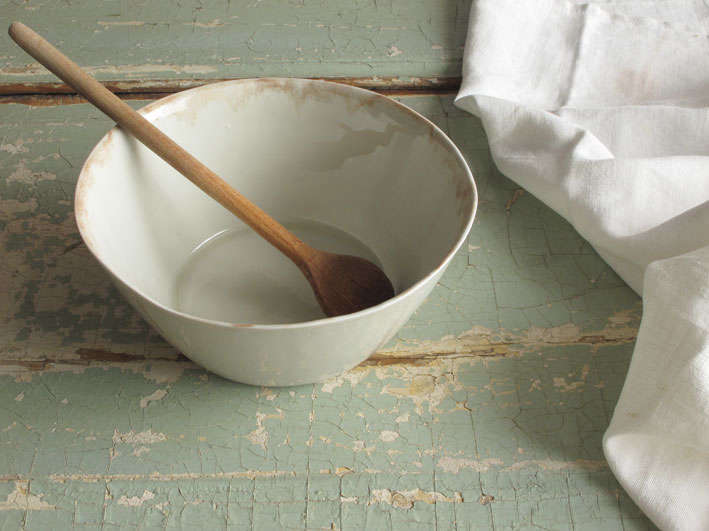
The shape is gently rounded, with a broad opening that makes ingredients visible and accessible. The walls are high enough to contain food during tossing but low enough to prevent the bowl from feeling heavy or visually bulky. Its restrained profile works particularly well with casual, unfussy food: leafy salads, pasta, beans, citrus, potatoes, or vegetables roasted until their edges become the best part.
Across Margarida Fabrica’s collections, related pieces appear in quiet white, gray, green, and speckled treatments, as well as decorated versions. The Fauna&Flora collection allows motifs such as swallows, bees, lavender, fish, whales, and olive branches to be applied to selected forms, including the salad bowl. The result can range from understated to playful without losing the simplicity of the vessel itself.
This is an important distinction. Decoration is not being used to rescue a weak shape. The bowl works before a single bird, branch, or blue mark is added.
Why This Handmade Ceramic Bowl Stands Out
It Connects Portuguese Tradition With Contemporary Design
Portugal has a long and highly visible relationship with ceramics. Glazed azulejo tiles have become an unmistakable part of the country’s architectural identity, while Portuguese workshops have produced practical and decorative pottery in many regional styles. Museum collections also document centuries of Portuguese earthenware, tin-glazed vessels, and ceramic exchange with Asia and other parts of Europe.
Fernandes’s Salad Bowl does not imitate a historic museum piece. Instead, it reflects something broader from that tradition: the belief that ceramics belong in daily life. The bowl is meant to be touched, filled, washed, and returned to the table. Its beauty is inseparable from its job.
It Leaves Room for the Human Hand
Mass-produced dinnerware can be wonderfully practical, but perfect repetition sometimes removes the visual evidence of how an object was made. Studio pottery offers a different pleasure. Slight shifts in glaze, rim, surface, or color can turn each piece into an individual object rather than one anonymous unit from a very long factory line.
Architectural Digest has highlighted the appeal of handmade ceramics precisely because organic variation gives clay character. Similar ideas appear throughout contemporary design: irregular edges and subtle imperfections can add warmth without making an object look unfinished. MoMA’s presentation of handcrafted Portuguese bowls likewise emphasizes how natural materials and glaze variation make individual pieces unique.
The goal is not wonkiness for the sake of wonkiness. Nobody wants a salad bowl that leans toward the bread basket like it has heard an interesting rumor. The charm comes from controlled variation: enough consistency to function properly, with enough evidence of the maker to avoid sterility.
It Is Useful Beyond One Recipe
Despite its name, this is not a bowl sentenced to a lifetime of lettuce. Its medium size and calm appearance make it unusually adaptable. That flexibility matters because the most successful household objects are often the ones that refuse to remain in their assigned department.
Practical Ways to Use the Salad Bowl
At the Table
Use it for mixed greens, tomato salad, roasted squash, couscous, potato salad, pasta, rice, or warm grains. Its open shape lets diners see the ingredients instead of peering into a deep ceramic cave. It also works as a bread bowl lined with a linen napkin or as a centerpiece filled with citrus, pears, figs, or seasonal produce.
For visual contrast, pair a pale version with dark greens, roasted beets, cherries, or deeply colored table linens. A gray or green glaze looks particularly comfortable beside wood, cork, stone, and brushed metal. A decorated Fauna&Flora version can carry most of the table’s personality, allowing the plates, glasses, and napkins to remain simple.
In the Kitchen
Beyond serving, the bowl can gather garlic bulbs, shallots, eggs, folded towels, coffee filters, or frequently used cooking tools. Because it is attractive enough to remain visible, it can replace the random plastic container that technically works but makes the counter look as though it has given up.
It may also serve as a preparation bowl for sturdy vegetables, grains, or pasta. For very vigorous mixing, however, select a surface where the ceramic base will not slide or scratch. A folded kitchen towel underneath provides additional stability and prevents an energetic cabbage toss from becoming an unscheduled floor installation.
In the Bathroom or Bedroom
The maker explicitly suggests uses extending into the bathroom. The bowl could hold rolled washcloths, wrapped soaps, bath accessories, jewelry, hair clips, or small grooming items. In a bedroom, it can become a catchall for watches, keys, reading glasses, or the mysterious collection of coins that appears whenever clothing enters a laundry basket.
In an Entryway or Home Office
Placed on a console, it can gather mail, sunglasses, and small daily essentials. On a desk, it can hold charging cables, stationery, or craft materials. Using a handmade serving bowl for office supplies may sound extravagant, but it is considerably more cheerful than storing everything in a cardboard box labeled “miscellaneous” until the end of civilization.
How the Bowl Improves the Salad-Making Experience
A good salad bowl needs more than photogenic glaze. It must provide enough room to distribute dressing without crushing delicate leaves. A broad opening also helps ingredients move upward and over one another rather than becoming compacted at the bottom.
Bon Appétit recommends adding dressing along the walls of a bowl and tossing gently so the greens receive an even coating. The publication also favors using clean hands for delicate leaves because heavy tongs can bruise them. Serious Eats similarly advises accounting for watery ingredients such as tomatoes and cucumbers, which can dilute dressing or create a puddle beneath the salad.
With a medium ceramic bowl, portion size matters. Avoid packing it to the rim before tossing. Fill it loosely, dress the first layer, add more ingredients, and toss again. For a large dinner-party salad, this bowl may be better for serving than mixing; prepare the salad in a larger vessel, then transfer it for presentation.
A Simple Salad That Suits the Bowl
Try a mixture of arugula, sliced pear, toasted walnuts, crumbled cheese, and a mustard vinaigrette. Whisk vinegar, mustard, salt, and pepper in the bottom of a separate container, then slowly add olive oil. Place the dry greens and toppings in the ceramic bowl, drizzle lightly, and toss just before serving.
The pale ceramic creates a clean background for the green leaves and golden pear, while the rounded walls keep walnuts from launching across the table. That last feature is not officially listed in the product specifications, but dinner guests will appreciate it.
Care, Cleaning, and Food-Safety Considerations
Margarida Fabrica recommends hand-washing its ceramics when possible, although occasional dishwasher use is permitted. The studio advises against pouring boiling water directly into the pieces and warns users to avoid major temperature changes. These precautions reduce thermal stress, which can contribute to cracking. The maker also notes that signs of use may develop over time, which is normal for artisan ceramics.
Use a soft sponge and ordinary dish detergent, then allow the bowl to dry thoroughly. Avoid sudden transitions from refrigerator-cold conditions to high heat. Unless the maker specifically confirms otherwise for the exact version purchased, do not assume that a decorative ceramic bowl is suitable for ovens, stovetops, freezers, or microwaves.
When buying vintage, decorative, or unfamiliar glazed pottery for food use, verify that it was produced as food-contact tableware. The U.S. Food and Drug Administration cautions that some traditional or improperly made ceramic glazes can release lead into food. If a piece is labeled decorative or its safety is uncertain, use it for nonfood storage rather than serving salad.
Food preparation matters too. Wash fresh produce under running water rather than with soap or detergent, dry greens before dressing, and clean utensils and food-contact surfaces after handling cut produce. Dry leaves accept vinaigrette more evenly; wet leaves mostly help the dressing practice synchronized swimming at the bottom of the bowl.
Is Margarida Melo Fernandes’s Salad Bowl Worth Buying?
This bowl makes the most sense for someone who values independent design, Portuguese ceramics, multipurpose homeware, and the subtle individuality of handmade objects. It is less suitable for anyone seeking identical industrial pieces, ultra-light serveware, or a bowl that can be dropped on tile with heroic optimism.
Its strongest quality is not novelty. The form is recognizable, calm, and useful. What distinguishes it is the careful relationship between proportion, material, and domestic purpose. It can carry salad to the table without ceremony, then spend the next day holding fruit, towels, or keys.
The official catalog continues to list the Salad Bowl among Margarida Fabrica’s made-to-order ceramics, although prices, glazes, decoration, and availability may change. Confirm current specifications with the studio before ordering, especially when selecting a custom motif or finish.
A 500-Word Use Experienceand the Final Verdict
A representative week with a handmade ceramic bowl of this size begins quietly. On the first day, it sits on the counter holding six lemons and one lime that appears to have joined the group without authorization. The bowl looks composed even when the rest of the kitchen does not. Its moderate diameter occupies enough space to feel intentional but does not consume the entire work surface.
At dinner, the fruit moves elsewhere and the bowl receives a salad of lettuce, cucumber, herbs, and roasted chickpeas. Its weight provides reassuring stability while ingredients are added. Ceramic does not skate across the counter as readily as lightweight plastic, although placing a towel beneath it remains sensible. The rounded interior makes it easy to lift ingredients from the bottom with both hands, and the open rim provides a clear view of whether the dressing has reached every leaf.
The bowl is most comfortable with a side salad for three or four people. It can handle a larger quantity when used only for presentation, but enthusiastic tossing becomes risky when ingredients are piled above the rim. This is the moment when practicality defeats ambition: use a larger mixing bowl first, transfer the finished salad, and accept that nobody awards medals for dressing twelve cups of arugula in a compact vessel.
After dinner, washing the bowl by hand encourages a slower look at the surface. Handmade ceramic rewards attention. The curve may not feel mathematically anonymous, and the glaze can shift subtly around the rim or base. Those details are easy to miss on a product page but become more noticeable during daily use. They make the object feel specific rather than generic.
On the second day, the bowl holds bread. On the third, it collects onions and garlic. Later, it moves to the bathroom with folded washcloths, where its domestic character becomes surprisingly elegant. The same proportions that frame salad also organize small textiles. Nothing about the form demands one location, and that freedom is arguably the design’s best feature.
There are limitations. Ceramic is heavier than wood, bamboo, melamine, or plastic. It demands thoughtful handling near hard countertops and sinks. A pale glaze may show dark utensil marks or stains more readily, and customized decoration deserves gentle cleaning. Anyone who treats serving bowls like portable sports equipment should choose something less fragile.
Yet these small obligations can improve the relationship between owner and object. Care is not necessarily inconvenience; sometimes it is what prevents a useful possession from becoming disposable. A well-chosen handmade bowl can accumulate memories of dinners, celebrations, hurried lunches, and ordinary evenings when the “recipe” was lettuce plus whatever remained in the refrigerator.
That is the final appeal of Margarida Melo Fernandes’s Salad Bowl. It does not rely on technological tricks or theatrical decoration. It offers a durable idea: make one familiar household object thoughtfully, give it pleasing proportions, and allow people to use it in more than one way. The bowl can be rustic without looking old-fashioned, minimalist without becoming cold, and decorative without forgetting that dinner is waiting.
In a home crowded with specialized gadgets, a beautiful ceramic bowl that simply keeps finding new jobs feels almost rebellious. It serves the salad, holds the fruit, organizes the bathroom, and still looks good enough to leave empty. Not bad for an object whose original job description was essentially “contain vegetables.”
Note: Product prices, finishes, dimensions, ordering procedures, and availability may change. Verify current details directly with Margarida Fabrica before publication or purchase.