Publishing note: the 13 image paths below are placeholders so you can drop in your selected gallery photos before posting.
Most people think they understand a farrier’s job right up until they actually watch one work. Then the lightbulb goes on. This is not just a person who slaps metal onto horse feet and calls it a day. A farrier is part craftsperson, part problem-solver, part equine detective, and part athlete with the lower-back flexibility of a yoga instructor who lost a bet.
The work sits at the intersection of hoof science, horse behavior, and hands-on skill. A good farrier studies how a horse stands, moves, loads each foot, and wears the hoof over time. They trim, balance, shape shoes, discuss changes with owners, and often collaborate with veterinarians when a horse is sore, lame, recovering from injury, or dealing with a hoof condition that needs more than a routine visit.
In other words, the farrier’s job deserves more respect than it usually gets. So instead of treating this trade like background barn noise, let’s put it center stage. Here are 13 picture-worthy moments that show what the job of a farrier really looks like, why it matters, and why the phrase “no foot, no horse” still hits hard.
Why a Farrier Matters More Than Many Horse Owners Realize
A horse’s hoof is not a decorative accessory. It is the foundation under a very large, very opinionated animal. When that foundation is out of balance, too long, chipped, sore, or poorly supported, the effects can travel up the leg and into performance, comfort, and overall soundness. That is why farriers are central to routine horse care, not an optional extra you remember only when the shoe goes missing in dramatic fashion somewhere out in the pasture.
Regular trimming or shoeing helps maintain balance, manage wear, and support the horse’s work, footing, and individual conformation. Some horses do well barefoot. Others need shoes for traction, protection, or therapeutic support. The farrier’s job is to read the horse in front of them, not blindly follow a one-size-fits-all formula. Good farriery is practical, observant, and tailored. That is part of what makes it such a fascinating profession to photograph and such a hard one to master.
The 13 Pics That Explain the Trade

Pic 1: The Quiet Inspection Before the Tools Come Out
The first real move is not dramatic. It is observational. A farrier looks at hoof shape, symmetry, flare, cracks, wear patterns, heel support, and the way the horse is standing. The best work usually begins with patience, not sparks. That calm inspection tells the farrier whether today is a basic trim, a reset, or the kind of appointment that may involve deeper problem-solving.

Pic 2: Cleaning the Hoof Like Details Actually Matter
Because they do. Packed dirt, stones, old sole, ragged frog tissue, and hidden soreness can change what the farrier sees. Cleaning the hoof exposes the real condition of the foot. It also reminds you that hoof care is not just about the outside wall. The sole, frog, white line, and underside of the foot all tell part of the story.

Pic 3: Trimming Excess Growth Without Guesswork
Hooves keep growing, and uneven growth changes balance. That is why routine appointments matter. A trim is not random shaving for cosmetic effect. It is controlled removal meant to restore a healthier shape, improve landing, and keep the foot functioning as efficiently as possible. Done well, it looks effortless. Done badly, the horse pays for it.

Pic 4: The Rasp, the Balance, and the Fine-Tuning
The rasp is one of the farrier’s signature tools for a reason. This is where little imbalances get addressed and the hoof is refined. It is not glamorous, but it is where craftsmanship becomes visible. A few strokes too many or too few can change the result, which is why good farriers work with intention instead of trying to impress everyone with speed.

Pic 5: Watching the Horse Walk Like a Living Diagnostic Report
Farriers do not just look down; they look at motion. How the horse lands, breaks over, tracks up, and carries weight can reveal whether the hoof is helping or hindering. That is why experienced farriers often watch horses move before and after work. The foot is the assignment, but the whole horse is the exam.

Pic 6: Shaping a Shoe the Old-School Way
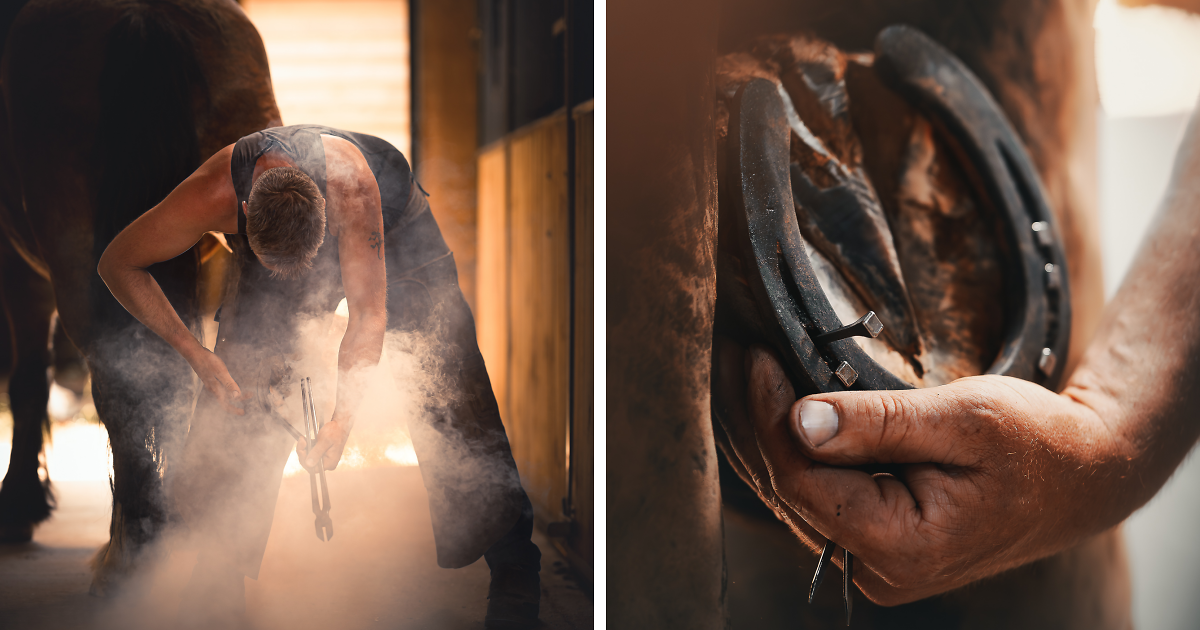
This is the part that makes people gather around like they just found the barn’s version of a live cooking show. Heating and shaping a horseshoe is part skill, part feel, part repetition. A properly shaped shoe is not about drama. It is about fit. The shoe must match the hoof and the horse’s needs, not the farrier’s ego.

Pic 7: Hot Fitting and the Moment Everyone Thinks Looks Scary
Hot fitting is one of the most misunderstood sights in farriery. To the untrained eye, it looks intense. To a trained farrier, it is a practical way to improve fit and seal the hoof surface. It is one of those moments where skill matters because the visual drama gets all the attention while the accuracy does the real work.

Pic 8: Nailing, Clinching, and Making It Hold
Attaching a shoe is not brute force. It is controlled placement through the hoof’s non-sensitive structure. The farrier has to know where the nail should travel, how the hoof is shaped, and how to finish the job so the shoe stays secure. There is no room for sloppy confidence here. Just real precision.

Pic 9: Finishing Work That Looks Neat Because It Is Thoughtful
The final finish is where neatness meets function. The foot gets smoothed, the clinches are set, and the whole job is checked again. Good finishing is not vanity. It is part of making sure the result is secure, clean, and suitable for the horse’s workload. The horse may not compliment the aesthetics, but the comfort level says enough.

Pic 10: The Physical Grind Nobody Understands Until They Try It
Farriery is hard on the body. There is lifting, crouching, bending, bracing, forging, and repeating the process horse after horse. Add weather, travel, mud, impatient clients, and the occasional horse that suddenly remembers free will, and you begin to see why this job demands serious stamina. It is skilled labor in the truest sense of the phrase.

Pic 11: When the Vet and Farrier Work as a Team
Some cases go beyond routine hoof care. Laminitis, recurring abscesses, limb injuries, cracks, poor conformation, and lameness problems may require collaboration with a veterinarian. This is where the farrier’s practical hoof knowledge and the veterinarian’s diagnostic tools can work together. The smartest professionals do not compete for the spotlight. They share it for the horse’s benefit.

Pic 12: Barefoot or Shod? The Answer Is Usually “It Depends”
One of the biggest myths in horse care is that there is a universal answer for every hoof. There is not. Some horses go comfortably barefoot. Others need protection, traction, or therapeutic support. Terrain, discipline, hoof quality, workload, and health history all matter. The farrier’s job is not to follow fashion. It is to support function.

Pic 13: The Walk-Away Test
At the end of the appointment, the result has to hold up in motion. A well-managed horse often steps away more balanced, more comfortable, and more ready for work. That is the quiet reward of farriery. There is no dramatic soundtrack, just a better foot under a better-moving horse. In this line of work, that is applause.
Skills People Underestimate in a Farrier
Plenty of people see the apron, hammer, and anvil and assume the trade is mostly muscle memory. Not even close. Good farriers need horsemanship, timing, communication, anatomy knowledge, and a working understanding of biomechanics. They need to read the horse’s mood, read the foot’s condition, and read the owner without getting dragged into every barn debate that starts with, “Well, my friend’s horse does great with…”
They also need judgment. In the United States, no universal license is required to trim and shoe horses, which makes professional development even more important. Serious farriers often build their skills through schooling, apprenticeship, certification, accreditation, clinics, and continuing education. The strongest professionals stay curious because horses have a wonderful habit of proving that yesterday’s easy answer may not fit today’s hoof.
And then there is people management. A farrier is often part service professional, part educator, part schedule juggler. They may explain why a horse needs a shorter cycle, why a crack is not “just cosmetic,” why poor barn footing is creating hoof trouble, or why your horse should really stop trying to cuddle them while they are working under 1,200 pounds of moving livestock.
Common Myths About the Job
Myth 1: Farriers only put on shoes.
Not true. Trimming, balancing, evaluating wear, monitoring hoof health, and making adjustments over time are core parts of the job. In some cases, the most important thing a farrier does is not add a shoe at all.
Myth 2: Every horse needs the same appointment schedule.
Also false. Many horses need attention every few weeks, but the ideal cycle depends on season, growth rate, workload, footing, and the individual hoof. The best schedule is the one that keeps the horse balanced and comfortable, not the one that sounds tidy on a calendar.
Myth 3: Hot shoeing automatically hurts the horse.
This misconception survives because smoke makes people dramatic. When done correctly, hot fitting is a technique, not cruelty theater. The real issue is whether the farrier knows how and why they are doing it.
Myth 4: A difficult horse is just part of the farrier’s problem.
Nope. Owners have responsibilities too. A safe work area, decent lighting, clean legs, picked hooves, and a horse with basic manners make the appointment safer and better for everyone involved. A farrier is there to work on the foot, not to star in an unplanned wrestling match.
Barn-Aisle Experiences That Bring the Job to Life
If you have spent any real time around a farrier, you know the job is full of small moments that never show up in a simple definition. One minute it is just another routine visit. The next minute you are watching a horse lean into the work, exhale, and stand almost gratefully as if it knows somebody is finally fixing the thing that has been bothering it. Those are the moments that make the trade memorable.
One of the most revealing experiences is seeing how quickly an appointment can shift from ordinary to educational. A horse comes in for what the owner calls “just a reset,” and suddenly the farrier is pointing out a hoof ring pattern, explaining uneven wear, asking whether the horse has changed footing recently, and recommending a conversation with the veterinarian if the soreness continues. What looked like routine maintenance turns into a mini master class in paying attention. It is humbling, honestly. The hoof had been speaking the whole time. The farrier was simply the one fluent enough to translate.
Another unforgettable part of the job is the atmosphere around the anvil. Even people who know nothing about horses tend to pause when metal hits metal. There is something timeless about it. The sound feels old, useful, and honest. A farrier shaping a shoe by hand can make the barn aisle feel like part workshop, part clinic, part history lesson. It is one of those rare jobs where modern knowledge and traditional craft still share the same physical space without arguing about it.
Then there is the human side. Farriers see horses at their best, at their quirkiest, and at their most inconvenient. They work around nervous young horses, saintly old campaigners, muddy fields, late owners, dim aisles, barking dogs, and the occasional horse that decides the farrier’s toolbox is deeply suspicious. Watching a professional stay calm through that is a lesson in itself. Good farriers are usually steady in a way that lowers the temperature of the whole barn.
And yes, the physical effort leaves an impression. You do not fully understand the trade until you see someone spend hours bent over feet, adjusting posture, lifting limbs, forging metal, and still finishing with careful detail on the last horse of the day. It builds respect fast. The romantic image of farriery may be fire, steel, and horseshoes, but the lived experience is endurance, concentration, and repeatable skill.
Maybe the most satisfying experience is seeing the before and after. A horse that stood awkwardly now stands square. A short, choppy stride becomes more relaxed. A fussy horse settles once the pressure in the foot is better managed. The change is sometimes subtle, sometimes obvious, but it is real. That is when the title of this article makes the most sense. Putting light on the job of a farrier means noticing the value in work that often happens quietly, practically, and without much applause. But in a barn, better movement is all the applause anyone needs.
Conclusion
A farrier’s job is one of those professions that looks simpler from a distance than it does up close. Get closer, though, and the picture changes fast. You see judgment, timing, strength, technical skill, continuing education, and a sharp eye for what the horse needs on that specific day. You see a profession built around details that matter because horses live on the outcome.
So if these 13 pictures teach anything, it is this: farriery is not background barn maintenance. It is foundational horse care, equal parts craft and care. The horse may never write a thank-you note, but a sounder stride is a pretty solid review.