Note: This article is based on current, real-world reporting and research summaries from NASA, JPL, AP, Reuters, PBS, National Geographic, Space.com, Scientific American, Smithsonian Magazine, Popular Science, Discover Magazine, and PolitiFact. Despite viral claims, NASA has not announced confirmed fungal life on Mars.
If Mars had a publicist, that poor soul would need a nap. Every few years, the Red Planet trends again with a fresh round of headlines that sound like they were written after three espressos and a binge of alien documentaries: fungus on Mars, life confirmed, NASA is hiding something, and the timeless classic, look at this suspiciously mushroom-shaped rock. The reality is both less dramatic and far more interesting.
As of April 17, 2026, the biggest Mars story is not that NASA found space mushrooms staging a hostile takeover. It is that scientists keep uncovering stronger evidence that ancient Mars was once wetter, warmer, and chemically more hospitable than the frozen, dusty world we see today. That matters because life does not usually begin in places that look like the inside of a neglected air fryer. It prefers water, chemistry, energy, and time. Mars appears to have checked at least some of those boxes billions of years ago.
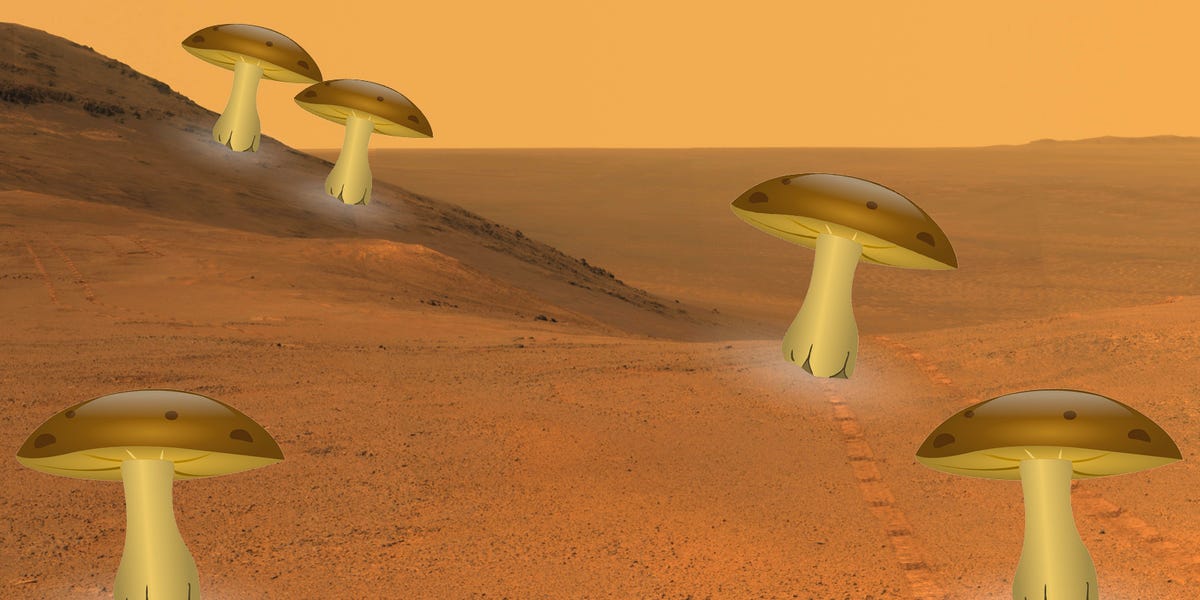
So where does the “fungus” angle come from? Mostly from speculative interpretations of rover images and old claims that never reached the level of accepted proof. What NASA’s actual missions have found is more nuanced: signs of ancient river deltas, lake environments, organic molecules, puzzling methane behavior, carbon chemistry that refuses to behave politely, and rock features that may be potential biosignatures but are not yet a smoking microscope slide. In other words, Mars keeps dropping hints, but it still has not handed scientists a signed confession.
Why the “fungus on Mars” headline keeps coming back from the dead
The fungus claim has staying power because it combines three irresistible internet ingredients: strange rover photos, scientific uncertainty, and the human tendency to see familiar shapes in weird places. If a rock is round, layered, or stubby enough, someone, somewhere, will call it a mushroom. This is less a breakthrough in astrobiology and more a breakthrough in imagination.
The problem is that appearance alone is not evidence of life. In planetary science, a shape that looks biological can still be produced by chemistry, geology, erosion, mineral growth, or plain old Martian weirdness. Mars is extremely good at producing weirdness. That is one reason credible researchers are so careful with their wording. They talk about potential biosignatures, organic compounds, and habitable environments, not “Congratulations, everyone, the fungi have entered the chat.”
Several fact-checks and mainstream science outlets in the United States have pushed back on the viral fungus claim. Their criticism is consistent: the photos do not provide compositional evidence, the biological interpretation is speculative, and morphology by itself is not enough. On a planet famous for dust, rock, salt chemistry, and severe environmental stress, jumping from “interesting shape” to “living fungus” is like seeing foam in your coffee and declaring the cup sentient.
What NASA has actually found on Mars
1. Ancient Mars looked far more life-friendly than modern Mars
NASA missions have spent years building the case that ancient Mars had water on its surface. Jezero Crater, where the Perseverance rover is exploring, was chosen precisely because it once hosted a lake and river delta. Deltas are exciting because on Earth they are excellent at trapping and preserving sediments, minerals, and potentially biosignatures. They are nature’s filing cabinets, only with more mud and fewer labels.
Recent Mars news has only strengthened that picture. In March 2026, researchers reported some of the oldest underground evidence of flowing water on Mars using radar data from Perseverance in Jezero Crater. Then in April 2026, another study described a giant shoreline-like landform in the northern plains that may represent the contours of an ancient ocean. Neither result proves life. But both expand the map of places where life could once have had a fighting chance.
That matters because habitability comes before biology. Before scientists can ask whether anything lived on Mars, they first have to ask whether the planet ever offered the basics: liquid water, suitable chemistry, energy sources, and stable conditions long enough for life to begin or survive. The growing answer is that ancient Mars may have been much more accommodating than the frozen desert of today.
2. Organic molecules are on Mars, but organic does not automatically mean biological
One of the most important developments in recent NASA news came from Curiosity. In 2025, researchers analyzing a drilled rock sample found the largest organic molecules yet detected on Mars. That is a big deal because organic molecules are carbon-containing compounds that can be associated with life-related chemistry. But here comes the scientific buzzkill, which is also the scientifically honest part: organic molecules can form without life.
Meteorites can deliver them. Geologic reactions can produce them. Radiation and ancient environmental chemistry can modify them. So while organics are crucial clues, they are not a press release that says, “We found Martian leftovers in the fridge.” They tell us Mars preserved ingredients and complexity, not necessarily a living cook.
NASA also reported in early 2026 that non-biological processes alone may not fully explain some Martian organics detected by Curiosity. That is intriguing. Still, intriguing is not identical to conclusive. Scientists need better context, more measurements, and ideally the chance to examine carefully selected samples in laboratories on Earth.
3. Methane keeps teasing scientists like a cosmic cliffhanger
Methane on Mars has long been one of the most maddening storylines in planetary science. On Earth, methane can be produced by both biology and geology. Curiosity has detected methane spikes and seasonal patterns that remain difficult to explain cleanly. Researchers have proposed different mechanisms, from rock-water interactions to strange transport behavior in the Martian subsurface and atmosphere.
The important thing for readers is this: methane is interesting because it suggests Mars may still be chemically or geologically active. But methane is not a fungal fingerprint. It is more like a blinking dashboard light. Something is happening. The challenge is figuring out exactly what.
4. Perseverance found one of the most exciting clues yet, but it is still only a clue
In September 2025, NASA announced that Perseverance had identified a rock sample in Jezero Crater containing what it called a potential biosignature. The rock, nicknamed “Cheyava Falls,” showed distinctive spots, minerals, and chemistry that may fit with microbial activity in an ancient watery environment. AP, Reuters, PBS, and National Geographic all treated the development as one of the strongest hints yet of possible ancient Martian life.
That wording matters. Hint. Potential. Possible. Those are not weasel words; they are guardrails. NASA itself emphasized that other non-biological explanations are still on the table. Scientists want the sample studied with the full arsenal of Earth-based instruments before anyone engraves “We are not alone” on a commemorative plaque.
Why “fungus” is still a leap too far
Image-based claims are not enough
If someone says they found fungus on Mars from photographs alone, skepticism is not cynicism. It is basic scientific hygiene. To identify fungus, scientists would need much more than a shape. They would want chemistry, structure, context, repeatability, and strong elimination of non-biological explanations. Mars images can suggest targets for deeper study, but they cannot do all the work by themselves.
The Martian surface is brutal
Modern Mars is not exactly a spa retreat for fungi. The surface is cold, dry, bombarded by radiation, and loaded with chemically reactive dust and salts. Studies discussed by NASA, Smithsonian, and other science outlets have shown just how hostile the surface can be, especially when ultraviolet radiation and perchlorates combine. Some Earth microbes and spores can survive Mars-like conditions for surprisingly long periods under protection, but “survive in a lab or experiment” is not the same thing as “is currently flourishing on the open Martian surface.”
That distinction is huge. Could hardy organisms endure parts of the Martian environment under specific conditions? Maybe. Does that mean rovers have photographed living fungi sprouting in the wild like cosmic yard mushrooms after rain? No. Mars does not owe us an easy miracle.
Planetary protection exists for a reason
NASA and JPL take contamination seriously because scientists do not want to confuse Earth microbes with Martian life. That is the whole point of planetary protection. If you are searching for life, the last thing you want is to bring your own invisible passengers and then congratulate yourself for finding them. It would be the most expensive own goal in scientific history.
This is another reason why dramatic life claims are treated carefully. Mars science is not just about finding exciting features. It is about proving what those features are, and proving what they are not.
So what does the real NASA news mean?
It means the case for ancient habitability on Mars keeps getting stronger. Ancient rivers, lakes, deltas, shoreline-like structures, carbonate clues tied to the planet’s lost atmosphere, and increasingly interesting organic chemistry all point to a Mars that was once more Earth-like than modern photographs suggest. Not identical to Earth, of course. No beaches, no boardwalk fries, no fungal food trucks. But possibly a planet where simple life could have existed.
It also means the biggest unanswered question has shifted from “Was Mars always dead?” to “If Mars was once habitable, did life ever begin there, and if it did, where are the best traces left behind?” That is a far more compelling scientific mystery than viral mushroom memes, because it is grounded in evidence that keeps improving year by year.
For the public, this is a good moment to separate scientific momentum from internet mythology. Mars is not boring because life has not been confirmed. It is fascinating precisely because the evidence sits in that uncomfortable, thrilling zone between possibility and proof. Scientists are not emptying the hype tank; they are filling the evidence tank, slowly and stubbornly, one drilled core and spectral reading at a time.
NASA news versus viral headlines: how to read the story without getting lost
If a headline screams that NASA found fungus on Mars, pause before mentally drafting Earth’s first interplanetary landlord dispute. Ask a few simple questions. Did the claim come from NASA itself? Does it rely on images alone? Does it include chemical analysis? Does the article distinguish between organics, habitability, potential biosignatures, and confirmed life? If the answer is mostly no, step away from the mushroom panic.
The better way to frame current Mars news is this: NASA has not found confirmed life on Mars, but it has found a growing stack of evidence that ancient Mars was a place where life may have been possible. That stack now includes stronger rock chemistry, improved environmental context, and some of the most intriguing possible biosignatures ever spotted on the planet. The story is not overhyped when told correctly. It is genuinely one of the most important scientific detective stories of our time.
The experience of chasing life-on-Mars news in the real world
Following Mars news can feel like riding a roller coaster designed by very patient geologists. One week, a headline implies alien life is basically warming up in the bullpen. The next week, scientists explain that the exciting signal might still be caused by minerals, salts, or chemistry doing chemistry things in a very Martian way. For readers, that emotional whiplash is part of the experience. Mars invites wonder, but it also demands discipline.
Imagine what that feels like for the scientists and engineers behind these missions. A rover does not stroll over to a rock and say, “Good news, everyone, this one contains fungus.” Data arrives in layers. First come images. Then mineral clues. Then context. Then arguments. Then more measurements. Then months or years of work to figure out whether a feature is biological, geological, accidental, or simply misunderstood. Mars science is not a magic show. It is a slow-motion courtroom drama where every witness is made of dust and ancient stone.
There is also a very human side to how the public experiences the topic. People want Mars to be alive because the idea is emotionally electric. A second origin of life would change how humanity understands itself. It would make biology feel less lonely and the universe feel less silent. That hope explains why “fungus on Mars” spreads so easily. It is catchy, visual, and just plausible enough to make people lean in. A gray paper about carbon isotopes and sedimentary context does not usually win the internet by knockout.
But the slower version of the story has its own drama. There is something deeply moving about watching a machine built on Earth roll through an ancient crater on another planet, reading rocks like a librarian of lost worlds. Every drill sample, every mineral map, every puzzling methane reading is a reminder that discovery often arrives not as a trumpet blast but as a stack of clues. The romance is real; it is just wearing a lab coat.
For science fans, that means learning to love uncertainty without mistaking it for weakness. When NASA says a rock contains a potential biosignature rather than confirmed life, that is not hesitation because scientists lack courage. It is caution because the claim matters too much to get wrong. If life on Mars is ever confirmed, it will not be because someone squinted at a fuzzy image and declared victory. It will be because many independent lines of evidence finally point in the same direction and survive every attempt to knock them down.
That is the real experience of this topic: excitement, restraint, curiosity, doubt, and then more curiosity. Mars keeps tempting us with almost-answers. And maybe that is why the planet remains so captivating. It is close enough to study in detail, strange enough to challenge our assumptions, and familiar enough to make us wonder whether Earth’s story ever had a rough draft next door. Until proof arrives, if it arrives, we live in that tension. Oddly enough, that is where some of the best science happens.
Conclusion
The phrase “Life on Mars – Fungus – NASA News” makes for a clicky headline, but the reality is smarter, richer, and more compelling than the viral version. NASA has not confirmed fungus on Mars. It has, however, helped build a serious and growing body of evidence that ancient Mars once had water-rich environments, interesting organic chemistry, and rock features worth testing as possible biosignatures.
That is not a disappointment. It is the real frontier. The Red Planet is no longer just a dry world of rusty postcards. It is a scientifically active mystery, one that may eventually reveal whether life is a cosmic fluke or a repeat performance. Until then, the best Mars reporting does not ask us to believe too quickly. It asks us to look closer.