Military aid rarely arrives with confetti, a marching band, and a cheerful “good luck out there.” More often, it arrives in crates, contracts, briefings, and careful diplomatic language. But when the latest aid sent to Ukraine includes systems that sharpen battlefield precision, strengthen air defense, and keep Russian commanders guessing, it can do something even more valuable than move metal: it can damage morale.
That is why the phrase “morale problems” matters. In war, morale is not a motivational poster taped above a barracks coffee machine. It is the invisible glue that keeps soldiers obeying orders, commanders making decisions, and military plans from turning into expensive traffic jams. When Ukraine receives modern Western assistancewhether rocket artillery ammunition, drones, armored vehicles, air defense interceptors, counter-drone tools, or repair supportit does not simply add equipment to the battlefield. It adds uncertainty to Russia’s calculations.
For Moscow, that uncertainty can be exhausting. Every new package of Ukraine military aid reminds Russian forces that Ukraine is not isolated, not out of friends, and not waiting politely for history to make up its mind. For Russian troops already facing long deployments, heavy casualties, strained logistics, and a war that has lasted far longer than the Kremlin’s early expectations, that message can be psychologically expensive.
Why Military Aid Affects Morale, Not Just Firepower
When people talk about weapons and military aid, they often focus on hardware: how many vehicles, how much ammunition, which system, what range, what price tag. Those details matter, but they are only part of the story. The deeper issue is how aid changes the mental environment of the battlefield.
For Ukraine, aid signals continuity. It tells soldiers that their defense is not being forgotten. It gives commanders more options. It tells civilians that the country still has international backing. Even when aid is delayed or debated, each delivered package can restore confidence that Ukraine’s resistance remains a global priority.
For Russia, the same aid sends the opposite signal. It suggests that time may not automatically favor Moscow. It complicates the belief that Western support will simply collapse from fatigue. It forces Russian planners to adjust, disperse, hide, move supplies farther back, and spend more energy protecting the systems that keep an army moving. In military terms, that is operational friction. In human terms, it is the very fancy art of making your opponent’s day worse.
The HIMARS Effect: A Lesson in Psychological Pressure
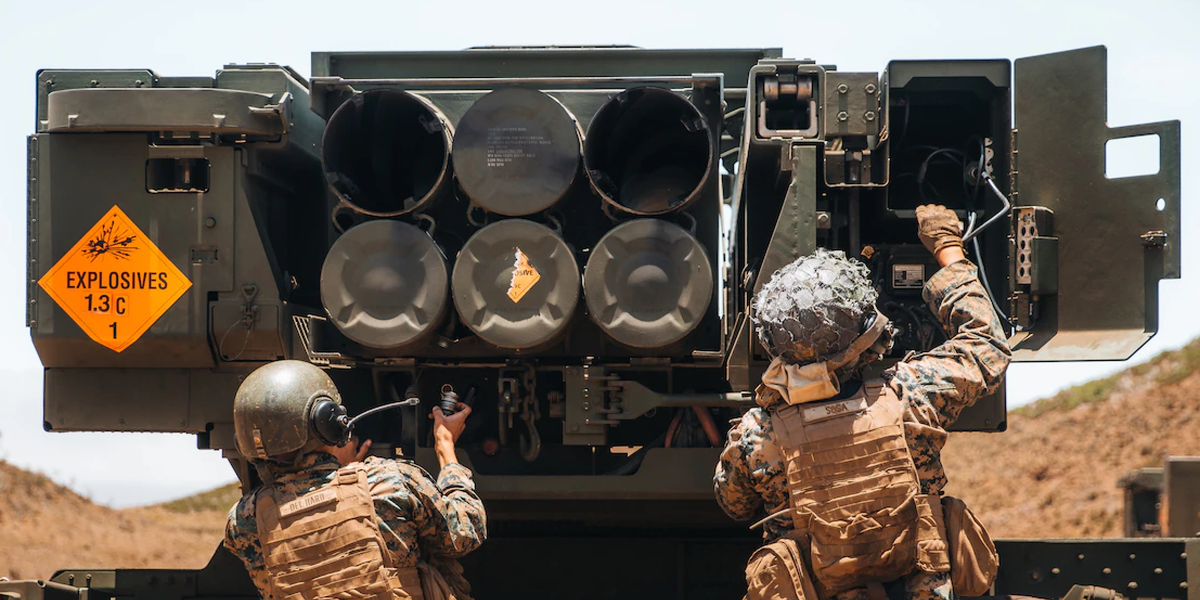
One of the clearest examples came when the United States supplied Ukraine with High Mobility Artillery Rocket Systems, commonly known as HIMARS. The system became widely discussed not because it magically changed the entire war overnight, but because it gave Ukraine a more precise way to strike valuable Russian military targets such as ammunition storage sites, logistics nodes, and command-related infrastructure.
That mattered because Russia’s war effort has depended heavily on massed artillery, large ammunition stockpiles, and supply routes stretching across occupied territory. When those networks become vulnerable, commanders must adapt. Supplies must be moved. Troops may receive fewer shells. Officers become more cautious. Rumors spread. Suddenly, the rear area does not feel quite so rear anymore.
For soldiers on the receiving end, the psychological effect can be larger than the physical blast radius. A unit may begin to wonder whether its location is known. Drivers may worry about supply roads. Officers may feel pressure to move faster than their systems allow. Even if only a portion of attacks succeed, the constant possibility of accurate strikes can create a mental tax. War already charges interest; precision weapons add late fees.
Drones and the New Morale Battlefield
Drones have become one of the defining features of the Russia-Ukraine war. They are used for observation, targeting, logistics awareness, and attacks. Ukraine’s growing drone ecosystem, supported by domestic production and foreign assistance, has made the battlefield more transparent and more stressful for Russian forces.
In previous wars, troops could often assume that distance, darkness, or terrain provided a decent measure of concealment. In Ukraine, that assumption is far weaker. Small drones can watch movement. Larger systems can help identify patterns. Counter-drone tools can protect troops and infrastructure. The result is a battlefield where being careless is not just risky; it is practically sending the enemy a calendar invite.
Aid packages that include drones or counter-drone capabilities therefore affect morale in two directions. They help Ukrainian forces see more and protect themselves better. They also remind Russian units that their activities may be observed, recorded, and targeted. That kind of pressure can wear down confidence over time, especially among units already dealing with fatigue, rotation problems, and inconsistent leadership.
Air Defense Aid: Protecting Cities and Preserving Will
Another major category of assistance is air defense. Russia has repeatedly used missiles and drones to attack Ukrainian cities, power systems, transportation infrastructure, and civilian life. Air defense systems and interceptors do not merely protect military assets. They protect the daily rhythm of a country trying to survive a war while still keeping hospitals open, lights on, trains moving, and children learning in classrooms or shelters.
That has a direct connection to morale. When civilians believe their skies are better defended, national resilience improves. When soldiers know their families are somewhat better protected, their own psychological burden may lessen. Aid that strengthens air defense therefore supports both the front line and the home front.
For Russia, improved Ukrainian air defense can be deeply frustrating. Moscow has invested heavily in aerial pressure as a way to exhaust Ukraine and test Western patience. When those attacks are intercepted or reduced in effectiveness, the strategy becomes more costly and less politically rewarding. In plain English, it is hard to boast about unstoppable power when your expensive strike package keeps having a bad evening.
Why Russian Morale Has Been Vulnerable
Reports and analysis throughout the war have pointed to several recurring Russian morale problems: poor training among some mobilized troops, heavy casualties, uneven leadership, logistical strain, unclear objectives, and the emotional weight of a long war. Russia still has significant manpower, a large defense industry, and the ability to adapt. Underestimating it would be foolish. But recognizing its vulnerabilities is not wishful thinking; it is basic analysis.
Morale problems do not always look dramatic. They may appear as slower assaults, reluctance to advance, poor coordination, discipline issues, complaints from soldiers’ families, or commanders using harsher methods to force compliance. They may also show up in the need to rely on irregular formations, prison recruitment, foreign support, or increasingly costly tactics to maintain pressure.
Ukraine’s aid-supported defenses can intensify these problems by making Russian advances more expensive. If a unit believes every push forward may bring heavy losses, morale erodes. If logistics crews fear precision strikes, supply becomes harder. If commanders cannot promise success, their orders carry less emotional force. Nobody enjoys being told, “Advance toward the highly monitored area,” especially when the phrase “highly monitored” is doing Olympic-level understatement.
Western Aid as a Message to Moscow
The latest aid sent to Ukraine also functions as strategic messaging. It tells Russia that the war is not simply a contest between Moscow and Kyiv. It is a test of whether borders can be changed by force without long-term consequences. That is why U.S. and allied assistance has included not only weapons, but training, intelligence support, maintenance, logistics, humanitarian aid, budget support, and sanctions coordination.
For Russia’s leadership, the hope has often been that Western unity will crack. Domestic debates in the United States and Europe have certainly created uncertainty, and Ukraine has felt the impact when aid slowed. But each renewed package undercuts Moscow’s narrative that patience alone will deliver victory.
That narrative battle matters. Soldiers do not fight in a vacuum. They hear rumors. They read messages. They notice whether the enemy has fresh ammunition or better defenses. They understand when a promised quick campaign has become a grinding war of attrition. When Ukraine receives more support, Russian troops may reasonably ask: how long is this supposed to continue?
The Role of Ammunition and Maintenance
Not every aid item becomes famous. Some of the most important support is deeply unglamorous: artillery rounds, spare parts, repair equipment, communications gear, medical supplies, vehicles, and maintenance contracts. These do not always make dramatic headlines, but wars are not won by headlines. They are won by supply chains with less personality but far better attendance records.
Ammunition keeps pressure on Russian positions. Spare parts keep vehicles from becoming expensive lawn ornaments. Repair support helps Ukraine sustain donated systems over months and years. Communications equipment improves coordination. Medical supplies save lives and help wounded personnel return to stability.
For Russia, the persistence of this support is discouraging because it means Ukraine’s resistance is renewable. Destroying one vehicle matters less if Ukraine can repair others. A temporary Russian advantage matters less if Ukraine receives more ammunition. The psychological problem for Russia is not just what Ukraine has today. It is the possibility that Ukraine may still have enough tomorrow.
How Aid Shapes the Battlefield Without Guaranteeing Victory
It is important to avoid fantasy. Military aid is not a magic wand, and Ukraine’s challenges remain severe. The country faces manpower strain, infrastructure damage, economic pressure, and the emotional exhaustion of prolonged war. Western aid can reduce disadvantages, but it cannot erase geography, weather, politics, or the brutal mathematics of attrition.
Russia, too, has adapted. It has expanded drone production, improved some defensive tactics, increased domestic military output, and leaned on partners such as Iran and North Korea. Moscow has shown a willingness to accept enormous losses for limited gains. That grim determination means Ukraine needs consistent support, not occasional bursts of attention followed by strategic napping.
Still, aid changes probabilities. It can help Ukraine hold lines, protect cities, strike logistics, defend airspace, and negotiate from a stronger position. It can also make Russia pay more for every kilometer. In a war of endurance, raising the cost of aggression is not a side effect. It is the point.
Specific Examples of Morale Pressure on Russia
1. Strikes on Logistics and Ammunition Storage
When Ukraine has used Western-supplied precision capabilities to hit Russian logistics, the effect has extended beyond the immediate target. Russian forces have had to disperse supplies and move storage sites farther from the front. That can slow resupply and create uncertainty among troops who depend on steady ammunition and fuel.
2. Stronger Ukrainian Air Defense
Air defense aid helps blunt Russia’s missile and drone campaigns. When Russian attacks fail to achieve their intended effect, it can weaken the perception of dominance. For a military culture that relies heavily on projecting strength, failed pressure campaigns are not exactly great for the office mood.
3. Drone Visibility Across the Front
Drone-supported surveillance makes concealment harder. Russian troops who know they may be watched from above face constant stress. This can reduce movement, slow attacks, and create hesitationthree things no commander wants unless the mission is “stand around nervously.”
4. Continued Western Commitment
Every major aid announcement tells Russian forces that Ukraine’s supply problem is not as simple as waiting out Kyiv. That affects morale because it challenges the belief that Russia only needs to endure longer than the West cares.
Why the Phrase “Morale Problems” Still Fits
The phrase “morale problems” may sound soft compared with artillery, drones, and missiles, but it captures a hard truth: armies are made of people. People get tired. People get scared. People notice when plans fail. People complain when leadership seems careless with their lives. People wonder why a war advertised as necessary keeps demanding more sacrifices without delivering a clear end.
Ukraine’s latest aid packages contribute to Russia’s morale problems because they keep the battlefield uncertain and costly. They help Ukraine resist, adapt, and punish mistakes. They make Russian rear areas less comfortable. They strengthen the message that Ukraine is not alone. And they complicate the Kremlin’s attempt to sell endurance as inevitability.
Morale is not destroyed by one delivery or one system. It is worn down by accumulation: another failed assault, another intercepted strike, another logistics disruption, another Western package, another sign that victory will not be quick or cheap. That is why aid matters beyond the equipment list.
Experience-Based Perspective: What This Topic Teaches About Modern War
Looking at the latest aid sent to Ukraine, one lesson stands out: modern war is not only about who has the biggest arsenal. It is about who can learn faster, repair faster, communicate better, and keep people believing that the struggle has purpose. This is where Ukraine has often surprised observers. Against a larger invader, Ukraine has used a combination of national resilience, Western aid, battlefield creativity, and technological adaptation to stay in the fight.
From an analytical perspective, the most striking experience is how quickly ordinary assumptions have aged. Before 2022, many people imagined major war in Europe as a contest dominated by tanks, aircraft, and traditional artillery. Those still matter, of course. But Ukraine has shown that drones, open-source intelligence, mobile air defense, electronic warfare, and flexible logistics can reshape the battlefield. The war has become a harsh classroom, and unfortunately, nobody gets to skip the final exam.
The second lesson is that morale depends on credibility. Ukrainian morale rises when aid arrives because it proves that promises are becoming practical support. Russian morale suffers when those same deliveries show that Ukraine’s partners remain involved. In this sense, a shipment of ammunition is also a message. A repair program is also a message. A new air defense commitment is also a message. The message is simple: Ukraine can continue.
The third lesson is that delays matter. When aid slows, Ukraine feels it on the battlefield. Shortages can force commanders to ration ammunition, reduce defensive options, or accept greater risk. That can encourage Russia to push harder. But when support resumes, it can help restore balance and prevent Russia from turning temporary advantage into strategic breakthrough.
The fourth lesson is that no single tool solves the war. HIMARS mattered, but it did not end the conflict. Drones matter, but both sides use them. Air defense matters, but interceptors are limited. Armored vehicles matter, but mines, drones, and artillery make movement dangerous. The real power comes from combining systems into a durable network: intelligence, defense, fires, mobility, training, maintenance, and political will.
Finally, this topic teaches that morale is practical, not poetic. It is built through food, rest, leadership, equipment, trust, and the belief that sacrifice is not being wasted. If Russian troops see repeated losses, poor planning, and a Ukrainian army that keeps receiving help, morale problems become more likely. If Ukrainian troops see consistent backing and usable tools, their own morale has a better chance of holding.
That is the deeper story behind the latest aid sent to Ukraine. It is not just about equipment crossing borders. It is about pressure moving in the other directiontoward Russian commanders, Russian logistics, Russian assumptions, and Russian soldiers wondering how long this war can keep demanding more from them.
Conclusion
The latest aid sent to Ukraine is designed to strengthen defense, improve battlefield options, and sustain resistance against Russia’s invasion. But its psychological impact may be just as important. By helping Ukraine strike logistics, defend cities, improve situational awareness, and remain supplied, Western assistance increases the strain on Russian forces and challenges Moscow’s expectation that time is automatically on its side.
Military aid does not guarantee victory. It does, however, raise the cost of aggression and keep Ukraine in the fight. For Russia, that means more uncertainty, more adaptation, more pressure, and yesmore morale problems. In a long war, that may be one of the most consequential effects of all.