Note: This article discusses a reported 2020 Colorado case involving a landlord’s election-related rent warning, tenant reaction, legal concerns, and the broader U.S. housing-affordability debate.
When Politics Shows Up in the Rent Envelope
Rent is already one of the least charming words in the English language. Add presidential politics to it, and suddenly a monthly bill starts acting like a campaign flyer with plumbing issues. That is why the story behind the headline “Landlord Makes It Clear That He Will Raise The Rent If Biden Gets Elected” spread so quickly online. It was not just another argument about taxes, gas prices, or whose yard sign had better font choices. It was about housing, power, fear, and the uncomfortable question of whether a landlord can use rent as political pressure.
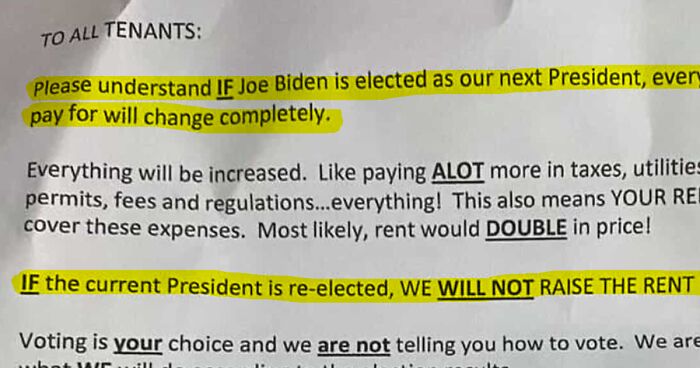
The incident centered on residents of a mobile-home park in Fort Morgan, Colorado, during the 2020 presidential election. Tenants reportedly received a notice warning that if Joe Biden won, expenses would rise and rent would likely increase dramatically. The notice also suggested that if Donald Trump won reelection, rent would not be raised for at least two years. For people living paycheck to paycheck, that kind of message did not feel like casual political commentary. It felt like the rent bill had put on a red, white, and blue necktie and started making demands.
The story became viral because it combined several issues Americans understand immediately: rising rent, unequal power between landlords and tenants, political anxiety, and the fear of losing a stable home. Even people who disagreed politically could recognize the tension. A tenant’s vote is supposed to be private. A tenant’s housing should not depend on how an election turns out. When those two worlds collide, the result is not civic engagement; it is a legal and ethical thunderstorm.
The Reported Colorado Rent Threat: What Happened?
According to local and national reporting at the time, tenants at a Colorado trailer park said they received a letter from their landlord before the 2020 election. The message warned that a Biden victory would cause higher taxes, utilities, permits, regulations, gasoline, groceries, and other expenses. The landlord then connected those predictions directly to rent, saying rent would likely double. The notice also told residents that if Trump won, rent would stay unchanged for at least two years.
That distinction mattered. Landlords can have political opinions. Tenants can have political opinions. The mailman probably has political opinions too, although thankfully he usually just delivers coupons and pretends not to judge our online shopping habits. But when a housing provider links a tenant’s financial security to a specific election result, the message can cross from opinion into intimidation. In this case, residents reportedly said they felt shocked, hurt, and pressured by a decision they could not individually control.
Colorado officials later treated the notice as a serious matter. The state attorney general’s office issued a cease-and-desist letter, describing the conduct as voter intimidation through economic coercion. The office warned against further communications implying consequences based on voting or election results, and also warned against retaliation toward tenants who complained. That response changed the story from “viral landlord drama” into a real example of how housing and voting rights can intersect.
Why the Message Hit Tenants So Hard
To understand why the notice caused such alarm, you have to understand the basic reality of renting. Many renters do not have a financial cushion large enough to absorb a major rent increase. A sudden jump can mean choosing between groceries, medicine, car repairs, childcare, or moving costs. For mobile-home park residents, the problem can be even tougher. Many residents own their homes but rent the land beneath them, meaning moving is expensive, complicated, or sometimes practically impossible.
That is why a threat to raise rent does not land like an ordinary price change. It lands like a threat to stability. If your coffee shop raises latte prices, you can sigh dramatically and make coffee at home. If your landlord doubles the rent, the solution is not quite as simple as “foam your own oat milk.” Housing is shelter, address, neighborhood, school district, work commute, and community. It is the place where people keep medication, family photos, winter coats, and the one drawer full of batteries that may or may not work.
The political layer made the situation more troubling. Voting is designed to be private and free from pressure. A landlord does not need to stand inside a voting booth to influence a tenant. Economic pressure can be powerful enough by itself. When the person who controls your housing cost tells you that one election outcome could double your rent, the message can feel less like a prediction and more like a warning label attached to democracy.
Can a Landlord Raise Rent Because of an Election?
In the United States, rent increases are usually governed by lease terms, state law, local ordinances, notice requirements, and, in some places, rent stabilization rules. A landlord generally cannot change rent in the middle of a fixed-term lease unless the lease allows it. For month-to-month tenants, landlords often must provide written notice before increasing rent. The required notice period varies by state and sometimes by the size of the increase.
That does not mean every rent increase is illegal. Landlords may raise rent for legitimate business reasons, such as higher property taxes, insurance costs, maintenance expenses, market rates, or major improvements. However, the reason matters. A rent increase used to punish, pressure, discriminate, or retaliate against tenants may create legal problems. A landlord who says, “Costs went up, so rent will rise after proper notice,” is in a different position from one who says, “Vote the wrong way and your rent gets body-slammed.”
Political affiliation is not a protected class under the federal Fair Housing Act in the same way race, religion, national origin, sex, familial status, and disability are protected. However, voter intimidation is its own legal concern, and many states have laws against threats, coercion, retaliation, or interference connected to voting. Local laws may also create additional tenant protections. In other words, this is not only a landlord-tenant issue. It can become a civil-rights issue when housing power is used to influence the vote.
Voter Intimidation Is Not Always Loud
When people hear “voter intimidation,” they may picture someone blocking a polling place, shouting at voters, or standing around in tactical gear like they are guarding a medieval drawbridge. But intimidation can be quieter. It can arrive as a robocall, a misleading flyer, a workplace warning, or a rent notice. The common thread is pressure: a message that tries to make someone afraid to vote, afraid to vote freely, or afraid of the consequences of participating in an election.
Federal voting-rights law prohibits intimidation, threats, and coercion connected to voting. State laws often add their own protections. The key idea is simple: people should be able to cast a ballot without fear that someone with power over their job, home, safety, or family will punish them for it. A landlord does not have to physically drag a tenant away from a ballot box to create a problem. Economic coercion can be enough to raise serious legal concerns.
The Colorado case is useful because it shows how officials may interpret a message that appears to tie rent consequences to an election outcome. Even though the landlord reportedly said tenants were free to vote as they chose, the financial warning still mattered. Saying “I am not telling you how to vote” does not magically erase a threat. That is like saying, “I am not telling you to panic,” while releasing a raccoon into the conference room.
The Bigger Housing Context: Renters Were Already Under Pressure
The story also resonated because rent anxiety is not imaginary. Across the United States, millions of households spend more than 30 percent of their income on rent and utilities, the common threshold for being housing cost-burdened. Many spend more than half their income on housing, leaving little room for emergencies. When rent eats the budget, every new fee feels personal, and every rent notice gets opened with the emotional energy of defusing a tiny paper bomb.
Rental markets have shifted since the pandemic years. Some national data shows rent growth cooling in many places as new apartment supply has helped relieve pressure. Still, affordability remains difficult for many households. A market can cool and still be too expensive, the same way a skillet can cool from “volcanic” to “still absolutely do not touch that.” For renters with low or moderate incomes, even small increases can be destabilizing.
That is why politically framed rent threats are so explosive. They land in a country where housing is already a major source of stress. Renters are not evaluating the statement in a vacuum. They are thinking about deposits, moving trucks, school changes, utility transfers, pet fees, application fees, and the possibility that the next place will be even more expensive. A landlord’s message can turn an already tense election season into a personal housing crisis.
What Tenants Should Do If They Receive a Political Rent Threat
1. Save the Message
Tenants should keep the original letter, email, text message, voicemail, or notice. Take screenshots, photograph posted notices, and save envelopes or timestamps. Documentation matters. A vague memory of a threat is harder to act on than a clear record with dates and wording.
2. Check the Lease
The lease is the first place to look. It may explain when rent can be increased, how much notice is required, and whether the tenancy is fixed-term or month-to-month. Tenants should not assume a rent increase is valid just because it appears on official-looking paper. Official-looking paper has carried plenty of nonsense throughout history.
3. Research Local Law
Rent rules vary widely by state, county, and city. Some jurisdictions limit rent increases. Others require longer notice for larger increases. Some have anti-retaliation laws that protect tenants who report violations, organize, complain about unsafe conditions, or exercise legal rights.
4. Report Voter Intimidation Concerns
If a message appears to threaten housing consequences tied to voting or election outcomes, tenants can contact state election officials, the state attorney general, local legal aid, or voting-rights hotlines. In urgent situations, tenants should seek direct legal help rather than relying on internet comment sections, which are famously where nuance goes to wear a fake mustache.
5. Talk With Neighbors Carefully
If multiple tenants received the same notice, a collective response may be stronger. Neighbors can compare documents, timelines, and experiences. However, tenants should avoid spreading rumors or altering documents. The goal is evidence, not chaos with a group chat.
What Landlords Should Learn From This Case
Landlords have the right to discuss politics as private citizens. They may worry about taxes, insurance, regulation, maintenance costs, and economic policy. But they should keep political opinions separate from tenant communications about rent. A rent notice is not the place to campaign. It is a legal and financial communication, not a bumper sticker with late fees.
A responsible landlord explains rent increases with clear, neutral, business-related reasons. The notice should comply with lease terms and state law. It should avoid threats, personal attacks, protected-class discrimination, retaliation, or any suggestion that tenants will be rewarded or punished because of voting choices. Even if a landlord believes an election will affect costs, tying rent directly to a candidate’s victory can create legal risk.
The better approach is boring, and boring is often legally beautiful. “Due to increased insurance and maintenance expenses, rent will increase by X amount on Y date, consistent with your lease and state notice requirements.” That sentence will never go viral, but that is the point. Not every landlord letter needs to become a national civics lesson with screenshots.
Why This Story Went Viral
The internet loves a story with a villain, a receipt, and a moral question. This one had all three. It also arrived during an election season when Americans were already arguing about everything from health care to grocery prices to whether the neighbor’s flag collection had become a full-time personality. The landlord’s message offered a clear example of how national politics can intrude into daily life.
But the viral reaction was not only about partisan outrage. Many people saw the story as a warning about power. A landlord has leverage because tenants need housing. An employer has leverage because workers need income. A lender has leverage because borrowers need credit. When powerful people use that leverage to influence political behavior, the problem becomes bigger than one election.
The story also revealed how quickly tenants can feel trapped. A homeowner who dislikes a neighbor’s political sign may grumble and close the blinds. A tenant who receives a rent threat from a landlord may wonder whether they can afford next month. That difference is why housing insecurity can chill speech, voting, organizing, and complaints about unsafe conditions. Stable housing supports civic freedom. Unstable housing makes people easier to pressure.
Specific Examples of Legal and Ethical Red Flags
A landlord communication may raise concern if it says rent will rise because a particular candidate wins, tenants who complain will face higher fees, voters supporting one party will lose lease renewal options, or residents who contact authorities will be punished. Even softer language can be problematic if the practical meaning is clear. “Vote however you want, but your rent depends on the outcome” is not exactly a lullaby for democracy.
Ethically, landlords should avoid using housing insecurity as leverage. Tenants are not political hostages. A lease should define housing obligations, not serve as a ballot-box weather report. If costs rise after an election because of real tax or regulatory changes, landlords can address those changes through normal legal channels. They do not need to predict disaster before votes are counted or imply that tenants can save themselves by favoring one candidate.
For tenants, the red flag is not merely a landlord having an opinion. The red flag is the connection between political outcome and housing consequence. That connection can transform ordinary political speech into coercive pressure, especially when delivered by someone with direct control over rent, renewal, fees, or eviction.
Experiences Related to Election-Based Rent Threats
Stories like the Colorado rent notice often bring out a flood of renter experiences because many tenants recognize the feeling immediately. Some have never received an explicitly political rent threat, but they have received sudden increases after asking for repairs. Others have seen fees appear after they joined a tenant meeting, posted criticism online, or questioned a lease term. The details differ, but the emotional pattern is similar: a person with housing power sends a message that feels less like administration and more like punishment.
One common experience is the “thin explanation” rent increase. A tenant receives a notice saying rent is going up, but the reason is vague: “market conditions,” “new expenses,” or “policy changes.” Those reasons may be legitimate, but when they follow a conflict, tenants naturally wonder whether something else is going on. In the political version of the story, the explanation is not thin at all. It is almost too direct. The landlord points to an election and tells tenants what financial consequence may follow. That directness is what made the Colorado case so alarming.
Another experience involves fear of speaking up. Renters often calculate risk before complaining. Will the landlord refuse to renew? Will maintenance slow down? Will the next rent increase be suspiciously large? This is especially true for tenants with children, elderly relatives, disabilities, limited income, immigration concerns, or few alternative housing options. When a landlord introduces politics into the equation, tenants may feel pressure to stay silent not only about repairs or fees, but also about civic beliefs.
Mobile-home communities face unique pressure. Many residents own the structure they live in but rent the lot. Moving a mobile home can cost thousands of dollars, and older homes may not be movable at all. That means a lot-rent increase can function like a trapdoor. Residents technically have choices, but those choices may be financially unrealistic. A political rent threat in that setting can feel especially heavy because the cost of leaving is so high.
Some renters respond by organizing. They compare notices, contact legal aid, speak with local reporters, or file complaints with state agencies. Others quietly document everything and wait, worried that visibility could make them targets. Neither response is cowardly or dramatic. Tenants make decisions based on risk, family needs, money, and safety. The important lesson is that documentation and collective awareness can turn confusion into clarity.
For many readers, the Colorado story serves as a reminder to read every rent notice carefully. Do not assume a landlord’s wording is harmless just because it includes a sentence like “we are not telling you how to vote.” The legal meaning of a message depends on the full context. A warning tied to election results, rent increases, and housing consequences deserves attention. Democracy works best when voters can make choices without wondering whether their rent payment is lurking behind the curtain wearing campaign merchandise.
Conclusion: Rent Should Not Be a Political Weapon
The story behind “Landlord Makes It Clear That He Will Raise The Rent If Biden Gets Elected” remains relevant because it shows how easily economic pressure can collide with democratic rights. Rent is not just another bill. It is the price of staying housed. When a landlord ties that price to an election outcome, tenants may reasonably feel pressured, frightened, or punished for political events beyond their control.
The broader lesson is not that landlords can never discuss politics or that rent can never rise after economic changes. The lesson is that housing power must be handled carefully. Legal rent increases should follow leases, notice rules, and legitimate business reasons. Voting should remain private, free, and protected from threats or coercion. When those boundaries blur, officials, tenants, journalists, and communities have good reason to pay attention.
For renters, the best response is to document, verify, and seek help from trusted legal or civic resources. For landlords, the best strategy is simple: keep campaign messaging out of rent notices. The rent envelope is already stressful enough. It does not need a podium, a slogan, and a tiny marching band.