A kitchen without enough storage is basically a tiny obstacle course with better lighting. You open a cabinet, a skillet threatens your toes, a saucepan lid rolls into another dimension, and suddenly dinner feels less like cooking and more like negotiating with cookware. That is where Enclume pot racks enter the roomconfident, sturdy, and very much not here for your wobbly pile of pans.
Enclume has built a reputation around handcrafted kitchen storage, especially ceiling pot racks, wall-mounted pot racks, utensil bars, and cookware stands. The brand’s look is easy to recognize: strong lines, hammered steel, professional-grade construction, and a slightly old-world attitude that says, “Yes, I can hold your Dutch oven, and no, I will not apologize for looking handsome while doing it.”
This guide explores why Enclume pot racks remain a favorite for serious home cooks, designers, and anyone who has ever lost a lid behind a stack of mixing bowls. We will look at materials, styles, installation, design fit, maintenance, and the real-life experience of using a pot rack in a busy American kitchen.
What Makes Enclume Pot Racks Different?
Enclume is not a brand built around flimsy decorative storage. Its identity is rooted in heavy-duty metalwork, traditional craftsmanship, and long-lasting kitchen function. The company is known for using materials such as carbon steel, 304 stainless steel, and solid copper, depending on the product line. Many of its racks are handcrafted in the United States and inspired by French metalworking traditions. Even the name “Enclume” means “anvil” in French, which is a pretty strong hint that the brand is not trying to make delicate little wall jewelry.
The most recognizable finish is hammered steel. It has a textured, hand-worked look that feels both rustic and refined. In a farmhouse kitchen, it looks right at home. In a modern kitchen, it adds contrast and warmth. In a small apartment kitchen, it quietly says, “You may not have a walk-in pantry, but you do have taste.”
Why a Pot Rack Still Makes Sense in a Modern Kitchen
Some people think pot racks belong only in old country kitchens or restaurant prep spaces. That is understandable, but also wrong in the way that storing cast iron under a stack of plastic containers is wrong. A good pot rack solves several problems at once.
It Frees Up Cabinet Space
Pots and pans are awkward. They are wide, heavy, noisy, and rarely stack as neatly as product photos promise. Hanging cookware opens up cabinets for food storage, small appliances, mixing bowls, or the giant collection of mugs you somehow acquired even though you live alone.
It Keeps Everyday Cookware Within Reach
A pot rack works best when it holds the pieces you use often: a skillet, sauté pan, saucepan, stockpot, colander, and maybe a few utensils. When everything is visible, cooking becomes faster. You do not have to dig through a cabinet while onions burn in the pan and your smoke alarm begins its solo career.
It Turns Cookware Into Decor
Open kitchen storage can become cluttered if handled carelessly, but a well-edited pot rack gives the room character. Copper pans, stainless steel skillets, black cast iron, and enamel Dutch ovens can look beautiful when arranged intentionally. Enclume racks are especially good at this because the rack itself has enough visual weight to look intentional rather than temporary.
Popular Types of Enclume Pot Racks
Enclume makes several styles, and the right choice depends on your kitchen layout, ceiling height, wall space, and cooking habits. Choosing the rack is not just a design decision; it is a daily workflow decision.
Ceiling-Mounted Pot Racks
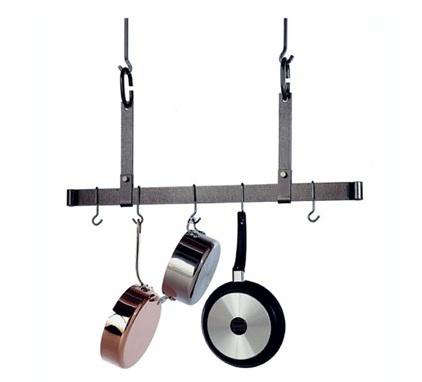
A ceiling pot rack is the classic choice. It usually hangs over an island, peninsula, prep table, or open walkway near the cooking zone. Enclume ceiling racks come in oval, rectangular, bar, crown, and low-ceiling designs. Many models include multiple hooks, and some include a grid that can hold additional kitchen items on top.
Ceiling racks are ideal for kitchens with enough overhead space and strong mounting points. They can become a dramatic centerpiece, especially above an island. The key is height. Too high, and the rack becomes a museum exhibit for pans you never touch. Too low, and every tall guest will learn humility.
Wall-Mounted Pot Racks
Wall racks are excellent for smaller kitchens or kitchens without a convenient ceiling location. Enclume wall-mounted pot racks include half-circle racks, bookshelf-style racks, and utensil bars. A wall rack can sit above a range, beside a prep area, on a pantry wall, or near a breakfast nook if the layout allows.
The bookshelf-style racks are especially practical because they combine hanging space below with shelf storage above. That means you can hang pans from hooks and place lids, cookbooks, oils, bowls, or small kitchen accessories on the shelf. It is the kitchen equivalent of getting a bonus drawer without remodeling.
Utensil Bars and Rails
For cooks who want the Enclume look without committing to a large rack, a utensil bar is a smart option. It can hold ladles, spatulas, tongs, small pans, measuring cups, or strainers. In compact kitchens, a simple wall bar can make an immediate difference. It is also less visually dominant than a ceiling rack, which is helpful if your kitchen is already full of strong design elements.
Cookware Stands
Not every kitchen has the right ceiling or wall structure for mounted storage. In that case, a standing pot rack can provide vertical storage without drilling into walls or joists. Enclume’s standing racks are useful in rental homes, large pantries, open kitchens, or dining areas where cookware can double as display.
Materials and Finishes: Why They Matter
The material of a pot rack affects durability, maintenance, style, and how it pairs with your cookware. Enclume’s major material options include hammered steel, stainless steel, and copper.
Hammered Steel
Hammered steel is the signature Enclume look. It feels hand-forged, substantial, and timeless. It pairs beautifully with cast iron, copper, stainless steel, and enamel cookware. The finish often has a protective coating or wax treatment, depending on the model, which helps preserve the metal and makes cleaning simpler.
Stainless Steel
Stainless steel fits clean, contemporary kitchens. It works well with stainless appliances, quartz countertops, simple cabinetry, and minimalist hardware. A stainless Enclume rack can look professional without feeling too rustic.
Copper
Copper is the show-off, but in a good way. A copper rack or copper cookware display brings warmth, shine, and old-world charm. It requires more visual confidence and usually more maintenance, but when done well, it can make a kitchen feel collected and luxurious.
How to Choose the Right Enclume Pot Rack
Before buying, measure carefully and think honestly about how you cook. The best pot rack is not necessarily the biggest or most dramatic. It is the one that makes your kitchen easier to use every day.
Start With Your Cookware
Lay out the pots, pans, and utensils you want to hang. Count them. Then remove the items you rarely use. A pot rack should not become a retirement home for novelty pans. If you use a skillet five times a week, hang it. If you use a lobster pot once every three years, it can stay in a cabinet and think about its choices.
Consider Ceiling Height
Many hanging pot racks are designed with typical kitchen ceiling heights in mind, but not every kitchen is typical. If your ceiling is low, look for a low-ceiling model. If your ceiling is high, you may need chain extensions or longer hooks so the cookware remains reachable. A good rule is that the longest pan should hang low enough to grab comfortably but high enough not to block sightlines or bump heads.
Check the Mounting Surface
Heavy cookware needs strong support. Whenever possible, ceiling racks should be mounted into joists or beams, and wall racks should be secured into studs. Drywall anchors may be included with some products, but cookware weight varies dramatically. Cast iron, copper, and large stockpots are not polite guests; they are heavy and they know it. When in doubt, hire a professional installer.
Match the Rack to Your Kitchen Style
For farmhouse, cottage, traditional, and industrial kitchens, hammered steel is a natural fit. For modern kitchens, stainless steel or a clean-lined bar rack may work better. For French country or vintage-inspired kitchens, an oval or crown-style rack can add romance without requiring you to start making cassoulet every Sunday.
Where to Place an Enclume Pot Rack
Placement determines whether your pot rack feels like a design upgrade or an obstacle. The rack should support your cooking routine, not interrupt it.
Above a Kitchen Island
This is the classic location. It works well because the island is often used for prep, and overhead storage keeps cookware close without sacrificing cabinets. An oval or rectangular Enclume ceiling rack can look balanced above an island, especially if the island is centered in the room.
Near the Range
A wall rack near the range is convenient for everyday pans and utensils. This setup is especially useful in smaller kitchens where every step matters. Just avoid placing cookware where grease splatter will turn cleaning into a part-time job.
On a Pantry Wall
If you have a pantry or utility wall, a wall rack can store less frequently used cookware while keeping the main kitchen visually calmer. This is a great compromise for people who like the function of hanging storage but prefer a more minimal cooking space.
Over a Window or Backsplash
Rails and narrow racks can work above a sink, across a window, or along a backsplash. This is better for lighter cookware and utensils than for heavy pots. Done carefully, it adds charm and uses otherwise wasted vertical space.
Installation Tips for Safety and Sanity
Installing an Enclume pot rack is not the time to freestyle with a mystery screw from the junk drawer. Read the instructions, measure twice, and respect the weight of the cookware you plan to hang.
Use a Stud Finder or Joist Finder
For ceiling racks, locate ceiling joists. For wall racks, locate studs. Mark carefully before drilling. A beautiful rack mounted in the wrong place is just future wall repair with hooks.
Think About Reach
The primary cook should be able to remove and replace pans naturally. If the rack is shared by people of very different heights, test the reach before final installation. A pot rack should make cooking feel smooth, not like a daily shoulder mobility exam.
Balance the Weight
Once installed, distribute cookware evenly. Put heavier pans closer to the main support points when possible. Avoid loading one side with cast iron while the other side holds a lonely whisk. Symmetry is not only attractive; it is practical.
How to Style an Enclume Pot Rack Without Creating Visual Chaos
Open storage works best when edited. The goal is “chef’s kitchen,” not “garage sale above eye level.”
Use Your Best-Looking Workhorses
Hang the pans you actually use and that look good together. Stainless steel, cast iron, copper, and enamel can mix beautifully if the arrangement feels intentional. If a pan is dented, stained beyond redemption, or has a handle held together by hope, give it cabinet privacy.
Group Similar Items
Place skillets together, saucepans together, and utensils together. This makes the rack easier to use and calmer to look at. A little order goes a long way.
Leave Breathing Room
Do not fill every hook just because it exists. Negative space matters. A rack with a little room looks curated; a rack packed with every pot you own looks like cookware is trying to escape.
Cleaning and Maintenance
Enclume racks are built for real kitchens, but real kitchens produce steam, oil, dust, and the occasional sauce incident that no one wants to discuss. Maintenance is straightforward if you keep up with it.
For hammered steel, a damp cloth is often enough for routine cleaning. Dry the rack thoroughly after wiping. Avoid harsh abrasives that can damage the finish. Stainless steel should be cleaned gently with non-abrasive products, following the grain where visible. Copper may require specialty copper cleaner if you want to maintain shine, though some homeowners prefer the natural patina.
Hooks should also be cleaned occasionally, especially if they sit near the stove. If the rack has a shelf, remove items and wipe the top surface regularly. Open storage looks best when it does not come with a free layer of kitchen dust.
Pros and Cons of Enclume Pot Racks
Pros
Enclume pot racks are strong, attractive, and available in many sizes and configurations. They can free cabinet space, improve cooking workflow, and add architectural interest. The handcrafted look gives them more personality than many generic kitchen organizers.
Cons
They require careful installation, especially ceiling models. They also put cookware on display, which means your pans need to be reasonably presentable. And because Enclume focuses on premium construction, these racks are usually not the cheapest option. They are better viewed as long-term kitchen fixtures than quick storage hacks.
Who Should Buy an Enclume Pot Rack?
An Enclume pot rack makes sense for people who cook often, own quality cookware, and want storage that looks intentional. It is especially useful in kitchens with limited cabinet space, open layouts, islands, or unused wall areas. It is also a strong choice for homeowners who appreciate American-made craftsmanship and are willing to invest in durable kitchen organization.
However, if you rarely cook, dislike visible storage, or live in a rental where drilling is not allowed, a smaller utensil bar or freestanding rack may be a better starting point. The goal is not to impress visitors with hanging cookware. The goal is to make your kitchen work better while looking good enough that visitors assume you know how to make risotto.
Specific Examples of Smart Enclume Setups
For a Small Apartment Kitchen
A 24-inch or 30-inch wall utensil bar can hold a skillet, small saucepan, tongs, ladle, and spatula. This clears one cabinet shelf and keeps everyday tools near the stove. Choose hammered steel if the kitchen needs warmth or stainless steel if the space is more modern.
For a Family Kitchen With an Island
An oval or rectangular ceiling rack above the island can hold the most-used cookware while creating a central focal point. Add hooks only for daily pieces, and use the top grid for lightweight items or decorative pieces that still serve a purpose.
For a Serious Home Cook
A deep bookshelf wall rack can combine hanging storage and shelf storage. Put sauté pans and skillets below, lids or cookbooks above, and utensils on side hooks. This setup feels close to a restaurant workstation without making your kitchen look like a commercial dish pit.
of Real-Life Experience: Living With an Enclume-Style Pot Rack
The first thing you notice after installing a serious pot rack is not the beauty. It is the silence. Not literal silence, of coursepans still clang if you swing them around like a medieval dinner bellbut cabinet chaos disappears. No more kneeling on the floor to retrieve the one saucepan trapped under the pasta pot. No more pretending that stacking five pans by size is a “system.” With a good Enclume rack, the kitchen starts to behave.
In daily use, the biggest advantage is speed. When a skillet hangs in plain view, you reach for it without thinking. Cooking eggs, searing chicken, warming tortillas, or making a quick sauce becomes smoother because the tools are where your hands expect them to be. This sounds small until you cook on a weeknight after a long day. Then every saved movement feels like luxury.
The second surprise is how much a pot rack changes the mood of the kitchen. Enclume’s hammered steel has presence. It does not disappear into the background, but it also does not scream for attention. It creates a working-kitchen atmosphere, the kind that suggests food happens here, not just coffee pod storage and decorative lemons. Guests notice it. Some admire it. Some ask if you cook more now. The honest answer may be “a little,” because accessible cookware removes one tiny barrier between hunger and action.
There is also a learning curve. At first, you may hang too much. Every hook looks like an invitation. Suddenly the rack is holding three skillets, two saucepans, a colander, a steamer basket, measuring cups, tongs, a whisk, and one novelty pan shaped like a fish. This is when the rack starts looking less like a design feature and more like a metal tree in a cookware storm. After a week or two, you edit. The everyday pan stays. The giant roasting pan goes back to storage. The fish pan returns to whatever drawer of questionable purchases it came from.
Cleaning is another real-world consideration. A rack near the stove will collect a fine film of kitchen life: steam, oil, dust, and ambition. Wiping it down regularly keeps it handsome. The hooks need attention too. This is not difficult, but it is part of the deal. Open storage means open responsibility.
The best experience comes when the rack is placed exactly where cooking happens. Over an island, it supports prep. Near a range, it supports action. On a pantry wall, it supports organization. Installed too far away, it becomes decorative storage, which is fine, but less magical. Installed too low, it becomes a forehead hazard with excellent craftsmanship.
Over time, an Enclume pot rack feels less like an accessory and more like kitchen architecture. It gives cookware a permanent home. It encourages better editing. It makes the room feel more personal, more capable, and more alive. And perhaps most importantly, it stops your cabinets from sounding like a drum solo every time you need a pan.
Conclusion
Kitchen pot racks from Enclume are more than attractive storage. They are durable, practical, and design-forward tools for people who want their kitchens to work harder and look better. Whether you choose a ceiling-mounted oval rack, a wall-mounted bookshelf rack, a simple utensil bar, or a standing cookware rack, the best Enclume setup is the one that matches your space, your ceiling height, your cookware, and your cooking rhythm.
The smartest approach is simple: measure carefully, install securely, hang only what you use, and let the rack become part of the kitchen’s daily rhythm. Done well, an Enclume pot rack does not just store pans. It frees cabinets, improves workflow, adds character, and makes the kitchen feel like a place where good meals are always within reach.
Note: This article is based on current manufacturer information, retailer product details, installation guidance, and established kitchen organization best practices.