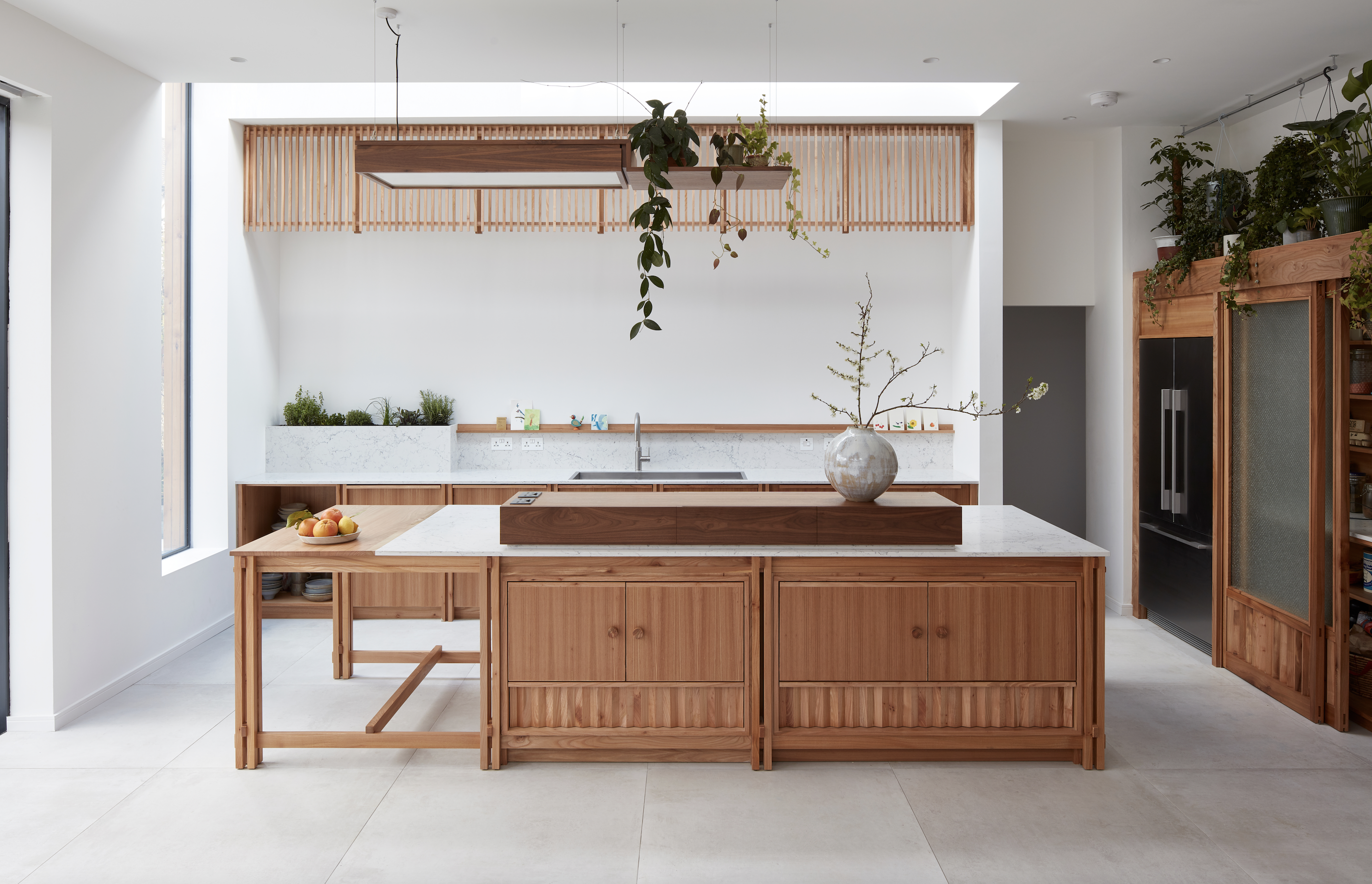
Some kitchens shout. Others politely clear their throat, offer you tea, and quietly reveal that every drawer, joint, shelf, and grain line has been considered with the focus of a chess grandmaster. This handcrafted kitchen on the Sussex Coast belongs firmly in the second category. It is calm without being cold, refined without being precious, and practical enough for real family lifewhich means snacks, school bags, dinner prep, and the occasional mystery spoon that appears where no spoon should be.
Inspired by Japanese craftsmanship, natural wood, thoughtful storage, and the disciplined beauty of restraint, this kitchen proves that minimalism does not have to feel empty. In fact, the room feels full: full of texture, intention, warmth, memory, and quiet design confidence. It is a Japanophile kitchen in the best sensenot a themed space, not a room wearing a kimono for attention, but a deeply personal interpretation of Japanese design principles translated into a coastal British family home.
The result is a kitchen that feels handcrafted rather than manufactured. It celebrates elm, walnut, quartz, sliding panels, custom storage, ceramics, greenery, and the kind of details that make you want to open drawers just to admire them. Yes, that is a very adult thrill. No, we will not apologize for it.
A Sussex Coast Kitchen With a Japanese Soul
The story begins with homeowners who wanted more than a standard kitchen renovation. The family had a strong connection to Japan, especially through time spent living and working there, and wanted the kitchen to carry that influence in a way that felt natural. Instead of importing a look wholesale, the designers translated Japanese ideassimplicity, craftsmanship, proportion, hidden utility, and respect for materialsinto a custom kitchen suited to the rhythms of daily life on the Sussex Coast.
That translation matters. A Japanese-inspired kitchen should not feel like a movie set or a souvenir shop. The best examples are subtle. They use wood honestly. They keep surfaces uncluttered. They allow light, shadow, texture, and negative space to do some of the talking. This kitchen does exactly that. It is not trying to impress you with fireworks; it is trying to make breakfast calmer. Frankly, that may be more heroic.
The Power of Handcrafted Wood
The visual heart of the room is the generous elm island. Elm is not the most common kitchen material, which is precisely part of its charm. Its grain has movement, personality, and depth. In this kitchen, the wood brings a rich warmth that keeps the minimalist structure from feeling sterile. The island is large enough for food preparation, gathering, storage, and casual family use, but it reads more like a piece of furniture than a block of cabinetry.
This furniture-like quality is central to the kitchen’s success. Rather than treating cabinets as anonymous boxes, the design gives each element its own presence. Cabinetry details, chevron patterns, contrasting dowels, inset hardware, and carefully joined panels add rhythm to the room. Nothing feels random. Even the practical pieces have dignity, which is more than can be said for most junk drawers.
Why Natural Wood Works So Well
Natural wood is a cornerstone of Japanese kitchen design because it softens clean lines and makes a space feel connected to nature. It also ages beautifully when chosen and finished well. A handcrafted wood kitchen may acquire small marks over time, but those marks can become part of the room’s character rather than flaws to panic about. This is where wabi-sabi enters the conversation: the beauty of imperfection, use, time, and honest materials.
In a family kitchen, that philosophy is refreshingly forgiving. A kitchen should not require everyone to hover nervously with coasters and a mild fear of olive oil. A well-designed handcrafted kitchen can be elegant and still accept that life happens. Toast crumbs happen. Children happen. Someone will eventually drip coffee near the nice thing. The goal is not perfection; the goal is grace under use.
A Kitchen Island That Earns Its Footprint
Large kitchen islands are everywhere, but not all of them deserve their square footage. Some are basically continents with bar stools. This Sussex Coast island, however, earns its keep. It provides prep space, integrated cooking, display opportunities, and practical storage. It organizes the room and creates a natural boundary between cooking and gathering.
The back of the island includes storage for tableware, making it easy for children or guests to help set the table without wandering into the main cooking zone. That is clever family design: it encourages participation while reducing traffic jams around hot pans. A good island should not merely look impressive in photographs; it should prevent someone from standing exactly where you need to be while you are holding a boiling pot.
The island also includes a custom walnut box for knives, utensils, ingredients, and even a device notch for following recipes. This is the kind of small detail that reveals a designer has actually watched people cook. Modern kitchens must support both traditional cooking rituals and today’s digital habits. Whether you are reading a handwritten recipe card or watching a video on how not to ruin noodles, the kitchen adapts.
Sliding Doors, Larder Storage, and the Art of Hiding Clutter
One of the most Japanese-inspired features in the room is the use of sliding doors and concealed storage. Sliding panels have a quiet elegance: they save space, reduce visual noise, and create a gentle ritual around opening and closing. In this kitchen, the larder cupboard uses sleek sliding doors with partially obscured glazing, allowing pantry items and small appliances to be accessible without being constantly on display.
This matters because real kitchens contain real things. Bags of rice, cereal boxes, jars, tea, oils, snacks, baking supplies, the one spice nobody remembers buyingthese are not always magazine-cover material. The genius of a good larder is that it makes everyday abundance feel orderly. You are not pretending clutter does not exist; you are giving it a beautiful place to go.
Custom Storage Is the Quiet Luxury
Luxury in this kitchen is not about gold faucets or dramatic chandeliers. It is about drawers designed around actual needs. Utensils, spices, knives, tableware, pantry staples, and serving pieces each have a logical home. Custom storage turns the kitchen into a calm operating system. You stop hunting for the zester. You stop stacking pans in a way that sounds like a medieval battle every time you make eggs.
This is especially important in minimalist kitchens. If you want clean counters, you need excellent hidden storage. Minimalism without storage is just clutter with nowhere to sit. The best Japanese-inspired kitchens understand this perfectly: what you do not see is as important as what you do.
The Tokonoma: A Moment of Meaning
Among the most poetic elements in this kitchen is the inclusion of a tokonoma-inspired display area. In traditional Japanese interiors, a tokonoma is an alcove used to display art, flowers, scrolls, or meaningful objects. It creates a focal point for reflection and beauty. In this Sussex kitchen, the idea has been adapted into a handcrafted elm shrine-like space for family mementos and treasured objects.
This detail elevates the kitchen beyond function. It reminds us that kitchens are not merely rooms for chopping onions and negotiating who emptied the dishwasher last. They are emotional spaces. They hold family stories, travel memories, small rituals, and the objects we choose to keep near daily life. A tokonoma-inspired feature gives those memories architecture.
Materials: Elm, Walnut, Quartz, Ceramics, and Greenery
The material palette is restrained but far from boring. Elm dominates the cabinetry and island, walnut appears in smaller functional pieces, and White Attica quartz provides durable work surfaces with a clean, luminous quality. The quartz balances the warmth of the wood and introduces a practical surface for cooking, cleaning, and daily use.
Handcrafted ceramics add another layer of texture. Pottery is especially at home in Japanese-inspired interiors because it brings human touch into the room. A slightly irregular bowl or handmade mug can do more for a kitchen’s soul than a dozen glossy accessories lined up like nervous soldiers.
Plants also play an important role. Greenery works beautifully against warm wood tones, and in this kitchen, plants help soften the architecture. An integrated herb planter adds both function and life. Fresh herbs near the cooking zone are not only convenient; they make the kitchen smell like someone has their life together, even if dinner is running twenty minutes late.
Japanese Design Without the Clichés
The most successful thing about this kitchen is what it avoids. It does not rely on obvious Japanese motifs. There are no decorative shortcuts, no overused symbols, no visual costume. Instead, the design focuses on deeper principles: calm proportion, natural materials, craft, simplicity, asymmetry, and respect for objects.
This is a useful lesson for anyone considering a Japanese-inspired kitchen. Do not begin with accessories. Begin with behavior. How should the kitchen feel when you enter it in the morning? Where do your hands naturally reach while cooking? Which items deserve display, and which should disappear? What materials will age well? What kind of light makes the room feel peaceful?
How to Borrow the Look at Home
You do not need a fully bespoke kitchen or a coastal house to borrow ideas from this project. Start with subtraction. Clear counters, reduce visual clutter, and identify what truly deserves to be seen. Then introduce natural materials where they will have the most impact: wood cabinet fronts, open shelves, a beautiful table, handmade stools, a stone or quartz worktop, linen blinds, or ceramic lighting.
Use a restrained palette. Warm whites, soft grays, muted greens, browns, charcoal, clay, and natural wood tones all work well. Avoid making the room too cold. Japanese-inspired minimalism should feel alive, not like a museum where soup is forbidden.
Invest in storage before decoration. A larder cabinet, appliance garage, drawer inserts, pull-out shelves, and dedicated zones for cooking tools can transform the way a kitchen feels. The goal is not to own fewer useful things; it is to stop making every useful thing compete for attention.
Practical Ideas Inspired by This Kitchen
- Choose natural wood cabinetry or a wood island to add warmth and texture.
- Use sliding doors or pocket doors to conceal pantry items and appliances.
- Add a dedicated display niche for ceramics, flowers, art, or family objects.
- Combine durable counters with handcrafted details for beauty and function.
- Keep the color palette earthy, calm, and connected to nature.
- Design storage around real habits, not imaginary showroom behavior.
- Use plants and herbs to bring softness, scent, and life into the kitchen.
Why This Kitchen Feels So Current
Although the kitchen is rooted in traditional craft, it feels remarkably modern. Current kitchen trends continue to favor natural materials, warm wood, hidden appliances, larger islands, integrated storage, and spaces that connect cooking with family life. This Sussex kitchen checks those boxes, but it does so without chasing trends. That is the difference between fashionable and timeless.
The room feels current because it answers a very contemporary desire: people want homes that calm them down. After years of fast design, disposable furniture, and hyper-polished interiors, there is renewed interest in materials that feel grounded and rooms that support slower, more intentional living. A handcrafted kitchen offers exactly that. It says: cook well, store thoughtfully, sit together, notice the grain, water the herbs, and maybe stop balancing mail on the counter like it is a competitive sport.
The Experience: Living With a Handcrafted Japanophile Kitchen
Imagine beginning the day in this kitchen. The coast outside is gray-blue and soft, the kind of morning light that makes even a kettle look cinematic. You slide open the larder door, and instead of chaos, everything is waiting at eye level: tea, coffee, oats, rice, jars, bread, and the small daily provisions that quietly run a household. The motion of the sliding door feels calmer than a hinged cabinet. It does not swing into your path. It simply moves aside, like a well-trained stage curtain.
The island becomes the center of the morning routine. Someone makes toast. Someone else chops fruit. A child reaches for plates from the storage on the dining side without crossing into the cooking zone. This sounds minor until you have lived in a kitchen where every breakfast feels like a traffic report. Here, the design choreographs movement so naturally that nobody notices the choreography. That is the best kind.
Cooking in a kitchen like this changes your pace. The wood invites touch. The drawers open with purpose. The utensil storage beside the hob means tools are close, but not scattered. A recipe can sit in the device notch while ingredients wait in shallow drawers. The kitchen does not demand performance; it supports process. You can cook something ambitious, or you can assemble a deeply respectable sandwich and still feel surrounded by good design.
There is also pleasure in the handmade details. The chevron pattern in the cabinetry catches the eye as you move around the room. The ceramics on display remind you that useful objects can be beautiful. The tokonoma-inspired area gives the family’s mementos a place of honor, turning memory into part of the architecture. It makes the kitchen feel lived in without feeling cluttered.
At dinner, the room shifts again. The A-frame dining table, handcrafted in elm, extends the same material language from cooking to eating. The kitchen does not stop at the island; it flows into gathering. Plants soften the edges. The herb planter makes the room feel fresh and slightly alive, as if the kitchen is not merely storing food but growing a tiny portion of it. Even if the basil is occasionally dramatic, the intention is lovely.
The greatest experience this kitchen offers is not luxury in the loud sense. It is relief. Relief from visual noise. Relief from poor storage. Relief from rooms that look impressive but do not understand family life. Every element seems to ask, “How can this be simpler, warmer, and more useful?” That question is the secret ingredient.
For homeowners inspired by the space, the lesson is not to copy every detail. Most people do not have access to a single native elm tree or a bespoke workshop ready to transform it into kitchen poetry. But anyone can borrow the mindset. Buy fewer things and choose better ones. Let natural materials show their grain. Give beloved objects room to breathe. Hide the toaster if it annoys you. Add a plant. Create one small display area that changes with the seasons. Make storage so logical that future you wants to send present you a thank-you note.
A Japanophile kitchen on the Sussex Coast reminds us that design does not have to be loud to be unforgettable. Sometimes the strongest room is the one that lowers its voice, sharpens its tools, and lets the wood do the talking.
Conclusion
This handcrafted kitchen on the Sussex Coast is a master class in Japanese-inspired restraint, natural materials, and practical family design. Its beauty comes not from excess but from intention: an elm island that anchors the room, sliding larder doors that calm the clutter, custom drawers that make cooking easier, ceramics that add human touch, plants that bring life, and a tokonoma-inspired display that gives memory a place to rest.
For anyone dreaming of a Japanese kitchen design, a Japandi kitchen, or a warm minimalist renovation, this project offers a clear lesson. Do not chase a theme. Chase a feeling. Aim for calm, function, craft, and materials that become more beautiful with use. The best kitchen is not the one that looks perfect for one photograph. It is the one that makes everyday life feel more graceful, one sliding door and well-placed spoon at a time.