Every bull market eventually acquires its own vocabulary. Investors stop saying “expensive” and start saying “visionary.” Companies without profits become “pre-profit.” A stock that doubles is described as obvious, although it was apparently invisible six months earlier. Then volatility returns, the mood changes, and everyone begins asking the same uncomfortable question: Is the party over?
The phrase “Go-Go Years” originally described Wall Street’s speculative boom during the 1960s. Fast-growing technology companies, aggressive mutual funds, celebrity portfolio managers, and enthusiastic individual investors pushed prices higher. Valuation discipline became about as fashionable as bringing a calculator to a dance club.
Modern markets have produced a familiar rhythm. The pandemic era brought commission-free trading, speculative technology stocks, meme stocks, cryptocurrencies, special purpose acquisition companies, and an explosion in options activity. After the correction of 2022, enthusiasm did not disappear. It reorganized around artificial intelligence, semiconductor companies, data centers, and a small group of enormously profitable technology leaders.
So, is this the end of the Go-Go Years? The most accurate answer is that one version has already ended, while another may still be dancingjust with a stricter dress code.
What Were the Original Go-Go Years?
Growth Stocks Became the Main Attraction
The original Go-Go Years stretched across much of the 1960s and into the early 1970s. Investors became fascinated with companies associated with computers, electronics, photography, franchising, aerospace, and other rapidly expanding industries. Xerox, Polaroid, IBM, McDonald’s, and numerous conglomerates were treated as businesses with nearly unlimited growth potential.
The mutual fund industry expanded alongside the boom. Assets in stock mutual funds doubled from 1960 to 1965 and doubled again between 1965 and 1970. Successful fund managers became public personalities, and investors increasingly selected funds based on recent performance. The market developed what the Securities and Exchange Commission later described as a “cult of performance.”
This was not irrational in every respect. America was experiencing genuine technological innovation, expanding consumer markets, and rising institutional participation. Many fashionable companies were real businesses with real products and excellent prospects. The mistake was assuming that a wonderful business remained a wonderful investment at any price.
The Nifty Fifty Took “Quality” to an Expensive Extreme
By the early 1970s, investors had gathered around a group of dominant companies known as the Nifty Fifty. These were considered one-decision stocks: Buy them, hold them, and supposedly never worry about valuation again.
At the end of 1972, the Nifty Fifty traded at roughly twice the price-to-earnings multiple of the broader S&P 500. Some individual companies commanded valuations of 50, 80, or even 100 times earnings. Investors were not buying fictional businesses. They were paying heroic prices for respected companies, which can be just as dangerous when expectations become impossible to satisfy.
The Boom Did Not End All at Once
The first major break arrived between late 1968 and May 1970. The Dow Jones Industrial Average fell approximately 36%, but the decline among fashionable growth categories was considerably worse. Contemporary estimates placed average losses among leading conglomerates, computer stocks, and technology stocks between roughly 77% and 86%.
The market recovered, encouraging investors to believe the interruption had been temporary. Then the 1973–1974 bear market delivered a more lasting reckoning. The S&P 500 lost about 39%, while a representative basket of Nifty Fifty stocks fell more sharply. Stock mutual fund assets declined 44% during 1973 and 1974, and investors continued withdrawing money for much of the decade. The fund industry did not regain its previous equity assets until the early 1980s.
That sequence matters. Speculative eras rarely end with one cinematic crash, a dramatic thunderclap, and a television anchor removing his glasses. They often end through repeated disappointments: a selloff, a hopeful rebound, another decline, and finally a long period in which investors lose interest.
Why the Recent Market Looked So Familiar
A New Generation Entered the Market
The pandemic accelerated an extraordinary increase in retail participation. Mobile brokerages made trading fast and inexpensive, while social media turned investment ideas into shareable entertainment. FINRA reported a surge in new retail investors and increased options trading during 2020. Later examinations found substantial growth in options-account openings at self-directed online platforms.
Federal Reserve data show that direct and indirect stock ownership among American families rose to 58% in 2022, up from 53% in 2019. Broader access to investing is a positive development. The problem appears when access is confused with expertise, or when the ability to execute a trade in three seconds creates the impression that evaluating it should take four.
Speculation Acquired New Packaging
The 1960s had conglomerates and glamour funds. The pandemic era had SPACs, meme stocks, thematic exchange-traded funds, digital tokens, unprofitable software companies, and options contracts with expiration dates shorter than some grocery lists.
SPAC initial public offerings raised more than $160 billion in 2021, approximately 15 times the amount raised in 2018. The structure offered companies a faster route to public markets, but it also introduced conflicts involving sponsor incentives, dilution, forecasts, and disclosure. As enthusiasm grew, investors sometimes focused more on celebrity sponsors and projected revenue than on what they would actually own after the transaction.
Star Managers Returned
Every Go-Go era needs recognizable heroes. In the 1960s, investors followed aggressive mutual fund managers. During the recent boom, they followed venture capital personalities, podcast hosts, social media traders, technology founders, and managers of concentrated innovation funds.
Strong performance attracts assets, media attention, and imitation. It also encourages investors to confuse a favorable environment with permanent skill. When liquidity is abundant and similar assets rise together, concentrated risk can look like genius. When the environment changes, yesterday’s winning strategy may suddenly resemble a speedboat parked in a cornfield.
Did the Go-Go Market End in 2022?
For many speculative assets, the answer is yes. Rising inflation forced the Federal Reserve to increase interest rates, ending the assumption that money would remain nearly free. Long-duration growth stocks, unprofitable technology companies, SPACs, and other highly valued assets suffered steep declines.
Higher rates affect markets because the value of an investment depends partly on the present value of future cash flows. When the discount rate rises, profits expected many years from now become less valuable today. A company promising enormous earnings in 2035 may still have a bright future, but investors become less eager to pay for the entire future before lunch.
The 2022 correction therefore marked the end of the pandemic’s anything-goes phase. Easy financing became harder. Companies reduced head counts, abandoned marginal projects, and concentrated on profitability. Investors rediscovered free cash flow, balance-sheet strength, and the curious idea that revenue should eventually produce income.
However, the broader growth-stock story did not end. It evolved.
The AI Boom Is a Different Kind of Go-Go Market
Today’s Leaders Often Have Real Profits
The artificial intelligence boom differs from the weakest parts of the dot-com and pandemic bubbles because many market leaders are highly profitable. Major semiconductor, cloud-computing, software, advertising, and platform companies generate substantial cash flow and possess established customer bases.
The current enthusiasm also reflects enormous capital spending on chips, data centers, networking equipment, power infrastructure, and software. Federal Reserve officials have identified AI-related investment and data-center construction as important contributors to business spending and productivity growth. This is not merely a collection of presentation slides promising that a revolutionary product will arrive immediately after the next funding round.
Real Innovation Does Not Guarantee Attractive Returns
A technology can transform the world while producing disappointing returns for investors who overpay. Railroads changed transportation. The internet changed nearly everything. Both innovations also produced financial wreckage because too much capital chased optimistic assumptions.
The same principle applies to artificial intelligence. Demand may continue growing rapidly, but competition, depreciation, energy costs, regulation, customer bargaining power, and technological obsolescence will determine who keeps the profits. Investors must distinguish between the size of an industry and the value captured by an individual company.
Valuation models are not designed to deny innovation. They are designed to ask how much growth is already embedded in the price. When a stock assumes years of flawless execution, even excellent results can disappoint if they are merely excellent instead of supernatural.
Market Concentration Adds Another Historical Rhyme
By mid-2025, the 10 largest companies represented almost 40% of the S&P 500, a concentration level not seen since the mid-1960s. The figure had moderated to approximately 36% by mid-2026, but it remained historically elevated. This does not automatically signal a crash. Large companies can remain large because their earnings justify their importance. Still, concentration means index performance increasingly depends on a relatively small group of businesses.
When those businesses rise, passive investors benefit. When they stumble together, diversification may feel less diversified than the label on the package suggests.
What Could Finally End the Current Go-Go Phase?
1. Interest Rates Stay Higher for Longer
As of mid-2026, the Federal Reserve’s target range for the federal funds rate stood at 3.5% to 3.75%. Inflation remained above the central bank’s 2% objective, with the May 2026 personal consumption expenditures price index rising 4.1% over the previous year and core PCE increasing 3.4%.
At the same time, economic growth remained positive, unemployment was 4.2%, and investment in high-technology infrastructure was strong. This combination complicates the argument for rapid rate cuts. If rates remain elevated, investors may continue demanding stronger earnings and more reasonable valuations.
2. AI Revenue Fails to Match AI Spending
Technology companies are spending extraordinary sums to build AI capacity. Eventually, shareholders will want evidence that this investment produces durable revenue and attractive returns on capital.
If customers refuse to pay enough for AI services, if models become commoditized, or if infrastructure requires constant replacement, profit expectations may decline. The market does not need AI to fail completely. It only needs reality to arrive below the forecast.
3. Earnings Leadership Broadens
A healthier market would not necessarily require the largest technology stocks to collapse. The Go-Go dynamic could fade through rotation. If industrial, financial, health-care, energy, consumer, and smaller companies begin producing stronger relative earnings, capital may spread across the market.
That outcome would look less like a bursting bubble and more like a crowded restaurant finally opening additional tables.
4. Investors Become More Sensitive to Price
The clearest sign that a speculative era has ended is not a particular index level. It is a change in behavior. Investors stop rewarding every ambitious forecast. Initial public offerings receive greater scrutiny. Management teams are questioned about dilution and cash flow. Unprofitable companies are required to explain when “adjusted earnings” will become recognizable to ordinary accountants.
In other words, the market remembers that a stock certificate is a claim on a business, not a raffle ticket with a ticker symbol.
Why This Does Not Mean Investors Should Abandon Stocks
The end of a Go-Go period is not the end of innovation, capitalism, or long-term wealth creation. It is usually the end of a particular set of expectations.
Some Nifty Fifty companies remained outstanding businesses for decades. Investors who bought at extreme valuations nevertheless endured long stretches of weak returns because too much future success had already been priced in. Other companies failed to adapt and disappeared from market leadership.
The lesson is not that dominant companies must be sold automatically. The lesson is that business quality and investment value are separate questions. A magnificent company can be a mediocre investment at the wrong price, while an unfashionable company can offer attractive returns when expectations are low.
Market history also shows that a small number of exceptional stocks create a large portion of long-term wealth. Selling every winner simply because it has become large can be costly. The practical response is not permanent pessimism. It is diversification, disciplined valuation, and sensible position sizing.
What Investors Can Do Now
Separate the Story From the Numbers
Write down what must happen for an investment to succeed. How fast must revenue grow? What margins are required? How much capital must be reinvested? What happens if competitors lower prices? A narrative becomes more useful when translated into assumptions that can be tested.
Rebalance Instead of Predicting the Exact Top
Market peaks are obvious mainly in documentaries produced afterward. Rebalancing offers a less dramatic solution. When one position or sector grows beyond its intended weight, trimming it restores diversification without requiring an all-or-nothing forecast.
Match Risk to the Time Horizon
Money needed within the next few years should not depend on a highly valued growth stock remaining popular. Long-term investors can tolerate volatility. A home down payment, tuition bill, or emergency reserve cannot patiently wait for market sentiment to improve.
Favor Financial Flexibility
Companies with manageable debt, positive free cash flow, and access to capital are better positioned when financing becomes expensive. The same principle applies to households. Maintaining liquidity makes it easier to avoid selling investments during a downturn.
Expect Discomfort
Diversification guarantees that something in the portfolio will look disappointing. That is not a defect. When every holding rises for the same reason, the portfolio may contain less diversification than the account statement suggests.
Conclusion: The Go-Go Years May Be Changing, Not Disappearing
The pandemic’s speculative Go-Go market largely ended when inflation and higher interest rates restored a meaningful cost of capital. Yet enthusiasm returned in a more concentrated and financially substantial form through artificial intelligence and dominant technology companies.
This cycle does not have to end like 1969, 1974, or 2000. Today’s leaders often possess stronger profits, competitive advantages, and balance sheets than the weakest stars of earlier bubbles. Nevertheless, history warns that real innovation cannot protect investors from excessive prices.
The best answer to “Is this the end of the Go-Go Years?” is therefore neither a cheerful yes nor a panicked no. It is a reminder that market regimes change. When they do, discipline usually outlasts excitement, cash flow eventually challenges storytelling, and the phrase “this time is different” receives another opportunity to age badly.
Experience-Based Lessons From Living Through a Go-Go Market
The most valuable lessons from speculative markets are often learned emotionally before they are understood intellectually. An investor may know that stocks can fall 50%, but that knowledge feels theoretical until a favorite holding actually does it on an otherwise ordinary Tuesday.
The Index Can Hide the Damage
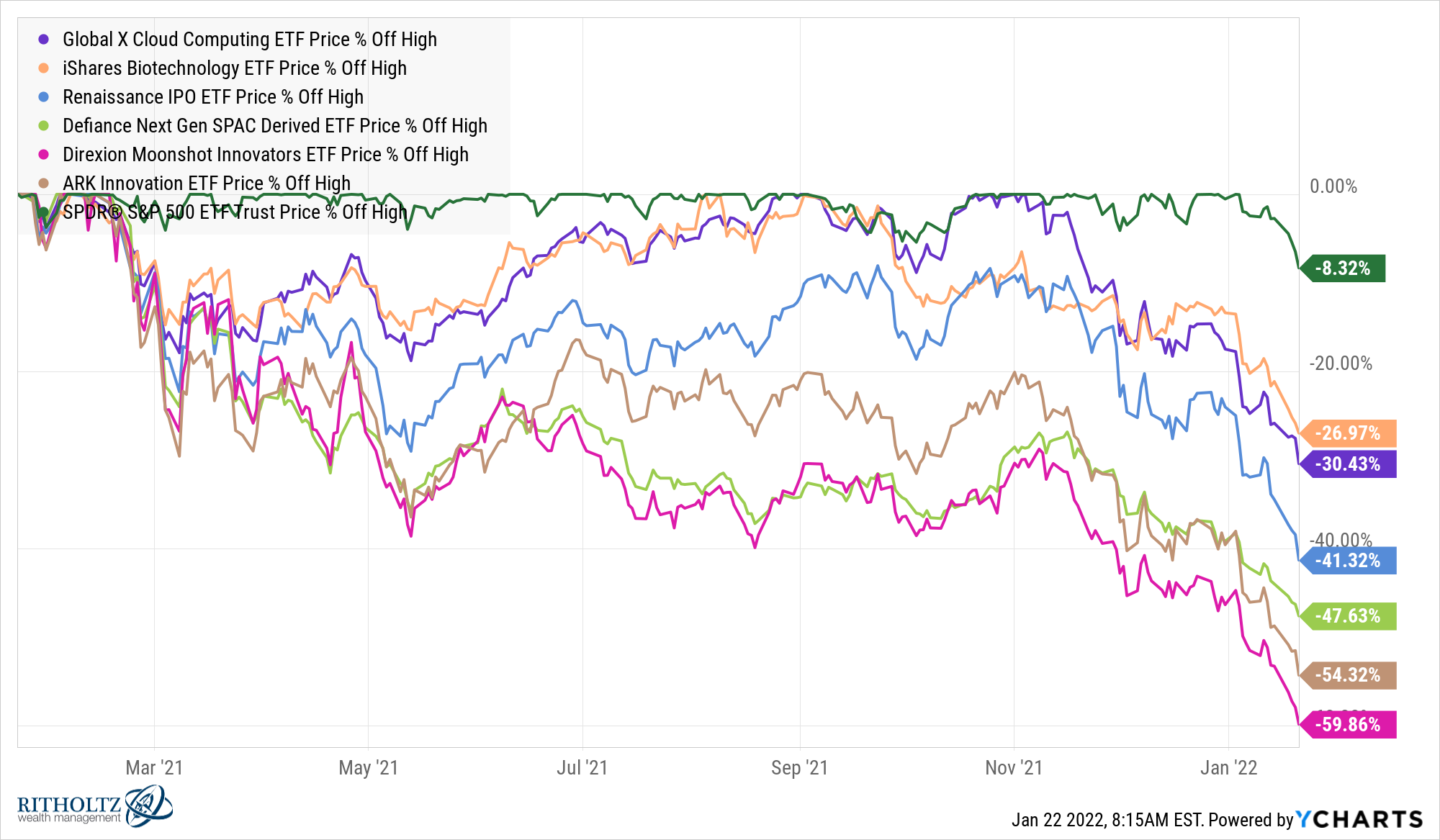
One common experience occurs when the broad market appears calm while speculative holdings collapse. An investor checks the S&P 500 and sees a modest decline, then opens a personal portfolio filled with cloud software, electric-vehicle companies, biotechnology stocks, or recent public offerings and discovers a much larger loss.
This happened near the end of both historical and modern Go-Go periods. Major indexes remained supported by established companies while fashionable groups were already deep in bear markets. The experience teaches an important lesson: The market is not a single object. A portfolio’s actual exposures matter more than whichever index appears in the evening news.
Confidence Quietly Becomes Concentration
Another familiar experience begins with success. A position rises, so the investor adds more. It rises again, confirming the decision. Soon, one stock becomes 20% or 30% of the portfolionot because that allocation was planned, but because confidence expanded alongside the price.
During the boom, concentration feels efficient. Diversification looks like an unnecessary collection of slower ideas. After the reversal, the investor discovers that position sizing is not an insult to conviction. It is protection against the possibility that conviction is wrong, early, or approximately correct but disastrously overpriced.
Social Proof Disappears During the Decline
Go-Go markets create communities around winning investments. Online discussions are active, forecasts are optimistic, and every dip attracts enthusiastic buyers. When prices reverse, the conversation changes. Some participants vanish. Others insist the market is manipulated. A few continue posting rocket emojis with the determination of musicians playing on a sinking cruise ship.
The emotional difficulty comes from losing both money and social confirmation. Investors who borrowed confidence from a crowd discover that the loan can be recalled without notice. A written investment thesis helps because it forces the decision to rest on evidence rather than applause.
The First Rebound Can Be Misleading
Sharp declines frequently produce powerful rallies. Investors who missed the opportunity to sell may interpret the rebound as proof that the old trend has returned. Sometimes they are correct. Sometimes the rally is simply part of a longer adjustment.
The original Go-Go market offered a recovery after the 1969–1970 decline before the more punishing bear market of 1973–1974. The experience suggests avoiding dramatic declarations such as “the bottom is definitely in” or “this company will never recover.” A gradual approachrebalancing, reviewing assumptions, and adjusting exposureusually works better than attempting to achieve emotional closure through one enormous trade.
Boring Assets Become Surprisingly Attractive
Near the peak, cash appears useless, bonds seem ancient, and profitable low-growth companies receive little attention. After a decline, those same assets suddenly provide stability, income, and optionality.
This change does not mean investors should chase whatever performed best during the latest correction. It means every asset has a purpose. Cash can fund near-term obligations. Bonds may reduce volatility. Broad index funds limit company-specific risk. Carefully selected growth stocks provide long-term upside. The portfolio works best when each component has a job beyond looking impressive in a screenshot.
The lasting experience of a Go-Go market is not simply that prices can fall. It is that enthusiasm changes how people define risk. During the boom, risk means missing out. During the bust, risk means losing money. A durable investment plan recognizes both definitions before either emotion takes control.