Math has a reputation for being the calm, confident adult in the room. While language argues over meanings, history debates interpretations, and weather forecasts nervously add percentages, math walks in wearing sensible shoes and says, “Two plus two equals four.” End of discussion. Please clap politely.
But is math always correct? The honest answer is both beautifully simple and delightfully complicated: mathematics can be correct within a defined system, but human use of math can be wrong, incomplete, misapplied, or misunderstood. In other words, math itself is usually not the problem. We are. Humans are the ones who forget units, round too aggressively, trust bad assumptions, misread statistics, or try to use a geometry built for flat paper on a curved planet and then wonder why the numbers look grumpy.
This article explores what it means for math to be “correct,” why proofs matter, where mathematical certainty begins and ends, and how math behaves when it leaves the chalkboard and enters the messy real world. Spoiler: math is powerful, but it is not a magic wand. It is more like a very sharp kitchen knifeamazing in skilled hands, risky when waved around during a group project.
What Does “Correct” Mean in Math?
In everyday life, “correct” often means “matches reality.” If you say the store closes at 8 p.m. and it does, you are correct. If you say your houseplant is thriving while it is actively becoming botanical toast, you are not.
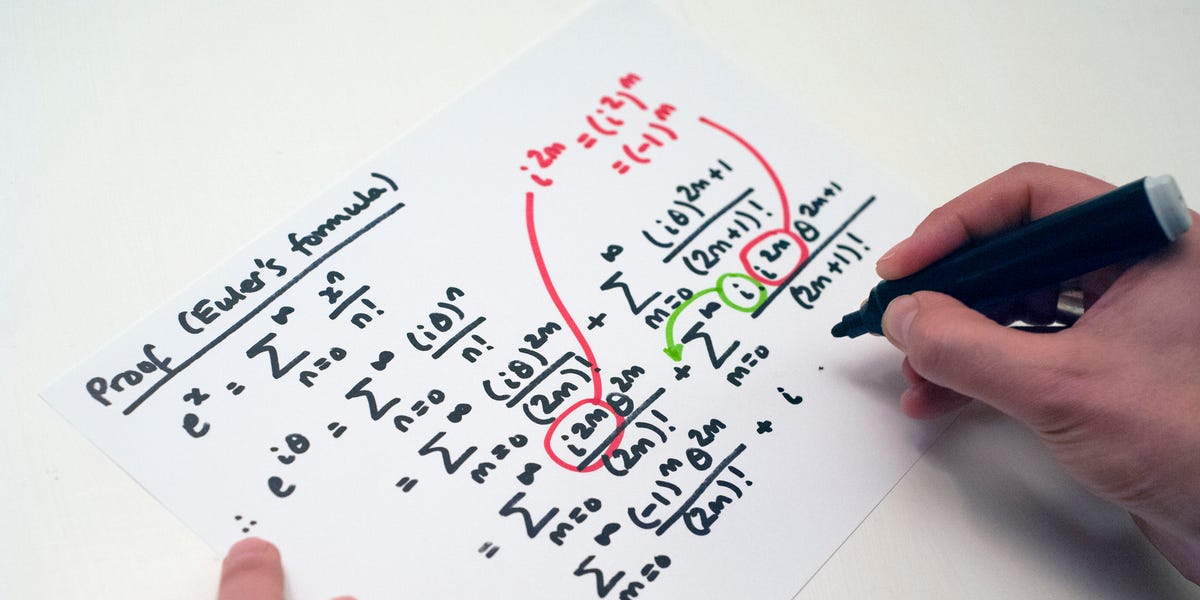
In mathematics, correctness usually means something more precise: a statement follows logically from accepted rules, definitions, and axioms. An axiom is a starting assumption. A proof is a chain of reasoning showing that a conclusion must follow from those assumptions. If every step is valid, the result is considered mathematically correct within that system.
For example, in ordinary arithmetic, the statement 2 + 2 = 4 is correct because it follows from the way natural numbers and addition are defined. It is not correct because a committee voted on it, or because your third-grade teacher gave it a stern look. It is correct because the structure of arithmetic makes it unavoidable.
Math Is Built on Rules, Not Vibes
One reason math feels so reliable is that it is not supposed to depend on mood, opinion, or whether Mercury is in retrograde. Once the rules are set, mathematical reasoning demands consistency. If you accept the rules of basic arithmetic, you do not get to decide that 7 x 8 equals 54 because 56 “feels too formal today.”
This is what separates math from casual guessing. A mathematical proof is not just a strong hunch wearing a blazer. It is a logical demonstration. In a valid proof, each claim must be justified by definitions, previous theorems, axioms, or accepted rules of inference.
Example: Why Proofs Matter
Suppose you test a pattern:
1 + 3 = 4
1 + 3 + 5 = 9
1 + 3 + 5 + 7 = 16
You may notice that the sum of the first few odd numbers creates perfect squares. That is a great observation, but observation is not proof. A proof shows that this pattern works for every case, not just the three examples that behaved nicely while you were watching.
This is why mathematics values proof so highly. Patterns can suggest truth, but proof earns it.
So, Is Math Always Correct?
Mathematics is correct when three things are true:
- The definitions are clear.
- The assumptions are accepted.
- The reasoning follows logically.
But math is not automatically “correct” in every possible meaning of the word. A formula can be perfectly valid and still be useless if applied to the wrong situation. A calculation can be accurate and still answer the wrong question. A statistical result can be technically correct and still be wildly misleading when interpreted badly.
Think of math like a GPS. The directions may be calculated correctly, but if you entered the wrong destination, congratulationsyou are now confidently driving to a dental office instead of a taco truck.
Mathematical Truth Depends on the System
One of the most fascinating parts of mathematics is that different systems can have different truths. This does not mean math is random. It means mathematical statements depend on the rules of the system being used.
A famous example comes from geometry. In Euclidean geometrythe geometry many people learn in schoolparallel lines never meet, and the angles inside a triangle add up to 180 degrees. This works beautifully on flat surfaces. Draw a triangle on a sheet of paper and the rule behaves like a well-trained golden retriever.
But on a curved surface, such as a sphere, geometry changes. Imagine drawing a triangle on Earth using the equator and two lines of longitude that meet at the North Pole. The angles can add up to more than 180 degrees. Euclidean geometry is not “wrong”; it is simply not the right system for every surface.
Euclidean vs. Non-Euclidean Geometry
Euclidean geometry assumes a flat plane. Non-Euclidean geometries explore spaces where Euclid’s parallel postulate does not work the same way. In spherical geometry, there may be no truly parallel lines. In hyperbolic geometry, there may be many lines through a point that do not meet a given line.
This shows that math is not just one giant rulebook dropped from the sky. It is a collection of logical systems. Each system has internal rules, and truth is evaluated inside those rules.
When Math Is Perfect but the Real World Is Messy
Pure mathematics can achieve extraordinary certainty. Applied math, however, must deal with realityand reality has a long history of spilling coffee on clean equations.
When math is used in engineering, medicine, economics, weather forecasting, public health, architecture, or technology, it relies on models. A mathematical model is a simplified representation of something real. Models help us estimate, predict, and understand complex systems, but they are never the entire universe in spreadsheet form.
For example, a public-health model may estimate how an infection spreads. A weather model may simulate atmospheric conditions. An economic model may predict inflation or unemployment. These models can be extremely useful, but they depend on assumptions, data quality, measurement methods, and uncertainty.
That means the math inside a model may be correct, while the model’s prediction may still miss reality. Not because math betrayed us, but because the world is complicated and occasionally enjoys plot twists.
Measurement Uncertainty: The Real-World Wiggle Room
In real-world science, measurements are estimates. A thermometer, scale, satellite, or lab instrument can be precise, but no measurement is infinitely perfect. That is why fields such as physics, chemistry, and engineering care so much about uncertainty.
If a bridge design uses measurements, the calculations may be mathematically correct, but engineers still need safety margins because materials vary, loads shift, and weather happens. Math gives structure to the decision, but good judgment keeps the bridge from becoming modern art.
Human Error: Math’s Most Persistent Frenemy
Many “math errors” are not failures of mathematics. They are failures of people using mathematics. A wrong sign, a misplaced decimal, a forgotten unit conversion, or a copied formula can turn a correct method into a disaster wearing a lab coat.
One of the most famous examples is NASA’s Mars Climate Orbiter. The mission failed in 1999 partly because one software system used English units while another expected metric units. The math did not suddenly forget how units work. The systems did not communicate correctly, and the spacecraft was lost.
This example is a powerful reminder: math requires context. Numbers are not self-explanatory. “10” means very different things depending on whether it refers to meters, miles, pounds, seconds, dollars, or the number of browser tabs open while avoiding work.
Statistics: Correct Calculations, Wrong Conclusions
Statistics is one of the most useful branches of mathematicsand one of the easiest to misuse. A statistical calculation can be correct while the interpretation is shaky.
Consider p-values. A p-value can help show how compatible data are with a statistical model. But a p-value does not tell you the probability that a hypothesis is true. It also does not prove that a result is important, meaningful, or ready to become a dramatic headline.
This matters because statistics often appears in medical research, business decisions, public policy, sports analysis, and social science. A result may be “statistically significant” but practically small. A study may show correlation but not causation. A survey may look impressive but rely on a biased sample.
Example: Correlation Is Not a Magic Wand
Suppose data show that people who buy more umbrellas also experience more rainy days. Does buying umbrellas cause rain? Unless umbrellas have recently gained weather-control powers, no. The more reasonable explanation is that rainy weather causes people to buy umbrellas.
The calculation may show a real relationship, but the conclusion depends on interpretation. Math can identify patterns. Humans must still ask whether those patterns make sense.
Gödel and the Limits of Mathematical Completeness
Now we arrive at one of the deepest reasons the question “Is math always correct?” gets interesting: Kurt Gödel’s incompleteness theorems.
In simple terms, Gödel showed that in any sufficiently powerful and consistent formal system capable of expressing basic arithmetic, there are true statements that cannot be proven within that system. Also, such a system cannot prove its own consistency using only its own rules.
This does not mean math is broken. It does not mean “anything goes.” It means mathematics has profound limits. Even in rigorous formal systems, truth and proof are not always the same thing.
That idea can feel unsettling. We want math to be a giant vending machine: insert axioms, press “truth,” receive theorem. Gödel showed that the machine has limits. Some truths are outside the reach of a given formal system.
Can Math Be Wrong?
Math can be “wrong” in several practical ways:
- A calculation error: The method is valid, but someone made a mistake.
- A false assumption: The reasoning works, but the starting point is flawed.
- A bad model: The model is too simple or does not represent reality well.
- A misinterpretation: The answer is correct, but the meaning is misunderstood.
- An incomplete proof: A claim seems convincing but has a logical gap.
- A system mismatch: A statement is true in one mathematical system but not another.
So, is math itself wrong? Usually no. But mathematical work can be wrong. Mathematical communication can be wrong. Mathematical assumptions can be wrong. Mathematical applications can definitely be wrong, sometimes expensively enough to make a finance department faint.
Why Mathematical Proofs Can Still Contain Mistakes
Published mathematical proofs are written by humans, and humans are charmingly imperfect. Even professional mathematicians sometimes discover gaps in proofs, errors in arguments, or hidden assumptions that were not fully justified.
This is why peer review, replication, formal verification, and community scrutiny matter. Mathematics is not merely a private activity where someone writes “obviously” five times and everyone goes home. A proof must be checked, challenged, clarified, and understood.
Modern proof assistants and formal verification tools are becoming more important because they can help verify logical steps with computer precision. These tools do not replace mathematical creativity, but they can reduce errors in complex arguments. Think of them as grammar checkers for logic, except much stricter and less likely to suggest turning your theorem into passive voice.
Math in Daily Life: Correct Enough vs. Perfectly Correct
In daily life, we often do not need perfect mathematical precision. We need answers that are useful enough. If a recipe calls for two cups of flour, nobody expects you to measure with laboratory-grade equipment unless you are baking for a committee of physicists.
Rounding, estimating, and simplifying are normal. The key is knowing when they are acceptable. Rounding the cost of lunch is fine. Rounding the dosage of medicine, the load capacity of an elevator, or the fuel needed for an aircraft requires much more care.
Mathematics gives us tools for managing this difference. Significant figures, error bounds, probability, confidence intervals, and safety factors all help us understand how precise an answer needs to be.
Common Myths About Math Correctness
Myth 1: Math Is Just Memorizing Formulas
Formulas are useful, but mathematics is really about relationships, logic, structure, and problem-solving. Memorizing formulas without understanding them is like owning a toolbox but trying to fix everything with the instruction manual.
Myth 2: A Number Makes Any Argument Scientific
Numbers can make an argument clearer, but they can also make nonsense look official. A chart, percentage, or equation does not automatically guarantee truth. You still need good data, honest methods, and reasonable interpretation.
Myth 3: If a Computer Calculated It, It Must Be Right
Computers are fast, not magical. They can process flawed data, execute bad code, and produce wrong results with impressive confidence. A computer can calculate exactly what you told it to calculateeven if what you told it was nonsense.
Myth 4: Math Has No Creativity
Mathematics is full of creativity. Mathematicians invent definitions, explore patterns, build models, and discover surprising connections. A proof can be elegant, clever, and even beautiful. Yes, beautiful. Math people say this without blinking.
Why Math Remains One of Humanity’s Most Reliable Tools
Despite its limits, mathematics is one of the most reliable tools humans have ever developed. It helps build bridges, encrypt data, design medicines, predict eclipses, guide spacecraft, analyze risk, optimize logistics, and describe the laws of physics.
Its power comes from disciplined reasoning. When used carefully, math reduces ambiguity. It forces us to define terms, state assumptions, test relationships, and follow logic. That makes math especially valuable in a world overflowing with opinions, guesses, and suspiciously confident social media posts.
Math is not always simple. It is not always intuitive. It is not always easy. But when its assumptions are clear and its reasoning is valid, it offers a level of certainty that few other human tools can match.
Final Answer: Is Math Always Correct?
Math is always correct only in a careful, qualified sense. Within a well-defined mathematical system, a proven statement is correct because it follows logically from the rules. But outside pure mathematics, correctness depends on assumptions, measurements, models, interpretation, and human execution.
So the best answer is this: math is not automatically correct in every context, but valid mathematical reasoning is internally reliable. Problems arise when people use the wrong system, feed in bad data, skip steps, misread results, or mistake a model for reality.
Math is not a crystal ball. It is not a universal translator for truth. It is a language of patterns, structure, and logic. Used well, it is astonishingly powerful. Used carelessly, it can confidently lead you into a ditch while showing all its work.
Personal Experiences and Reflections: Learning That Math Is Correct, But I Am Not Always Correct With Math
Most people meet math in school, where it often appears as a set of problems with one answer printed in the back of the book. That can make math feel like a strict judge in a black robe, banging a tiny calculator-shaped gavel. You either got the right answer or you did not. Case closed.
But real experience with math teaches something more interesting: the answer is only part of the story. The path matters. The assumptions matter. The interpretation matters. Sometimes the most valuable lesson is not “I got the answer wrong,” but “I asked the wrong question.”
One common experience is the classic test-day disaster: you know the concept, you understand the formula, and then one tiny arithmetic slip sends the final answer into another dimension. Maybe you forgot a negative sign. Maybe you divided when you should have multiplied. Maybe you wrote 6 x 7 = 48 because your brain briefly left the building. The math was fine. The human operating the pencil had a temporary software update failure.
Another familiar experience happens with word problems. A student may know exactly how to solve a percentage problem, but if they misread “percent increase” as “percent of total,” the entire solution goes sideways. This is a powerful reminder that math correctness depends on translation. Before solving, we have to convert language into structure. If that translation is wrong, the calculation may be neat, tidy, and completely irrelevant.
Everyday budgeting offers another practical lesson. Suppose you calculate that you can afford a monthly subscription because it is “only $12.” The math may be correct for one month. But multiply it by twelve months, add three other subscriptions, include taxes, and suddenly “only $12” has invited its friends and formed a small financial marching band. Math did not deceive you. The original frame was too narrow.
Cooking gives a gentler example. Doubling a recipe sounds simple: multiply every ingredient by two. But anyone who has cooked knows that real life may object. Spices, baking time, pan size, moisture, and heat distribution do not always scale perfectly. The arithmetic is correct, but the model is incomplete. That is applied mathematics in an apron.
Travel planning also reveals the gap between correct calculation and realistic prediction. A map app may say a trip takes 22 minutes. Mathematically, that estimate may be based on distance, average speed, and traffic data. But then comes rain, construction, a delivery truck blocking one lane, or a mysterious traffic jam caused by everyone slowing down to look at absolutely nothing. The estimate was not useless; it was conditional.
These experiences show why math should be respected, not worshiped blindly. Math is strongest when paired with context, careful reading, and common sense. It can reveal hidden patterns, prevent costly mistakes, and sharpen thinking. But it still asks us to be responsible users.
The most helpful mindset is not “math is always right, so I must be wrong,” nor “math is hard, so who cares?” A better mindset is: “What assumptions am I using? What system am I working in? What does this result actually mean?” Those questions turn math from a feared school subject into a practical reasoning tool.
In the end, learning math is partly learning humility. It teaches that certainty is possible, but only under clear conditions. It teaches that details matter. It teaches that a small error can travel a long way. And occasionally, it teaches that buying a calculator does not automatically make you wisethough it does make you faster at discovering exactly how wrong your first guess was.
Conclusion
Math is one of the clearest and most dependable forms of human knowledge, but it is not a free pass to certainty in every situation. Pure mathematics can produce correct conclusions through proof, while applied mathematics must wrestle with assumptions, data, measurement, and interpretation. The real question is not only “Is math correct?” but also “Are we using it correctly?”
When we understand the difference, math becomes more useful and less intimidating. It is not a mysterious force reserved for geniuses. It is a disciplined way of thinkingone that helps us ask sharper questions, build better models, and avoid letting a decimal point quietly ruin our afternoon.