Note: Clean HTML body only, ready to paste.
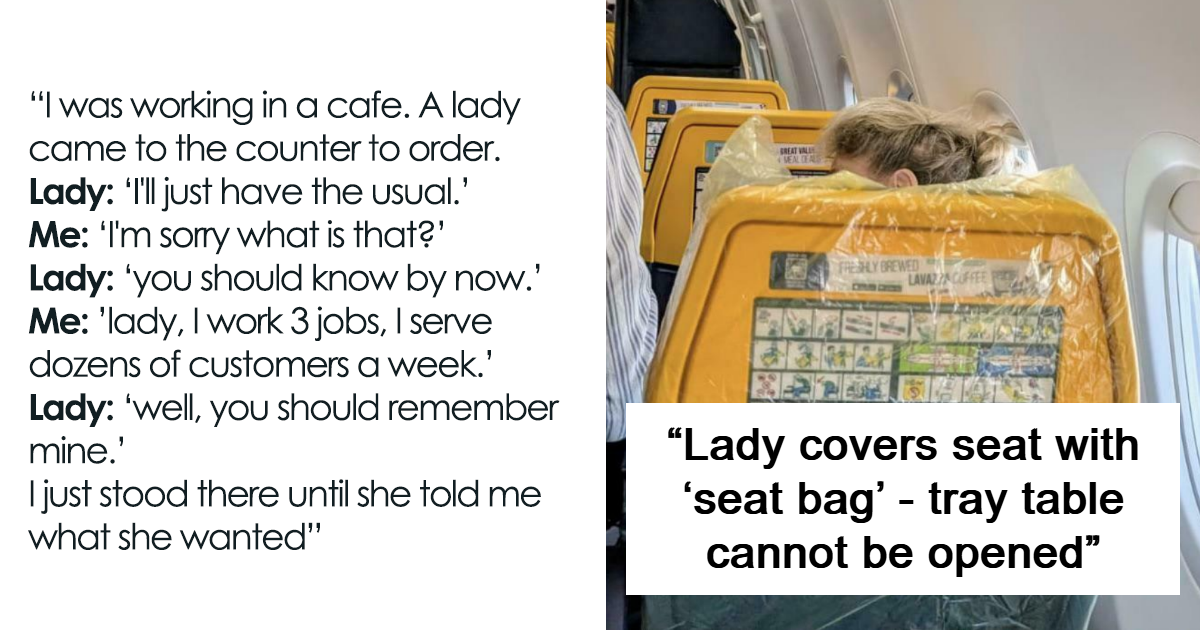
There was a time when “the usual” sounded charming. It meant you were a regular, the server smiled when you walked in, and your coffee order had achieved a level of local celebrity. Now? In far too many cases, “I’ll just have the usual” lands less like friendly familiarity and more like a tiny hostage situation. You can practically hear the subtext: You work here, therefore you should orbit me.
That, in one gloriously annoying sentence, is the modern entitlement epidemic. It is not just bad manners. It is not just impatience. It is not even just rudeness, though there is certainly enough of that to power the national eye-roll grid for years. Entitlement is the belief that normal rules are for other people, while your preferences deserve special handling, immediate compliance, and ideally a round of applause.
The reason those 50 stories hit such a nerve is simple: they feel familiar. Anyone who has stood behind a line-cutter, worked retail during a holiday rush, served tables on a Saturday night, answered customer emails, or merely existed in public with open eyes has probably met some version of these people. The details vary, but the script rarely does. Someone wants an exception. Someone resents a boundary. Someone acts personally offended by the existence of policies, wait times, or other humans.
And that is why this topic resonates so hard. These stories are funny in the way stepping on a Lego is funny five years later. In the moment, they are exhausting. Up close, they reveal something bigger than isolated bad behavior. They show how inflated expectations, low frustration tolerance, and a startling lack of empathy have become weirdly normalized in modern life.
What Those 50 Stories Actually Reveal
At first glance, viral entitlement stories look like random chaos. One person berates a cashier over an expired coupon. Another expects a restaurant to memorize a custom order despite not being there in months. A third barges into a closing store as if “closed” is a suggestion written by cowards. But when you zoom out, patterns appear.
The Main Character Customer
This is the person who enters a shared space and immediately behaves as though the whole scene was built for them. The menu is not a menu; it is a draft. The policy is not a rule; it is an opening bid. The queue is not a line; it is a challenge to their greatness. They do not see workers as people performing a job under constraints. They see them as supporting actors in the biopic of their own convenience.
That mindset matters. Healthy confidence says, “I know what I like.” Entitlement says, “Everyone should already know what I like, adapt around it, and feel lucky I showed up.” One is self-awareness. The other is ego wearing loafers.
The Rule-Exception Collector
Another recurring type is the person who treats every standard as negotiable when it inconveniences them. They want the discount without the deadline, the reservation without the booking, the upgrade without the fee, and the apology without acknowledging their own behavior. To them, fairness is not a shared principle. It is a service they expect to receive personally.
This is part of what makes entitlement so irritating: it often dresses itself up as righteousness. Entitled people rarely say, “I want special treatment because I think I matter more.” They say, “This is ridiculous,” “This makes no sense,” or “Any decent business would do this for me.” Translation: I would like my selfishness to be mistaken for principle.
The Emotional Steamroller
Then there is the person who weaponizes emotion. The goal is not to solve the problem; the goal is to create enough discomfort that everyone caves. They sigh theatrically, raise their voice, repeat themselves, insult someone’s competence, or act stunned that the universe failed to prioritize them. It is less communication and more amateur community theater with a revenge budget.
These people understand something many decent folks forget in the moment: public pressure works. Workers are tired. Managers want peace. Bystanders hate tension. The louder person often wins, which teaches the worst possible lesson not just that bad behavior is acceptable, but that it is effective.
Why Entitlement Feels Worse Right Now
People have always been capable of selfishness. History did not begin with the invention of the rude brunch customer. But entitlement feels louder today for a few reasons, and none of them are especially comforting.
Convenience Culture Has Rewired Expectations
Modern life is built around speed. We stream instantly, order instantly, message instantly, and track deliveries with the intensity of Cold War intelligence analysts. Convenience is wonderful until it becomes psychological training. When people get used to frictionless everything, even ordinary delays begin to feel like injustice. A five-minute wait becomes an insult. A sold-out item becomes a betrayal. A human limitation becomes poor service.
That creates a dangerous confusion: the idea that wanting something quickly means you are owed it quickly. But life is still stubbornly physical. Restaurants get busy. Workers get tired. Systems make mistakes. Planes land late. Coffee takes time. The entitled mind treats these realities not as facts, but as personal attacks.
Public Rudeness Is More Visible and More Contagious
Another reason this feels like an epidemic is that incivility spreads. When people are treated rudely, they often carry that irritation into the next interaction. One customer snaps at an employee. That employee goes home stressed. A coworker absorbs the tension. A manager becomes short-tempered. A stranger gets the leftover edge. Bad behavior does not stay put. It ricochets.
That is one reason entitlement creates so much damage beyond the original moment. It is not just one person being difficult. It is one person setting off a chain reaction of fatigue, defensiveness, and resentment. In other words, entitlement is not merely unpleasant. It is socially expensive.
The Internet Has Turned Every Minor Inconvenience Into Content
We also live in a culture where every annoyance can be instantly narrated, dramatized, and performed. Instead of asking, “Is this worth making a fuss about?” many people now ask, “Could this become a story where I am obviously right?” That mindset encourages moral inflation. Suddenly, not getting your preferred sandwich modification is not mildly disappointing; it is evidence of collapse, disrespect, failure, corruption, and possibly a war crime.
Online culture rewards certainty, outrage, and self-centered storytelling. Nuance gets fewer clicks. Grace gets fewer shares. “Maybe they were overwhelmed” is not exactly algorithm catnip.
Empathy Is Losing Ground to Self-Importance
At the core of entitlement is an empathy problem. The entitled person is not always evil, dramatic as that sounds. Sometimes they are simply trapped inside their own inconvenience. Their need fills the whole screen. They cannot imagine the barista has served 200 people today, the nurse is juggling six tasks, the gate agent did not personally engineer the delay, or the cashier does not own the company and cannot override policy because Chad from Table 7 is spiritually attached to extra ranch.
Once empathy shrinks, everything feels personal. Boundaries feel hostile. Delays feel disrespectful. Equality feels like neglect because being treated like everyone else is unacceptable to someone who has quietly decided they are not everyone else.
Why This Behavior Hurts More Than People Admit
It is tempting to laugh off entitlement as petty drama. Sometimes it is petty drama. Sometimes it is also a direct route to burnout. Frontline workers deal not only with tasks, but with emotional labor the pressure to stay pleasant, calm, and accommodating while someone else behaves like a toddler with a loyalty card.
That mismatch is brutal. The worker must regulate their tone, face, and words. The entitled customer gets to free-style. Over time, that wears people down. It drains patience, increases stress, and can make workplaces feel less safe, less respectful, and less human. A job becomes harder not because the work itself changed, but because other people started acting like courtesy is optional.
And the damage is not limited to customer-facing roles. Entitlement shows up in offices, group projects, classrooms, neighborhoods, and family group chats that should absolutely have been muted months ago. It appears whenever someone assumes their deadlines matter more, their preferences count extra, or their discomfort justifies bulldozing everyone else.
That is how entitlement corrodes trust. It tells decent people that cooperation is for suckers. It teaches observers that the loudest person gets the fastest results. It makes basic respect feel like a rare artisanal product instead of the bare minimum for social life.
Not Every Assertive Person Is Entitled
To be fair, not every complaint is entitlement. Some businesses do provide terrible service. Some systems are unfair. Some workers are rude. Some policies are dumb enough to deserve their own documentary series. The solution is not for everyone to become silent and endlessly accommodating.
The difference lies in proportion and perspective. Assertive people say, “This order is wrong. Can you help fix it?” Entitled people say, “This is unbelievable. How do you people mess this up every time?” Assertive people understand that their issue matters without believing it is the center of the universe. Entitled people confuse inconvenience with oppression and disagreement with disrespect.
That distinction matters because a society without standards becomes chaos, but a society without humility becomes unbearable. You can advocate for yourself without turning every interaction into a monarchy.
What Those 50 People Prove About Us
Those 50 people do not prove that everyone is awful. They prove something more subtle and, in some ways, more alarming: a lot of people have become comfortable behaving badly in ordinary public life. They assume workers should absorb it. They assume strangers should tolerate it. They assume their mood deserves accommodation.
And maybe the deepest problem is this: entitlement often masquerades as confidence, honesty, or “just having standards.” But real confidence does not require humiliating other people. Real honesty does not need an audience. Real standards apply to your own behavior too.
If this epidemic has a silver lining, it is that most people still recognize the sickness when they see it. That is why these stories spread. They offer a moment of collective recognition. Yes, that person really did act like the deli counter was their kingdom. Yes, that customer really did expect a worker to read their mind. Yes, your exhaustion is valid.
The cure is not complicated, though apparently it is emotionally difficult for some folks. Wait your turn. Ask, do not demand. Accept the occasional “no” without behaving like civilization has failed. Remember workers are people, not vending machines with student debt. And if you find yourself about to say, “You should know my usual by now,” maybe pause and consider whether what you actually need is a coffee, a snack, or a brief supervised reintroduction to humility.
Experiences That Make The Entitlement Epidemic Feel Real
Talk to enough people in customer-facing jobs, and the stories start to blur into a single national stress dream. A server remembers the guest who snapped fingers instead of saying “excuse me,” then acted offended when the table did not receive royal-level attention. A retail worker recalls being blamed for inventory shortages as though they personally hid the last sweater in a cave for sport. A receptionist remembers the caller who treated a fully booked schedule like an insult invented exclusively for them. Different jobs, same energy: How dare reality fail to arrange itself around me?
Even outside the workplace, everyday entitlement has become weirdly theatrical. You see it in parking lots, where people leave carts in the middle of spaces because returning them is apparently beneath their rank. You see it in airports, where someone with Zone 7 boarding hears “families with small children first” and thinks, “That sounds like a challenge.” You see it online, where complete strangers demand free expertise, instant replies, and custom help with all the warmth of a ransom note.
What makes these experiences so draining is not just the inconvenience. It is the emotional weirdness of being treated as though your time, labor, and dignity matter less than someone else’s passing preference. Entitlement always carries that little sting. It says, “I am a person. You are a function.” And even when the moment is brief, the message lingers.
Plenty of people also know the experience from the other side not as the entitled person, hopefully, but as the bystander trapped nearby. You are standing in line at a coffee shop, minding your business, when someone launches into a five-minute lecture about ice, foam, pricing, cup size, or the philosophical betrayal of oat milk being out of stock. Suddenly the whole room is tense. Nobody knows where to look. The employee is trying to stay polite. The customer is acting like they are cross-examining a hostile witness. And everyone else is silently united in the most sacred form of democracy: shared secondhand embarrassment.
Then there are the quieter experiences, the ones that do not go viral because they are too ordinary. The friend who never says thank you. The coworker who treats collaboration like personal assistance. The family member who assumes everyone should rearrange plans around them, then calls other people selfish for having limits. These are not spectacular stories. They are cumulative ones. They wear people down slowly, like water dripping on stone, except the water is saying, “Actually, I think you should do more for me.”
That may be why the entitlement epidemic feels so personal. Most of us are not just reacting to one rude stranger or one absurd comment. We are reacting to repetition. To the pileup. To the sense that ordinary decency is being negotiated downward in real time. And yet, those same experiences also clarify what people still value. We remember the patient customer, the apologetic driver, the stranger who waits their turn, the manager who backs up staff, the regular who says please and thank you like those words still have some muscle left in them.
In that sense, these experiences do more than prove entitlement is real. They also prove its opposite is still possible. Courtesy is not dead. Empathy is not extinct. Plenty of people still know how to move through the world without acting like they own the soundtrack. The frustration comes from knowing how simple basic respect can be and watching too many people treat it like an optional premium feature.
Conclusion
The viral stories are entertaining because they are absurd, but they matter because they are revealing. They show how easily selfishness can disguise itself as confidence, how quickly inconvenience can become outrage, and how often workers and strangers are expected to absorb behavior that should have been corrected years ago. If there is an epidemic here, it is not just entitlement. It is the erosion of the small social habits that make shared life bearable: patience, empathy, gratitude, and the astonishingly underused ability to hear the word “no” without acting like you have been chosen to suffer in a Greek tragedy.
That is also why the antidote is both boring and powerful. Respect people. Follow the rules unless there is a real reason not to. Ask for help without demanding submission. Remember that being inconvenienced is not the same thing as being wronged. Civilization, as it turns out, is held together less by genius than by people who know how to wait their turn and not terrorize the staff.