Some photography ideas arrive like lightning. Others show up looking innocent and then immediately reveal themselves as chaos in a sweater. Photographing children with their dogs belongs firmly in category two. Kids are unpredictable. Dogs are unpredictable. Put them together in one frame and you do not get “easy portrait session.” You get a tiny, lovable tornado with paws.
That is exactly why this challenge was worth doing. There is something deeply honest about the relationship between a child and a dog. Adults pose for the camera. Kids tolerate it. Dogs absolutely did not read the memo. But when a child leans into a furry best friend, when a dog watches a small human with full-body devotion, and when both forget the camera is even there, the result feels bigger than a portrait. It feels like evidence. Evidence that companionship can be loud, muddy, goofy, and still somehow cinematic.
This project pushed me to work faster, observe better, and stop trying to control every detail. Instead of chasing perfect poses, I looked for perfect moments: a mittened hand on warm fur, a secret whispered into floppy ears, a side-eye from a dog who clearly believed the shoot should include more treats and fewer artistic ambitions. What I got were images that felt playful, tender, and surprisingly powerful.
Below are the best 21 photos from the challenge, along with what made each one work. Think of this as part photo essay, part storytelling exercise, and part love letter to the strange little magic that happens when children and dogs share the same frame.
Why Children and Dogs Make Such Powerful Photo Subjects
Children and dogs are naturally expressive, which is wonderful for storytelling and mildly terrifying for scheduling. Neither subject is particularly interested in your shot list. That means the best images rarely come from stiff direction. They come from trust, patience, and the ability to recognize a genuine moment before it disappears. One second you are adjusting composition; the next second the dog is licking the kid’s nose and the kid is laughing like the world just told its best joke. That is the frame you keep forever.
What also makes these portraits special is emotional contrast. Children bring wonder. Dogs bring loyalty. Together, they create scenes that can be whimsical, protective, funny, and heartbreakingly sweet in the span of a few minutes. A big dog beside a tiny child instantly adds visual drama. A shy child with a calm dog adds softness. A high-energy pair creates action and comedy. Every duo writes its own script.
There is also a practical lesson here for anyone interested in family photography, dog photography, or lifestyle portraiture: the image becomes stronger when it tells a story instead of simply proving that two subjects were present in the same zip code. The goal is not “child plus dog.” The goal is “relationship.” Once that clicked, the entire challenge changed for me.
Here Are The Best 21 Photos From The Challenge
-
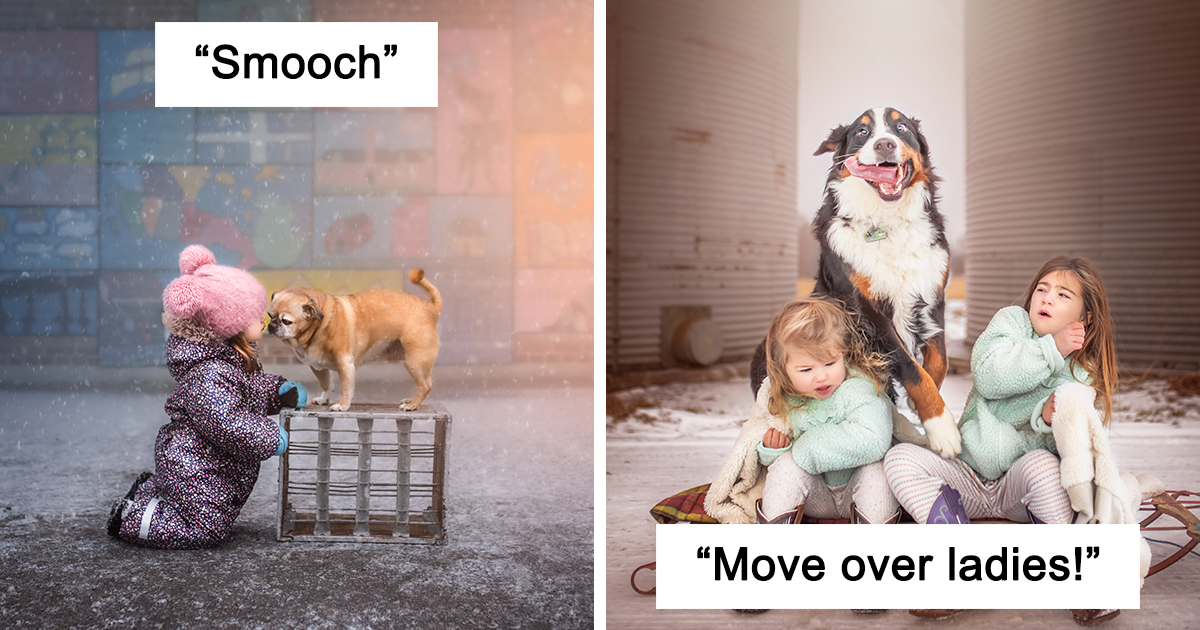
1. Move Over, Ladies!
This image works because it has attitude. The child’s expression says confidence, the dog’s body language says devotion, and the composition feels like the start of a tiny buddy-comedy movie. It is funny without trying too hard, which is usually when funny looks best on camera.
-
2. Smooch
Every photo series needs one frame that melts everybody into a puddle, and this was it. A quick kiss from dog to child instantly turned a portrait into a memory. Nothing was overposed, nothing felt forced, and that is exactly why the tenderness landed.
-
3. Snow-Day Sidekick
Cold weather added texture to this shot: rosy cheeks, visible breath, and fur that looked extra plush against the winter light. The scene felt adventurous, like the two subjects had just returned from a mission involving snow forts and very questionable navigation skills.
-
4. Forever
This was one of the quietest images of the project, and that stillness gave it weight. The child’s body leaned in; the dog stayed calm and present. It did not need big action. It only needed closeness. Sometimes the softest frame says the most.
-
5. Ice Time
The strength of this photo was movement held just long enough to feel alive without becoming a blur festival. It looked playful, brisk, and full of winter energy. The best part was the sense that the child and dog were doing something together, not simply standing near each other.
-
6. Best Friends On Patrol
A walking shot can do what a formal portrait cannot: it shows rhythm. Here, both subjects looked like a team with a mission, even if the mission was just “inspect yard, demand snacks.” Matching direction and shared focus made the frame feel naturally connected.
-
7. The Little Guardian
In this image, the dog seemed protective and the child seemed completely at ease. That contrast made the portrait memorable. It captured the way dogs can make children feel safe without the photo becoming sentimental mush. Emotional, yes. Cheesy, thankfully no.
-
8. Whispering Secrets
One of my favorite visual tricks is photographing a child speaking softly to a dog. It creates instant intimacy because viewers imagine the secret for themselves. The dog’s patient attention did half the storytelling work here, which is impressive considering the model was paid in treats.
-
9. Windy-Day Heroes
Wind can ruin a session or rescue it. In this case, it rescued it beautifully. Hair, scarves, and fur picked up motion that made the frame feel spontaneous and cinematic. Instead of fighting the weather, I let it become part of the mood.
-
10. Boots, Paws, And Brave Faces
This shot leaned into detail: boots in the snow, muddy paws, and a stance that suggested both subjects were ready for an expedition. Those little elements made the image tactile. You could almost hear the crunch underfoot and the dog’s impatient “Are we done posing yet?” energy.
-
11. The Look That Says Everything
Sometimes all you need is eye contact. In this frame, the child looked at the dog and the dog looked right back with the kind of expression that makes people believe dogs know far more than they admit. No props. No gimmicks. Just connection.
-
12. Tiny Mittens, Giant Heart
The visual contrast carried this image: small hands against a broad chest, child-sized clothing beside a full-grown dog, fragility next to strength. The pairing felt both sweet and dramatic, which is a fantastic combination when you want a portrait to linger in the viewer’s mind.
-
13. Waiting Together
This was a sitting pose, but it did not feel static. Both subjects looked outward, sharing attention toward something beyond the frame. That tiny storytelling cue made the photo feel thoughtful, as if they were waiting for a parent, a sled ride, or the universe to deliver hot chocolate.
-
14. The Comedian And The Straight Man
One subject grinned, the other looked gloriously unimpressed. Comedy achieved. The best child-and-dog portraits often succeed because the personalities do not match at all. That mismatch creates tension, charm, and the kind of visual humor people remember.
-
15. A Quiet Hug
This image avoided the overly staged “hug the dog” cliché by keeping the gesture natural and relaxed. It felt like comfort instead of instruction. The dog looked settled, the child looked calm, and the whole frame seemed to exhale in a very noisy world.
-
16. Partners In Crime
There is a special expression children get when they are plotting something harmless but chaotic, like jumping in puddles or sneaking extra cookies. Pair that expression with a dog who appears fully committed to the plan, and suddenly the photo tells a complete story without a single caption.
-
17. The One With The Snowflakes
Weather became a prop here. Tiny snowflakes catching on fur and sleeves added sparkle without looking artificial. The frame felt seasonal, but more importantly, it felt lived in. You could tell the subjects were really there, really cold, and still very much game for the adventure.
-
18. Porch Patrol
This photo had strong environmental storytelling. The porch, the doorway, and the posture of both subjects created a sense of home. Not every memorable portrait needs a dramatic background. Sometimes “where they belong together” is the most powerful setting of all.
-
19. Mud, Mischief, And Joy
Perfection is overrated. This frame worked because it embraced real life: a little mess, a lot of laughter, and the kind of happy disorder that defines childhood and dog ownership in equal measure. Honestly, if nothing is slightly dirty, was the session even real?
-
20. The Farewell Light
Late-day light did the heavy lifting in this image. The warm glow softened skin, highlighted fur, and turned an ordinary pose into something almost painterly. It reminded me that beautiful portraits are often less about gear and more about choosing the right moment to press the shutter.
-
21. Home
I wanted the final image in the series to feel complete, and this one did. It was not necessarily the loudest or most technically showy frame, but it had emotional closure. Child and dog, relaxed together, looking exactly where they were meant to be. That is the whole project in one image.
What This Challenge Taught Me About Photographing Kids With Dogs
The first lesson was simple: stop trying to micromanage magic. Children and dogs do not respond well to a photographer who behaves like an air traffic controller with a camera strap. When I loosened the shot list and focused on prompts instead of rigid posing, everything improved. “Walk together.” “Tell your dog a secret.” “Put your forehead close.” Those kinds of directions left room for personality.
The second lesson was technical but important. Fast shutter speeds are your best friend when your subjects have two legs and four legs and exactly zero patience for blur. Soft natural light also matters more than people think. When the light is gentle, the mood feels gentler, skin tones look better, and fur keeps detail instead of turning into one giant shadow with eyebrows.
The third lesson was perspective. Eye-level shots are powerful because they invite the viewer into the child’s world instead of making the child and dog look observed from above. Getting lower changed everything. It made the dog feel bigger, the child feel more present, and the bond feel immediate. It also reminded me that good photography occasionally requires kneeling in snow and questioning every life choice that led there.
Most importantly, safety and comfort shape the best images. The dog needs space. The child needs to feel calm. An adult needs to stay close. The moment a pose feels forced, the quality drops. You can see it in the body language instantly. The strongest portraits came when the dog was relaxed, the child was engaged, and the session moved quickly enough to keep everyone happy.
That combination of storytelling, timing, light, patience, and common sense turned the challenge from a novelty into something much richer. These were not just cute pictures. They were portraits of trust, routine, companionship, and the weirdly beautiful teamwork required to photograph a kid and a dog before somebody sees a squirrel.
My Experience Behind The Lens: The Real Story Of Photographing Children With Their Dogs
If I am being honest, this challenge sounded far more reasonable in my head than it did in real life. In my imagination, I pictured calm children, cooperative dogs, and a graceful artistic process where everybody moved exactly where I hoped they would. In reality, one child wanted to run, one dog wanted to sniff absolutely everything, another dog had very strong opinions about snowbanks, and I spent a surprising amount of time making ridiculous noises in public. Dignity was not invited to this project.
And yet, that messiness became the best part.
What surprised me most was how quickly the emotional truth of each pair revealed itself. Some children were chatty and proud, eager to tell me every detail about their dog’s habits, favorite toy, and suspicious relationship with squirrels. Others were quieter, but the second they touched their dog, they relaxed. The dog became the bridge between nervousness and confidence. I would watch a child settle into the moment simply because their best furry friend was beside them, and that changed the energy of the entire shoot.
I also learned that photographing children with dogs is not really about control. It is about attention. You have to notice the micro-moments: the hand reaching instinctively toward fur, the dog glancing back to check on the child, the burst of laughter after an unexpected lick, the split second when both subjects look in the same direction and the frame suddenly clicks into place. If you wait for perfection, you miss the soul of the session. If you watch carefully, imperfection becomes the story.
The weather, the movement, and the unpredictability forced me to simplify. I planned faster. I framed quicker. I stopped fussing over things that did not matter and started protecting the things that did: comfort, safety, trust, and emotional honesty. That shift made me a better photographer. It taught me that preparation is useful, but presence is everything.
By the end of the challenge, I was not just collecting successful images. I was collecting proof that childhood and dog companionship belong together in photographs. These portraits held playfulness, loyalty, comedy, resilience, and affection all at once. They reminded me that some of the most meaningful images are not grand or polished. They are personal. They feel like home. They show a child exactly as they are with a dog exactly as it is, and somehow that is more beautiful than anything overly staged could ever be.
Would I do the challenge again? Absolutely. Would I bring extra gloves, better snacks, and an even deeper respect for the phrase “never work with children or animals”? Also absolutely. But that is the charm of this kind of photography. It asks you to trade perfection for authenticity, and that is a bargain I would make every time.
Conclusion
“I Challenged Myself To Photograph Children With Their Dogs, And Here Are The Best 21 Photos” is more than a catchy title. It is a reminder that some of the most compelling portraits happen when affection outruns perfection. These images work not because every pose is flawless, but because every frame captures a real relationship. The best child and dog photography feels spontaneous, emotionally rich, and full of personality. It preserves a chapter of life that passes far too quickly.
For photographers, parents, and dog lovers alike, the takeaway is simple: do not wait for a perfectly polished moment. Watch closely. Keep the session safe, light, and playful. Let the child interact naturally with the dog. Then be ready. Because somewhere between the wiggles, the weather, the laughter, and the total refusal to follow instructions, the photo you actually wanted will show up when you least expect it.