Writing a resume can feel a little like trying to summarize your entire professional life on a cocktail napkin. You have skills, experience, wins, lessons, and at least one job that taught you patience the hard way. Somehow, all of that must fit into a document that is clean, sharp, and convincing.
The good news: a strong resume is not magic. It is structure, strategy, and clarity. Employers do not need your autobiography, your horoscope, or a dramatic retelling of your internship. They need proof that you can solve problems, do the job, and make their team stronger. That is the whole game.
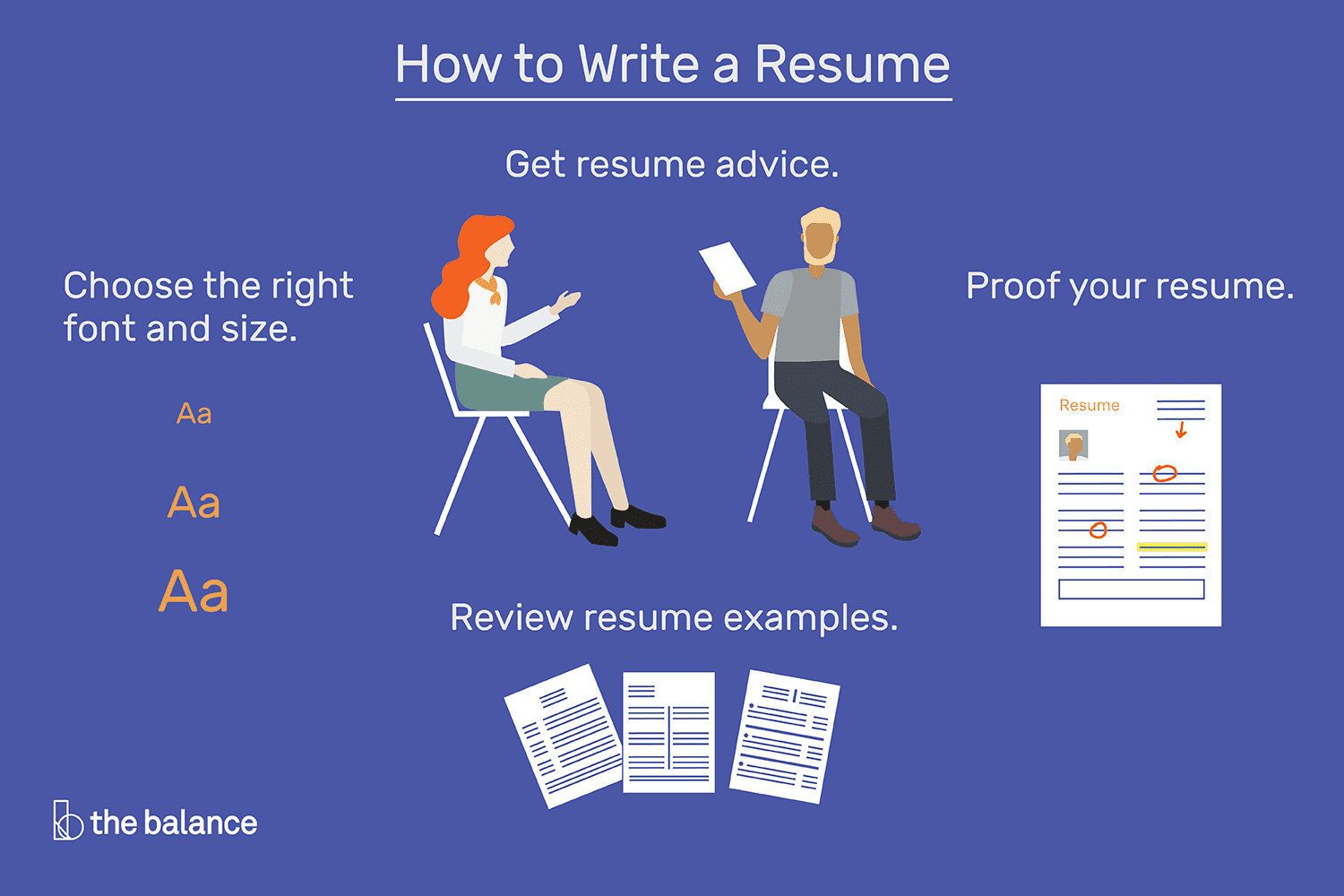
In this guide, you will learn how to write a resume that looks professional, reads naturally, and gives hiring managers exactly what they are searching for. You will also see practical examples you can adapt for your own job search.
What a Resume Is Supposed to Do
A resume is a marketing document, not a diary. Its purpose is to show relevant qualifications fast. That means your resume should make it easy for a recruiter or hiring manager to answer three questions:
- Who are you professionally?
- What have you done that matters?
- Why are you a strong fit for this specific role?
If your resume answers those questions clearly, you are already ahead of a surprising number of applicants. Yes, really. Many resumes still wander into the wilderness of vague phrases like “hardworking team player” and “responsible for various tasks.” That is not a resume. That is beige wallpaper.
Step 1: Choose the Right Resume Format
Before you write anything, choose a format that fits your background. Most job seekers should use a reverse-chronological resume, which lists your most recent experience first. It is familiar, easy to scan, and works well for people with a fairly steady work history.
1. Reverse-Chronological Resume
Best for: Most professionals, recent graduates with internships, and applicants with relevant work experience.
Why it works: It shows career progression and puts your latest, often strongest, experience near the top.
2. Functional Resume
Best for: Limited situations, such as major employment gaps or highly unconventional backgrounds.
Why to be careful: Some employers dislike it because it can hide timeline details. Use it only when there is a strong reason.
3. Combination Resume
Best for: Career changers, technical professionals, or people with strong skills plus relevant experience.
Why it works: It blends a skills-focused section with work history.
For most people, reverse-chronological wins. It is the plain cheeseburger of resume formats: reliable, familiar, and hard to mess up.
Step 2: Add the Essential Resume Sections
A strong resume usually includes the following sections:
Contact Information
At the top of the page, include:
- Full name
- Phone number
- Professional email address
- City and state
- LinkedIn profile or portfolio link, if relevant
Skip your full street address. Also skip anything that belongs in a dating profile, not a job application, such as age, marital status, religion, or a photo for a standard U.S. resume.
Professional Summary
A summary is a short introduction, usually two to four lines, placed below your contact information. This section is especially useful if you have some experience, a clear specialty, or a career-change story to explain.
Example:
Results-driven marketing coordinator with 4 years of experience supporting digital campaigns, email strategy, and content production. Known for improving campaign performance through testing, reporting, and sharp project coordination. Seeking to bring data-backed creativity to a growth-focused marketing team.
If you are a student or entry-level applicant, you can use a summary too, but keep it focused on skills, coursework, projects, and goals. Do not write an objective that says you want “a challenging position where I can grow.” Every human wants that. Say something more useful.
Work Experience
This is the heart of the resume. For each role, include:
- Job title
- Employer name
- Location
- Dates of employment
- Bullet points showing achievements and impact
Start each bullet with a strong action verb. Focus on accomplishments, not just duties. Whenever possible, add numbers, percentages, revenue, volume, time saved, or other measurable results.
Education
List your degree, school, graduation date or expected graduation date, and honors if relevant. Recent graduates can place education higher on the page. Experienced professionals usually place it after work history.
Skills
Add a skills section that reflects the job description. Include a mix of technical skills, software, tools, certifications, and job-relevant competencies. Keep it honest. If your skill level with Excel is “I once made a table and survived,” do not label yourself an advanced spreadsheet wizard.
Step 3: Write Bullet Points That Sound Like Results
The biggest difference between a weak resume and a strong one is often the bullet points. Weak bullet points describe tasks. Strong bullet points describe value.
Weak vs. Strong Resume Bullets
Weak:
Responsible for managing social media accounts.
Better:
Managed Instagram, Facebook, and LinkedIn content calendars, increasing engagement by 28% over six months.
Weak:
Helped customers and answered questions.
Better:
Resolved 50+ customer inquiries daily while maintaining a 96% satisfaction score.
Weak:
Worked on a team project.
Better:
Collaborated with a 5-person team to launch a student fundraising campaign that exceeded its goal by 18%.
A useful formula is:
Action Verb + What You Did + Why It Mattered + Measurable Outcome
For example:
Redesigned onboarding materials, reducing new-hire training time by 15% and improving completion rates.
Step 4: Tailor the Resume to the Job
This is where many job seekers get lazy, and unfortunately, lazy resumes have a habit of becoming invisible resumes. One generic document sent to 75 openings is not a strategy. It is digital confetti.
To tailor your resume:
- Read the job description carefully
- Highlight repeated keywords and skills
- Match your summary, skills, and bullet points to the role
- Move the most relevant experience higher on the page
If a job posting emphasizes project management, cross-functional collaboration, and reporting, your resume should not bury those strengths under a mountain of unrelated details. You do not need to rewrite your life story each time, but you should absolutely adjust the emphasis.
Step 5: Keep It ATS-Friendly
Many employers use applicant tracking systems, or ATS, to sort and scan resumes before a human ever reads them. That does not mean you should stuff keywords like a Thanksgiving turkey. It means your formatting should be clean and your language should reflect the role.
ATS-friendly resume tips:
- Use standard headings like Experience, Education, and Skills
- Choose common fonts such as Arial, Calibri, or Times New Roman
- Avoid graphics, charts, icons, tables, and text boxes
- Use keywords naturally from the job posting
- Save the file in the requested format, usually PDF or DOCX
Your resume does not need to look like a movie poster. It needs to be readable by both software and actual humans, which is a lovely old-fashioned goal.
Step 6: Cut the Clutter
One of the smartest things you can do is remove anything that does not strengthen your case. A resume is not improved by extra words. It is improved by relevant words.
Consider removing:
- Outdated or irrelevant jobs from many years ago
- References available upon request
- Obvious soft skills with no proof
- Personal details not relevant to hiring
- Long paragraphs instead of bullets
For many professionals, one page is ideal. Two pages can be reasonable if you have substantial relevant experience. The key is not page count for its own sake. The key is density of value.
Resume Examples You Can Adapt
Example 1: Entry-Level Resume Summary
Professional Summary
Detail-oriented business student with internship experience in customer support, market research, and administrative coordination. Strong communicator with hands-on experience using Excel, Canva, and CRM tools. Eager to contribute analytical and organizational skills in an entry-level operations role.
Example 2: Work Experience Bullet Points for a Marketing Role
Marketing Assistant | BrightPath Media | Chicago, IL | 2023–2025
- Coordinated weekly email campaigns for a subscriber list of 22,000+, helping improve average open rates by 14%.
- Created and scheduled social content across three platforms, supporting a 31% increase in follower engagement.
- Compiled monthly performance reports using Google Analytics and HubSpot, giving leadership clearer visibility into campaign ROI.
Example 3: Resume Bullets for Customer Service
Customer Service Representative | Northview Retail | Dallas, TX | 2022–2024
- Handled 60+ customer interactions per shift while maintaining a 95% positive feedback rating.
- Trained 8 new team members on store systems, return procedures, and service standards.
- Helped reduce checkout delays by identifying a workflow issue and suggesting a revised register rotation process.
Example 4: Career Change Resume Summary
Professional Summary
Former high school teacher transitioning into learning and development, with 7 years of experience designing lesson plans, leading group instruction, and measuring student outcomes. Skilled in training delivery, communication, and curriculum development. Ready to bring education expertise to corporate training and employee development.
A Simple Resume Template
You can structure your resume like this:
Your Name
City, State | Phone | Email | LinkedIn
Professional Summary
2–4 lines tailored to the target role.
Skills
8–12 relevant skills and tools.
Professional Experience
Job Title | Company | Dates
3–5 bullets focused on results
Education
Degree | School | Graduation Date
Optional Sections
Certifications, Projects, Volunteer Experience, Languages
Common Resume Mistakes to Avoid
- Using one generic resume for every job
- Listing responsibilities without results
- Writing long, dense paragraphs
- Including grammar mistakes or inconsistent formatting
- Overdesigning the page until it becomes unreadable
- Adding skills you cannot actually defend in an interview
And yes, proofreading matters. A resume with a typo does not automatically go in the trash, but it does whisper, “I was in a hurry,” which is not the strongest brand statement.
How to Make Your Resume Stronger Fast
If you want a quick upgrade, do these five things today:
- Replace vague phrases with action verbs
- Add numbers to at least three bullet points
- Rewrite your summary for the target role
- Remove outdated or irrelevant information
- Check that your formatting is simple and consistent
Those small edits can dramatically improve clarity, and clarity is what gets interviews.
Final Thoughts
A great resume is not the one with the fanciest layout or the most adjectives. It is the one that makes your value obvious. It tells a clean, credible story about what you have done, what you do well, and why you belong in the role you want next.
Think of your resume as a highlight reel, not the entire documentary. Lead with relevant experience, show impact with numbers, tailor it to the job, and keep the design simple enough that nobody needs a user manual to read it.
Do that, and your resume will stop blending into the pile and start doing what it is supposed to do: open doors.
Experience-Based Resume Lessons Job Seekers Learn the Hard Way
Here is something that rarely gets said loudly enough: many people do not write a strong resume the first time. They write a polite, slightly sleepy document full of decent intentions and very little punch. Then they apply to a dozen jobs, hear nothing back, and wonder whether the hiring universe has personally cursed them. Usually, the problem is not bad luck. It is weak positioning.
One common experience is realizing that “responsible for” is not doing anyone any favors. Job seekers often describe duties because duties are easy to remember. Achievements take more thought. But once they go back and add specifics like increased sales, shortened turnaround time, trained new staff, improved retention, or reduced errors, the resume suddenly sounds far more credible. Same person. Same experience. Better framing.
Another lesson comes from tailoring. Many candidates resist this because it feels repetitive. Then they finally compare their resume with an actual job posting and notice the mismatch. The employer wants client communication, reporting, scheduling, and stakeholder coordination. Their resume talks about being organized, hardworking, and “passionate.” That is not alignment. That is wishful thinking wearing a blazer.
Career changers often discover a different truth: your past experience still counts, but only if you translate it. A teacher moving into training, a retail lead moving into operations, or a server moving into customer success may have excellent transferable skills. The mistake is assuming employers will connect the dots on their own. Once job seekers rewrite bullets in the language of the target role, the story becomes much easier to understand.
Students and entry-level applicants learn another important lesson: lack of full-time experience does not mean lack of material. Class projects, internships, volunteer work, leadership roles, freelance assignments, and campus organizations can all provide strong resume content when written well. What matters is not whether you were paid in a dramatic corporate office with glass walls. What matters is whether you demonstrated skills, ownership, and results.
Finally, many people learn that confidence on a resume is not bragging. It is clarity. If you improved a process, say so. If you handled a busy workload, say so. If you helped a team hit a goal, say so. Employers are not hiring mystery novels. They are hiring problem-solvers. The strongest resumes usually come from candidates who stop downplaying their work and start describing it with accuracy, evidence, and just enough backbone to sound like someone worth calling.