Note: Body-only HTML, ready to copy and publish.
A good hair day is wonderful. A great hair day with a scarf? That is main-character behavior. If you have ever stared at a silky square scarf and thought, “Cute, but now what?” you are in the right place. Learning how to tie a scarf in your hair is one of the easiest ways to make a simple hairstyle look styled on purpose, even when you absolutely did not style it on purpose. We support the illusion.
Hair scarves can dress up second-day waves, rescue a rushed ponytail, add color to braids, and give buns, headbands, and half-up styles a little extra personality. Better yet, you do not need celebrity-level skills or an emergency glam squad hidden behind your bathroom door. With the right scarf, a few basic folds, and a knot that actually stays put, you can create a polished look in minutes.
In this guide, you will learn exactly how to tie a scarf in your hair in several easy ways, including headbands, braided styles, ponytail wraps, bun wraps, and vintage-inspired looks. You will also learn how to choose the best scarf, how to prep your hair, and how to avoid the classic mistakes that turn “effortless chic” into “why is this slipping off my head in the parking lot?”
Why a Hair Scarf Works So Well
A scarf is one of those rare accessories that is both practical and stylish. It can hold hair back, disguise oily roots, soften the look of a tight ponytail, and add movement, color, and texture without requiring a single hot tool. That is a lot of responsibility for one piece of fabric.
The best part is the versatility. A narrow scarf can act like a headband. A long skinny scarf can weave into a braid. A square scarf can become a triangle wrap, a top-knot accent, or a retro bow. If your outfit feels plain, a patterned scarf can wake it up. If your hairstyle feels too serious, a scarf can make it feel playful. If your hair feels unruly, a scarf can make it look intentional. Basically, the scarf is doing the public relations work for your hair.
Choose the Right Scarf Before You Start
Pick the Best Fabric
Lightweight scarves are the easiest to work with. Silk and satin scarves are especially popular because they look polished, glide smoothly, and are gentler on hair than rougher fabrics. Cotton scarves can work too, especially for casual looks, but bulky or stiff fabrics can be harder to knot neatly and may slip or puff up in odd places. A scarf should cooperate with your hairstyle, not behave like a tiny rebellious blanket.
Choose the Right Size
For a headband look, a small square or narrow oblong scarf is perfect. For scarf braids and ponytail wraps, a long skinny scarf works best. For triangle wraps or babushka-inspired styles, use a larger square scarf that can fold diagonally with enough length left to tie securely.
Think About Print and Color
If you are new to hair scarf styles, start with a pattern that includes one color already found in your outfit. That makes the look feel pulled together without trying too hard. Florals feel romantic, stripes feel classic, polka dots feel retro, and solid colors are the easiest to dress up or down.
Prep Your Hair So the Scarf Stays Put
Before you start tying, take a minute to prep. Freshly washed hair can be slippery, especially if it is silky or fine. If needed, add a little texture spray, dry shampoo, or light styling cream for grip. Smooth flyaways with a small amount of serum or leave-in product, but do not overdo it. You want control, not “my scarf and I are now one shiny object.”
If you have curly, coily, or textured hair, a silk or satin scarf can be especially helpful for reducing friction and keeping styles neater. If you have thick hair, secure the base hairstyle first with an elastic or pins before adding the scarf. And if you have short hair, do not leave the chat. Scarves work beautifully with bobs, lobs, pixies, and layered cuts too.
How to Tie a Scarf in Your Hair: Easy Styles to Try
1. The Classic Scarf Headband
This is the easiest place to start and one of the most wearable looks for everyday life. It works with loose hair, ponytails, buns, and half-up styles.
- Fold your scarf diagonally into a triangle.
- Roll the triangle into a long band, starting from the wide edge.
- Place the middle of the band under your hair at the nape of your neck.
- Bring both ends up over your head.
- Tie once or twice at the top of your head or slightly off to the side.
Wear it with the knot on top for a retro vibe, or tie it underneath your hair for a cleaner, more subtle finish. This style is perfect when you want your hair off your face but still want it down.
2. The Bow Headband
If the classic headband had a flirtier cousin, this would be it. Follow the same steps as the headband wrap, but tie the scarf into a soft bow instead of a standard knot. Place the bow at the top center, slightly off-center, or near one temple. Keep the loops small enough that you look stylish, not gift-wrapped.
3. The Scarf-Wrapped Ponytail
This style is ridiculously easy and looks like you tried much harder than you did.
- Pull your hair into a low or mid ponytail.
- Secure it with a hair elastic.
- Tie the scarf around the base of the ponytail.
- Leave the scarf ends loose, or knot them into a bow.
This works well for straight hair, waves, curls, and braids. A scarf-wrapped ponytail adds movement and color, especially if the tails are long enough to hang with the hair. It is also a nice way to make a gym ponytail look brunch-worthy.
4. The Scarf Braid
If you want the most eye-catching style in the room, this is the one. A scarf braid looks detailed, but the method is simple once you see the logic.
- Start with a ponytail or gather your hair into three braid sections.
- Tie the scarf securely at the base of the ponytail or the top of the braid section.
- Use the scarf as one of the three braid strands, or split the scarf so it blends through two sections.
- Braid downward as usual.
- Tie the end with a clear elastic or wrap the leftover scarf around the bottom.
This style works especially well with long hair, layered braids, and protective styles. It gives your braid extra fullness and color, and it photographs beautifully. Yes, this matters. No, we are not pretending otherwise.
5. The Bun Wrap
A messy bun can look charming. A scarf-wrapped bun can look like you own a summer house somewhere fabulous.
- Create a low bun, top knot, or messy bun.
- Tie the scarf around the base of the bun.
- Wrap the ends around once more if the scarf is long.
- Finish with a knot or a bow.
You can tuck the ends in for a sleek result or let them trail for a softer, more romantic finish. This look is great for weddings, weekends, and days when your hair has exactly two moods: up or absolutely not.
6. The Triangle Wrap or Babushka Style
This look has vintage charm and practical benefits. It is excellent on windy days, beach days, travel days, and any day your hairline needs a little privacy.
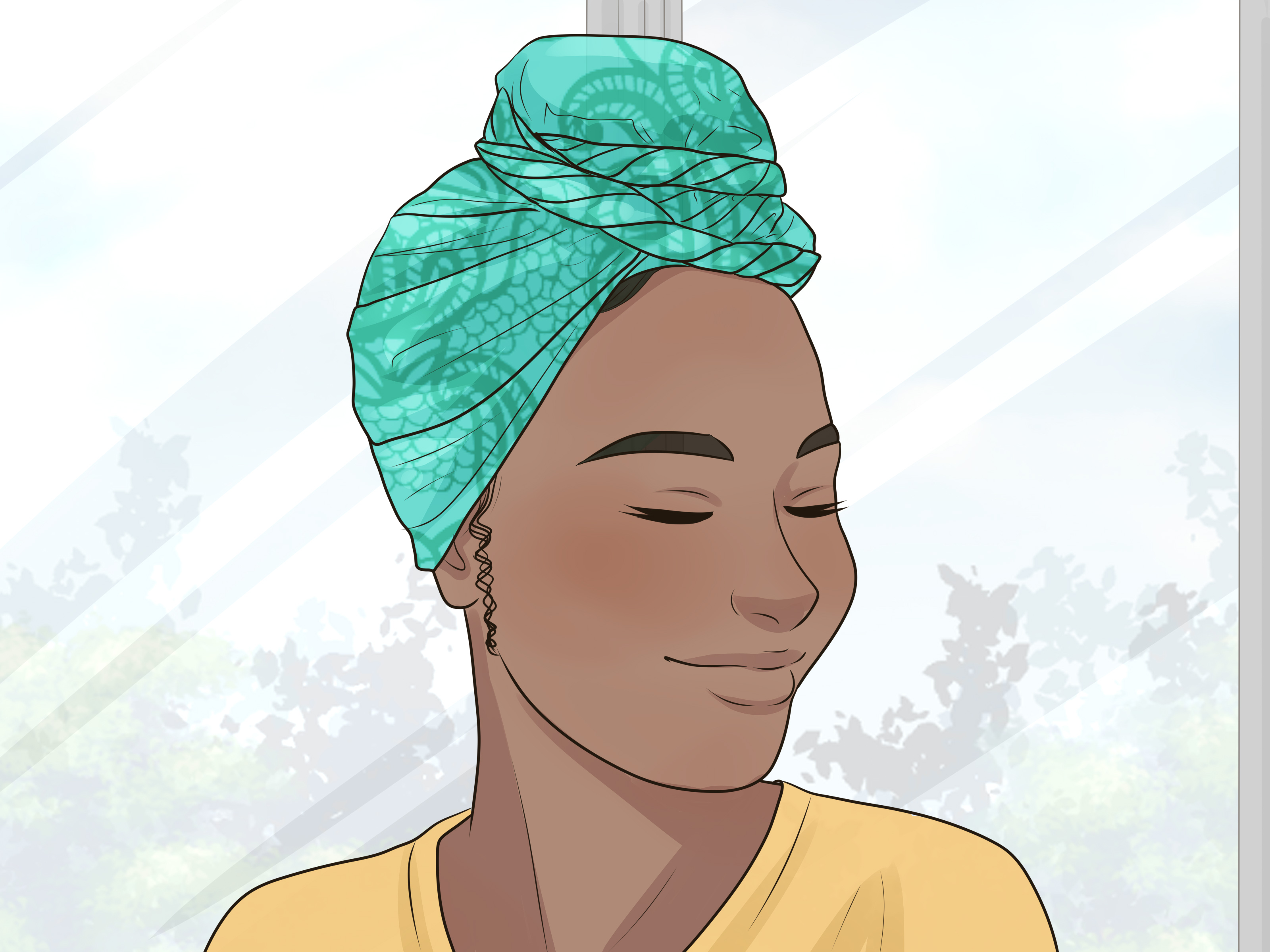
- Fold a square scarf diagonally into a triangle.
- Place the long folded edge across your hairline or slightly behind it.
- Let the point fall over the back of your head.
- Bring the two ends under your chin or behind your neck.
- Tie securely.
Tie it under the chin for a classic, vintage-inspired finish, or knot it at the back of the neck for a more casual, modern version. It looks especially chic with sunglasses and a little confidence.
7. The Half-Up Scarf Tie
This style is soft, flattering, and surprisingly versatile.
- Pull the top half of your hair back into a half ponytail or mini bun.
- Secure it first with an elastic.
- Tie the scarf over the elastic.
- Let the tails hang down through the rest of your hair.
This is a great option if you want to test the hair scarf trend without committing to a full wrap. It is pretty, simple, and beginner-friendly.
Best Scarf Styles by Hair Type and Length
Short Hair
Try rolled headbands, mini top knots with scarf wraps, or side-tied bows. A smaller scarf usually works better because too much fabric can overwhelm shorter cuts.
Medium-Length Hair
You can wear almost every style here, especially headbands, bun wraps, half-up ties, and low ponytail scarves. Medium hair is the overachiever of scarf styling.
Long Hair
Long hair is ideal for scarf braids, oversized bows, ponytail wraps, and full triangle ties. The scarf has room to move, and the extra length creates more drama in the best way.
Curly, Coily, and Textured Hair
Silk and satin scarves are often the easiest option because they help minimize friction and preserve moisture better than rougher materials. Scarves also pair beautifully with puff styles, braids, twist-outs, box braids, and buns. Just avoid tying too tightly around the edges.
Common Mistakes to Avoid
Using a scarf that is too thick: Bulky scarves are harder to knot and may slip, bunch, or create more volume than you wanted.
Skipping the base style: A scarf is not magic tape. If your ponytail or bun is unstable underneath, the scarf will not fix it.
Tying too tightly: A scarf should feel secure, not like it is negotiating with your scalp.
Ignoring balance: If your scarf is loud and oversized, keep the hairstyle simple. If the hairstyle is intricate, a simpler scarf often looks more polished.
Not testing knot placement: A knot in the wrong place can feel bulky against a car headrest, hat, or sunglasses. Small detail, huge difference.
How to Make the Style Last All Day
If you want your scarf hairstyle to survive commuting, humidity, errands, lunch, and the general chaos of being alive, secure the underlying hairstyle first. A clear elastic, a couple of bobby pins, or a discreet claw clip can do a lot of hidden work. For extra hold, tuck the scarf ends into the wrap or pin the knot from underneath.
A light mist of hairspray can help with flyaways, but use restraint. You are styling hair, not laminating it. If your scarf is silky and keeps slipping, try anchoring it against slightly textured hair rather than freshly conditioned, ultra-smooth strands.
What the Experience Is Actually Like
There is a very specific joy in realizing that a hair scarf can solve multiple problems at once. It can rescue a style, elevate an outfit, and save you from a full shampoo-and-blow-dry session when that level of commitment is simply not happening. For many people, the first experience with a hair scarf starts the same way: skepticism. You tie it once, it slips. You tie it twice, it looks lopsided. You stare in the mirror like the scarf has personally betrayed you. Then, on the third try, something clicks.
The headband style is often the gateway look because it feels familiar. It is essentially a fabric headband with more flair and better stories to tell. Once people get comfortable with the rolled wrap and basic knot, they usually branch out. The ponytail scarf tends to be the next favorite because it is nearly impossible to mess up. It moves when you walk, gives even a boring ponytail a little drama, and somehow makes a basic T-shirt look more intentional.
The scarf braid is where the confidence level starts to rise. At first, it can feel a little like patting your head, rubbing your stomach, and folding fitted sheets all at once. But after one or two tries, the technique becomes surprisingly intuitive. The payoff is worth it. A scarf braided into your hair adds color, texture, and fullness in a way that looks creative rather than costume-y. It is the kind of style that gets compliments from strangers in coffee lines, which is both flattering and mildly suspicious.
People with curly, coily, or textured hair often find that scarves are useful beyond style alone. A soft scarf can help keep a look neat, protect the hair from friction, and make day-three or day-four hair feel fresh again. People with straight or fine hair tend to love scarves for the opposite reason: they add shape, detail, and grip to styles that might otherwise fall flat. In both cases, the experience is less about perfection and more about ease. A scarf gives hair a finished quality without demanding a full production.
There is also the outfit factor. Once you start matching or contrasting your scarf with your clothes, shoes, or lipstick, it becomes a whole thing in the best way. A neutral outfit suddenly looks styled. A messy bun suddenly looks Paris-adjacent. A rushed morning suddenly looks like a deliberate aesthetic decision. Was it actually deliberate? Let us protect the mystery.
Over time, most people develop favorite scarf habits. Some keep one in the car, one in a tote bag, and one near the bathroom mirror for emergencies. Some reach for one only on humid days. Others build entire summer looks around them. The experience becomes less “How do I tie this?” and more “Which version of myself am I going for today?” That is the fun of it. A hair scarf is small, but it changes the mood of a hairstyle almost instantly. It is practical, expressive, and just a little dramatic, which is honestly the perfect combination.
Conclusion
If you want a quick style upgrade that feels creative without being complicated, learning how to tie a scarf in your hair is absolutely worth it. Start with a classic headband, move into a ponytail wrap, then graduate to bun wraps or scarf braids once you feel comfortable. Choose a lightweight scarf, secure the base hairstyle first, and let the scarf add the personality.
Whether your vibe is polished, playful, vintage, relaxed, or somewhere between “I planned this” and “I made this work in four minutes,” there is a hair scarf style for you. And that may be the real magic of it: one little piece of fabric, endless ways to look put together.