If you have ever bought insurance and wondered, “Wait, who is paying this person helping me compare deductibles at 8:14 p.m. on a Tuesday?” you are asking a very smart question. Insurance agents and brokers do not work on good vibes alone. They make money through a mix of commissions, renewals, fees, bonuses, and sometimes salaries or employer benefits. The details vary by product, company, state rules, and whether the professional is an agent, a broker, or something in between.
That matters because compensation shapes behavior. It can influence which products get more attention, how aggressively a policy is recommended, and how much service a client receives after the sale. It does not automatically mean something shady is happening. It simply means money has a seat at the table, and smart consumers should know where it is sitting.
Here is the simple version: most insurance agents and brokers earn money when a policy is sold and when it stays on the books. But that “simple version” hides a surprisingly interesting business model. Let’s unpack it without turning this into a nap-inducing licensing textbook.
Agent vs. Broker: Same Neighborhood, Different Address
Before talking about money, it helps to define the job titles. People often use agent and broker as if they are identical twins. In real life, they are more like cousins who look alike in holiday photos.
What an insurance agent does
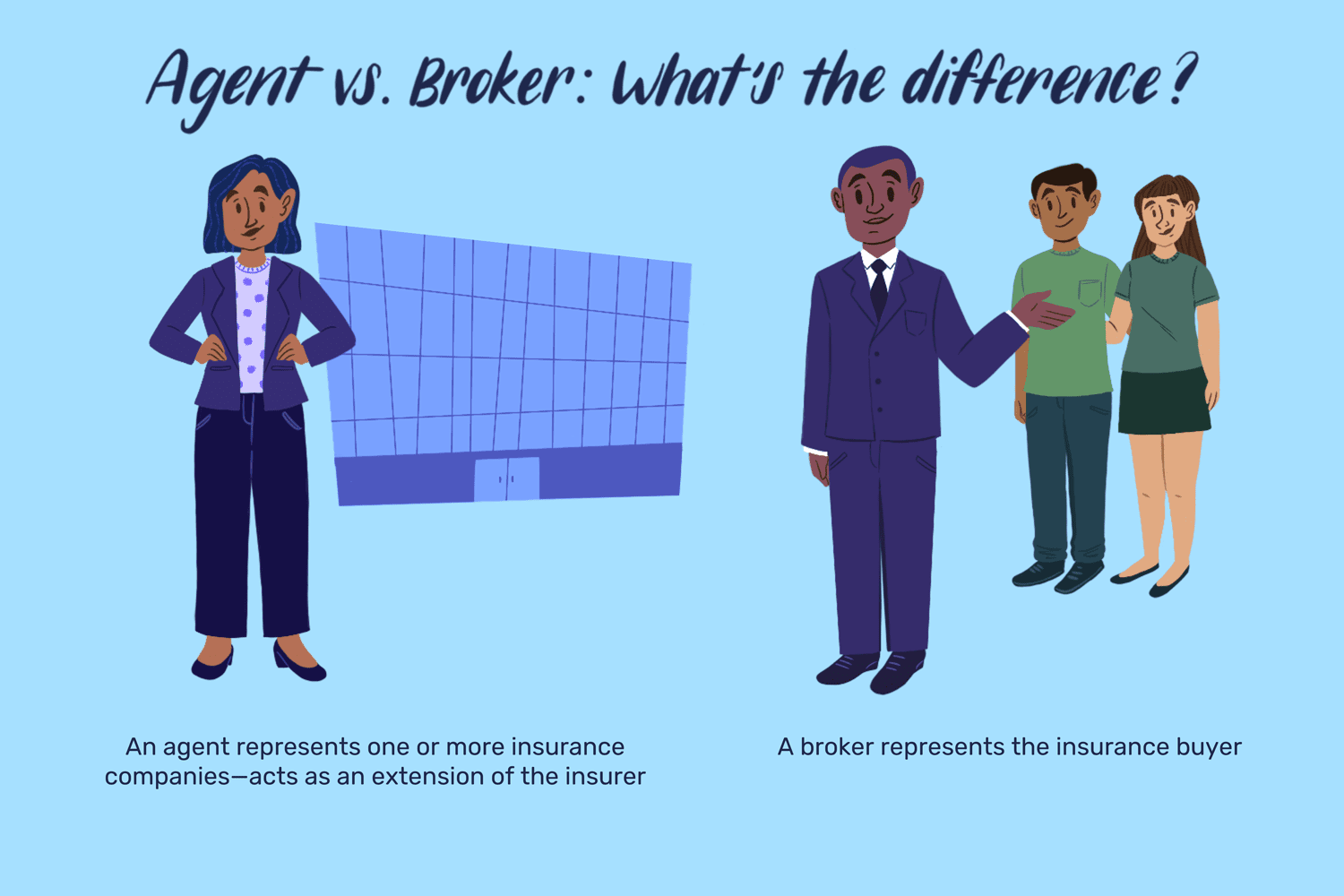
An insurance agent typically represents an insurance company. That can happen in two main ways. A captive agent sells for one carrier or one carrier family. An independent agent can sell policies from multiple insurers. Either way, agents usually earn compensation tied to the policies they place.
Some captive agents are straight commission salespeople. Others receive a salary, a draw against future commissions, or a base pay plus incentive package. In other words, some agents are hunting for every sale like it is the last sandwich at a conference buffet, while others have a more stable paycheck with commissions layered on top.
What an insurance broker does
A broker is generally positioned more on the consumer side of the transaction. Brokers shop coverage, compare carriers, and help clients evaluate options. In many cases, they are paid by the insurer through commissions. In some states and some lines of business, they may also charge a broker fee, as long as the fee is properly disclosed and allowed by law.
That distinction is important. Agents usually help place business with insurers they represent. Brokers usually help clients shop the market. In practice, though, insurance distribution can get messy. Titles overlap, state law varies, and one professional may wear multiple hats depending on the transaction. Insurance does love a plot twist.
The Main Ways Insurance Agents and Brokers Make Money
1. New-business commissions
This is the big one. When an insurance policy is sold, the insurer usually pays a commission to the agent or broker involved in the sale. That commission is commonly calculated as a percentage of premium, although the exact formula can vary widely by line of insurance, insurer, and distribution agreement.
Think of it as a finder’s fee plus sales compensation plus advice payment wrapped into one. If an agent brings a customer to the insurer and the policy goes into force, the insurer shares a portion of that premium with the producer. For many agents and brokers, this is the engine that starts the whole income machine.
Not every policy pays the same way. Some products are more front-loaded, meaning the first-year compensation is relatively generous. Others spread compensation out more evenly over time. That difference changes how insurance professionals build their books of business and where they focus their energy.
2. Renewal commissions
Here is where the job gets more interesting. Insurance is not always a one-and-done sale. Many policies renew every six or twelve months, and some stay active for years. When that happens, the agent or broker may receive a smaller ongoing commission each time the policy renews.
This is why retention matters so much. A producer who writes a lot of business but cannot keep clients happy may look successful for a moment, then watch income leak out like air from a cheap pool float. A producer with a loyal client base, on the other hand, can build a steadier revenue stream over time.
Renewals are one reason seasoned insurance professionals often talk about “book of business” value. A strong book is not just a list of past customers. It is a stream of future income tied to policies that continue renewing.
3. Broker fees and service fees
Commissions are not the only path to revenue. In some transactions, especially where state law allows it, brokers may charge fees directly to clients. These can be broker fees, consulting fees, or transaction-related service fees. Usually, the rules require disclosure, agreement, and reasonable handling.
Why charge a fee? Because some insurance placements are labor-intensive. A broker might spend hours gathering underwriting details, negotiating with multiple carriers, explaining exclusions, helping with policy changes, or assisting with claims-related paperwork. In certain situations, a fee is how the broker gets paid for work that is not fully covered by commission income.
Still, this is an area where consumers should keep both eyes open. A broker fee is not always refundable, and it can be negotiable depending on the rules and the transaction. Translation: read before you sign. Revolutionary concept, I know.
4. Bonuses, overrides, and contingent compensation
Now we enter the spicy section. Some insurance professionals can earn money beyond ordinary commissions. That extra compensation may come in the form of production bonuses, incentive compensation, overrides, or contingent commissions. These arrangements can reward volume, retention, profitability, product mix, or other targets.
For example, a producer may earn more for hitting sales thresholds, keeping policies in force, or selling approved products. In certain markets and products, those incentives are limited or structured carefully by law. In others, they are part of normal distribution economics.
This does not mean every agent or broker is chasing bonuses like a game-show contestant. But it does mean compensation can be layered. The visible commission may be only one piece of the puzzle.
5. Salary, draws, and employee benefits
Not every insurance professional is paid like an entrepreneur living on coffee and quarterly targets. Some work as employees of agencies, brokerages, or insurers. They may receive a salary, health benefits, retirement contributions, office support, and bonuses tied to performance.
A newer producer may also receive a draw, which is essentially an advance against future commissions. This helps smooth income while that person builds a client base. It is useful, but not magic. If commissions do not catch up, the draw can become a financial headache instead of a safety net.
How Compensation Changes by Insurance Type
Auto and home insurance
Property and casualty insurance, such as auto and homeowners coverage, often rewards consistency. New sales matter, but renewals matter just as much. Agents working in personal lines typically focus on volume, customer retention, cross-selling, and service quality. A client who buys auto, home, umbrella, and maybe a toy policy for that beloved fishing boat is usually more valuable than a one-policy shopper who disappears after the first rate increase.
That is why many personal-lines agencies are obsessed with retention. The first sale starts the relationship, but the renewal cycle is where stable income is built.
Health insurance
Health insurance has its own quirks. Agents and brokers helping people with Marketplace plans are licensed by their states and often receive commissions from health insurers. Some may only represent certain carriers. Compensation structures can also be more regulated or uniform in specific health markets, especially where lawmakers want to avoid incentives that distort enrollment behavior.
In practical terms, health producers often earn money by helping consumers compare plans, understand provider networks, navigate subsidies, and complete enrollment. The work can be extremely hands-on, especially during open enrollment, which tends to feel like tax season with more deductibles.
Life insurance
Life insurance is where many consumers hear the loudest warnings about commissions. That is partly because compensation can be more front-loaded than in some other lines. A producer may receive substantial first-year compensation, with smaller renewal income later.
That structure reflects the effort involved in life insurance sales: fact-finding, underwriting prep, medical and financial information gathering, beneficiary planning, and sometimes estate or business-planning discussions. It is a more consultative sale, and the compensation model often reflects that.
But it also creates a clear incentive issue. When one product pays faster or more generously than another, the producer has a financial reason to prefer it. That is exactly why disclosure, suitability rules, and best-interest standards matter so much in life insurance and annuities.
Annuities and specialty products
Annuities, business policies, and specialty lines can involve more complex compensation structures. In these cases, money may come from commissions, overrides, consulting arrangements, or incentive systems. The more complex the product, the more important it becomes for buyers to ask how the producer is getting paid and whether any extra incentives are in play.
Complex products are not bad by definition. Sometimes they are exactly what a client needs. But complexity and compensation together can create enough fog to justify a flashlight.
Do Consumers Pay More When They Use an Agent or Broker?
Usually, commissions are already built into the cost structure of the policy. That means a consumer often pays the same premium whether they buy through an agent, a broker, or directly from the insurer. In that sense, the professional’s commission is not always an “extra” line item slapped onto the bill.
However, that does not mean advice is free in some magical economic vacuum. The insurer is still paying for distribution, and that cost is part of the business model. In transactions where broker fees are permitted, there may also be a direct fee paid by the client.
So the better answer is this: consumers often do not pay a separate commission bill, but compensation still exists and still matters.
Why Understanding Compensation Matters
If you know how insurance agents and brokers make money, you become a sharper buyer. You understand why one producer emphasizes life insurance reviews every year, why another wants to cross-sell home and auto together, and why someone else spends extra time pushing a more complex product.
Again, that is not a reason to distrust every producer. Good agents and brokers add real value. They explain coverage gaps, compare quotes, catch underwriting mistakes, and help clients avoid buying junk coverage that looks cheap until it actually has to work. The point is not cynicism. The point is clarity.
Smart questions to ask before you buy
- Are you paid by commission, fee, or both?
- Do you represent one insurer or several?
- Will you receive any bonus, override, or extra compensation if I choose this policy?
- Are there fees for policy changes, consulting, or renewal service?
- How will you help me after the sale if I need service or claims support?
Those questions are not rude. They are financially literate.
What This Means for Insurance Professionals
From the producer’s side, making money in insurance is rarely just about being a smooth talker in a decent blazer. Long-term success usually comes from building trust, keeping clients, staying compliant, and managing a book of business that continues to generate renewals. A flashy closer may win the month. A disciplined advisor who writes business that stays on the books usually wins the decade.
That is also why service matters so much. Returning calls, explaining rate changes, helping with certificates, handling endorsements, and guiding clients through renewal shopping are not glamorous tasks. But they protect retention, and retention protects income.
Real-World Experiences: What Making Money in Insurance Often Feels Like
To understand this topic in a more human way, picture three different insurance professionals.
The first is a new captive auto and home agent. She has a base salary that keeps the lights on, but the real excitement comes from commissions and monthly incentives. Every new policy matters. Every cross-sale matters. Every customer who bundles home and auto makes the day better. She learns very quickly that insurance income is not just about persuading people to buy. It is about staying organized, following up relentlessly, and making sure customers actually keep the policies long enough to become renewal income. Her mornings are full of quote requests, her afternoons are packed with follow-up calls, and by Friday she can explain uninsured motorist coverage faster than most people can order lunch.
The second is an independent commercial broker. His income is much less predictable. He may spend days gathering payroll estimates, loss runs, and property details for a small business client, then shop that account to several carriers. If the client never binds coverage, he may earn nothing for all that work. If the client does bind and stays for years, the account can become very valuable. This is one reason brokers talk so much about relationships and retention. The first year may feel like a grind. The third or fourth year, when renewals come back and referrals start showing up, feels very different. In commercial insurance, patience can be profitable.
The third is a life insurance producer. She might spend several meetings discussing income replacement, estate goals, debt, children, and long-term needs before even reaching the application stage. Underwriting takes time. Medical records take time. Clients sometimes get cold feet. When a policy finally issues, the first-year compensation can be meaningful, but it came after a lot of unpaid effort. That is why life insurance sales can look lucrative from the outside yet feel emotionally demanding on the inside. A producer may work for weeks on a case that never places. Then, suddenly, one well-matched policy becomes the revenue highlight of the month.
Across all three experiences, a pattern appears. Insurance income rewards persistence more than drama. It rewards the person who keeps accurate records, calls the client back, explains confusing terms without sounding annoyed, and does not vanish after the signature. The public often imagines agents and brokers making easy money because policies renew automatically. In reality, those renewals are usually the result of steady service, compliance work, remarketing, problem-solving, and relationship management.
There is also an emotional side to the job that rarely gets enough attention. Producers deal with scared homeowners after storms, families talking about death and disability, business owners worried about lawsuits, and consumers who want “the best coverage for the cheapest price,” which is a dream sentence and a contradictory one. Making money in insurance is partly about sales, yes. But it is also about translating risk into plain English and staying calm while other people panic.
That is why the most successful insurance professionals are often not the loudest. They are the clearest. They know their compensation model, understand their product mix, manage conflicts carefully, and build trust strong enough to survive renewal season. In this business, reputation is not just nice to have. It is a revenue strategy.
Conclusion
So, how do insurance agents and brokers make money? Mostly through commissions paid by insurers, often through renewal income when policies stay active, and sometimes through fees, salaries, bonuses, or incentive compensation layered on top. The exact formula depends on the line of insurance, the role of the producer, state rules, and the agency or carrier arrangement behind the scenes.
For consumers, the takeaway is simple: ask how your insurance professional gets paid, understand whether they represent one company or several, and pay attention to whether extra fees or incentives are involved. For producers, the truth is just as clear: the biggest money usually comes not from one heroic sale, but from building a book of business that renews, grows, and trusts you enough to stay.
Insurance may not be the world’s flashiest industry, but the compensation model is more layered than many people realize. Behind every cheerful quote comparison is a business structure quietly humming along, powered by premiums, renewals, and the eternal hope that clients will not wait until the night before renewal to answer their email.