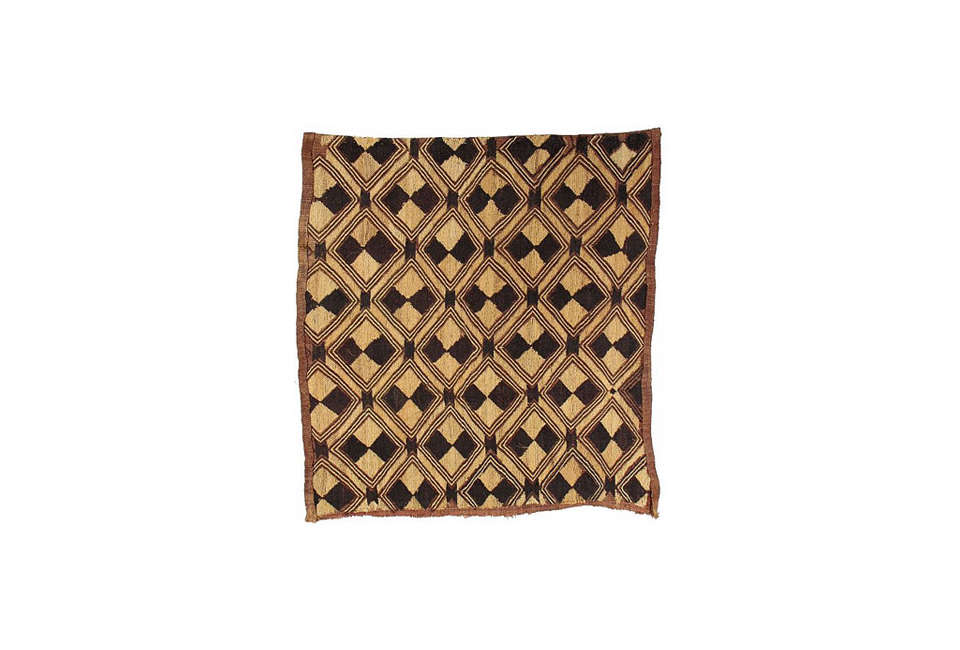
Handwoven Kuba raffia cloth is the kind of textile that can make a quiet room suddenly look like it has a passport, a personality, and possibly better taste than the person who decorated it. Made by Kuba artists from the Democratic Republic of the Congo, this extraordinary cloth is woven from raffia palm fiber and decorated with bold geometric patterns, embroidery, appliqué, dye, and cut-pile textures. It is not just “fabric.” It is portable architecture, visual rhythm, cultural memory, and slow design rolled into one beautiful, slightly unruly rectangle.
In a world full of mass-produced prints pretending to be “artisan-inspired,” authentic Kuba cloth stands apart because it is genuinely handmade. Each panel carries small irregularities that are not flaws but signatures of the hand. The lines may lean. The motifs may shift. The symmetry may decide to take a coffee break. That is exactly the point. Kuba raffia cloth is alive with movement, and its beauty comes from the human decisions stitched into every inch.
Today, handwoven Kuba raffia cloth appears in museums, private collections, interior design projects, and homes where people want texture with meaning. It can be framed as wall art, styled as a table runner, layered over a bench, used as a textile accent, or collected as an example of African design history. But before it became a favorite of designers and collectors, Kuba cloth had deep cultural roles in status, ceremony, exchange, dress, and identity.
What Is Handwoven Kuba Raffia Cloth?
Handwoven Kuba raffia cloth is a textile traditionally made by Kuba peoples in Central Africa, especially in the region of the present-day Democratic Republic of the Congo. It begins with raffia palm fiber, a natural material processed into strips and woven into a foundation cloth. The base textile is often plain woven, then transformed through decorative techniques such as embroidery, appliqué, dyeing, patchwork, and cut-pile work.
One of the most admired forms is sometimes called Kasai velvet or Kuba pile cloth. Despite the glamorous name, this is not velvet in the European silk sense. The plush surface is created by embroidering raffia fibers into the woven base and then carefully clipping the raised threads to form a soft, dimensional surface. Think of it as sculpture that happens to be flexible enough to fold.
Kuba cloth is especially famous for its geometric language. Common motifs include diamonds, lozenges, zigzags, interlocking lines, grids, circles, crosses, and energetic broken patterns. These designs rarely sit still. They seem to slide, pulse, and rearrange themselves as your eyes move across the surface. This lively asymmetry is one reason Kuba textiles have fascinated artists, designers, and collectors for generations.
The Cultural Story Behind Kuba Raffia Cloth
The Kuba kingdom developed a celebrated artistic tradition in Central Africa, and textiles became one of its most recognizable achievements. Raffia cloth was used for clothing, ceremonial display, prestige, funerary practices, and exchange. In many contexts, the quality and decoration of a textile could communicate wealth, social standing, achievement, or participation in important life events.
Unlike ordinary cloth meant only to cover the body, handwoven Kuba raffia cloth often functioned as a cultural statement. Some pieces were worn as skirts or overskirts during ceremonies. Others were displayed, exchanged, or preserved as valuable objects. The cloth could signal status in a way that was immediately understood within the community. Today we might use a luxury watch, tailored suit, or designer handbag to whisper, “I have arrived.” Kuba raffia cloth did something similar, only with far better geometry.
Kuba textiles also reflect collaboration. Historical sources often describe men as responsible for preparing and weaving the raffia foundation cloth, while women frequently completed decorative work such as embroidery and appliqué. The finished textile therefore represents both technical skill and social cooperation. A single panel may carry the labor of multiple hands, stages, and decisions.
How Kuba Raffia Cloth Is Made
1. Harvesting and Preparing Raffia Fiber
The process begins with raffia palm. Young leaves are harvested, stripped, peeled, dried, and softened before weaving. Raffia is durable, fibrous, and slightly stiff compared with cotton or linen, which gives Kuba cloth its distinctive structure. It does not drape like a silky scarf. It has presence. It enters a room and politely refuses to disappear into the background.
2. Weaving the Foundation Cloth
The prepared raffia fibers are woven into panels, often on an inclined loom. These base panels may be relatively small, so larger garments or decorative textiles are created by stitching several sections together. This panel-based construction contributes to the visual rhythm of Kuba cloth. Even before decoration begins, the cloth already has a modular character.
3. Dyeing, Stitching, and Appliqué
After weaving, the cloth may be dyed with earthy tones, commonly including tan, brown, black, cream, and reddish shades. Artists then add surface design using embroidery, appliqué, and stitching. Appliqué involves cutting and attaching additional pieces of raffia cloth to the surface. These shapes are often cut freehand, giving the final composition a spontaneous and energetic quality.
4. Creating Cut-Pile Texture
For pile cloth, raffia thread is stitched into the foundation and clipped to create a raised, velvet-like texture. This technique requires patience and control. Clip too much, and the design loses definition. Clip too little, and the surface lacks plushness. The best pieces feel balanced, tactile, and visually rich, almost like a map you want to read with your fingertips.
Why Kuba Cloth Patterns Feel So Modern
One of the most fascinating things about handwoven Kuba raffia cloth is how contemporary it looks, even when the piece is decades old. The patterns can feel surprisingly close to modern abstract art, graphic design, jazz improvisation, or architectural drafting. This is not because Kuba artists were trying to predict modern interiors. It is because strong design does not expire.
Kuba compositions often avoid perfect repetition. A pattern may begin in one direction, then shift scale, break alignment, or introduce a new motif. This creates visual tension. The eye expects order, but the textile offers movement. The result is sophisticated and playful at the same time. It is design with rhythm, not design on autopilot.
That irregular rhythm is also why Kuba cloth works beautifully in modern homes. Minimalist rooms benefit from its warmth. Eclectic spaces benefit from its structure. Neutral interiors benefit from its texture. Maximalist spaces, already living their best dramatic life, welcome Kuba cloth like an old friend wearing a fantastic jacket.
Common Uses for Handwoven Kuba Raffia Cloth
Wall Art
Framing Kuba raffia cloth is one of the best ways to protect and display it. A single panel can become a museum-like focal point above a sofa, console, bed, or fireplace. Because the patterns are bold but usually grounded in natural colors, Kuba cloth can command attention without shouting.
Table Runners and Decorative Layers
Kuba cloth can be styled as a table runner on a dining table, sideboard, or entry console. Its texture adds depth to wood, stone, and ceramic surfaces. Since raffia can be sensitive to moisture and heavy wear, it is best used decoratively rather than as a surface for spaghetti night, red wine experiments, or any meal involving toddlers with sauce access.
Pillows and Upholstery Accents
Many designers use Kuba cloth for accent pillows, cushion covers, or small upholstery details. Because authentic pieces are handmade and often limited in size, they are especially effective in small doses. A pair of Kuba cloth pillows can bring global texture to a plain linen sofa or add pattern to a leather chair without overwhelming the room.
Bed and Bench Styling
A Kuba raffia textile can be folded across the end of a bed or draped over a bench. This creates a collected look, as if your room has stories and not just a shopping receipt. The trick is to let the cloth breathe. Avoid burying it under too many competing patterns. Kuba cloth likes company, but it does not enjoy being visually interrupted every three inches.
How to Identify Quality Kuba Raffia Cloth
Authentic handwoven Kuba raffia cloth usually shows evidence of handwork. Look for natural fiber texture, dimensional stitching, slight irregularities, and variation in pattern. The design should not look digitally flat. If the “cloth” is perfectly printed on smooth cotton or polyester, it may be Kuba-inspired, but it is not handwoven Kuba raffia cloth.
Quality pieces often have strong composition, tight stitching, balanced contrast, and visible texture. Older or vintage textiles may show fading, repair, fraying, or age-related softness. These signs are not automatically bad. In fact, they can add character and collectible appeal. However, major structural damage, strong odors, brittle fibers, or unstable dye may require professional care.
When shopping, read descriptions carefully. Terms like “Kuba-style,” “Kuba print,” or “inspired by Kuba cloth” may indicate a reproduction or modern interpretation. Those can still be attractive decorative products, but they are different from authentic handwoven raffia textiles made by Kuba artisans or communities connected to the tradition.
Care Tips for Kuba Raffia Cloth
Kuba raffia cloth should be handled gently. Raffia is a natural fiber, and older pieces can be fragile. Avoid machine washing, soaking, harsh detergents, or aggressive scrubbing. For routine care, use light dusting or a low-suction vacuum with a protective screen. Keep the textile away from direct sunlight to reduce fading, and avoid damp areas where moisture could weaken fibers or encourage mildew.
If the cloth is valuable, old, or heavily soiled, consult a textile conservator rather than attempting a heroic cleaning mission in your sink. The sink may be confident. The sink is wrong. Museum-quality or collectible textiles deserve careful treatment, especially when they carry cultural and historical importance.
Decorating With Kuba Raffia Cloth Without Overdoing It
The easiest way to decorate with handwoven Kuba raffia cloth is to let it be the star. Pair it with natural materials such as wood, clay, leather, rattan, linen, wool, or stone. Its earthy tones work beautifully with warm whites, charcoal, terracotta, olive, camel, espresso, and muted metallics.
For a clean modern room, frame one Kuba panel in a simple black, walnut, or natural wood frame. For a layered bohemian space, combine it with woven baskets, handmade ceramics, and textured throws. For a refined traditional room, use a Kuba pillow or framed textile as an unexpected graphic accent. The goal is not to turn your home into a theme restaurant called “Global Vibes & Throw Pillows.” The goal is to create contrast, respect, and visual interest.
Why Designers and Collectors Love Kuba Cloth
Designers love Kuba cloth because it solves several decorating problems at once. It adds pattern without relying on bright color. It adds texture without feeling bulky. It adds history without looking old-fashioned. And because every handwoven piece is unique, it brings individuality into rooms that might otherwise feel too showroom-perfect.
Collectors value Kuba raffia cloth for similar reasons, but with more attention to cultural context, technique, age, provenance, and condition. A collectible piece is not merely a decorative object; it is part of a larger artistic tradition. Museums in the United States and around the world preserve Kuba textiles because they show the sophistication of Central African design, the importance of raffia as a material, and the remarkable creativity of Kuba artists.
Ethical Buying: Respect the Craft, Not Just the Look
As Kuba-inspired patterns become popular in home decor, buyers should think carefully about authenticity and respect. There is a difference between purchasing a genuine handmade textile, buying a clearly labeled reproduction, and purchasing a mass-produced item that borrows the look without acknowledging the source tradition.
Ethical buying begins with curiosity. Who made the textile? Is it vintage, contemporary, handmade, printed, or machine-produced? Does the seller provide accurate information? Are the materials described honestly? When possible, buy from reputable dealers, fair-trade sources, African art specialists, artisan cooperatives, or shops that clearly explain their sourcing.
Respect also means avoiding the idea that Kuba cloth is simply “tribal pattern.” That phrase flattens a rich cultural tradition into a vague decorating label. Handwoven Kuba raffia cloth deserves better. It has a place, a people, a process, and a history.
Experiences With Handwoven Kuba Raffia Cloth
The first experience many people have with handwoven Kuba raffia cloth is visual. You see it across a room, and something about it interrupts the usual flow of furniture, paint colors, and predictable wall art. It does not sparkle. It does not need neon. It simply sits there with its quiet geometry, looking ancient and modern at the same time. That contrast is magnetic.
Touching Kuba cloth is another experience entirely. The surface is dry, fibrous, and tactile, with raised stitching that makes the pattern feel physical rather than printed. A printed fabric shows you a design. Kuba raffia cloth lets you feel the design. The difference is like reading a menu versus smelling dinner. Suddenly, the craft becomes real.
In a home, Kuba cloth often changes the mood of a space faster than expected. A plain entryway becomes more collected with a framed panel. A neutral sofa gains confidence with a Kuba pillow. A simple wooden bench feels intentional when layered with a folded raffia textile. The cloth adds the visual equivalent of a drumbeat: steady, patterned, earthy, and alive.
One practical experience worth mentioning is that Kuba cloth does not behave like soft cotton. It can be stiff, slightly uneven, and sometimes delicate around the edges. That means it works best when treated as artful decor rather than everyday utility fabric. If you use it on a table, think “beautiful layer,” not “placemat for barbecue sauce.” If you use it on a chair, think “accent,” not “main seat for the family dog who believes all textiles are personal property.”
Collectors often describe the pleasure of noticing new details over time. A motif that looked like a simple diamond may reveal tiny stitch variations. A border may shift direction. A patch may show a repair or an intentional design change. These discoveries make the cloth feel conversational. It gives you something new every time you look.
There is also an emotional experience in owning handmade work. Mass-produced decor can be attractive, but it often feels anonymous. Handwoven Kuba raffia cloth carries evidence of time and labor. Someone harvested fiber, prepared it, wove it, stitched it, clipped it, dyed it, adjusted it, and made decisions that no machine would make in quite the same way. That human presence gives the textile warmth.
For people who enjoy interiors, Kuba cloth is especially rewarding because it is flexible. It can fit into modern, rustic, eclectic, organic, minimalist, or globally inspired rooms. Yet it never becomes generic. Even when used sparingly, it brings depth. A room with Kuba cloth tends to feel less decorated and more collected, as though each object arrived with a reason.
The best experience, however, comes from learning the story behind the cloth. Once you understand its connection to Kuba artistry, raffia palm fiber, ceremonial dress, social status, and collaborative making, the textile becomes more than a pattern. It becomes a cultural object that asks for attention and respect. That is the real beauty of handwoven Kuba raffia cloth: it decorates a wall, yes, but it also expands the room intellectually. Not bad for something that started as palm fiber.
Conclusion
Handwoven Kuba raffia cloth is a powerful example of how traditional craft can remain visually fresh across centuries. Made from raffia palm fiber and enriched through weaving, embroidery, appliqué, dye, and cut-pile techniques, it represents both artistic mastery and cultural meaning. Whether displayed as wall art, styled as a home accent, collected as African textile art, or studied as part of design history, Kuba cloth offers more than decoration. It offers rhythm, texture, heritage, and human touch.
For anyone searching for a textile that feels authentic, sculptural, warm, and quietly dramatic, Kuba raffia cloth is hard to beat. It does not need to match everything in the room. In fact, its charm comes from being confidently itself. And in a world of copy-paste decor, that confidence is refreshing.