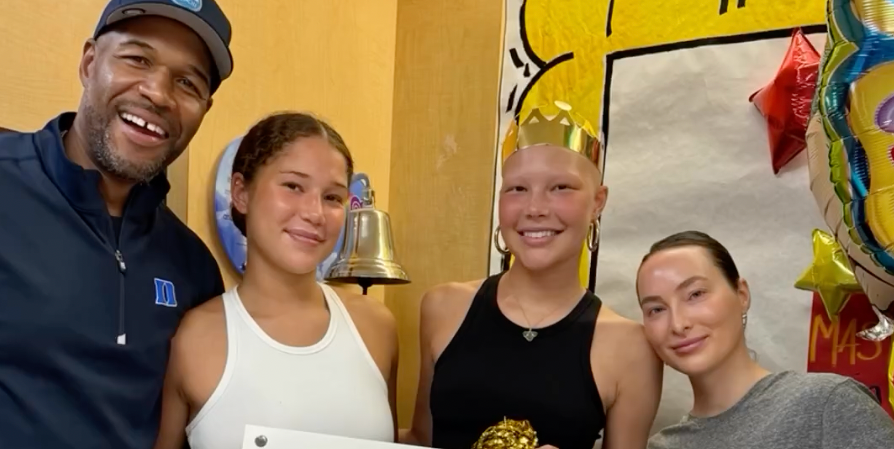
Michael Strahan has worn a lot of titles in his life: Super Bowl champion, Pro Football Hall of Famer, television personality, “Good Morning America” co-anchor, and professional gap-toothed grin ambassador. But in the emotional story of his daughter Isabella Strahan finishing chemotherapy, the title that matters most is simple: proud dad.
Isabella Strahan’s cancer journey became public in January 2024, when she and her father appeared on “Good Morning America” to share that she had been diagnosed with medulloblastoma, a malignant brain tumor. At just 19, Isabella was a college student beginning a new chapter at the University of Southern California when headaches, nausea, balance issues, and alarming symptoms eventually led doctors to discover a tumor in the back of her brain.
Months later, after brain surgery, radiation, chemotherapy, hospital setbacks, and the kind of bravery nobody should have to prove at 19, Isabella marked a major milestone: she finished chemotherapy. Michael Strahan celebrated the moment publicly, praising his daughter’s strength and calling her a “superwoman.” For fans who had followed Isabella’s updates, the moment felt bigger than celebrity news. It was a reminder that behind every famous last name is a family holding its breath, cheering for one more good scan, one more good day, one more step forward.
Who Is Isabella Strahan?
Isabella Strahan is one of Michael Strahan’s twin daughters, along with her sister Sophia. Before her diagnosis became public, Isabella was building her own life as a student and model. She had enrolled at USC and was stepping into the excitement of college life: new friends, new routines, new independence, and probably the occasional laundry mystery that every freshman eventually faces.
Then came the symptoms. Isabella later shared that she began experiencing headaches, nausea, and trouble walking straight in October 2023. Her condition worsened, and after she vomited blood, her family pushed for medical attention. An MRI revealed a fast-growing tumor, and doctors moved quickly.
What makes Isabella’s story especially moving is how openly she chose to document it. Through YouTube vlogs and public updates, she gave viewers an honest look at treatment: the hospital stays, the fear, the fatigue, the hair loss, the brain fog, the pain, the humor, and the strange little victories that become enormous when life is measured by appointments and blood counts.
What Happened During Isabella Strahan’s Cancer Treatment?
Isabella was diagnosed with medulloblastoma, a cancerous brain tumor that develops in the cerebellum, the part of the brain that helps control coordination and movement. Treatment for medulloblastoma commonly includes surgery, radiation therapy, chemotherapy, or a combination of these approaches, depending on the patient’s age, tumor type, tumor spread, and overall health.
In Isabella’s case, treatment began with emergency brain surgery in late October 2023 to remove the tumor. She then went through rehabilitation and six weeks of radiation treatment. In February 2024, she began chemotherapy at Duke Children’s Hospital & Health Center in Durham, North Carolina.
Her treatment path was not smooth. Isabella experienced difficult side effects, including fatigue, hair loss, and brain fog. She was also hospitalized several times due to complications, including fevers and infections. Public updates noted that she underwent additional surgeries after complications related to her surgical site. These details made her final chemo celebration feel even more powerful. It was not a neat Hollywood montage. It was hard, messy, exhausting, and real.
The Emotional Moment Isabella Finished Chemo
When Isabella finished her final round of chemotherapy in June 2024, she celebrated in the way every cancer patient deserves to celebrate: loudly, joyfully, and with absolutely no obligation to be calm about it. She rang the hospital bell, walked through a confetti parade, and shared the milestone with family, nurses, and supporters who had walked through the long months with her.
She also posted a celebratory TikTok video wearing a crown, dancing with her twin sister Sophia, and signaling to the world that she had made it through one of the hardest chapters of her life. The moment was sweet, funny, emotional, and deeply human. It was the kind of video that makes people smile before they realize they are also tearing up.
Michael Strahan’s response was full of fatherly pride. He praised Isabella for her strength and resilience, calling her “superwoman” and expressing how proud he was of her. His message resonated because it did not feel polished for television. It felt like a dad who had watched his child endure the unimaginable and finally had a chance to exhale.
Why Michael Strahan’s Praise Touched So Many Fans
Michael Strahan is known for confidence, charm, and a big on-air personality. But his public support for Isabella showed a softer side that many parents instantly understood. When your child is sick, career achievements become background noise. Awards, ratings, and trophies shrink next to hospital bracelets and scan results.
That is why his praise landed so strongly. He was not simply applauding a milestone. He was recognizing the grit it took to get there. Finishing chemotherapy is not like finishing a marathon where you trained by choice and crossed the line with a medal. It is more like being dropped into a storm, handed a map written in medical terms, and told to keep walking even when your body wants to sit down forever.
For fans of “Good Morning America,” the story also carried an added emotional layer. Michael Strahan has spent years helping deliver news, interviews, and uplifting stories into American homes. This time, the news was personal. Viewers were not just watching a celebrity family; they were watching a father and daughter navigate fear, hope, and recovery in public.
Understanding Medulloblastoma in Simple Terms
Medulloblastoma is a malignant brain tumor that most often starts in the cerebellum. Although it is more common in children, it can also affect teenagers and young adults. Because the cerebellum plays a major role in balance and coordination, symptoms can include headaches, nausea, vomiting, dizziness, walking problems, vision changes, and coordination issues.
One reason medulloblastoma can be serious is that it may grow quickly and can spread through cerebrospinal fluid to other parts of the brain and spinal cord. That is why diagnosis, treatment planning, and follow-up care are so important. Treatment often involves a specialized team that may include neurosurgeons, oncologists, radiation oncologists, rehabilitation specialists, nurses, therapists, and mental health professionals.
In everyday language, medulloblastoma is not a “wait and see” kind of diagnosis. It requires fast, coordinated care. The good news is that many patients can be treated successfully, especially when the tumor is detected and managed with the right medical plan. Still, recovery can take time, and life after treatment often includes follow-up scans, physical healing, emotional adjustment, and patience.
Isabella’s Openness Helped Others Feel Less Alone
One of the most meaningful parts of Isabella Strahan’s story is that she chose to share the less glamorous side of cancer treatment. She did not present recovery as a perfect highlight reel. She talked about pain. She showed hospital life. She admitted when things were difficult. She documented moments when she felt scared, tired, frustrated, or simply ready to be done.
That kind of honesty matters. Many young patients feel isolated because serious illness can separate them from friends, school, dating, hobbies, and the ordinary chaos of growing up. Seeing someone like Isabella speak openly can make another patient think, “Okay, I am not the only one who feels this way.” That thought can be surprisingly powerful.
Her story also helped families understand that support is not always about saying the perfect thing. Sometimes support looks like sitting quietly in a hospital room. Sometimes it looks like bringing food, making someone laugh, helping with appointments, or dancing in a TikTok because chemo is finally over and the moment deserves a little sparkle.
Life After Chemotherapy: Recovery Is a Chapter, Not a Switch
When someone finishes chemotherapy, it is tempting to imagine that life immediately returns to normal. In reality, recovery often happens in stages. The last treatment is a huge milestone, but the body still needs time to rebuild strength. The mind also needs time to process everything that happened.
Isabella herself acknowledged that finishing treatment did not mean everything was instantly back to the way it was before. She still had recovery ahead of her. That honesty is important because many survivors feel pressure to act “all better” once treatment ends. Friends may expect celebration. Family may feel relieved. The patient, however, may still be dealing with fatigue, anxiety, physical changes, and the emotional weight of what they survived.
For young adults, returning to school, work, or social life after cancer can be especially complex. There is excitement, yes, but also adjustment. The world kept moving while treatment took center stage. Getting back into normal life can feel wonderful and strange at the same time, like rejoining a movie halfway through and trying to figure out the plot.
What Families Can Learn From Michael and Isabella Strahan’s Story
The Strahan family’s experience offers several lessons for families facing serious illness. First, symptoms should be taken seriously, especially when they are persistent, unusual, or worsening. Headaches, nausea, balance problems, and vomiting can have many causes, but when symptoms escalate, medical evaluation matters.
Second, advocacy can change the course of care. Isabella’s family acted when her symptoms became alarming. In medical situations, speaking up, asking questions, seeking clarification, and pushing for answers are not rude. They are responsible. You do not need a medical degree to say, “Something is not right.”
Third, emotional support is part of treatment. Doctors fight disease with medicine, surgery, and science. Families fight the loneliness around it. Michael Strahan’s public praise for Isabella was more than a sweet social media moment; it was an example of how love can help carry someone through fear.
The Power of Celebrating Milestones
Ringing the bell after chemotherapy has become a meaningful tradition for many cancer patients. Not every patient connects with it in the same way, and not every cancer journey ends neatly at the sound of a bell. But for Isabella, the celebration marked a hard-earned finish line after months of treatment.
Milestones matter because they give shape to an experience that can feel endless. The first surgery recovery. The last radiation session. The final chemo infusion. The first clear scan. The first day back at school. Each milestone says, “You are moving forward.”
For Isabella, the bell, the confetti, the crown, and the dance were not small things. They were symbols of survival, relief, and personality. Cancer may have interrupted her life, but it did not erase her humor, style, or spirit.
Why This Story Continues to Inspire
Isabella Strahan’s journey continues to inspire because it combines vulnerability and strength without pretending either one is easy. She showed that bravery is not always a dramatic speech or a fearless smile. Sometimes bravery is showing up for the next appointment. Sometimes it is getting out of bed after a brutal treatment. Sometimes it is admitting that you are scared and continuing anyway.
Michael Strahan’s praise also reminds people that caregivers need recognition, too. Parents watching their children suffer often feel helpless. They cannot trade places. They cannot absorb the pain. What they can do is show up, encourage, advocate, and celebrate every inch of progress. His message to Isabella reflected the deep pride of a parent who has seen the private battles behind the public update.
Celebrity stories often move quickly through the entertainment cycle, but this one stayed with people because it touched something universal: the fear of illness, the love of family, and the relief of hearing good news after months of uncertainty.
Experiences Related to Isabella Strahan Finishing Chemo
Stories like Isabella Strahan’s often connect with readers because nearly every family has faced a season when life suddenly split into “before” and “after.” Before the diagnosis, there are schedules, deadlines, group chats, grocery lists, and normal complaints about traffic. After the diagnosis, there are appointments, scans, test results, medication schedules, and a new vocabulary nobody wanted to learn.
For families supporting someone through chemotherapy, one of the most important experiences is learning how to be useful without becoming overwhelming. Patients may not always want big speeches or constant reminders to “stay positive.” Sometimes positivity feels like another job. A more helpful approach can be simple: ask what they need today, not what you assume they need forever. One day it may be a ride to the hospital. Another day it may be quiet. Another day it may be tacos, a blanket, and permission to complain without anyone trying to fix the entire universe.
Caregivers also learn that small routines can become emotional anchors. A favorite hoodie for treatment days, a playlist for the car ride, a specific snack after appointments, or a family joke that survives even the hardest weeks can create comfort. These routines do not make cancer easy, but they give the day a little structure when everything feels uncertain.
Young patients face a unique emotional challenge. They may be thinking about school, friends, appearance, independence, dating, and future plans while also dealing with serious medical care. Hair loss, fatigue, and physical changes can affect confidence. Missing classes or social events can create loneliness. Isabella’s openness about her treatment helped highlight that cancer care is not only about destroying tumor cells; it is also about protecting identity, dignity, and hope.
Families can also learn from the way Isabella celebrated her final chemo treatment. Celebration does not have to wait until life is perfect. In fact, it may matter most when life is still complicated. A bell-ringing ceremony, a cake, a dance video, a family dinner, or even a quiet moment in the car can mark survival. These moments tell the patient, “This mattered. What you endured mattered. We saw you.”
Another common experience after chemotherapy is the strange emotional space between relief and fear. Everyone wants to celebrate, but many survivors still worry about future scans or recurrence. This is normal. Support should continue after treatment ends because recovery is not a light switch. The body needs time. The heart needs time. The family needs time. Encouraging a survivor to return to life at their own pace can be one of the kindest gifts.
Isabella Strahan’s story is not inspiring because it is famous. It is inspiring because it is human. A young woman faced a terrifying diagnosis, endured painful treatment, shared her truth, and reached a milestone that deserved every bit of confetti. Her father’s praise was not just celebrity news; it was a reminder to celebrate courage when we see it, especially when it comes from someone who had no choice but to be strong.
Conclusion
Michael Strahan praising Isabella as she finished chemotherapy was more than a proud-parent post. It was a public celebration of resilience after months of fear, treatment, setbacks, and recovery. Isabella’s journey with medulloblastoma showed the difficulty of brain cancer treatment, but it also showed the power of family, medical care, humor, honesty, and hope.
Her final chemo milestone gave fans a reason to cheer, not because the journey was easy, but because it was hard and she kept going. From surgery and radiation to chemotherapy and recovery, Isabella faced a life-changing diagnosis with remarkable openness. Michael Strahan’s words captured what many people watching felt: admiration for a young woman who fought through an unimaginably difficult chapter and came out ready to keep living.
Note: This article is for informational and editorial purposes only. It is not medical advice. Anyone experiencing persistent headaches, nausea, balance problems, vision changes, vomiting, or other concerning symptoms should contact a qualified healthcare professional.