Some gadgets ask for your attention. The 2019 Supercon badge practically steals it, runs away with it, and then invites you to spend your whole weekend rewriting the laws of portable hardware. At first glance, it looks like a familiar retro handheld: a chunky shell, a screen, a cheerful button layout, and the kind of silhouette that triggers instant Game Boy nostalgia. But that first glance is a trap. This was not a toy pretending to be development hardware. It was development hardware disguised as a toy, which is a much more dangerous thing.
What made the 2019 Supercon badge so special was not just that it used an FPGA. It was the way the entire design leaned into openness, experimentation, and the delightful possibility that every attendee might do something slightly unhinged and technically impressive with it. In an era when many event badges are fun but constrained, this badge showed up like a tiny hardware lab hanging from a lanyard. It gave users a real platform, a real invitation to explore, and just enough convenience to make sure no one could honestly claim they had “nothing to tinker with.”
Why This Badge Was More Than a Conference Souvenir
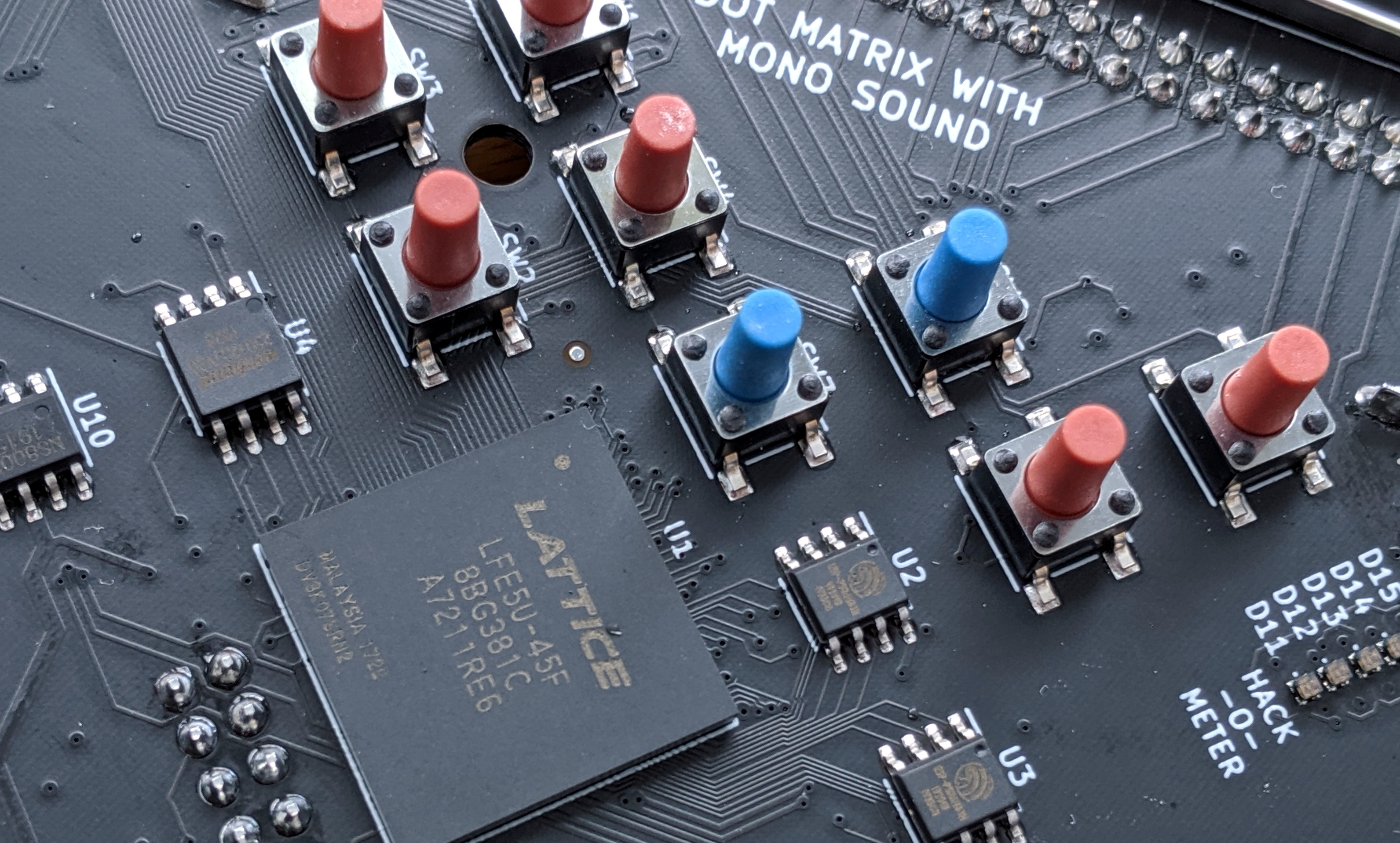
The easiest way to understand the badge is to stop thinking about it as swag and start thinking about it as a handheld FPGA computer with personality. At its core sat a Lattice ECP5 FPGA, a serious piece of programmable logic for something wearing a conference badge name tag. The hardware adopted a Game Boy-inspired form factor, complete with a color LCD and eight user buttons, but that retro look was only the sugar coating on a deeply hackable machine.
That combination matters. A lot. The Game Boy style made the device instantly legible. People knew how to hold it, how to press it, how to imagine games on it. Meanwhile, the FPGA heart meant the badge was not locked into a single fixed hardware identity. It could become a game platform, a graphics playground, a weird musical instrument, an experiment in soft-core computing, or a tiny public demonstration that open hardware people are incapable of leaving well enough alone. The result was a badge that felt approachable on the outside and gloriously unbounded on the inside.
The “Gigantic” Part Is Relative, But the Point Still Lands
The title calls it gigantic, and in strict FPGA industry terms, some engineers will immediately raise an eyebrow and prepare a speech. Fine. Yes, modern high-end FPGA devices can dwarf it. But in the specific context of a conference badge, the word fits like a glove. This was a large, capable FPGA for something meant to hang around your neck, survive travel, and tempt hundreds of people into rewriting its behavior before lunch.
That is why the badge felt so audacious. Conference badges are usually constrained by cost, power, manufacturing complexity, and the reality that many recipients will never crack open a hardware toolchain. The 2019 Supercon badge ignored that timid little voice and said, “What if we made something absurdly capable anyway?” That is the spirit people responded to. It was not gigantic because it broke datacenter records. It was gigantic because it blew past normal expectations for an event badge and landed squarely in the territory of “You brought what to a conference?”
A Handheld Built for Mischief, Learning, and Late-Night Demos
The hardware details explain why the badge became such a magnet. Beyond the FPGA, it included a color screen, a cartridge interface, a MicroUSB connection, and even HDMI output. That last feature alone was enough to make hardware people start grinning like cartoon inventors. A badge that could potentially throw its hacks onto a big display is not just a development platform. It is a tiny stage.
The cartridge slot pushed the concept even further. This was not decorative nostalgia. It was an expansion path, a way to plug in prototyping cartridges with their own flash memory and load apps directly from them. Suddenly the badge looked less like an isolated gadget and more like a modular ecosystem waiting to happen. The official hardware also exposed expansion options through headers and footprints that encouraged ambitious users to attach their own oddball inventions. In other words, the badge did not merely tolerate add-ons. It practically flirted with them.
That openness changed the mood around the device. Many dev boards are technically flexible, but they still feel like work. This badge felt playful. You could imagine building something serious on it, but you could just as easily imagine building something wonderfully unnecessary, like a custom synthesizer, a cartridge-based mini game, a visual demo, or a peripheral that exists mainly to make the person standing next to you ask, “Why?” and then, a few seconds later, “Okay, but that is actually amazing.”
It Was Friendly Enough for Software People, Too
One of the smartest choices in the design was that you did not need to be an FPGA wizard to get started. Apps could be written in C and copied to the badge through a USB mass-storage workflow. That meant the platform offered two on-ramps at once. If you wanted to stay in software, you could treat the badge like a quirky little handheld computer and start building programs. If you wanted to dive into programmable logic, the doors were wide open. This dual personality made the badge much more than a toy for hardcore gate-count romantics.
That matters for community growth. A badge like this can easily become an intimidating trophy if it only rewards experts. The 2019 Supercon badge avoided that trap by letting people approach it at different depths. Beginners could get something working. Intermediate users could modify, extend, and learn. Hardcore FPGA fans could happily disappear into the toolchain and emerge later with custom logic, suspiciously little sleep, and the thousand-yard stare of someone who has been debugging timing issues for fun.
The Real Magic Was the Open Toolchain Story
Plenty of hardware looks exciting on paper and then becomes less exciting the moment you discover that touching the good stuff requires a proprietary maze, a vendor lock-in ritual, and maybe three operating systems you do not currently own. The 2019 Supercon badge was exciting partly because it arrived during a moment when open-source FPGA tooling around the ECP5 had become genuinely meaningful.
Projects like Yosys, nextpnr, and Project Trellis helped make a fully open flow for ECP5 work feel real rather than theoretical. That changed the emotional temperature of the badge. It was not just “Here is a programmable device.” It was “Here is a programmable device you can explore using tools and workflows the community can actually inspect, improve, and share.” For hackers, educators, and open hardware fans, that is not a footnote. That is the whole love song.
This is also why the badge felt so symbolic. It represented a meeting point between several movements that had been gathering energy for years: open-source EDA tooling, the rise of RISC-V, community-driven hardware culture, and badge hacking as a kind of public performance art for engineers. The badge did not invent those trends, but it gave them a charming physical body with buttons and a screen. Suddenly the future of open digital design was not an abstract forum thread. It was something you could hold in one hand.
RISC-V Made the Story Even Better
Running a RISC-V core inside the badge was more than a nice buzzword attachment. RISC-V carries a philosophical weight because it is an open standard instruction set architecture, which pairs beautifully with the badge’s broader openness. Put an open ISA on an FPGA platform supported by open tooling, and now you are not just giving people hardware. You are giving them a layered stack of permission to experiment.
That stack is powerful because it collapses the distance between software and hardware. Need a peripheral? Add one. Want a CPU-based application? Write it. Want to reshape the machine beneath the application? That door is right there. In a traditional embedded environment, the hardware perimeter is usually fixed. On an FPGA platform with a soft-core processor, the hardware itself becomes negotiable. That is catnip for curious people.
The badge even hinted at that superpower through its graphics capabilities and its overall SoC design. This was not just a processor stapled to a screen. It was a playground where hardware-accelerated ideas could feel immediate, visual, and fun. You could think in terms of sprites, tile layers, outputs, custom control logic, and expansion hardware without pretending your ambitions needed to remain “reasonable.” Reasonable was asked to wait outside.
Why the Badge Became a Hardware Siren Song
The phrase “hardware siren song” fits because the badge appealed to multiple kinds of temptation at once. First, there was the nostalgia temptation: it looked like a handheld game device, so of course people immediately wanted to make games. Second, there was the hacker temptation: it exposed expansion options and a cartridge slot, which basically translates to “Go ahead, build something inappropriate.” Third, there was the open systems temptation: FPGA, RISC-V, and open tools together made the badge feel like a statement about what modern experimental hardware could be.
Most irresistible of all, the badge rewarded curiosity with escalating possibilities. You might start by wanting to load an app. Then you notice the cartridge concept. Then you realize the hardware beneath the app layer is not fixed in stone. Then you learn there were workshops built around teaching people to poke at the low-level FPGA side. Then you see follow-up work showing the badge pushed even further, including Linux-related experiments on modified hardware. At that point, the badge is no longer an object. It is a very polite thief stealing your calendar.
That is why people remember it so vividly. It offered a complete arc: visual appeal, technical depth, accessibility, expandability, and a larger cultural meaning. It stood at the intersection of conference fun and serious engineering possibility. Some hardware impresses you. This badge recruited you.
What the 2019 Supercon Badge Says About Hardware Culture
The badge also says something important about the kind of culture that created it. Hardware communities thrive when tools are visible, when experimentation is social, and when learning can happen in public without shame. A conference badge is a perfect vehicle for that because it turns hardware into a shared language. People are all holding the same base platform, but every modification becomes a personal accent.
With the 2019 Supercon badge, that social aspect was amplified. There were dedicated spaces for badge hacking, workshops to introduce lower-level development, and enough visible capability in the device to spark conversation constantly. It created the ideal engineering loop: see something cool, ask how it works, try it yourself, break it, fix it, show it off, and inspire the next person to make the situation slightly weirder. This is one of the healthiest patterns in maker culture, and the badge supported it beautifully.
There is also a lesson here for anyone designing educational hardware. People learn faster when the platform is inviting, when the feedback is immediate, and when the device itself feels worth caring about. A sterile board on a desk can teach you a lot. A Game Boy-shaped FPGA badge that can run software, support cartridges, and tempt you into hardware acceleration can teach you the same lessons with a lot more laughter. Sometimes the best teaching tool is the one that feels a little ridiculous in the most inspiring way possible.
The Experience: Why This Badge Felt Like Trouble in the Best Way
To understand the emotional pull of the 2019 Supercon badge, you almost have to imagine the moment of contact. You pick it up expecting novelty, maybe a cute handheld gimmick, and instead you realize it has the posture of a real machine. The buttons are not there for decoration. The screen is not there to flash a logo and call it a day. The cartridge slot is not a joke. Every design choice quietly says the same thing: this device expects to be used, changed, and possibly pushed far beyond what was sensible at the planning stage.
That creates a very particular kind of excitement. It is the feeling that the hardware is larger on the inside than it looks on the outside. From across the room, it reads as charming retro tech. In your hands, it starts unfolding into a list of possibilities. Maybe you build a game. Maybe you make a cartridge that adds some delightfully obscure peripheral. Maybe you use the screen for a demo that should not be running on a conference badge but somehow is. Maybe you decide the correct use of your weekend is to disappear into toolchains, bitstreams, and debugging sessions while everyone else is eating snacks like responsible adults.
There is also something uniquely satisfying about a device that rewards both shallow curiosity and deep obsession. You can appreciate the badge in five minutes and still be discovering new layers after hours of tinkering. That is rare. A lot of hardware either reveals everything immediately or hides everything behind a wall of complexity. The Supercon badge sat in that sweet middle ground where it was inviting enough to draw you in and rich enough to keep you there. It did not punish curiosity. It escalated it.
And then there is the social side, which may be the most underrated part of the whole experience. Hardware like this changes the tone of a room. Suddenly people are not just wearing badges; they are carrying conversation starters, tiny labs, and visible proof that engineering can be playful. One person is showing off a software trick. Another is talking about the FPGA flow. Someone else is already planning an add-on board because of course they are. The badge becomes a magnet for collaboration, comparison, and a little friendly one-upmanship. In a good hardware crowd, that energy is priceless.
The best gadgets make you want to use them. The best development platforms make you want to learn from them. The 2019 Supercon badge did both at once, and that is why it lingers in memory. It was not just clever. It was generous. It gave people a platform, a challenge, a joke, a teaching tool, and a small invitation to go overboard. Naturally, many accepted. That is the real siren song here: not just powerful hardware, but powerful hardware that makes overcommitment feel like a perfectly reasonable life choice.