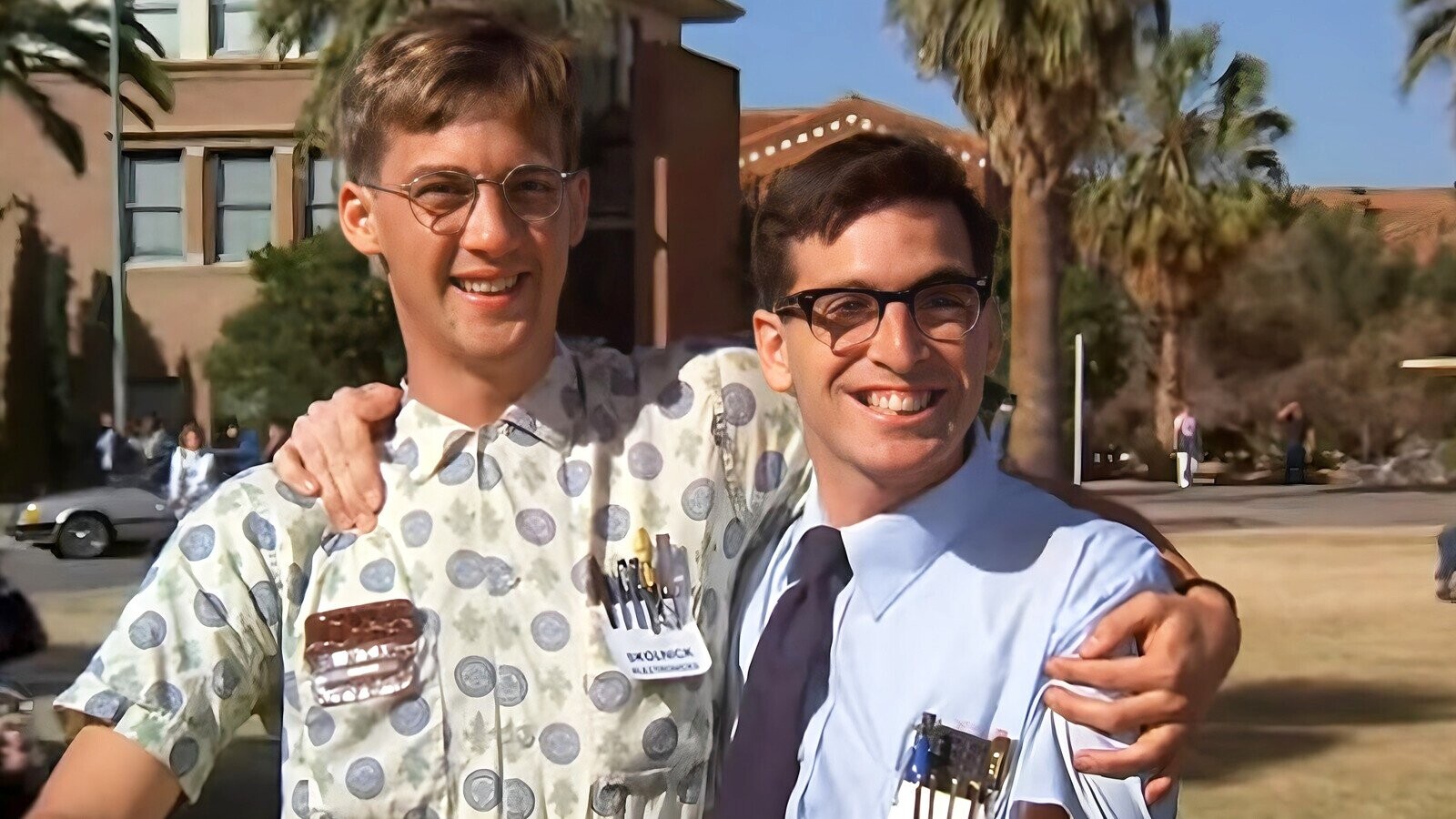
At first glance, this sounds like the easiest pop-culture take in the world. A modern creator looks back at Revenge of the Nerds, winces at the movie’s messier ideas about sex, stereotypes, and humiliation, and says, “Yeah, that didn’t age well.” Fair enough. Plenty of viewers have landed there. But Paul Feig, the creator of Freaks and Geeks, had a different complaint lurking behind his dislike of the 1984 comedy, and that twist is what makes the story interesting.
Feig’s problem was not mainly that Revenge of the Nerds is now a museum exhibit for what 1980s studio comedy could get away with. His deeper issue was artistic. He disliked the way the movie treated nerds as oversized punch lines instead of recognizable people. In his view, the characters felt exaggerated, self-conscious, and weirdly dishonest — less like actual outsiders and more like a room full of performers putting on a “look at these losers” costume for the audience. That distinction matters, because it helps explain why Freaks and Geeks still feels human while so many high-school and underdog comedies from its era now feel preserved in plastic.
In other words, Feig didn’t simply reject one movie. He rejected an entire style of comedy writing. And if you want to understand why Freaks and Geeks became a cult classic after just one season, this is the place to start.
The Real Reason Paul Feig Couldn’t Stand the Movie
The easiest version of this story is the clicky one: creator of a beloved outsider show hates a notorious outsider movie. But Feig’s criticism goes deeper than today’s standard retrospective scolding. He was frustrated by the broadness of the characters — the giant glasses, the loud snorts, the cartoon signals screaming, “Attention everyone, a nerd has entered the building!” That approach, for him, flattened real people into novelty acts.
That frustration also came from experience. When Feig was trying to build a career in comedy, he saw how often Hollywood preferred extreme, overplayed misfits to subtle, vulnerable ones. Executives responded to the loud version of nerdiness: the version with neon arrows pointing at the joke. Feig hated that. To him, it was fake. Worse, it was condescending. It treated the outsider not as a character to understand, but as a figure to display.
That may sound like a small creative disagreement, but it reveals a big split in comic philosophy. Some comedies want the audience to admire the machinery. They want the viewer to feel the wink. Look how silly this is. Look how knowingly dumb this is. Feig has never really been that guy. His best work usually operates in a different key: characters may be awkward, ridiculous, overmatched, or socially doomed, but the camera rarely behaves as if it is better than they are. It stays with them. It lets them sweat.
That is what Feig found missing in Revenge of the Nerds. The movie may have been selling underdog rebellion, but it often did so by turning its heroes into a sideshow. And once you notice that, the title starts to feel a little ironic. The nerds are supposedly getting their revenge, but they are also being mocked by the very film that claims to champion them.
Why Revenge of the Nerds Worked in the First Place
To be fair, Revenge of the Nerds did not become famous by accident. In 1984, the premise was easy to sell: smug jocks torment outcasts, the outcasts fight back, and audiences cheer when the social ladder gets kicked in the shins. That formula was catnip. The movie mixed college-fantasy chaos, fraternity warfare, and the classic American underdog story into one very loud package. It gave a generation of viewers a simple, satisfying message: maybe the weird kids could win.
And for many fans, that message really mattered. Before tech billionaires, superhero dominance, Comic-Con prestige, and the total mainstreaming of fandom, “nerd” was still mostly a social insult. Revenge of the Nerds captured that status anxiety and turned it into a rallying cry. The movie’s title alone did half the cultural work. It suggested that the people shoved to the edges of campus life might someday control the room.
That is one reason the film stayed lodged in the culture even as its rougher edges became harder to ignore. It was crude, chaotic, and often tone-deaf, but it gave outsiders a victory fantasy at a time when Hollywood did not exactly specialize in nuanced empathy for the socially awkward.
The problem, as Feig saw it, was that the movie also cheapened the very people it pretended to uplift. The nerds won, yes, but they won while still being packaged as comic grotesques. It was a triumph with an asterisk the size of a dorm room futon.
How Freaks and Geeks Became the Counterargument
Feig did not answer Revenge of the Nerds by writing an essay. He answered it by making Freaks and Geeks. When the NBC series premiered in 1999, it brought a radically different energy to stories about teenage outsiders. Instead of treating the so-called freaks and geeks like branding categories, the show treated them like kids still figuring themselves out. That sounds simple. On television, it was almost rebellious.
The series was set in suburban Michigan around 1980 and drew heavily from Feig’s own adolescence. Sam Weir and his friends were not geek mascots assembled from leftover stereotypes. They were specific boys with distinct rhythms, fears, and humiliations. Sam was anxious and hopeful. Neal was chatty and eager. Bill was gangly, lonely, and somehow both hilarious and heartbreaking at the same time. They were funny not because the show pointed and shouted, “Nerd alert!” but because they felt like real teenagers trying to survive gym class, crushes, bad timing, and public embarrassment.
Lindsay and the freaks got the same treatment. They were not romanticized rebels with magazine-cover cool. They were confused, occasionally dumb, sometimes selfish, often tender, and never as sure of themselves as they looked. That choice mattered. It turned social categories into emotional weather.
No Makeover Nonsense Allowed
One of Feig’s smartest instincts was in casting. He did not want the lazy television trick where conventionally gorgeous actors are disguised as outsiders with frizzy hair, ugly sweaters, and one sad pair of glasses. He wanted faces that felt lived-in, vulnerable, and a little surprising. You could not simply wait for these kids to remove their frames and become prom royalty. The whole point was that they already counted as fully human before any imaginary makeover montage.
That is a huge reason the show still lands. It never treats authenticity like a temporary obstacle on the road to glamour. It lets awkwardness stay awkward. It lets acne keep its job. It lets insecurity hang around longer than a sitcom usually allows.
Failure Wasn’t a Bug. It Was the Point.
Another network-era miracle of Freaks and Geeks is that it refused to hand out cheap victories. Sam might get close to the dream girl, only to discover that closeness is not the same thing as romance. Lindsay might chase reinvention and still feel lost. Jokes land, then sting. Wins are partial. Humiliations linger. That refusal to tidy up adolescence is exactly what made the show feel honest.
Feig understood something many teen stories miss: high school is not a neat hero’s journey. It is a series of almosts. Almost fitting in. Almost getting kissed. Almost understanding who you are. That emotional realism is the polar opposite of the cartoon logic he disliked in Revenge of the Nerds.
The Difference Between Laughing at Outsiders and Laughing with Them
This is really the heart of the whole debate. Comedy about outsiders can go two ways. One way says: these people are absurd, so let’s frame them as spectacles. The other says: these people are recognizable, so let’s frame them as human beings whose absurdity grows naturally out of life. Both can produce laughs. Only one tends to age with grace.
Revenge of the Nerds often leans toward spectacle. The movie is built on the visual and behavioral shorthand of social otherness. It wants the audience to register the type immediately. Freaks and Geeks, by contrast, slows down that process. It lets the viewer sit with the characters long enough for category to dissolve into personality. A geek is no longer just a geek. He is a kid trying not to get destroyed in dodgeball. A burnout is no longer just a burnout. She is a teenager improvising a self out of grief, boredom, anger, and curiosity.
That is why Feig’s criticism still feels fresh. He was not merely objecting to a few outdated jokes. He was objecting to the cruelty hidden inside false comic distance. When performers treat characters as dumb from the outside, the audience is invited to do the same. When a show lets characters live from the inside, the laughter changes. It gets warmer. Sharper, sometimes. But warmer.
Why This Still Matters in Pop Culture
Today, nerd culture is not exactly struggling for oxygen. Comic-book universes print money. Gamers drive billion-dollar industries. Tech founders are mythologized until the next scandal drops. Glasses have gone from punch-line accessory to carefully curated lifestyle choice. In that sense, the old social map has been redrawn.
But Feig’s insight still matters because pop culture still loves labels. Hollywood still defaults to simplification. The weird kid, the cool kid, the awkward girl, the band geek, the burnout, the loner — these are useful story shortcuts, and shortcuts are tempting. The risk is that once a label becomes a costume, the character underneath starts evaporating.
Freaks and Geeks endures because it never let that happen. It was realistic, yes, but not in some dull documentary sense. It was real in the more difficult way: it understood that people are inconsistent, defensive, ridiculous, sweet, and lonely, often within the same scene. That is a much harder trick than slapping tape on a pair of glasses and calling it comedy.
So when people say Paul Feig hated Revenge of the Nerds, the most interesting part is not the hate. It is the standard behind it. He wanted outsider stories that did not sneer at outsiders. He wanted comedy that could be broad without being phony, emotional without becoming sentimental, and funny without reducing vulnerable people to props. That is not just a critique of one 1984 movie. It is a creative manifesto hiding in plain sight.
Extended Reflection: The Experience of Seeing Yourself in These Stories
There is also a reason this topic keeps resurfacing beyond film criticism, and it has everything to do with recognition. A lot of people first encounter stories about nerds, geeks, burnouts, and outcasts long before they have the language to analyze how those stories work. They just know the gut feeling. One version makes them laugh, but from a distance. Another version makes them feel seen. The difference is enormous.
For viewers who grew up feeling awkward, overexcited, underconfident, or chronically a step behind the cool kids, movies and shows like these are never just entertainment. They are little social mirrors. You watch to figure out whether the culture thinks people like you are lovable, embarrassing, dangerous, ridiculous, or maybe all four before lunch. That is why Feig’s complaint lands so hard. If the joke is built on a fake version of your life, it can feel like someone else is borrowing your pain and returning it as a novelty item.
That is part of the emotional magic of Freaks and Geeks. Watching Sam, Bill, and Neal does not feel like attending a costume party where everybody came dressed as “the nerd.” It feels like remembering the specific texture of being young and uncertain. The pauses are too long. The confidence arrives too early and leaves too fast. A small social failure feels like an international incident. The wrong shirt can ruin a week. A half-compliment from the right person can power an entire semester. That level of detail is why the show sticks.
And for viewers who were not geeks, the show still works because it refuses the fantasy that social categories explain everything. The freaks are insecure. The popular kids are not immune to confusion. The adults are fumbling, too. Nobody is granted the dignity of perfection, but everybody is granted the dignity of complexity. That may be the most generous thing a coming-of-age story can do.
By contrast, broader campus comedies often create a sugar rush of identification. You root for the underdogs, sure, but you do not necessarily believe in them. They are symbols first, people second. That can be fun for 90 minutes. It is less useful for anyone looking for something deeper than a chant of revenge and a food-fight of stereotypes.
Maybe that is why so many fans return to Freaks and Geeks long after high school is over. The show understands a quiet truth: most people are not stars of their adolescence. They are just trying to survive it with a little dignity, a few decent friends, and maybe one conversation that goes better than expected. That is a much humbler fantasy than conquering campus or humiliating the jocks. It is also much closer to life.
So yes, the headline is catchy. Paul Feig hated Revenge of the Nerds. But the lasting value of that story is what came next. He took his frustration with fake outsider comedy and turned it into a series that treated awkward people as full characters, not decorative weirdos. That choice still feels radical, and maybe always will. Because the easiest thing in the world is to laugh at the uncool kid. The harder, better thing is to understand why that kid matters.
Conclusion
Paul Feig’s dislike of Revenge of the Nerds is more revealing than any simple “this aged badly” argument. His complaint cut to the craft. He believed outsider characters deserved honesty, not cartoon treatment; empathy, not a patronizing wink. That belief became the DNA of Freaks and Geeks, a show that replaced stereotype with specificity and gave awkward adolescence something rare on television: respect.
That is why the comparison still matters. One title made nerds marketable as comic types. The other made them recognizable as people. And in the long run, recognition beats caricature every time.