Note: This article is for inspiration and safety education. Any real dry ice handling should be done only by a trained adult following official safety guidance in a well-ventilated area.
Halloween is the one night of the year when people actively try to make their homes look suspicious. Cobwebs? Yes. Flickering lanterns? Absolutely. A plastic skeleton lounging on the porch like it pays rent? Essential. And then there is the grand champion of spooky atmosphere: the dry ice display.
When people talk about building a memorable Halloween setup, dry ice almost always enters the chat wearing a dramatic cape. It creates that low, crawling fog that seems to slide across the ground like it has secrets. The effect feels theatrical, eerie, and surprisingly elegant when it is part of a smart overall design. But here is the truth many Halloween articles skip: dry ice is not just a decoration. It is a hazardous material. That means the best “dry ice display for Halloween” is not the most extreme one. It is the one that looks incredible and respects safety.
This guide explores why dry ice became such a Halloween favorite, what makes the effect so visually powerful, the risks people often underestimate, and how to design a spooky display that still feels polished, fun, and responsible. In other words, we are aiming for haunted-house chic, not accidental chaos.
Why a Dry Ice Display Became a Halloween Classic
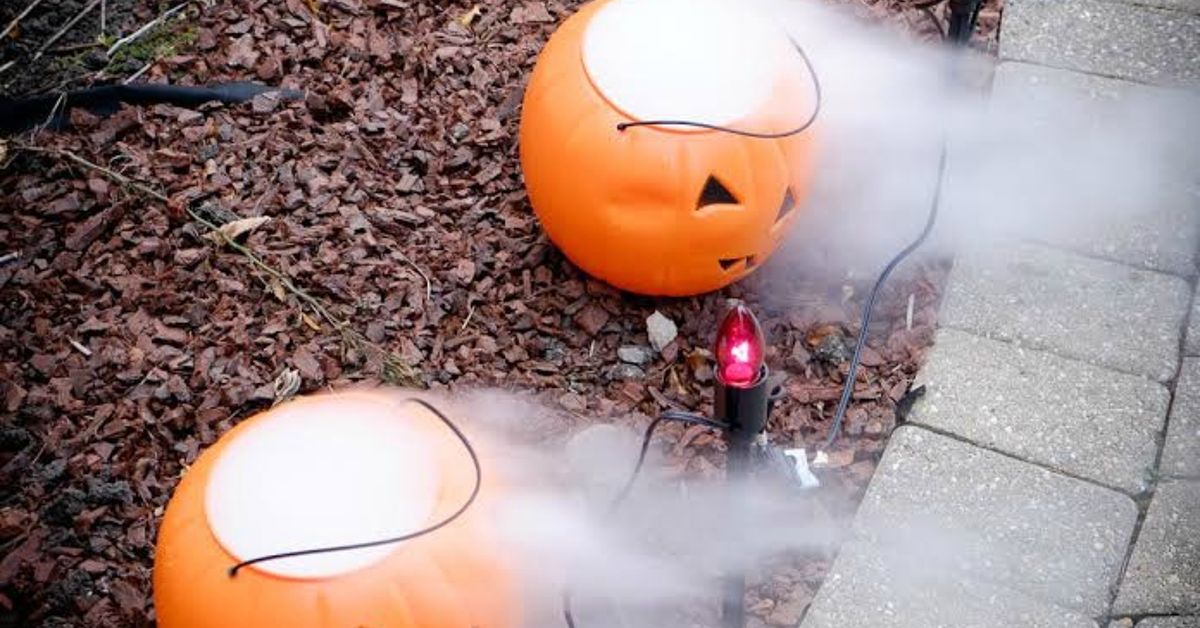
Halloween decorating has always been about atmosphere more than perfection. Most people do not remember whether your fake tombstones were hand-painted or store-bought. They remember the feeling. They remember stepping onto a porch and seeing a layer of mist drifting around pumpkins, lanterns, or a bubbling cauldron prop. That visual instantly suggests mystery. It slows people down. It turns a front yard into a scene.
That is why the idea of a dry ice display for Halloween keeps showing up in party planning, haunted house design, school carnivals, neighborhood trick-or-treat routes, and fall photo setups. The fog effect looks expensive even when the rest of the décor is simple. A few LED candles, some dark fabric, old crates, and a little ground-hugging mist can make a scene feel cinematic.
Dry ice also has a huge style advantage over random clutter: it adds motion. Static decorations are fine, but motion makes people stare. Fog rolls. It shifts. It appears to react to light. Under purple, green, or amber lighting, the display can look like a mad scientist’s workshop, a witch’s kitchen, or a ghostly graveyard depending on the mood you want.
What Dry Ice Actually Does
The appeal is all about low fog
Dry ice is solid carbon dioxide, and one reason it attracts so much Halloween attention is that the visual effect feels different from ordinary mist. Instead of floating upward and disappearing too fast, the fog often stays low and creeps outward, which is exactly what people want for spooky scenes. It looks less like a humidifier and more like the opening shot of a horror movie where someone definitely should not go into the basement.
That low-lying effect works especially well in Halloween themes that already rely on shadows and silhouettes. Think graveyard scenes with crooked crosses, black cat cutouts near porch steps, apothecary-style party tables, or a “forbidden potion” buffet. Even a simple bowl centerpiece can feel more dramatic when the surrounding décor suggests a story.
It works best when it supports a theme
The strongest Halloween displays do not treat fog as the entire concept. They use it as a supporting actor. A haunted display usually looks better when the mist highlights something else: carved pumpkins, antique-looking bottles, fake ravens, hanging lanterns, eerie signage, or a color palette built around black, bone, rust, deep green, or midnight purple.
In other words, the display should still look interesting when the fog fades. If your setup only works because it is smoky, it may need more visual structure. A good Halloween scene has layers: light, texture, height, and a focal point. Fog simply gives those layers a little drama and a lot of personality.
The Safety Side of a Dry Ice Halloween Display
Here is the part that deserves more attention than it usually gets. A dry ice display may look playful, but dry ice is cold enough to injure skin, dangerous in poorly ventilated spaces, and never something to treat like a party toy. This is especially important around children, pets, crowded rooms, and food or drink stations.
Cold burns are real
One of the biggest myths about dry ice is that it is basically “extra cold regular ice.” It is not. Direct contact can cause painful cold burns that resemble frostbite. That matters on Halloween because curiosity is half the holiday. Kids poke things. Adults lean in for photos. Somebody always wants to “just touch it for one second.” That one second can be a terrible idea.
If a display includes dry ice at all, it should be treated as a restricted element, not an interactive one. A spooky centerpiece should never become the evening’s accidental trip to urgent care.
Ventilation matters more than aesthetics
Dry ice becomes carbon dioxide gas as it dissipates. In a well-ventilated area, that may be manageable for a carefully planned display handled by a responsible adult. In enclosed or poorly ventilated spaces, though, carbon dioxide can build up in ways people do not notice right away. That is what makes the risk sneaky. There may be no dramatic warning, just a growing problem in the background.
This is why small rooms, tightly closed vehicles, crowded indoor parties, and poorly ventilated entryways are not places to get casual with dry ice. If a Halloween setup depends on a hazardous material and the setting cannot support it safely, the smartest choice is not “be brave anyway.” The smartest choice is “pick another effect.”
Food and drink displays need extra caution
Halloween hosts love themed beverages, bubbling punch bowls, and dramatic dessert tables. But a dramatic food display should never come at the expense of safety. Dry ice should not be directly consumed, and it should not be treated like a fun ingredient for guests to discover in a cup. That may sound obvious, but Halloween has a long tradition of people trying to impress guests with “smoking drinks” and “witch’s brew” moments.
The more a display is designed to attract attention, the more important it is to think like a cautious planner. If there is even a chance a guest, especially a child, could mistake something dangerous for part of the treat, the setup needs to be rethought. Spooky is fun. Ambiguous is not.
When a Dry Ice Display Makes Sense
A dry ice display tends to work best in controlled, adult-managed settings where safety planning is the first priority and the visual effect is only one part of a broader décor concept. An outdoor Halloween party with open airflow, clear boundaries, and non-contact display zones is very different from a packed indoor family gathering where kids are weaving around every table like caffeinated bats.
It can also make more sense in photo-forward displays than in high-traffic activity zones. If your goal is to create one memorable visual corner, one themed porch moment, or one dramatic focal point, you do not need the entire house wrapped in a fog bank. In fact, a smaller, more intentional look often feels more stylish.
Less is usually more with Halloween atmosphere. A thin ribbon of eerie mist around pumpkins and lanterns often looks better than a room that resembles a confused weather event.
When You Should Skip It Entirely
There are plenty of situations where the answer is simply no. If the event is crowded, indoors, child-heavy, pet-heavy, poorly ventilated, or built around food service, a dry ice display may not be worth the risk. The same goes for hosts who want something low-maintenance. Dry ice is not décor you can casually set and forget. It demands judgment, supervision, and a willingness to prioritize safety over spectacle.
And honestly, skipping dry ice does not mean sacrificing style. Halloween décor has evolved. There are now excellent alternatives that give a creepy mood without introducing a hazardous material into the scene.
Smart Alternatives That Still Look Amazing
Use lighting like a professional set designer
If there is one underappreciated Halloween superpower, it is lighting. Colored uplights, flickering LED candles, shadow projectors, lantern clusters, and backlit fabric panels can make a scene feel eerie even without a single puff of fog. Green and purple are the classic crowd-pleasers, but amber and deep red can feel richer and more cinematic when used carefully.
Choose motion without risk
Motion sells the fantasy. Flowing fabric, hanging ghost forms, projection effects, fan-driven décor, and gentle light movement can all create atmosphere without introducing a substance people might touch, inhale too closely, or misunderstand. Good design is not about one trick. It is about combining details so the whole space feels intentional.
Build texture into the display
Halloween scenes come alive when materials contrast with one another. Rough wood crates, velvet table runners, matte black candlesticks, weathered labels, metallic potion bottles, old books, faux moss, branches, and gauzy fabric all add depth. You do not need a blockbuster budget. You need contrast, layering, and the confidence to remove anything that looks too busy.
A polished spooky display usually has one focal point, two supporting details, and enough empty space to let the mood breathe. That rule saves a lot of decorators from turning the front porch into a discount-store avalanche.
Design Ideas for a More Memorable Halloween Setup
If you are inspired by the idea of a dry ice display for Halloween, think in scenes rather than objects. A “witch’s study” scene might include stacked books, apothecary labels, candlelight, a moonlit color scheme, and one mysterious central prop. A “forgotten graveyard” look might rely on stone textures, dim lanterns, ravens, and low lighting. A “vintage haunted dinner” aesthetic might lean into dark florals, brass accents, old portraits, and eerie place settings.
Notice what these themes have in common: each one works even before fog enters the picture. That is the secret. Strong décor creates the story first and adds effects second. Once you think that way, your Halloween display becomes more elegant, more believable, and often more shareable online too.
From an SEO perspective, this matters because people searching for Halloween decorating ideas are usually looking for inspiration they can adapt. They are not just searching for one object. They want mood, style, examples, and confidence. A great Halloween display article should help readers imagine the finished scene, not just dump a list of props in their lap and wish them luck.
What to Remember If Something Goes Wrong
If someone is exposed to dry ice and shows signs of a cold burn or frostbite-like injury, or if anyone feels dizzy, short of breath, confused, or unwell around a display, treat that as a real warning sign. Move away from the source, get to fresh air if breathing is a concern, and seek medical help when symptoms are significant or persistent. Cold injuries should be handled carefully, and severe symptoms are not the time for internet bravado.
Halloween should end with leftover candy and too many photos, not a story that begins with, “So we thought it would be funny if…” That sentence has haunted enough people already.
Final Thoughts
A dry ice display for Halloween can look unforgettable, but the real magic is not the fog itself. It is the atmosphere you build around it: the lighting, the textures, the color story, the pacing of the space, and the good judgment to know when an effect is worth using and when it is better left out. The best Halloween décor is immersive, not reckless.
If your goal is a stylish, spooky, conversation-starting setup, focus on story first and effects second. Make the porch feel like a scene. Make the table feel like a spellbook came to life. Make the room feel like it knows something the guests do not. That is how you create Halloween charm that people actually remember.
And if the display earns a few delighted gasps, a flood of photos, and one neighbor whispering, “Okay, that is ridiculously cool,” you have done your job.
Experiences Related to “Dry Ice Display for Halloween”
One of the most interesting things about Halloween displays is how people react to them emotionally. A dry ice display, even when used only as a visual reference point in a carefully supervised setup, changes the mood immediately. Guests do not just see decorations. They slow down, lean in, and start narrating the scene to themselves. A porch becomes an “entrance.” A table becomes a “lab.” A simple pumpkin arrangement suddenly looks like it came with a backstory and a suspicious inheritance.
People who have attended strong Halloween events often describe the experience in the same way: the display felt immersive before anyone even rang the bell. The combination of low lighting, layered textures, and drifting mist gave the setup a movie-like quality. Children usually reacted with a mix of caution and excitement, while adults reached for their phones because the scene looked photogenic in a way ordinary decorations rarely do. That is the hidden power of atmospheric design. It makes even familiar Halloween props feel new.
Hosts also tend to remember the planning lessons. The first is that visual drama works best when it has boundaries. The most successful displays are usually the ones that separate the “look at this” area from the “walk through here” area. That keeps the scene beautiful and the traffic flow manageable. Another common lesson is that lighting matters more than people expect. Many hosts assume fog will do all the work, then discover that without good lighting, the scene feels flat. But when lanterns, shadows, or colored accents are used well, the display suddenly feels intentional and premium.
There is also a social side to the experience. Halloween displays often become gathering points. Guests linger. Kids debate whether the witch is “real.” Neighbors stop for photos. Someone inevitably says, “This looks way fancier than last year,” which is both a compliment and a challenge for the future. The display becomes part décor, part conversation starter, part neighborhood legend.
At the same time, many experienced hosts come away with a stronger respect for safety than they expected. They realize that the best Halloween atmosphere is not about pushing an effect to the limit. It is about controlling the environment, thinking ahead, and keeping the fun from turning into risk. That perspective often changes how people decorate in later years. They become more selective, more design-focused, and less interested in gimmicks for gimmicks’ sake.
In the end, the experience of a Halloween display is not really about dry ice alone. It is about anticipation. It is the little pause before a guest steps onto the porch. It is the flicker of light across old-looking props. It is the laugh that happens right after someone says, “Nope, that corner is definitely haunted.” When the display works, it creates a memory that feels larger than the materials used to build it. That is why people keep chasing the perfect Halloween atmosphere year after year. They are not just decorating. They are staging a moment people will remember.