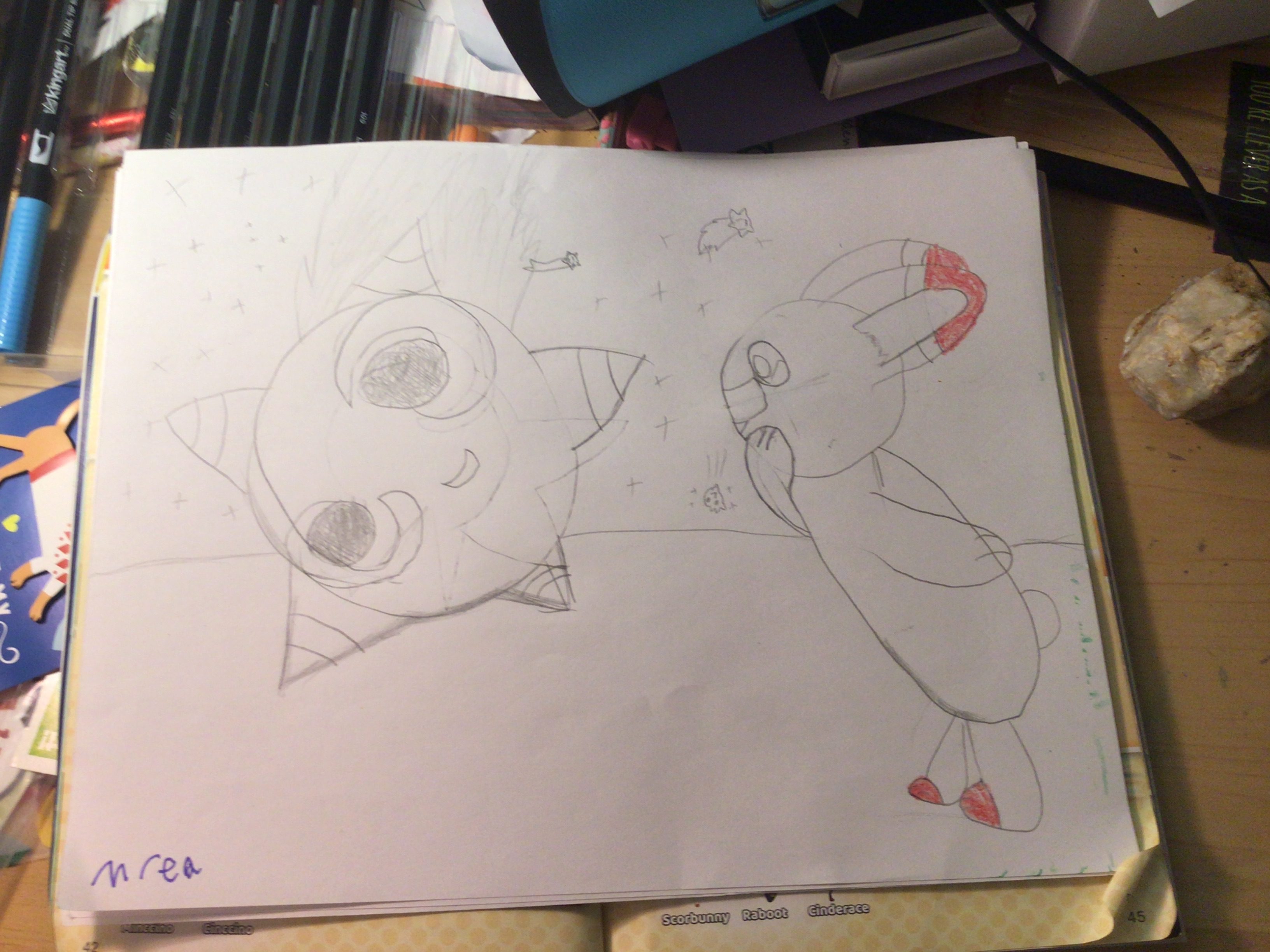
Learning how to draw a cool Pokémon picture is one of those creative projects that sounds simple until your pencil touches the paper and Pikachu suddenly looks like a confused potato with ears. The good news? That is completely normal. Every great drawing begins as a weird little sketch with potential. Whether you want to draw Pikachu, Charizard, Eevee, Lucario, Gengar, or your own original monster inspired by Pokémon-style design, the secret is not magic. It is structure, observation, practice, and a little willingness to laugh when your first attempt looks like it lost a battle with a pencil sharpener.
Pokémon art is popular because the characters are instantly recognizable. They use bold silhouettes, expressive faces, simple shapes, energetic poses, and memorable color palettes. That makes them perfect subjects for beginners and fun challenges for experienced artists. A cool Pokémon picture can be cute, dramatic, funny, action-packed, or even poster-worthy. You do not need expensive supplies. You need a clear plan, a reference, basic drawing techniques, and the courage to keep going past the “this looks terrible” stage.
Why Pokémon Are So Fun to Draw
Pokémon characters are built around strong visual ideas. Pikachu is round, bright, and electric. Charizard is a dragon-like powerhouse with wings and flame. Squirtle is a turtle with playful proportions. Gengar is basically a mischievous shadow with a grin that says, “I definitely moved your keys.” Each character has a clear personality, which gives artists something to express beyond outlines and colors.
Another reason Pokémon drawings work well for practice is variety. Some Pokémon are made from simple circles and ovals, while others involve claws, armor, fur, feathers, flames, shells, vines, or robotic shapes. That range helps you practice line art, shading, proportion, texture, composition, and color theory without feeling like you are doing homework. It is homework wearing a cool hat.
Start With the Right Reference
Before you draw, choose a Pokémon and study it carefully. The official Pokédex is useful because it helps you identify the creature’s type, shape, features, and personality. Instead of copying blindly, look for construction clues. Is the head a circle, oval, triangle, or boxy form? Are the arms short or long? Where are the eyes placed? Does the character stand upright, crouch, float, crawl, or fly?
For a beginner-friendly drawing, choose Pokémon with simple forms such as Pikachu, Jigglypuff, Ditto, Voltorb, Rowlet, Snorlax, or Piplup. If you want a bigger challenge, try Charizard, Greninja, Lucario, Rayquaza, Mewtwo, or Garchomp. Advanced characters are not impossible; they simply require more patience and more construction lines. In other words, do not start with Rayquaza if you currently fear drawing spaghetti.
Supplies You Need to Draw a Cool Pokémon Picture
You can create a polished Pokémon drawing with basic supplies. A regular pencil, eraser, paper, black pen, and colored pencils are enough. If you work digitally, use a tablet, stylus, and drawing app with layers. Digital tools are helpful because you can sketch, lower opacity, ink on a new layer, and undo mistakes. Traditional tools build confidence because each line teaches control.
Recommended Supplies
- HB pencil for sketching light construction lines
- 2B or 4B pencil for darker shadows
- White eraser for cleaning the sketch
- Fine-tip black pen for line art
- Colored pencils, markers, or watercolor for color
- Sketchbook paper or smooth drawing paper
- Reference image for pose, proportions, and color
Step 1: Pick the Mood of Your Pokémon Picture
A cool Pokémon picture needs a mood. Do you want cute, fierce, funny, heroic, mysterious, or cinematic? The mood affects the pose, expression, background, color, and lighting. A happy Eevee might sit in soft grass with round eyes and warm colors. A fierce Charizard might stand in a dramatic pose with smoke, flames, and a low camera angle. A spooky Gengar might glow in purple shadows with a grin wider than your weekend snack budget.
Before sketching, write one sentence describing your image. For example: “Pikachu jumps forward with lightning sparks.” Or: “Bulbasaur rests under a huge leaf after rain.” This tiny creative brief keeps your drawing focused. Without it, you may end up adding random clouds, three trees, a volcano, sunglasses, and emotional confusion.
Step 2: Break the Pokémon Into Basic Shapes
Almost every drawing becomes easier when you break it into simple shapes. Start with circles, ovals, triangles, rectangles, and curved guidelines. Pikachu’s head and body can begin as rounded forms. Charmander’s body can start as a bean shape with a circle for the head and a tapering tail. Squirtle uses circles, ovals, and a shell shape. Lucario needs longer construction lines for the torso, legs, snout, and ears.
Draw lightly at first. These early lines are scaffolding, not the final artwork. Think of them as the construction crew. They are important, but they do not need to be glamorous. Use a center line on the face to place the eyes, nose, mouth, and cheeks. Use simple limb lines to plan movement. If your Pokémon is running, jumping, or attacking, use a curved action line through the body to make the pose feel alive.
Step 3: Focus on Silhouette
A strong silhouette means the character is recognizable even as a flat shadow. Pokémon designs often rely on this principle. Pikachu’s ears and lightning tail, Bulbasaur’s bulb, Jigglypuff’s round body and curl, and Charizard’s wings all create instant recognition. When drawing your Pokémon picture, zoom out or hold the paper at arm’s length. Can you still tell which Pokémon it is? If yes, your design is working.
To improve the silhouette, exaggerate the most important features slightly. Make Pikachu’s ears confident. Give Charizard’s wings a clear spread. Make Gengar’s spikes and grin readable. Do not overcomplicate the outline with too many tiny details. A cool drawing often looks clean before it looks complicated.
Step 4: Add Expression and Personality
The face sells the drawing. A Pokémon with accurate proportions but a flat expression can feel stiff. A slightly imperfect drawing with great personality can feel fantastic. Eyes, mouth shape, eyebrows, cheek placement, and head tilt all matter. If you draw Pikachu happy, the cheeks lift and the eyes become lively. If you draw Mewtwo serious, the eyes narrow and the posture becomes calm but powerful. If you draw Psyduck, just make it look like it forgot why it entered the room. Perfect.
Expressions should match the pose. A Pokémon in battle might lean forward, squint, and open its mouth. A sleepy Pokémon should have relaxed eyelids, soft lines, and a heavier body shape. A surprised Pokémon can use wider eyes, raised brows, and a backward lean. Personality turns a picture from “technically correct” into “I want this on my wall.”
Step 5: Clean Up the Line Art
Once the sketch looks solid, refine the lines. Use confident strokes and avoid scratching over the same area too many times. Smooth contour lines help the character look polished. You can vary line weight by making outer edges slightly thicker and interior details thinner. This adds depth and makes your drawing feel more professional.
If you are using pencil only, darken the important lines and erase construction marks. If you are inking, let the pen dry before erasing pencil underneath. Many artists have learned this lesson the tragic way, also known as “the great smudge incident.”
Step 6: Use Shading to Make the Picture Pop
Shading makes a flat drawing feel three-dimensional. Choose one light source before adding shadows. For example, if the light comes from the upper left, shadows should appear on the lower right side of the body, under the chin, behind limbs, and below overlapping parts. Keep it simple. You do not need to shade every inch like a dramatic movie poster.
Try hatching, crosshatching, soft pencil gradients, or marker layers. Hatching uses parallel lines to create value. Crosshatching overlaps lines in different directions. Colored pencils can build gentle shadows by layering slowly. Digital artists can use multiply layers for shadows and overlay layers for glow effects. Electric Pokémon look especially cool with rim lighting, sparks, and bright highlights.
Step 7: Choose Colors That Match the Character
Color is one of the most exciting parts of drawing a cool Pokémon picture. Use the official color palette as a starting point, then add your own lighting. Pikachu is yellow, but shadows may become warm orange or soft brown. Squirtle is blue, but highlights can lean toward pale cyan. Bulbasaur combines green and blue-green, which looks great with leafy backgrounds. Fire-type Pokémon look powerful with red, orange, yellow, and smoky gray.
Do not color too aggressively at first. Build layers gradually. Leave small white highlights in the eyes to make the character feel alive. Use darker color under the body, inside ears, below arms, and around overlapping shapes. If your Pokémon uses an attack, let the move influence the palette. Thunderbolt adds bright yellow and white. Flamethrower adds orange glow. Water Gun adds blue motion streaks. Shadow Ball adds purple and black energy.
Step 8: Create a Simple Background
A background can make your Pokémon drawing feel complete, but it should not fight the main subject. For beginners, simple backgrounds work best: grass, clouds, speed lines, spark effects, rocks, a Poké Ball pattern, or a soft gradient. For a more advanced piece, place the Pokémon in a forest, cave, beach, city, stadium, or mountain scene.
Composition matters. Put the Pokémon slightly off-center for a more dynamic image. Use diagonal lines to suggest motion. Add foreground elements, such as grass or dust, to create depth. If the character is small on the page, make the environment part of the story. If the character is large, keep the background cleaner so the viewer focuses on the expression and pose.
Step 9: Add Special Effects
Special effects are the secret sauce. A cool Pokémon picture can include lightning bolts, flame trails, water splashes, leaves, psychic energy, dust clouds, stars, ice crystals, or glowing outlines. The trick is moderation. Too many effects can make the drawing look like it sneezed glitter.
Use effects to support the story. Pikachu can have jagged lightning around the cheeks and tail. Charizard can have flame glow under the wings. Greninja can have water arcs and motion blur. Gengar can have purple smoke and eerie highlights. A small amount of glow around the strongest attack can make the whole picture look more dramatic.
Common Mistakes When Drawing Pokémon
Skipping Construction Lines
Many beginners jump straight to details. That is like building a house by starting with curtains. Construction lines help you place the head, body, limbs, and features correctly. Always sketch the big shapes first.
Making Both Sides Too Symmetrical
Symmetry can look stiff. Even front-facing Pokémon need slight natural variation. Tilt the head, shift the pose, or change the angle of the arms to create life.
Using Flat Colors Only
Flat color is fine for a clean cartoon style, but shadows and highlights add polish. Even one shadow layer can make a major difference.
Overcrowding the Background
If your background has more drama than the Pokémon, simplify it. The character should remain the star of the page.
Easy Pokémon Drawing Ideas for Beginners
If you are just starting, choose ideas that let you finish a picture without wrestling a thousand details. Draw Pikachu holding a berry, Jigglypuff singing into a marker, Snorlax sleeping under a tree, Ditto copying a Poké Ball, or Rowlet sitting on a branch. These ideas are simple, expressive, and fun.
Another great exercise is drawing the same Pokémon in three moods: happy, angry, and sleepy. This teaches expression without forcing you to learn a new body every time. You can also draw a mini comic panel with one simple joke. For example, Psyduck tries to use Confusion, gets confused, and somehow wins anyway. Classic Psyduck behavior.
Advanced Pokémon Drawing Ideas
Once you feel comfortable, try more dramatic concepts. Draw Charizard flying over a volcano, Lucario charging Aura Sphere, Greninja leaping through rain, Mew floating in a glowing bubble, or Gengar emerging from a shadow. Use perspective to make the picture more exciting. A low angle makes the Pokémon look powerful. A close-up creates emotional intensity. A wide shot can show the environment and tell a bigger story.
You can also design a fake trading card illustration for personal practice. Create a border, name, type symbol, and action scene. Keep it as fan art and avoid using it commercially unless you have proper rights. This format is a great way to practice composition because trading card art needs to be readable in a small space.
How to Draw Your Own Pokémon-Inspired Creature
Creating an original creature is a fantastic exercise. Start with a theme: animal, object, myth, food, plant, weather, emotion, or machine. Then choose a type, such as Fire, Water, Grass, Electric, Ghost, Dragon, Fairy, or Steel. Combine the theme and type into one clean idea. For example, a Grass-type raccoon with leaf-mask markings, or an Electric-type hummingbird that stores static in its wings.
Keep the design readable. Give it one or two signature features, not seventeen. Choose a strong silhouette, simple color palette, and expressive face. Think about how it moves, what it eats, where it lives, and how it behaves. Great creature design feels like biology, personality, and cartoon charm all shook hands.
Practice Routine: Improve in 20 Minutes a Day
You do not need to draw for five hours a day to improve. A focused 20-minute routine can work beautifully. Spend five minutes warming up with circles, curves, and straight lines. Spend five minutes sketching a Pokémon using basic shapes. Spend five minutes refining the expression or pose. Spend five minutes adding quick shadows or color notes.
Repeat this for a week with different Pokémon. By the end, your lines will feel smoother, your proportions will improve, and your confidence will grow. Keep your old drawings. They are proof that you are improving, even if some of them look like they were drawn during an earthquake.
Experience: What Drawing a Cool Pokémon Picture Teaches You
The best experience related to drawing a cool Pokémon picture is discovering that art improves when you stop trying to make the first sketch perfect. A lot of beginners quit too early because the rough sketch looks messy. But messy is not failure. Messy is the workshop. When you start with a circle for the head, an oval for the body, and stick-like limb guides, the drawing may look silly. That is exactly where the magic begins. Every clean illustration you admire probably had an awkward stage hiding underneath it.
One useful experience is drawing Pikachu several times in different poses. The first version may look too stiff. The second may have ears that point in strange directions. The third may finally capture the cheerful energy. Through repetition, you begin to understand the character instead of merely copying lines. You notice that the cheeks need space, the tail angle changes the pose, and the eyes control most of the expression. Small discoveries like that make drawing more enjoyable.
Another helpful experience is comparing traditional and digital drawing. On paper, you learn patience and line control because every mark matters. Digitally, you learn organization through layers, opacity, resizing, and quick corrections. Both methods build skill. Traditional sketching feels direct and honest. Digital art feels flexible and forgiving. Many artists use both: pencil sketches for ideas, digital tools for cleanup and color.
Coloring also teaches patience. The first instinct is to press hard and finish quickly, but better results usually come from light layers. A yellow Pokémon becomes more interesting when you add warmer shadows, pale highlights, and a little reflected color from the background. A Water-type becomes more alive when the blues shift from deep navy to bright cyan. A Ghost-type gains mood when purple shadows fade into black. Coloring is not just filling empty space; it is storytelling with light.
The most satisfying moment is adding the final details: eye highlights, attack sparks, soft shadows under the feet, or a tiny background element that makes the scene feel complete. That is when the drawing stops being a sketch and becomes a picture. It does not have to be perfect. In fact, the small imperfections often make it feel more personal. A cool Pokémon picture is not only about accuracy. It is about energy, charm, and the joy of making something with your own hands.
Conclusion
To draw a cool Pokémon picture, start with a clear idea, use a good reference, build the character from simple shapes, focus on silhouette, refine the expression, clean up the line art, add color, and finish with shadows or special effects. The process is beginner-friendly, but it also has enough depth to challenge experienced artists. Pokémon drawings teach the fundamentals of character art: proportion, gesture, design, value, color, and composition.
Most importantly, keep drawing. Your first Pokémon picture does not need to be a masterpiece. It needs to exist. Every sketch improves your eye, your hand, and your confidence. Today’s lopsided Pikachu may be tomorrow’s dramatic Charizard poster. Grab a pencil, pick a Pokémon, and start. The paper is waiting, and unlike a wild Abra, it will not teleport away.
Note: This article is intended for educational drawing guidance and fan-art practice. Pokémon characters, names, and designs belong to their respective rights holders. For publishing, use your own original drawings and avoid presenting official artwork as your own.