Winter storms have a talent for turning ordinary houses into expensive science experiments. Water expands when it free may be quietly building a miniature reservoir above your ceiling.
Property insurance can cover many types of winter storm damage, but coverage is not automatic for every cold-weather disaster. Whether a claim is paid often depends on what caused the damage, whether the loss was sudden, which exclusions appear in the policy, and whether the property owner took reasonable steps to prevent the problem.
Before the forecast starts using phrases such as “historic cold” and “potentially catastrophic icing,” it is worth learning what your homeowners, renters, condo, landlord, or commercial property insurance actually covers.
Does Property Insurance Cover Winter Storms?
In many cases, yes. Standard homeowners insurance commonly covers sudden and accidental damage caused by winter-related perils such as wind, falling trees, the weight of snow or ice, and water released by a frozen pipe that bursts.
The important phrase is sudden and accidental. Insurance is designed to respond to unexpected losses, not ongoing deterioration, neglected maintenance, or damage that develops because a building was left without heat during freezing weather.
Coverage also varies by policy form. One policy may protect the dwelling against most risks unless they are specifically excluded, while another may cover only the perils named in the contract. Never assume that your neighbor’s successful claim means yours will be handled the same way. Insurance policies are less like identical snowflakes and more like tax returns: similar at a distance, complicated up close.
Winter Storm Damage Commonly Covered by Property Insurance
Damage From the Weight of Snow, Sleet, or Ice
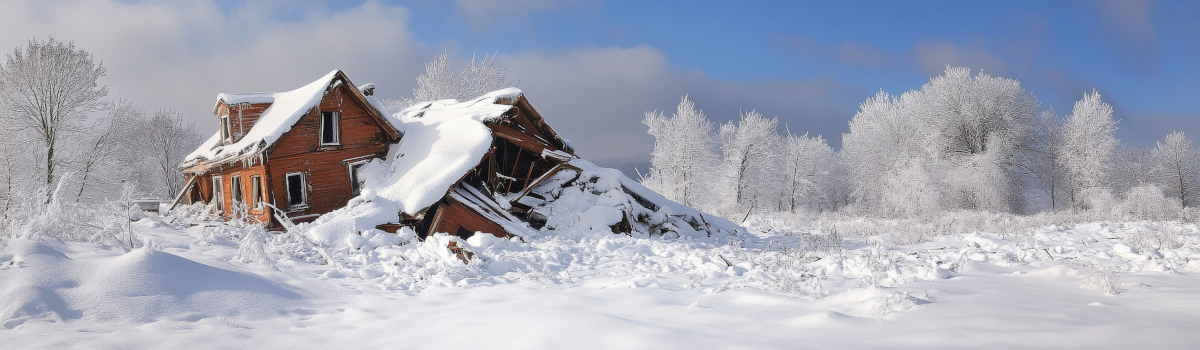
Many homeowners policies cover structural damage caused by the weight of accumulated snow, sleet, or ice. Examples may include a roof that partially collapses, damaged rafters, cracked interior walls, or a porch that fails under an unusually heavy load.
Coverage may be more limited for detached structures, fences, patios, swimming pools, retaining walls, and landscaping. A policy might cover the main house while offering narrower protection for a shed or fence. The definitions of “dwelling,” “other structures,” and “covered property” therefore matter.
Wind and Falling Objects
Winter storms can produce strong winds that tear off shingles, damage siding, or send tree limbs through a roof. Wind damage and damage from falling objects are commonly covered under many property policies.
If a neighbor’s tree falls on your home during a storm, you will usually file a claim with your own insurer unless the neighbor was negligent. A healthy tree falling during severe weather is generally treated as an act of nature. However, responsibility may be different if the tree was visibly diseased, the owner had been warned, and nothing was done.
Frozen and Burst Pipes
Property insurance often covers the resulting water damage when a pipe freezes and suddenly bursts. That may include damaged drywall, flooring, cabinets, furniture, insulation, and other insured property.
The policy may not pay to replace the worn-out plumbing component that caused the problem. It may pay for tearing out part of a wall to reach the burst pipe and repairing the resulting damage, while excluding the cost of the pipe itself. Exact wording controls the outcome.
Freeze claims may also be denied when the property owner failed to use reasonable care to maintain heat or shut off and drain the water system. This issue frequently arises in vacant homes, seasonal properties, rental units between tenants, and houses left unattended during holiday travel.
Ice Dam Water Damage
An ice dam forms when heat escaping into an attic warms part of a snow-covered roof. Meltwater flows toward the colder eaves, refreezes, and creates a ridge of ice. Additional water can then collect behind that ridge and work its way beneath shingles.
Sudden interior water damage caused by an ice dam may be covered, particularly when the home has been reasonably maintained. However, insurers may distinguish between an unexpected event and repeated leakage caused by deteriorated roofing, clogged gutters, poor ventilation, or long-term neglect.
Fire and Smoke Damage
Winter storms increase the use of fireplaces, generators, candles, wood stoves, and portable heaters. If one of these causes an accidental fire, standard property insurance will generally cover insured fire and smoke damage, subject to the deductible and policy limits.
Safety rules still matter. Generators should be operated outdoors and well away from doors, windows, and vents. Space heaters should be kept away from curtains, bedding, furniture, and other combustible materials. An insurance payment is not much comfort if the family cat has to explain to the fire department why the curtains were touching the heater.
Additional Living Expenses
If covered winter storm damage makes a home uninhabitable, homeowners, renters, and condo policies may provide loss-of-use or additional living expense coverage. This can help pay the extra cost of a hotel, temporary rental, restaurant meals, laundry, pet boarding, and other necessary expenses above normal household spending.
This coverage has limits. It may be capped by a dollar amount, a percentage of dwelling coverage, a time period, or all three. It also generally applies only when a covered loss makes the residence unfit to live in. A neighborhood power outage without physical damage to the home may not be enough.
Winter Weather Losses That May Not Be Covered
Flooding and Rising Snowmelt
Standard homeowners, renters, and condo insurance generally excludes flooding. In insurance terms, flooding may include water that accumulates on normally dry land, rising surface water, overflowing streams, or snowmelt entering the building at ground level.
That distinction creates one of winter insurance’s most confusing situations. Water from a burst pipe may be covered, while water from rapidly melting snow flowing through a basement window may be excluded. The substance is the same. The source is what matters.
Flood coverage typically requires a separate National Flood Insurance Program policy or private flood insurance. Flood policies may also have waiting periods, so buying coverage after snow begins piling up is rarely a winning strategy.
Sewer and Drain Backups
A winter thaw can overwhelm drainage systems, sump pumps, or municipal sewers. Many standard policies provide little or no coverage for water that backs up through a sewer or drain.
Water-backup coverage is often available through an optional endorsement. Limits may be significantly lower than the dwelling limit, so homeowners with finished basements should review the amount carefully. A $5,000 endorsement can disappear quickly when the basement contains flooring, drywall, appliances, electronics, and furniture.
Wear, Deterioration, and Poor Maintenance
Insurance generally does not pay for damage caused solely by aging materials, rot, corrosion, repeated seepage, faulty construction, or inadequate maintenance. If old shingles have been leaking during every thaw for three winters, the fourth winter may not transform the problem into a covered event.
However, an excluded condition and a covered loss can occur together. An insurer might refuse to pay for a deteriorated roof while covering some resulting interior damage from a separately covered event. These claims often require careful review of the adjuster’s findings and the policy language.
Failure to Protect the Property
Policyholders generally have a duty to take reasonable steps to prevent additional damage. After discovering a leak, this may include shutting off the water, moving belongings, arranging emergency drying, and making temporary repairs.
Leaving water running for days because “the insurance company will handle it” is not a recommended claims strategy. Insurers may cover the original loss while denying avoidable damage that occurred afterward.
Power Outages Without Insured Damage
A power outage alone usually does not trigger coverage for hotel expenses. Food spoilage may be covered under some policies, but limits, deductibles, and conditions vary. Some contracts cover spoilage only when the outage originates on the insured property, while others may cover certain off-premises outages.
Because refrigerated food claims are often relatively small, compare the loss with the deductible before filing. A claim for $350 of groceries is less exciting when the deductible is $1,000.
Policy Details That Determine How Much You Receive
Named-Peril Versus Open-Peril Coverage
A named-peril policy covers only causes of loss specifically listed in the contract. An open-peril policy generally covers direct physical loss unless the cause is excluded. Even an open-peril policy contains exclusions, conditions, limits, and definitions, so “open” does not mean “covers absolutely everything.”
The dwelling and personal property may also be insured differently. A homeowners policy might provide open-peril protection for the building but named-peril coverage for belongings.
Replacement Cost Versus Actual Cash Value
Replacement cost coverage generally pays the cost to repair or replace damaged property with materials of like kind and quality, subject to policy limits. Actual cash value coverage subtracts depreciation based on age, condition, and expected useful life.
Suppose a winter storm destroys a 15-year-old roof. A replacement cost policy may eventually pay the covered replacement expense, minus the deductible. An actual cash value policy may pay substantially less because the old roof had already used part of its expected lifespan.
Replacement cost claims are sometimes paid in stages. The insurer may initially issue an actual cash value payment and release recoverable depreciation after repairs are completed and documented.
Deductibles
The deductible is the portion of a covered property loss paid by the policyholder. Some policies use a flat deductible such as $1,000 or $2,500. Others may apply separate wind, storm, or percentage deductibles under certain conditions.
A percentage deductible is usually calculated from the insured value of the dwelling, not the amount of damage. A 2% deductible on a home insured for $400,000 equals $8,000. That is a rather dramatic difference from a $2,000 flat deductible and an excellent reason to read the declarations page before the storm arrives.
Coverage Limits and Sublimits
The maximum payment may depend on dwelling limits, other-structures limits, personal-property limits, loss-of-use limits, and special sublimits. Trees, debris removal, business property, valuable items, mold, and water backup may each have separate restrictions.
Rebuilding costs can also rise after a regional disaster because contractors, materials, temporary housing, and equipment are suddenly in high demand. Extended or guaranteed replacement cost coverage may provide additional protection when rebuilding expenses exceed the stated dwelling limit.
Ordinance or Law Coverage
Repairs may have to comply with current building codes even when the damaged home was built decades ago. Standard coverage may not fully pay the extra cost of required electrical, insulation, roofing, plumbing, or structural upgrades.
An ordinance or law endorsement can help cover these additional expenses. This protection may be especially valuable for older homes in regions where snow-load, energy-efficiency, or ice-barrier requirements have changed.
How Coverage Differs by Property Type
Renters Insurance
A landlord’s insurance generally covers the building, not the tenant’s furniture, clothing, electronics, or temporary living costs. Renters insurance may cover personal belongings and additional living expenses after a covered winter storm loss.
Condo Insurance
Condo losses may involve both the association’s master policy and the unit owner’s HO-6 policy. The governing documents determine which party is responsible for walls, fixtures, improvements, deductibles, and shared property. Unit owners should review the master policy rather than assuming the association covers everything inside the front door.
Landlord and Vacant-Property Insurance
Rental and vacant-property policies can contain different freeze requirements and narrower coverage than owner-occupied homeowners insurance. Owners should confirm minimum-heat requirements, vacancy restrictions, inspection duties, and whether loss of rental income is included.
Commercial Property Insurance
Commercial policies may cover building damage, business personal property, equipment, and certain losses caused by winter storms. Business income coverage may help when insured physical damage forces operations to stop.
A general utility outage or inaccessible roads may not trigger business income coverage unless the policy includes applicable utility-service, civil-authority, ingress, or egress provisions. Commercial policyholders should review waiting periods and time-based deductibles before a major storm.
Winter Storm Coverage Examples
| Winter Storm Event | Typical Coverage Result | Important Catch |
|---|---|---|
| A heated home has a pipe that suddenly freezes and bursts | Resulting water damage is often covered | The failed pipe itself may not be covered |
| A seasonal home is left without heat and a pipe bursts | Coverage may be denied | Freeze-prevention requirements may apply |
| Heavy snow causes part of the roof to collapse | Structural damage is commonly covered | Policy limits and exclusions still apply |
| Melting snow flows across the ground into a basement | Usually excluded by standard property insurance | Separate flood insurance may be required |
| An ice dam suddenly damages ceilings and insulation | Resulting interior damage may be covered | Long-term leakage or poor maintenance may be excluded |
| A storm knocks out neighborhood power but the home is undamaged | Hotel expenses are usually not covered | Food spoilage coverage varies |
| A snow-laden tree limb falls through the roof | Damage to the home is often covered | Tree removal coverage may have a sublimit |
| Thawing snow causes a sewer backup | Often excluded without an endorsement | Water-backup coverage must usually be added |
What to Do Before Extreme Winter Weather
- Read the declarations page, covered-perils section, exclusions, endorsements, and deductible provisions.
- Ask whether frozen pipes, ice dams, snow-load collapse, water backup, food spoilage, and additional living expenses are covered.
- Confirm whether the dwelling, roof, and personal property are insured for replacement cost or actual cash value.
- Update the home inventory with photographs, videos, receipts, model numbers, and serial numbers.
- Insulate exposed pipes and outdoor faucets, including plumbing in garages, crawl spaces, attics, and exterior walls.
- Keep adequate heat in the building and follow the policy’s requirements when leaving it unattended.
- Clean gutters and arrange professional inspection of aging roofs, chimneys, furnaces, boilers, and fireplaces.
- Learn where the main water shutoff valve is located before water begins coming through the ceiling.
- Consider water-leak sensors, automatic shutoff devices, sump-pump alarms, and backup power.
- Store policy information, insurer phone numbers, and property records where they can be accessed during an outage.
How to Handle a Winter Storm Insurance Claim
- Protect people first. Leave the building if there is a collapse risk, electrical danger, fire, carbon monoxide concern, or rapidly spreading water.
- Stop additional damage. Shut off water, cover broken openings, move belongings, and contact qualified emergency professionals.
- Document everything. Photograph and record the damage before cleanup whenever it is safe to do so.
- Report the claim promptly. Ask for a claim number, adjuster contact information, deductible amount, and instructions for emergency repairs.
- Keep damaged property. Do not discard important items until the insurer has inspected them or authorized disposal.
- Save receipts. Track temporary repairs, drying services, lodging, meals, transportation, and other storm-related expenses.
- Request written explanations. If part of the claim is denied, ask the insurer to identify the relevant policy language.
- Review the estimate carefully. Compare measurements, labor rates, materials, depreciation, taxes, permits, and required code upgrades.
Policyholders who cannot resolve a dispute may contact their state department of insurance. Depending on the situation, they may also consult a qualified attorney, licensed public adjuster, contractor, engineer, or other professional.
Experiences and Lessons From Winter Storm Claims
The following composite experiences reflect common situations faced by property owners. They are not descriptions of one specific person or claim.
Experience One: The Burst Pipe That Waited Until Morning
A family prepares for a severe freeze by leaving the heat on, opening sink cabinets, and insulating an outdoor faucet. Unfortunately, a pipe running through an poorly insulated exterior wall still freezes overnight. The family notices low water pressure in the morning but assumes the municipal supply is having trouble.
Several hours later, the frozen section thaws and water begins pouring into a downstairs room. The homeowners shut off the main valve, photograph the damage, call a plumber, and report the claim immediately. Emergency workers remove wet flooring and open part of the wall to dry the structure.
Because the home was heated and the family took reasonable precautions, the resulting water damage is treated as sudden and accidental. The claim covers much of the drywall, insulation, flooring, drying, and repainting, minus the deductible. The small section of pipe that failed is not fully covered because it is considered the defective component.
The practical lesson is that low water pressure during a freeze deserves immediate attention. A frozen pipe may not leak while the blockage remains solid. The indoor waterfall often begins during the thaw.
Experience Two: The Vacation Home With the Thermostat Turned Down
Another owner leaves a seasonal property empty for several weeks and lowers the thermostat to save money. A power interruption occurs during extreme cold, the indoor temperature falls, and multiple pipes burst. By the time a neighbor notices water near the front door, several rooms have been damaged.
The insurer investigates whether the owner complied with the policy’s freeze-protection condition. Records show that the water system was not drained, the main valve was not shut off, and no one was checking the property. The claim becomes disputed because the policy requires reasonable care to maintain heat or shut off and drain the system.
This experience illustrates why owners of vacant and seasonal properties should not rely on ordinary assumptions. A smart thermostat, low-temperature alarm, leak sensor, automatic shutoff valve, and local property check may cost far less than a denied six-figure claim.
Experience Three: The Ice Dam With Two Causes
After several snowstorms, a homeowner discovers water stains around an upstairs window. A contractor identifies an ice dam, but the inspection also reveals deteriorated flashing and years of moisture damage.
The insurer separates the claim into covered and excluded components. Some sudden interior damage associated with the recent ice event may be covered, while replacing worn flashing and repairing old rot may not be. The settlement is therefore smaller than the homeowner expects.
The lesson is that a storm does not automatically convert maintenance problems into insured losses. Annual roof inspections, adequate attic insulation, proper ventilation, and clean drainage paths can prevent both physical damage and complicated arguments over causation.
Experience Four: The Basement Flood That Was Not a Pipe Claim
A rapid thaw sends snowmelt across a yard and through a basement entrance. The homeowner expects coverage because the loss happened during a winter storm. The adjuster determines that the water traveled over the ground before entering the house, which falls under the policy’s flood or surface-water exclusion.
The homeowner has no separate flood policy and must pay for cleanup and repairs. Had the water come from a burst interior supply line, the coverage analysis could have been completely different.
This is perhaps winter insurance’s most important lesson: coverage follows the cause of the loss, not the season printed on the calendar. Snow can produce covered roof damage, excluded surface flooding, covered pipe leakage, or excluded sewer backupall during the same storm.
Conclusion: Review Your Policy Before the Temperature Drops
Property insurance often provides meaningful protection against winter storms, including wind damage, falling objects, snow-load collapse, ice-related damage, burst pipes, fire, and temporary living expenses. But exclusions for flooding, sewer backup, deterioration, neglect, and preventable freezing can leave major gaps.
The most effective time to understand those gaps is before the first hard freeze. Review the policy, confirm the deductible, compare replacement cost with actual cash value, inspect the property, and ask specific questions in writing. Winter will still be cold, inconvenient, and occasionally rude, but at least it will be less likely to surprise your bank account.