Editor’s note: The famous “tomato soup loaded with vodka” breakfast story should be treated as a colorful Hollywood anecdote, not a verified daily menu or a lifestyle recommendation. It is included here as part of Desi Arnaz’s complicated entertainment legacy, especially the public discussion around his work habits, fame, health, and struggles with alcohol.
The Breakfast Story That Sounds Like a Lost I Love Lucy Gag
Some celebrity stories arrive wearing a tuxedo. Others crash through the kitchen door holding a soup bowl and asking whether breakfast can legally contain a punchline. The claim that Desi Arnaz ate tomato soup loaded with vodka for breakfast every day belongs firmly in the second category. It sounds like something Ricky Ricardo would deny loudly while Lucy hid the evidence behind a potted plant.
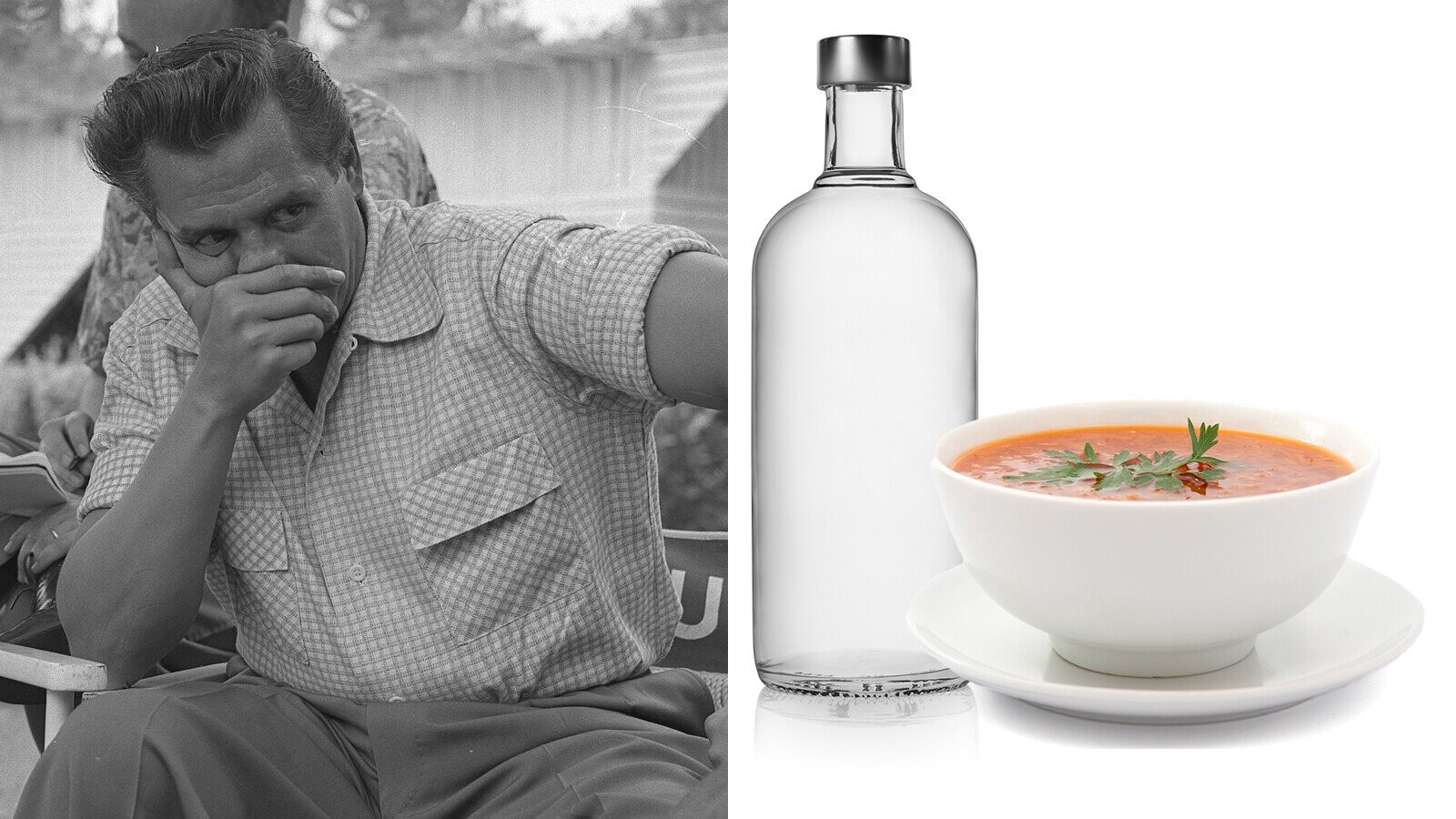
The story has circulated because it is outrageous, memorable, and attached to one of television’s most fascinating pioneers. According to the commonly repeated account, an I Love Lucy crew member remembered Arnaz starting mornings with tomato soup “loaded with vodka.” That detail has been framed as shocking, funny, sad, and very Old Hollywood all at once. It is the kind of anecdote that makes readers stop scrolling and say, “Wait, tomato soup? For breakfast?”
But the real story is not just about a bizarre breakfast. It is about Desi Arnaz himself: Cuban-born entertainer, bandleader, actor, producer, studio executive, television innovator, husband of Lucille Ball, and a man whose brilliance often ran alongside personal chaos. The tomato soup rumor works as a doorway into a much bigger conversation about celebrity myth, workplace pressure, addiction, and the cost of building a television empire before anyone had written the instruction manual.
Who Was Desi Arnaz Beyond the Soup Bowl?
Desi Arnaz was born Desiderio Alberto Arnaz y de Acha III in Santiago de Cuba in 1917. Before American audiences knew him as Ricky Ricardo, he lived through dramatic upheaval. His family fled Cuba after political turmoil in the 1930s, and Arnaz arrived in the United States as a young immigrant who had to rebuild his life from the ground up. That background matters because it helps explain the drive, urgency, and showman’s toughness that later defined him.
Arnaz did not enter Hollywood as a polished studio creation. He came through music, nightclubs, touring, and performance. He became known as a charismatic bandleader and helped popularize Latin rhythms with mainstream American audiences. Long before sitcom fans quoted Ricky’s exasperated lines, Arnaz understood timing, audience energy, and how to command a room without asking permission twice.
Then came Lucille Ball. Their partnership was romantic, professional, combustible, and historic. Together, they built I Love Lucy, one of the most influential shows in American television. On-screen, Lucy and Ricky were domestic comedy magic. Off-screen, Ball and Arnaz were building something much larger than a sitcom: a production model that changed how television was made, filmed, owned, rerun, and sold.
Why the Tomato Soup and Vodka Story Became So Sticky
Search interest around “Desi Arnaz tomato soup vodka” is not only about alcohol. It is about contrast. Audiences remember Arnaz as charming, musical, quick, stylish, and warm. The image of him beginning a workday with a bowl of tomato soup spiked with vodka is jarring because it clashes with the polished black-and-white world of classic television.
That contrast is exactly why the story spreads. Old Hollywood anecdotes often survive because they compress a complicated life into one unforgettable image. For Frank Sinatra, it might be a glass in a nightclub. For Marilyn Monroe, it might be a dressing room mirror. For Desi Arnaz, in this story, it is a breakfast bowl that sounds like a Bloody Mary took a wrong turn and ended up in the soup aisle.
Still, a responsible article should not treat the anecdote as a cute recipe. Morning drinking is not glamorous, and alcohol dependence is not a quirky character trait. Arnaz’s struggles with alcohol have been discussed in biographies, interviews, and reporting about his marriage and later years. The soup story is best understood as part of that larger context: a warning sign wrapped in show-business absurdity.
The Pressure Cooker Behind I Love Lucy
To understand why any destructive habit might take hold, look at the environment Arnaz helped create and survive. I Love Lucy was not just another job. It was a high-stakes experiment. Ball and Arnaz had to convince sponsors, network executives, and skeptical industry insiders that American viewers would accept a sitcom starring a redheaded American woman and her Cuban husband. That was not a small hurdle in early 1950s television.
Arnaz also pushed for production decisions that now seem obvious but were bold at the time. The show was filmed in Hollywood on 35mm film, used a live studio audience, and helped refine a multi-camera sitcom style that later became standard. Those choices preserved the show’s quality and made reruns valuable. In simple terms, Arnaz helped turn television episodes into assets that could live beyond one broadcast night. Somewhere, every streaming platform should send him a thank-you card.
He was also a business strategist. Desilu Productions became a major studio force. The company’s later legacy would include famous television properties and a model of creative ownership that influenced the industry for decades. Arnaz was not merely the guy saying “Lucy, I’m home.” He was negotiating, producing, solving technical problems, and proving that a performer with an accent could also be the smartest executive in the room.
Anecdote Versus Verified Habit: What We Can Honestly Say
The title “Desi Arnaz Ate Tomato Soup Loaded with Vodka for Breakfast Everyday” is powerful because it reads like a confession from a lost gossip column. However, there is an important difference between a repeated anecdote and a fully documented daily routine. The story has been attributed to someone connected to the I Love Lucy production world, but that does not automatically mean every detail happened every single day exactly as retold.
Memory is not a surveillance camera. Crew stories are valuable, but they can be sharpened by time, emotion, humor, and repetition. A shocking detail becomes cleaner each time it is retold. “He sometimes had this alarming breakfast” becomes “He had it every day.” “Loaded with vodka” becomes the headline. The soup bowl becomes a symbol.
So, the most accurate way to discuss the story is this: Desi Arnaz was widely reported to have struggled with alcohol, and one behind-the-scenes anecdote claims he began mornings with vodka-heavy tomato soup. Whether it was literally every day or not, the story reflects the darker side of a man whose public charm and private pressures often collided.
The Human Side of Desi Arnaz’s Alcohol Struggles
Arnaz’s drinking has often been discussed alongside his marriage to Lucille Ball. Their relationship was passionate and productive, but also strained by long work hours, fame, infidelity, and alcohol. They divorced in 1960, yet their bond never disappeared completely. Family members and later writers have described a relationship that remained emotionally significant even after the marriage ended.
That complexity is important. It is easy to flatten famous people into either saints or disasters. Arnaz was neither. He was a gifted entertainer who helped build modern television. He was also a man who made painful choices and suffered real consequences. The tomato soup story should not erase his achievements, but his achievements should not sanitize the damage caused by addiction either.
There is a lesson here for modern readers: talent does not cancel out self-destruction. A person can be visionary and vulnerable, hilarious and hurting, generous and reckless. Arnaz’s life reminds us that success can magnify problems instead of solving them. Fame brings applause, but applause is not medical care, rest, honesty, or peace.
Why Old Hollywood Loved Strange Food Stories
Hollywood history is full of odd eating habits, dramatic diets, studio-controlled meals, cocktail lunches, and tales that sound like they were invented by a bored press agent with a typewriter and a deadline. Food stories are sticky because they make celebrities feel close. We may not know what it is like to run a studio, but we all understand breakfast.
That is why “tomato soup loaded with vodka” lands harder than a vague sentence like “Arnaz drank too much.” It gives the issue a scene. You can picture the bowl. You can smell the tomato. You can imagine the crew watching with concern while the machinery of television production keeps rolling.
It is funny for half a second, then uncomfortable. That emotional whiplash is what makes the anecdote worth discussing. The best celebrity history does not simply say, “Look how wild they were back then.” It asks why the behavior happened, who enabled it, who suffered because of it, and what the public chooses to remember.
Desi Arnaz’s Real Legacy Is Bigger Than the Rumor
If Desi Arnaz were remembered only for a strange breakfast, that would be like remembering the Grand Canyon for having a nice parking lot. The tomato soup story is tiny compared with his actual impact. Arnaz helped prove that sitcoms could be filmed beautifully, performed before live audiences, and rerun profitably. He helped create a business structure that gave performers more control. He helped put an interracial and intercultural marriage at the center of American television during a conservative era.
His influence can be seen in countless sitcoms that followed. The living-room set, the live audience laughter, the rhythm of domestic conflict, the preservation of episodes for syndication, and the idea that television could have long-term economic value all connect back to the world Arnaz helped build.
He also matters as a Cuban-American figure in entertainment history. At a time when Hollywood often limited Latino performers to stereotypes, Arnaz became a household name and a powerful producer. His accent, which some executives considered a liability, became part of his identity and charm. He did not erase where he came from to succeed. He turned it into part of the music.
What the Tomato Soup Story Says About Celebrity Mythmaking
The internet loves a headline that sounds impossible. “Desi Arnaz ate tomato soup loaded with vodka for breakfast” has all the ingredients: famous name, weird food, alcohol, nostalgia, and a hint of scandal. It is practically engineered to make readers click while whispering, “No way.”
But good storytelling requires more than shock. The responsible angle is not “Wasn’t this hilarious?” The better angle is “What does this reveal?” It reveals that the golden age of television was not as tidy as the reruns. It reveals that the people who created comfort entertainment were often under brutal pressure. It reveals that a man can make millions laugh while privately losing control.
That is why this anecdote continues to matter. It is not because anyone needs another bizarre celebrity breakfast fact. It is because the story pulls back the curtain on a beloved era. Behind the laughter, there were deadlines, arguments, illnesses, business risks, and personal habits that could become dangerous.
Experiences and Reflections Related to the Desi Arnaz Breakfast Story
Reading about the Desi Arnaz tomato soup vodka story feels a bit like watching an old sitcom with the laugh track suddenly turned off. At first, the detail is so strange that it almost plays as comedy. Tomato soup for breakfast already sounds like a bold choice, the kind of thing someone makes when the refrigerator contains one can, two regrets, and no eggs. Add vodka to the story, and it becomes pure Hollywood folklore.
But the longer you sit with it, the less funny it becomes. That is the experience many classic TV fans have when they move from watching the polished episodes to reading about the lives behind them. I Love Lucy is warm, bright, and perfectly timed. Lucy’s schemes collapse safely. Ricky gets frustrated, the audience laughs, and the world resets before the credits. Real life did not reset that neatly for Desi Arnaz.
One useful way to approach this topic is as a reminder that nostalgia needs honesty. It is possible to love classic television and still admit that some of its stars were struggling. In fact, that honesty can make the work more impressive. Arnaz was not operating in a calm, modern entertainment workplace with wellness programs, open conversations about addiction, and carefully protected mental health days. He was building a new medium while living inside a celebrity marriage that America watched like a national hobby.
The tomato soup anecdote also changes how some viewers see Ricky Ricardo. On the show, Ricky often functions as the straight man: musical, expressive, exasperated, and lovable. Knowing more about Arnaz the producer adds depth. He was not just reacting to Lucy’s chaos on camera. Off camera, he was managing budgets, defending creative choices, working with technical crews, and trying to make a risky production model succeed. The man behind Ricky had responsibilities that would make most people reach for coffee. The anecdote suggests he may have reached for something far more troubling.
For writers, bloggers, and entertainment fans, the experience of researching this story is a lesson in balance. A headline can be playful, but the article should not be careless. The goal is not to turn Arnaz into a meme with a soup spoon. The goal is to understand why one weird breakfast story still catches attention decades later. It catches attention because it contains comedy, sadness, fame, pressure, and contradiction in a single bowl.
It also reminds readers not to copy the habits of famous people just because those habits sound dramatic. Old Hollywood produced great art, but it also normalized behavior that harmed many performers. The glamorous version is easy to sell. The honest version is more useful.
In the end, the strongest experience connected to this topic is not shock. It is perspective. Desi Arnaz deserves to be remembered as a groundbreaking Cuban-American entertainer and producer who helped shape television. The tomato soup and vodka story belongs in the footnotes of that legacy, not as a punchline, but as a cautionary detail about the human cost that can hide behind historic success.
Conclusion
The story that Desi Arnaz ate tomato soup loaded with vodka for breakfast every day is unforgettable because it is absurd, vivid, and unsettling. It sounds like a joke until it starts looking like a warning. Whether the detail happened daily or became exaggerated through retelling, it fits into a well-documented broader picture of Arnaz as a brilliant but troubled figure whose alcohol struggles affected his health, marriage, and career.
Still, Desi Arnaz should never be reduced to a bowl of soup. His true legacy is enormous. He helped transform sitcom production, strengthened the value of reruns, co-built Desilu, and proved that a Cuban-American performer could become one of the most important business minds in television. The strange breakfast anecdote may bring readers in, but the deeper story is about genius, pressure, addiction, love, ambition, and the complicated humans behind America’s favorite reruns.