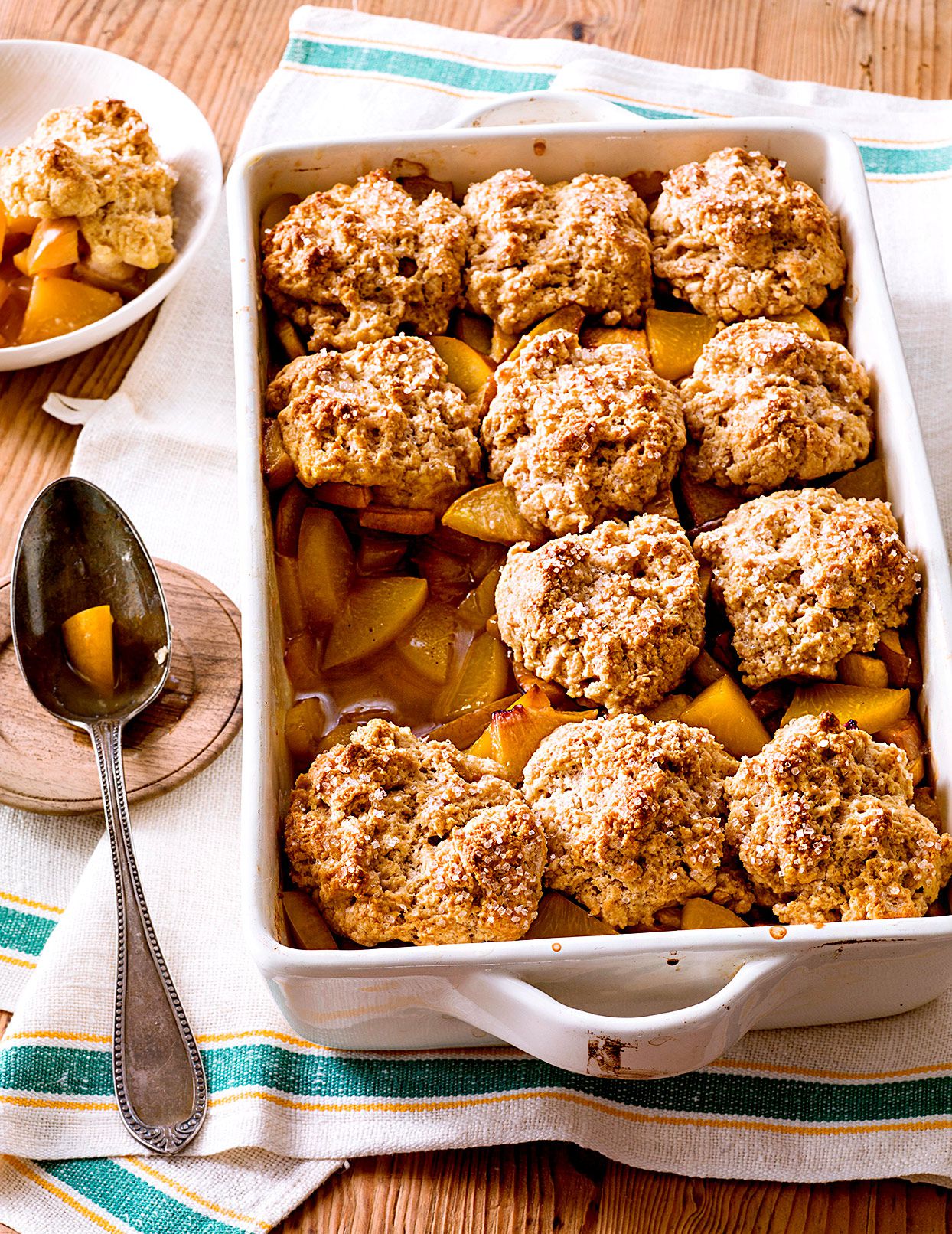
Peach cobbler is the dessert equivalent of a warm hug… if hugs came with bubbling fruit and a golden, buttery top that dares you not to add ice cream. It’s rustic, forgiving, and basically built for “I’m not measuring that with a ruler” energy.
This version is the classic American style: juicy peaches thickened just enough to be spoonable (not soup), topped with tender drop-biscuits that bake up crisp on the edges and soft in the middle. It’s old-fashioned in the best waysimple ingredients, big payoff, and zero need to pretend you’re “just having a small bite.”
What Makes a Peach Cobbler “Classic”?
In the U.S., “classic peach cobbler” usually means baked peaches under a simple toppingoften biscuit-like, sometimes cake-likeserved warm. The goal is contrast: saucy fruit + a buttery top. No fussy crust lattice. No pastry anxiety. Just a cozy pan dessert that welcomes imperfections like a grandma who says, “Honey, that looks perfect,” even when it’s leaning slightly to the left.
Quick Game Plan
- Use ripe-but-firm peaches for flavor and structure.
- Thicken the filling so it turns glossy and spoonable instead of watery.
- Give the fruit a head start so the topping bakes through before the peaches boil over into chaos.
- Bake until deeply goldenpale topping is just a fancy way to say “underdone.”
Ingredients
For the Peach Filling
- 6 to 7 cups peaches (about 3 to 3 1/2 pounds), peeled or unpeeled, sliced or cut into chunks
- 1/2 to 3/4 cup granulated sugar (use less for very sweet peaches, more if they’re shy on flavor)
- 1 tablespoon lemon juice (brightens everything up)
- 2 tablespoons cornstarch (the “not soup” ingredient)
- 1/2 teaspoon ground cinnamon (optional, but very “summer comfort”)
- Pinch of nutmeg (optional, but it’s the secret handshake)
- 1/4 teaspoon kosher salt
- 1 teaspoon vanilla extract (optional)
- 1 to 2 tablespoons bourbon (optional, grown-up peach perfume)
For the Classic Drop-Biscuit Topping
- 2 cups all-purpose flour
- 1/3 cup granulated sugar
- 1 tablespoon baking powder
- 1/2 teaspoon kosher salt
- 10 tablespoons cold unsalted butter, cut into small cubes
- 1 cup buttermilk (or whole milk; buttermilk gives extra tenderness)
- 1 tablespoon coarse sugar (optional, for crunch on top)
- 1/2 teaspoon cinnamon (optional, to sprinkle over the top)
Optional “Make It Extra” Add-Ins
- 1/2 cup brown sugar (swap for part of the granulated sugar for caramel notes)
- 1/2 teaspoon almond extract (a tiny bit goes a long way)
- 1 cup blueberries or raspberries (for a peach-berry cobbler moment)
Equipment
- 9×13-inch baking dish (a deeper one helps prevent bubbly overflow)
- Large mixing bowl
- Pastry cutter or two forks (or your fingertips if you like living dangerously)
- Sheet pan (optional, but smart: catches drips)
Classic Peach Cobbler: Step-by-Step
Step 1: Preheat the oven
Heat the oven to 400°F. Place a rack in the middle. If your baking dish is on the shallow side, set it on a sheet pan to catch any enthusiastic bubbling.
Step 2: Prep the peaches
If you peel peaches, the quickest method is a brief blanch: score an “X” on the bottom, dunk in boiling water for 30–45 seconds, then move to ice water. The skins should slip off easily. But honestly? Leaving the skins on is totally fine for a rustic cobbler (and it saves time).
Step 3: Mix the filling
In a large bowl, toss peaches with sugar, lemon juice, cornstarch, salt, and any optional flavorings (cinnamon, nutmeg, vanilla, bourbon). Let sit for 10 minutes so the peaches start releasing juice and the sugar dissolves.
Step 4: Par-bake the fruit (the not-so-secret trick)
Pour the peach mixture into your 9×13-inch baking dish and bake for 10 minutes. This head start helps the filling begin thickening so it won’t turn watery under the topping.
Step 5: Make the topping
While the peaches par-bake, whisk together flour, sugar, baking powder, and salt in a bowl. Add the cold butter and cut it in until the mixture looks like coarse crumbs with some pea-size bits (those bits = flaky tenderness).
Pour in the buttermilk and stir gently just until a shaggy dough forms. Stop mixing the second it comes together. Overmixing is how biscuits turn into “biscuit-flavored stress.”
Step 6: Top the peaches
Remove the hot peaches from the oven. Drop spoonfuls of dough over the fruit. Aim for mostly covered with some gapssteam needs escape routes. If you want a prettier top, lightly flatten taller mounds so they bake evenly.
Sprinkle with coarse sugar and a pinch of cinnamon if you like sparkle and crunch.
Step 7: Bake, then lower the heat
Bake at 400°F for 15 minutes, then reduce the oven to 375°F and bake 20–25 minutes more, until the topping is a deep golden brown and the filling is bubbling at the edges.
Step 8: Rest (yes, really)
Let the cobbler rest for 15–20 minutes. This is when the filling finishes thickening and goes from “lava” to “spoonable lava.” Also: it prevents mouth burns that make you question your life choices.
How to Know When It’s Done
- Color: The topping should be golden brownnot beige.
- Bubbling: You should see bubbling peach juices around the edges.
- Topping texture: A toothpick in the thickest biscuit portion should come out clean or with a few crumbs.
- Optional thermometer check: The center of the biscuit topping should read about 200°F if you want certainty.
Serving Ideas
The classic move is vanilla ice creambecause hot cobbler + cold ice cream is basically a law of nature. Whipped cream is excellent too, especially if you add a tiny splash of vanilla or bourbon to it.
- Warm cobbler + vanilla ice cream
- Warm cobbler + lightly sweetened whipped cream
- Room-temp cobbler + plain heavy cream (old-school and surprisingly elegant)
Peach Options: Fresh, Frozen, or Canned
Fresh peaches
Best flavor when they’re in season. Choose peaches that smell fragrant and give slightly when pressed, but aren’t so soft they feel like they’ve accepted defeat.
Frozen peaches
Totally workable. Don’t thaw completelyfrozen peaches release a lot of liquid as they bake. Increase cornstarch by 1 extra tablespoon if your frozen fruit seems especially juicy.
Canned peaches
Great in winter or when you need cobbler on a schedule. Drain well (especially if packed in syrup), then proceed. Because canned peaches are softer, cut the par-bake step to 5 minutes so they don’t turn to mush.
Common Problems (and Fixes)
“My cobbler is watery.”
Peaches vary wildly. Add enough thickener (cornstarch works well), and don’t skip resting time. Also, underbaking can keep the filling from fully thickening.
“The topping is browned but doughy inside.”
Two usual culprits: the biscuit mounds are too thick, or the oven temp is running hot. Flatten the tallest mounds next time, and bake until the topping is deeply golden. If needed, tent loosely with foil near the end.
“It overflowed all over my oven.”
Cobbler is enthusiastic. Use a deeper dish (or place the dish on a sheet pan). Also make sure you leave a bit of headspacefruit bubbles like it has plans.
Easy Variations (Still Classic at Heart)
1) “Lazy-Day” Batter Cobbler
If you love the old-school version where butter melts in the pan, batter gets poured over it, and peaches go on top (often with a “don’t stir” rule), you can absolutely do that. It bakes up more cake-like than biscuit-topped and is famously fast. Use a 350°F oven and bake until golden and set.
2) Brown Sugar + Spice
Swap half the granulated sugar for brown sugar, and add a pinch of ginger. It tastes like peaches wearing a cozy sweater.
3) Peach + Berry
Add 1 cup blueberries or raspberries. It’s still peach cobblerjust with friends.
Storage and Reheating
- Refrigerate: Cover and store for up to 5 days.
- Reheat (best texture): 350°F for 12–15 minutes until warmed through.
- Microwave: Works in a pinch, but the topping softens.
- Freeze: You can freeze baked cobbler, but the topping won’t be quite as crisp after thawing.
Food Safety Note
Fruit desserts hold heat like tiny delicious volcanoes. Let the cobbler rest before serving, especially for kids. Your taste buds will thank you, and your tongue will stop sending angry emails.
of Real-Life Cobbler Experiences (The Kind You’ve Probably Lived)
Peach cobbler has a funny way of becoming the dessert you didn’t plan to make but somehow ended up making anyway. Maybe you bought peaches that were supposed to be “for snacking,” and then two days later they’re sitting on the counter looking a little too softlike they’re auditioning for a compost pile. Cobbler is the heroic save. You slice, toss with sugar and lemon, and suddenly those almost-too-ripe peaches taste intentional. Like you’re the kind of person who always knew exactly what they were doing. (You do now.)
If you’ve ever taken cobbler to a potluck, you’ve seen the social dynamics play out: someone claims they “don’t really do desserts,” then circles back with a larger spoon. Another person asks if it’s homemade, and you say yes, and then they look at you with newfound respectlike you just fixed their Wi-Fi without touching the router. Cobbler has that effect. It’s not fussy, but it feels generous. A big pan of warm fruit and buttery topping communicates: “I wanted you to be happy today.”
The experience of serving it is half the fun. The first scoop is always a little messy because the filling is bubbling and the topping is tender, and gravity is very excited to participate. The second scoop is prettierbecause the cobbler has had a minute to settle and thicken. That’s when you realize resting isn’t just a suggestion, it’s a strategy. It’s also when the kitchen smells like peaches and butter in a way that makes people wander in “just to check something” and then stand there waiting for a bowl to appear.
Cobbler is also one of those recipes that quietly adapts to your life. In summer, you may go full fresh-peach mode, maybe even with peaches from a farmers market that perfume your whole car on the drive home. In winter, canned peaches show up like a reliable friend who’s not flashy but always comes through. Frozen peaches? They’re the weekday cobbler solution: less prep, more dessert. And each version brings its own personalityfresh peaches feel bright and floral, canned peaches are mellow and cozy, and frozen peaches are surprisingly bold if you thicken the juices right.
The topping has its own “experience curve,” too. The first time, you might overmix and wonder why your biscuits came out a bit tough. The next time, you stir just until it comes together, and suddenly the topping is tender and goldenlike you unlocked a level-up. That’s the charm of peach cobbler: it teaches you little kitchen truths (don’t skip thickener, don’t underbake, let it rest) without ever being intimidating. It’s comfort food that practically wants you to succeed.
Conclusion
Classic peach cobbler is proof you don’t need fancy techniques to make a dessert people remember. Get good peaches (or decent peaches with the right plan), thicken the filling, bake until golden, and let it rest. Do thatand your only “problem” will be how quickly the pan empties.