Social media has given humanity many gifts: long-lost friends, oddly specific cooking hacks, dogs wearing sunglasses, and the ability to watch a stranger reorganize a pantry at 2 a.m. with the intensity of a moon landing. But it has also given us something far more chaotic: the overedited selfie, the “casual” luxury flex, the fake vacation backdrop, the suspiciously rubbery waistline, and the influencer post so polished it squeaks.
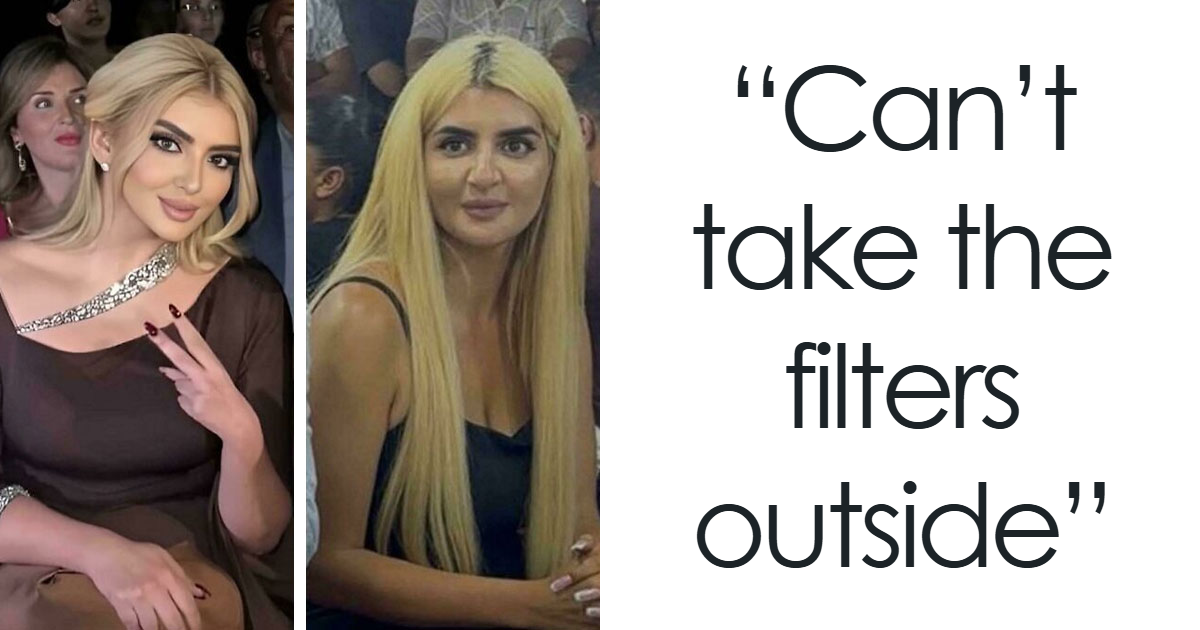
The phrase “Can’t take the filters outside” captures a very modern problem. Online, a person can smooth skin, reshape a jawline, shrink a waist, brighten eyes, lengthen legs, swap skies, blur wrinkles, and add the glow of a Renaissance cherub who drinks 12 green juices a day. Offline? Fluorescent lighting, security cameras, other people’s tagged photos, and basic geometry are waiting like unpaid interns ready to expose the truth.
This article looks at why people fake it on social media, why audiences are getting better at spotting the tricks, and what those 49 brutal “caught in the act” moments reveal about our relationship with beauty, status, attention, and authenticity. We are not here to bully anyone’s natural appearance. We are here to gently laugh at warped doorframes, fake private jets, suspiciously glossy “candid” moments, and the digital confidence that disappears the second real life enters the chat.
Why Social Media Makes “Fake It Till You Make It” So Tempting
Social media rewards presentation. That does not automatically make it bad, but it does make it highly theatrical. Platforms are built around visibility, reaction, and repetition. A photo that looks dramatic, expensive, glamorous, or physically “perfect” often travels farther than an ordinary moment. That creates a quiet pressure: if everyone else seems flawless, maybe your normal face, kitchen, vacation, outfit, relationship, or lunch looks too plain.
For influencers, the pressure can be even higher. A polished image is not just a personal choice; it can be part of a business strategy. The more aspirational the lifestyle appears, the easier it may be to sell beauty products, supplements, clothes, travel packages, fitness programs, or “main character energy” in a bottle. That is why transparency matters. In the United States, the Federal Trade Commission expects creators to clearly disclose material relationships with brands. In plain English: if money, free products, discounts, or business ties are involved, followers should not have to solve a mystery novel to figure it out.
But faking it is not limited to paid influencers. Everyday users can feel the same pressure. A regular person may edit a picture because they feel insecure, want approval, or simply enjoy looking more polished. The trouble begins when editing stops being playful and starts becoming a second identityone that cannot survive tagged photos, group pictures, video calls, or being seen at the grocery store buying cereal in sweatpants.
The Most Common Social Media Fakes People Spot Immediately
Not all social media fakery looks the same. Some of it is subtle. Some of it walks into the room wearing a neon sign that says, “I have never met a real shadow.” Here are the most common categories behind those viral “fooled no one” moments.
1. The Beauty Filter That Went Too Far
Beauty filters can be fun. A soft glow here, a little color correction there, and suddenly everyone looks like they slept eight hours and remembered to drink water. But extreme filters often erase the details that make a face look human. Skin becomes poreless plastic. Eyes grow cartoonishly large. Noses narrow into pencil strokes. Teeth glow like emergency exit signs. The person may still be recognizable, but only in the way a wax museum figure is recognizable after a long summer.
The awkward part is that filters do not always behave consistently. They can glitch in videos, slip when a hand crosses the face, or fail under certain lighting. That is how viewers spot the difference between a polished image and a digital mask. When the face changes shape mid-sentence, the internet notices.
2. The Warped Background Giveaway
One of the oldest editing fails is also one of the funniest: the background that bends around the body. A suspiciously tiny waist may look convincing for two seconds, until you notice the doorframe curving like a pool noodle. Gym mirrors become liquid. Bathroom tiles develop emotional problems. Stairs slant. Car windows ripple. Brick walls suddenly forget how bricks work.
This is why many overedited images are exposed not by the body itself but by the environment. Real walls are straight. Real cabinets do not lean in sympathy toward someone’s edited hip. Real sidewalks do not melt because a thigh gap needed extra drama.
3. Fake Luxury Lifestyles
Another classic category is the pretend luxury flex. Think rented sports cars, staged private jet cabins, borrowed shopping bags, hotel lobbies framed as personal mansions, or “casual” watch photos where the wrist is angled harder than a real estate agent’s wide-angle lens.
Luxury content performs well because it sells fantasy. But audiences have become savvier. They notice when the “private jet” set appears in multiple creators’ feeds. They notice when a “new car” still has dealership tags. They notice when a designer bag changes size, color, or existence from one photo to the next. Trying to fake wealth online can backfire fast because the internet has one hobby above all others: noticing things.
4. Fake Travel and Vacation Photos
Nothing says “living my best life” like pretending to be somewhere you are absolutely not. Some people use old vacation pictures as if they are current. Others pose in front of murals, screens, or themed restaurants to imply they are abroad. A few get more ambitious and digitally place themselves in front of famous landmarks, apparently forgetting that lighting, shadows, scale, and weather all need to agree with the lie.
Viewers catch these details quickly. The Eiffel Tower should not look sharper than the person standing in front of it. A beach sunset should not cast studio lighting on someone’s face. Snowy mountains should not appear behind a person dressed for humid weather unless the vacation destination is “Photoshop National Park.”
5. Fitness Transformations With Creative Math
Fitness content can be motivating, but it can also become a playground for exaggeration. Some transformations are real, earned, and inspiring. Others rely on lighting, posture, dehydration, pump timing, editing, different clothing, and the magical power of turning slightly to the side. A “30-day transformation” may involve two photos taken ten minutes apart: one relaxed, one flexed, one under kitchen lighting, one under gym lighting that could make a potato look shredded.
The issue is not posing. Everyone poses. The issue is presenting ordinary tricks as proof of a miracle product, extreme diet, or secret program. That turns harmless image management into misleading marketing, especially when followers compare their real bodies to someone else’s staged highlight reel.
6. Relationship Perfection Theater
Some social media fakes are not about faces or money but relationships. The couple that posts long captions about “our perfect love” may be in the middle of a silent car ride so cold it needs a weather advisory. The family that looks coordinated, peaceful, and joyful may have spent 40 minutes arguing over matching sweaters. The friendship group laughing on camera may be held together by one group chat and three unresolved grudges.
Again, the problem is not sharing happy moments. The problem is when the performance becomes a replacement for reality. People can become so committed to proving they are happy that they forget to actually be happy.
Why Audiences Are Getting Better at Detecting Fake Posts
Years ago, a heavily edited photo might pass with little questioning. Today, viewers have seen too many digital tricks to be easily fooled. They know the signs: blurry edges, mismatched shadows, repeated textures, strange fingers, inconsistent reflections, impossible proportions, and captions that are doing the emotional labor of a full public relations team.
Short-form video has also made fakery harder to maintain. A still photo can be edited carefully, but video introduces motion. Filters may slip. AI edits may create strange artifacts. A background may shimmer. A face may change shape between frames. Social media users have become informal forensic analysts, pausing videos and zooming in with the confidence of detectives examining a crime scene.
Platforms have also started paying more attention to manipulated content, especially AI-generated media. Labels for AI images, synthetic content, and edited media are becoming part of the online environment. These systems are not perfect, but they reflect a larger cultural shift: people want to know what they are looking at.
The Body Image Problem Behind the Joke
It is easy to laugh at a hilariously bad edit. And honestly, when a bathroom sink bends around a fake waistline, laughter is a reasonable human response. But there is a deeper issue underneath the comedy. Beauty filters and edited images can shape what people believe normal bodies and faces should look like.
Health and psychology experts have repeatedly warned that constant exposure to idealized images can affect self-esteem, body satisfaction, and mental health, especially for teens and young adults. When every face appears poreless and every body looks sculpted, the average person may start judging themselves against something that never existed in the first place.
This is why the “Instagram vs. reality” conversation matters. It reminds people that lighting, angles, editing, filters, posing, and money can all create illusions. The perfect face may be a filter. The perfect body may be a pose. The perfect home may be one clean corner surrounded by laundry just outside the frame. The perfect life may be a caption written during a meltdown.
Where Fake Posts Cross the Line
There is a difference between harmless polish and deception. Editing a photo because you like the look is one thing. Selling a skincare product while secretly using heavy filters is another. Posting a flattering travel picture is normal. Pretending a rented set is your everyday lifestyle while selling a wealth course is not exactly a triumph of honesty.
Fake posts become harmful when they manipulate trust. That includes hiding sponsorships, exaggerating results, creating unrealistic body standards, staging luxury to sell questionable advice, or pretending a product caused an outcome that was actually created by editing. Followers are not wrong for expecting basic honesty. If someone is selling confidence, beauty, success, health, or transformation, the audience deserves to know what is real and what is digital glitter.
49 Brutal Lessons From People Who Fooled No One
The viral appeal of “49 brutal times” posts is not just that they expose awkward edits. It is that they reveal patterns. After enough examples, the lesson becomes clear: the internet may reward fakery for a moment, but it also preserves evidence forever. Screenshots are the fossils of bad decisions.
One person edits their waist, and the curtain bends. Another smooths their face until their nose nearly vanishes. Someone claims to be on a luxury trip, but the reflection shows a local café. A creator posts a “natural beauty” selfie with a filter name accidentally visible. A gym influencer shares a transformation where the floor tiles appear to be training for the Olympics. A seller promotes hair growth products while wearing extensions. A lifestyle guru preaches minimalist calm from a room that looks serene only because the mess has been shoved into one heroic corner.
These examples are funny because they are relatable in an exaggerated way. Most people have tried to look better in a photo. Most people choose flattering lighting. Most people delete pictures where they blink, sneeze, or look like they just received bad financial news. The difference is scale. A little curation is normal. A completely fictional version of yourself is exhausting.
How to Enjoy Social Media Without Falling for the Illusion
The healthiest way to use social media is not to assume everything is fake. That would make the internet bleak and joyless, like a salad with no dressing. Instead, assume that most posts are selected, styled, and framed. They may be real, but they are rarely the whole story.
Before comparing yourself to someone online, ask a few questions. Is this a paid post? Is there a filter? Is the lighting unusually perfect? Is the person selling something? Is the image cropped to hide context? Would this moment look the same in a random tagged photo taken by someone’s aunt? That last question is powerful. Aunt photography fears no influencer.
It also helps to diversify your feed. Follow people who show process, not just perfection. Look for creators who disclose sponsorships clearly, talk honestly about editing, and do not make you feel like a failed houseplant. Social media should inspire you, entertain you, teach you, or connect you. It should not leave you feeling like your face, body, home, bank account, and breakfast are all underperforming.
Why Authenticity Is Becoming the Real Flex
For years, the biggest online flex was looking perfect. Now, the stronger flex may be looking believable. Audiences are tired of being tricked. They appreciate creators who show behind-the-scenes moments, messy kitchens, normal skin texture, realistic budgets, imperfect progress, and actual personality.
Authenticity does not mean posting every private struggle or abandoning aesthetics. A beautiful photo can still be real. A styled room can still be honest. A good outfit can still be fun. The key is not pretending that a curated moment represents every second of life. When creators admit what is staged, sponsored, filtered, or edited, they build trust. And trust lasts longer than a smoothing filter.
Extra Experiences: What “Can’t Take The Filters Outside” Teaches Us in Real Life
Anyone who has spent enough time online has experienced the strange gap between digital confidence and real-life presence. Maybe you have met someone whose profile looked like a luxury magazine spread, only to discover they are a normal person with normal pores, normal lighting, and a normal tendency to misplace their keys. Maybe you have seen a restaurant that looked dreamy on Instagram but felt crowded, loud, and approximately the size of a shoebox in person. Maybe you have ordered a product from a glossy influencer video and received something that looked like it had been assembled during a power outage.
One of the most common experiences is the “tagged photo reality check.” A person posts a highly edited selfie, then a friend uploads a group picture from the same event. Suddenly, the online version and the real-life version are standing next to each other like contestants in a before-and-after challenge nobody agreed to enter. This does not mean the person looks bad. Usually, they look perfectly fine. What looks strange is the difference. The filter created expectations that real life had no intention of meeting.
Another familiar experience is the fake lifestyle post. Someone shares a carefully framed photo of a laptop, latte, and city view with a caption about “building my empire.” It looks productive and glamorous. But anyone who has actually worked from a café knows the reality: unstable Wi-Fi, one tiny table, a chair designed by someone who hates spines, and the growing fear that you have overstayed your welcome after buying one iced coffee three hours ago. The photo is not necessarily false, but it is incomplete. It sells the vibe, not the back pain.
Then there is the vacation illusion. Social media makes travel look effortless: flowing dresses, empty beaches, golden sunsets, and zero mosquitoes. Real travel includes delayed flights, sweaty walks, confusing parking rules, sunscreen in your eyes, and at least one meal chosen purely because everyone was too hungry to keep looking. The best memories often happen outside the perfect photo. They are not always polished, but they are real.
The same applies to fitness and beauty content. A person may post a flawless gym mirror selfie, but no one sees the 37 attempts, the lighting search, the pump timing, the strategic angle, or the moment they nearly dropped their phone on a dumbbell. A makeup look may appear effortless, but it may have taken two lamps, three products, a ring light, and the patience of a saint. Once you understand the production behind the post, comparison loses some of its power.
The biggest lesson is simple: online images are often performances, not full biographies. A filter can smooth skin, but it cannot create character. A rented car can suggest wealth, but it cannot create wisdom. A caption can announce happiness, but it cannot guarantee peace. The people who seem most impressive online are not always the ones living best offline.
That is why the “Can’t Take The Filters Outside” idea resonates so strongly. Real life has texture. It has bad lighting, awkward angles, weather, tired eyes, chipped nail polish, unexpected bills, and friends who post photos before asking permission. Instead of treating those things as failures, we can treat them as proof that we are not digital products. We are people. And people are more interesting than filters.
Conclusion: The Internet Can Spot a Fake, So Try Being Real
Social media fakery is funny when it fails, but it is also revealing. The overedited selfie, the fake luxury flex, the staged vacation, and the too-perfect transformation all point to the same cultural anxiety: people want to be admired, and many believe they must become more polished, more beautiful, richer, happier, or more successful to deserve attention.
But the backlash against obvious fakery shows that audiences are hungry for something else. They want honesty. They want context. They want creators who can be stylish without being deceptive, aspirational without being fake, and funny enough to admit when the lighting is doing most of the work.
Filters can be entertaining. Editing can be artistic. Curation can be useful. But when the online version of life becomes impossible to carry outside, the illusion starts working against you. The most durable online presence is not the most flawless one. It is the one people can trust when the filter slips.
Note: This article is written as original, publication-ready content based on widely reported social media trends, digital literacy guidance, influencer disclosure principles, and mental health research. It avoids identifying private individuals and focuses on the broader cultural pattern rather than personal ridicule.