Note: This article is based on real information about the historic Beauty and the Beast-inspired “Tale as Old as Time” afternoon tea experience at Town House at The Kensington in London. Availability, menus, and pricing can change, so readers should check the venue before booking.
Some places serve afternoon tea. Others politely hand you a tiny sandwich and hope you behave. Then there are rare, theatrical experiences that make you feel as though a talking teapot might waltz past your table and offer a refill with excellent posture. London’s Beauty and the Beast-inspired tea room experience belonged firmly in that last category.
Known as the “Tale as Old as Time” afternoon tea, this enchanting event took place at Town House at The Kensington, a luxury hotel restaurant in South Kensington. It was not an official castle, no one was transformed into furniture, and your waiter probably did not sing in French-accented harmony. Still, the experience captured the spirit of Beauty and the Beast with playful pastries, storybook presentation, elegant surroundings, and the kind of table setting that practically begged to be photographed before anyone touched the mousse.
For travelers, Disney fans, afternoon tea lovers, and anyone who has ever wanted to say “Be Our Guest” without immediately being asked to do dishes, the concept was irresistible. It blended one of Britain’s most beloved dining rituals with one of the most recognizable fairy-tale worlds in pop culture. The result was part dessert course, part theater, and part nostalgia machine.
A Fairytale Afternoon Tea in South Kensington
The Beauty and the Beast tea room experience was hosted at Town House at The Kensington, located on Queen’s Gate in South Kensington. This area is already a dream for visitors because it sits near major cultural attractions such as the Victoria and Albert Museum, the Natural History Museum, and the Science Museum. In other words, you could look at dinosaurs, admire couture, and then eat a dessert inspired by a magical rose. That is what experts call a well-balanced itinerary.
Town House is known for polished hospitality and themed afternoon teas. Instead of simply placing pastries on a tiered stand and calling it a day, the restaurant has built a reputation for turning tea into a story. The Beauty and the Beast-inspired menu was one of its most talked-about creations because it did not merely borrow a name. It leaned into the world of the tale: enchanted household objects, romantic castle imagery, dramatic desserts, and whimsical references to the film’s most memorable moments.
The setting mattered, too. A themed tea can fall flat if the room feels like a conference lobby wearing a paper crown. At The Kensington, the atmosphere was refined and cozy, with the kind of elegant hotel dining room that makes even a simple cup of Earl Grey feel like it has a trust fund. Plush seating, warm lighting, polished service, and the South Kensington location created a sophisticated backdrop for a menu that was intentionally playful.
What Made the Beauty and the Beast Tea Room So Special?
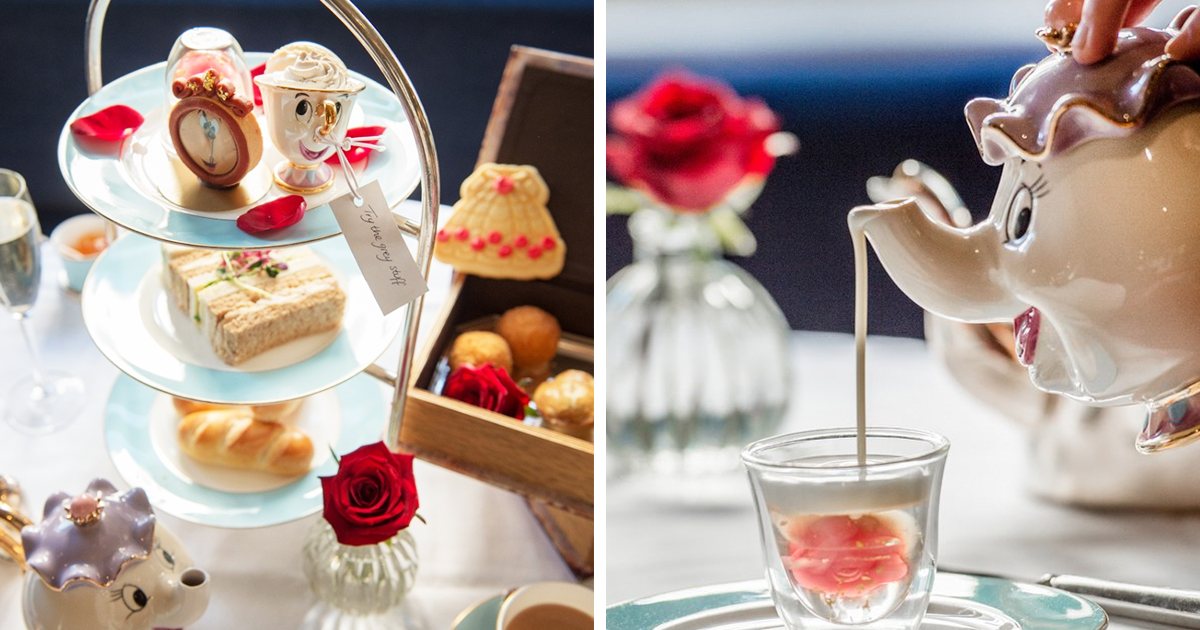
The magic of this afternoon tea was in the details. Guests were not just served sweets; they were invited into a miniature edible performance. The experience included nods to beloved characters such as Mrs. Potts, Chip, Lumiere, and Cogsworth. The table presentation brought the “Be Our Guest” mood to life, making the meal feel like a delicious stage set.
One of the most memorable items was the famous “Try the Grey Stuff” dessert, a playful reference to the song from Beauty and the Beast. In this version, the grey stuff appeared as a delicate white chocolate mousse. Thankfully, unlike many things recommended in musical numbers by enchanted cutlery, it actually sounded safe to eat.
Another standout was a vanilla and gold jelly with a suspended rose petal, inspired by the enchanted rose at the heart of the story. This was the kind of dessert that made guests pause before eating it, partly because it looked beautiful and partly because no one wanted to be the person who ruined the symbolism with a spoon too quickly.
The menu also included imaginative bites such as a spiced snowball macaron and a chocolate clock tart inspired by Cogsworth. Savory courses referenced the extravagant feast energy of “Be Our Guest,” with items such as beef ragu and other refined bites designed to balance the sweetness. It was a clever reminder that afternoon tea is not only about cake. It is also about pretending tiny sandwiches count as lunch, which they absolutely do if served on fine china.
The Menu: Where Storytelling Met Pastry
Sweet Treats With Character
The sweet side of the Beauty and the Beast afternoon tea did much of the storytelling. Each dessert had a visual or thematic role. The enchanted rose jelly referenced the Beast’s ticking curse. The chocolate clock nodded to Cogsworth. The grey stuff mousse gave fans a direct connection to the film’s famous banquet scene. The snowball macaron recalled the wintry romance and playful scenes associated with Belle and the Beast.
This is what makes themed dining work: the food must be good, but it also has to reward attention. A regular pastry can taste wonderful, but a pastry that looks like a story clue gives guests another reason to smile. Every item becomes a conversation starter. You do not simply say, “This mousse is nice.” You say, “I am eating the grey stuff, and frankly Lumiere had a point.”
Savory Bites for Balance
A successful afternoon tea needs contrast. Too many sweets in a row can make even the most devoted dessert lover begin to see sparkles. The savory course helped ground the experience with richer flavors and more traditional tea-room structure. This is important because afternoon tea usually follows a familiar rhythm: savory sandwiches or bites, scones, and pastries. Town House kept that structure but dressed it in theatrical costume.
Items such as beef ragu, cheese soufflé-inspired bites, and other savory pieces gave the menu more depth. They also connected to the abundance and flair of the “Be Our Guest” feast. Instead of a standard cucumber sandwich quietly minding its own business, the savory selection helped build the feeling of a castle banquet scaled down for polite human consumption.
Tea, Champagne, and the Ritual of Indulgence
Like any proper London afternoon tea, the experience included a selection of teas. Guests could also choose versions with Champagne, turning the outing into a celebration. The tea itself was not just a beverage but part of the ritual: poured slowly, sipped between courses, and used as a socially acceptable reason to spend two hours eating beautifully decorated carbohydrates.
Afternoon tea has long been associated with elegance, conversation, and a pause in the day. The Beauty and the Beast version amplified that pause into a full experience. It was not fast food. It was slow, decorative, slightly dramatic, and designed to make guests enjoy the moment.
Why London Is Perfect for a Fairytale Tea Experience
London and afternoon tea are already a powerful pair. Add a fairytale theme, and the concept practically markets itself. The city has a deep tradition of hotel teas, from classic luxury settings to modern, playful interpretations. Visitors often seek afternoon tea because it feels distinctly British, but today’s best versions do more than repeat tradition. They remix it.
The Beauty and the Beast tea room experience worked because it respected the structure of afternoon tea while giving it a fresh personality. It kept the elegance, the tiered presentation, the dainty portions, and the sense of occasion. Then it added nostalgia, character references, and visual surprise. That combination appealed to both traditional tea fans and younger visitors looking for something more memorable than a standard sightseeing break.
South Kensington also helped. The neighborhood is graceful, museum-rich, and visitor-friendly. A themed tea at The Kensington could easily fit into a day of cultural exploring. Guests might visit the V&A in the morning, wander past the grand architecture of Queen’s Gate, and then settle into Town House for an afternoon that felt like stepping into a softly lit storybook.
Is the Beauty and the Beast Tea Room Still Available?
Here is the important part for readers planning a trip: the original “Tale as Old as Time” Beauty and the Beast afternoon tea was a past experience and has been replaced by newer themed afternoon teas at Town House at The Kensington. The venue has continued to develop creative afternoon tea concepts, often connected to art, fashion, London landmarks, or nearby cultural exhibitions.
That does not make the Beauty and the Beast tea any less real or less beloved. In fact, its limited availability helped fuel its reputation. Guests who attended shared photos, reviews, and excited descriptions of the Mrs. Potts-style teapots, Chip-inspired cups, rose-themed desserts, and whimsical pastries. The experience became one of those London dining events people remembered long after the last crumb disappeared.
For anyone hoping to book a similar experience today, the best approach is to check Town House at The Kensington’s current afternoon tea offerings. The exact Beauty and the Beast menu may no longer be served, but the venue’s theatrical approach to afternoon tea remains part of its identity. London also continues to offer many themed teas across hotels, restaurants, and theater-adjacent venues.
Who Would Love This Kind of Tea Experience?
A Beauty and the Beast-inspired tea room is ideal for several kinds of guests. Disney fans are the obvious audience, especially those who grew up with Belle, the Beast, and a dining room full of singing plates. But the experience also appeals to travelers who enjoy immersive dining, couples looking for a romantic afternoon, families celebrating a special occasion, and friends who want an outing with more sparkle than a standard brunch.
It is also a strong choice for people who enjoy food presentation. The menu was designed for visual delight as much as flavor. Each plate had a “look at this!” quality. In the age of Instagram, that matters. But even before social media, humans enjoyed pretty food. We simply used to describe it dramatically to our friends instead of making it pose near a window.
For parents, the theme offered a family-friendly luxury experience without feeling too childish. For adults, it delivered nostalgia without sacrificing elegance. That balance is difficult to achieve. Too much theme can feel like a birthday party at a shopping mall. Too little theme can feel like someone placed one rose on a table and expected applause. Town House found the sweet spot: refined, whimsical, and just theatrical enough.
How to Plan a Similar Fairytale Afternoon in London
Even if the original Beauty and the Beast tea is no longer available, travelers can still design a magical London afternoon around the same spirit. Start in South Kensington, where museums and elegant streets create a naturally storybook mood. Visit the Victoria and Albert Museum for fashion, design, and decorative arts. Walk through the neighborhood and admire the townhouses, garden squares, and grand facades. Then book a themed afternoon tea at a hotel known for creative menus.
When choosing a tea, look for a few key features. First, check whether the menu has a clear concept rather than a vague label. A good themed tea should connect its pastries, savory bites, presentation, and atmosphere. Second, confirm dietary options in advance. Many luxury hotels can accommodate vegetarian, gluten-free, or other needs, but they usually appreciate notice. Third, book early. The most popular themed teas can fill quickly, especially on weekends and during school holidays.
Dress codes vary, but smart casual is usually a safe choice. You do not need a ball gown, although Belle would support the ambition. Comfortable but polished clothing works well. Afternoon tea is relaxed, but it is still a special setting. Think “I might meet a duchess” rather than “I just assembled furniture for four hours.”
Why Themed Afternoon Tea Works So Well for SEO and Travel Content
From a content perspective, the Beauty and the Beast tea room is a dream topic because it combines travel, food, nostalgia, luxury hospitality, and pop culture. Searchers might look for “Beauty and the Beast tea room London,” “Beauty and the Beast afternoon tea,” “themed afternoon tea London,” “fairytale tea room,” or “best afternoon tea in Kensington.” These related keywords naturally fit into the story without forcing awkward repetition.
The topic also has strong emotional appeal. People are not only searching for calories and opening hours. They are searching for a feeling: wonder, romance, childhood memory, and the thrill of discovering something special in a famous city. That makes the article more engaging than a plain listing. It allows readers to imagine the experience before they ever book a table.
Good SEO writing should answer practical questions while keeping the reader entertained. Is the tea real? Where was it? What was served? Is it still available? Who would enjoy it? What can travelers book instead? This article addresses those questions while preserving the charm that made the experience famous in the first place.
Extra Experience Guide: What It Feels Like to Be Their Guest
Imagine arriving in South Kensington on a cool London afternoon, the kind where the sky looks undecided and your umbrella is emotionally preparing for battle. You step off the street into The Kensington and immediately feel the pace change. Outside, London buses sigh at traffic lights. Inside, everything softens: warm lighting, polished floors, gentle service, and that lovely hotel hush that makes people instinctively lower their voices, as though scones require confidentiality.
The first pleasure is the table. A themed afternoon tea works best when the reveal begins before the food arrives, and the Beauty and the Beast-inspired experience understood that perfectly. The references to Mrs. Potts and Chip created an instant connection to the film. Even guests who planned to act maturely probably felt their inner child sprinting around the room wearing a cape.
Then came the slow parade of courses. Savory bites arrived first, giving the experience structure and preventing the meal from becoming a sugar avalanche. The portions were small, but that is the secret of afternoon tea: everything looks delicate until you realize you have eaten twelve separate things and are now negotiating with the final pastry like it is a mountain summit.
The sweets delivered the strongest sense of fantasy. The rose jelly was more than a dessert; it was a centerpiece. Clear, elegant, and symbolic, it turned a familiar story detail into something edible. The chocolate clock brought humor and recognition. The grey stuff mousse gave guests the joy of tasting a line they already knew by heart. These items made the tea feel interactive without needing costumes, scripts, or anyone shouting, “Audience participation!” which is always a risky phrase.
The experience also encouraged lingering. This was not a meal to rush between attractions. It was a pause, a reward, and a little pocket of theater in the middle of a travel day. Guests could sip tea, compare favorite desserts, take photos, and enjoy the rare luxury of doing nothing except eating tiny beautiful things while seated in a lovely room. That is not laziness. That is culture.
For couples, the fairytale theme offered romance without being overly serious. For families, it created shared excitement across generations. For friends, it became a perfect celebration: birthdays, reunions, girls’ trips, or simply the noble achievement of surviving the week. And for solo travelers, it could be a charming act of self-indulgence. After all, Belle enjoyed books and independence; she would absolutely support taking yourself to tea.
The lasting appeal of the Beauty and the Beast tea room comes from how completely it understood its audience. Fans did not want a museum exhibit. They wanted to taste the story. They wanted elegance with a wink. They wanted a teapot that felt like a character, a dessert that carried a memory, and an afternoon that made London feel a little more magical than it already is.
That is the real reason people still search for this experience. It was not only about food. It was about stepping briefly into a beloved world and discovering that, in London, even afternoon tea can have a plot twist.
Conclusion: A Tale Worth Remembering
The Beauty and the Beast tea room in London was one of those rare themed dining experiences that managed to be charming, elegant, and genuinely memorable. Hosted at Town House at The Kensington, the “Tale as Old as Time” afternoon tea transformed a classic British ritual into a fairytale feast, complete with character-inspired presentation, imaginative desserts, refined savory bites, and a strong dose of nostalgia.
Although the original Beauty and the Beast afternoon tea is no longer the current offering, its legacy lives on in the way people talk about themed tea in London. It showed that afternoon tea can be more than sandwiches and scones. It can be storytelling. It can be theater. It can be a reason to plan an entire afternoon around one very pretty pot of tea.
So, would you want to be their guest? Absolutely. Just remember to book early, check the current menu, bring a camera, and never underestimate a dessert called “the grey stuff.” Apparently, it really can be delicious.