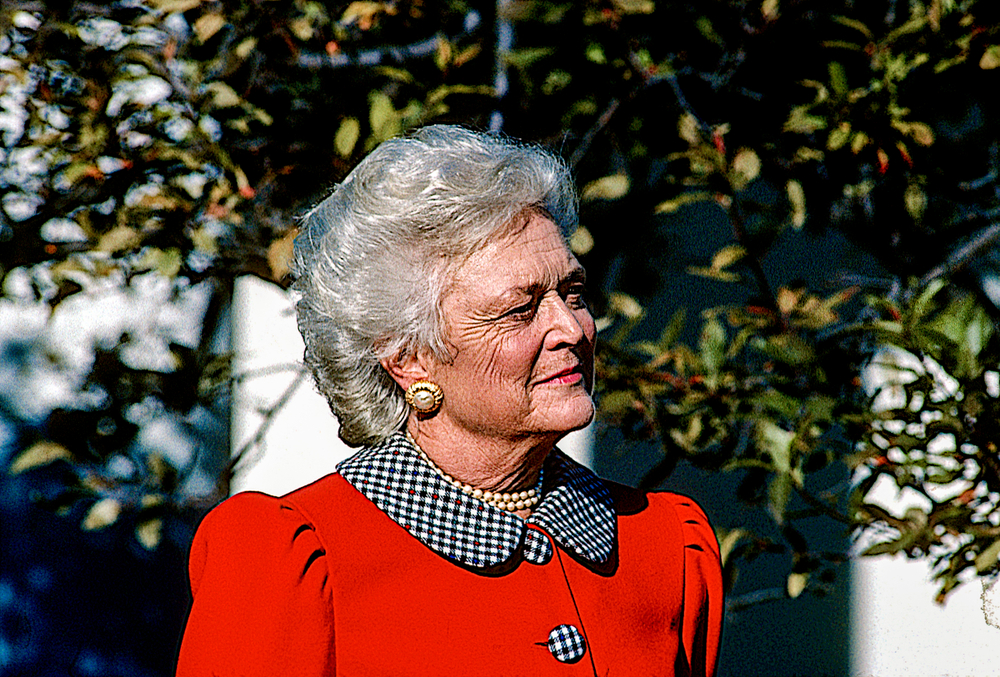
Barbara Bush was never a physician, nurse, hospice director, or health policy professor. She did not wear a white coat, write prescriptions, or show up on rounds with a clipboard and a no-nonsense expressionalthough, let’s be honest, she probably could have managed a hospital wing with one raised eyebrow. Yet in the final chapter of her life, the former First Lady did something quietly powerful: she helped millions of Americans talk about palliative care, comfort care, hospice, and death with a little less fear.
In April 2018, at age 92, Barbara Bush chose to stop pursuing additional aggressive medical treatment and focus on comfort care. She had been living with serious health problems, including chronic obstructive pulmonary disease and congestive heart failure. Her family’s public announcement was brief, dignified, and emotionally direct. It also became one of the most important national teachable moments about end-of-life care in recent memory.
That is why the phrase “Barbara Bush: the First Lady of palliative care” still resonates. It is not an official title. It is a tribute to the way her final decision turned a private medical choice into a public conversation about dignity, autonomy, family, comfort, and what it means to live well even when cure is no longer the goal.
Who Was Barbara Bush?
Barbara Pierce Bush was born on June 8, 1925, in New York and became one of the most recognizable women in American public life. She was the wife of President George H. W. Bush, the 41st president of the United States, and the mother of President George W. Bush, the 43rd president. Alongside Abigail Adams, she holds a rare place in American history as both the wife and mother of U.S. presidents.
But Barbara Bush’s legacy cannot be squeezed into a family tree, no matter how presidential that tree may be. As Second Lady and later First Lady from 1989 to 1993, she championed literacy, especially family literacy. She launched the Barbara Bush Foundation for Family Literacy, visited schools and libraries, promoted adult reading programs, and treated literacy not as a nice little hobby but as a national issue tied to opportunity, dignity, and independence.
Her public persona was famously direct. She had pearls, white hair, and a grandmotherly warmth, but she was not fragile porcelain. She was witty, candid, and allergic to nonsense. That combinationkindness with a spinemay be one reason her final health decision carried so much weight. When Barbara Bush chose comfort care, many Americans heard not surrender, but strength.
What Happened in Barbara Bush’s Final Days?
In the days before her death on April 17, 2018, Barbara Bush’s family announced that she would not seek additional medical treatment and would instead focus on comfort care. She died at home in Houston, surrounded by family. The news moved quickly through national media because she was a former First Lady, but the deeper reason it struck people was simpler: almost every family eventually faces a version of this decision.
Should a loved one return to the hospital again? Is another procedure worth the burden? Are treatments improving life or only extending suffering? When does “doing everything” begin to mean doing everything that brings comfort, peace, and presence rather than everything technically possible?
Barbara Bush’s choice gave the country a real-life example of a difficult but deeply human question. It also challenged a common misunderstanding: that choosing comfort care means giving up. In reality, palliative care and comfort-focused care can be active, thoughtful, medically supported approaches to serious illness.
What Is Palliative Care?
Palliative care is specialized medical care for people living with serious illness. Its goal is to improve quality of life by easing symptoms, reducing stress, supporting families, and helping patients make decisions that match their values. It can address pain, shortness of breath, nausea, anxiety, fatigue, sleep trouble, appetite changes, and emotional distress.
One of the biggest myths about palliative care is that it is only for the final days of life. That is not true. Palliative care can begin at any stage of a serious illness and can be provided alongside treatments meant to cure or control disease. A person receiving chemotherapy, heart failure treatment, kidney disease care, or lung disease management may also receive palliative care to feel better and function better.
Think of palliative care as an extra layer of support. The regular medical team may focus on treating the disease. The palliative care team focuses on the person living with the disease. That distinction matters. The patient is not a chart, a diagnosis code, or a dramatic hospital bracelet. The patient is a whole human being with fears, hopes, routines, relationships, and unfinished conversations.
Palliative Care vs. Hospice: What Is the Difference?
Hospice care is a specific type of palliative care for people who are approaching the end of life and are no longer seeking curative treatment for the terminal illness. In the United States, Medicare hospice coverage generally applies when a physician certifies that a patient is expected to have six months or less to live if the illness follows its usual course.
Palliative care is broader. It can be used earlier and does not require a patient to stop disease-directed treatment. Hospice usually begins when comfort becomes the primary goal and curative treatment is no longer being pursued. Both hospice and palliative care focus on comfort, dignity, symptom relief, and support for the family.
Barbara Bush’s family used the phrase “comfort care,” a term often associated with hospice and end-of-life palliative care. The phrase is easy to understand, which may be why it landed so powerfully. Comfort care sounds like what it is: care that prioritizes comfort. No Latin degree required. No medical jargon decoder ring needed.
Why Barbara Bush’s Decision Mattered
Many public figures are remembered for speeches, policies, awards, or dramatic moments under bright lights. Barbara Bush’s final public act was quieter. She showed that end-of-life decisions can be discussed openly, respectfully, and without shame. That alone was significant.
American culture often treats death as a failure of medicine instead of a natural part of life. Families may feel pressure to keep choosing tests, hospitalizations, and procedures because stopping aggressive treatment feels like quitting. Doctors may struggle to start conversations about prognosis. Patients may worry that choosing comfort will disappoint loved ones. Everyone tiptoes around the subject until the subject is standing in the middle of the room wearing tap shoes.
Barbara Bush’s comfort care decision helped reframe the conversation. It suggested that there is courage in saying, “Enough.” It reminded families that quality of life matters. It showed that a person can choose medical care that aligns with personal values rather than simply following the momentum of more intervention.
The Power of Choosing Comfort
Comfort care is not passive. It can involve medication management, breathing support, emotional counseling, spiritual care, caregiver education, help with bathing or positioning, equipment for home safety, and coordinated communication among clinicians. The goal is not to abandon the patient. The goal is to stop abandoning the patient’s comfort.
For someone with advanced heart or lung disease, comfort care may focus on easing shortness of breath, reducing anxiety, managing swelling, preventing distress, and helping the person remain in a familiar environment. For families, it may provide guidance during frightening changes: what to expect, when to call for help, how to manage symptoms, and how to be present without feeling completely helpless.
Barbara Bush’s choice was especially meaningful because it appeared consistent with the way she lived: practical, family-centered, and honest. She had spent decades in public service but chose to spend her final days not in a spotlight, not in an intensive care unit, but with loved ones nearby. That image changed how many people understood “care.”
How Her Literacy Legacy Connects to Palliative Care
At first glance, literacy and palliative care may seem unrelated. One belongs in classrooms and libraries; the other in clinics, homes, and hospital rooms. But Barbara Bush’s life connects them through a single theme: dignity.
Literacy gives people the power to understand information, ask questions, navigate systems, and make choices. Palliative care also depends on understanding, communication, and choice. Patients and families need clear language about illness, treatment options, risks, benefits, and likely outcomes. They need medical teams that speak like humans, not like instruction manuals assembled during a thunderstorm.
Health literacy is especially important near the end of life. Families may hear terms such as “comfort measures,” “advance directive,” “DNR,” “hospice eligibility,” “goals of care,” and “symptom management” during moments of exhaustion and fear. Clear communication can reduce confusion and regret. In that sense, Barbara Bush’s lifelong literacy mission and her final comfort care decision belong to the same larger story: people deserve the words they need to make meaningful choices.
What Families Can Learn from Barbara Bush
1. Talk Before the Crisis
The best time to discuss end-of-life wishes is before everyone is panicked in a hospital hallway, fueled by vending machine coffee and dread. Families should talk about values, preferences, fears, and hopes while the conversation can still be calm. These talks do not have to be grim. They can be loving, even freeing.
2. Ask What Matters Most
Medical decisions are not only about what treatment is available. They are about what matters most to the person receiving care. Is the goal more time at any cost? More time at home? Less pain? Mental clarity? Being able to say goodbye? A good care plan begins with the patient’s values.
3. Understand That Comfort Is Care
Some people hear “comfort care” and imagine medical teams walking away. That is a painful misconception. Comfort-focused care can be intensive, skilled, and deeply attentive. It simply measures success differently. Instead of asking only, “Can we extend life?” it also asks, “Can we reduce suffering?”
4. Include the Family
Serious illness affects more than the patient. Spouses, children, siblings, friends, and caregivers carry emotional and practical burdens. Palliative care recognizes the family as part of the unit of care. That support can make the difference between feeling lost and feeling guided.
5. Put Wishes in Writing
Advance directives, health care proxies, and living wills help families honor a person’s choices when that person can no longer speak clearly or make decisions. These documents do not remove emotion from the process, but they can reduce uncertainty and conflict.
Barbara Bush and the Human Side of Medical Decisions
Barbara Bush’s public image made her comfort care decision feel familiar to many Americans. She was not an abstract case study. She was a woman people had watched for decades: holding grandchildren, attending public events, speaking about literacy, supporting her husband, making sharp jokes, and representing a generation that often valued toughness and privacy.
That is partly why her choice was so important. If someone known for resilience, grit, and plainspoken strength could choose comfort care, then perhaps comfort care was not weakness. Perhaps it was wisdom. Perhaps the brave thing was not always another ambulance ride, another tube, another night under fluorescent lights. Sometimes the brave thing is a peaceful room, a familiar hand, and permission to stop fighting the body and start caring for the person.
Experiences Related to Barbara Bush’s Palliative Care Legacy
The experience of watching a loved one face serious illness is rarely neat. Families often move through it like people trying to assemble furniture without instructions: everyone means well, someone is crying, and nobody can find the tiny wrench. Barbara Bush’s comfort care decision gives families a more humane way to think about those moments. It invites people to ask not only, “What can medicine do?” but also, “What should medicine do for this person, in this situation, at this time?”
Many families discover palliative care late, after repeated hospitalizations have already worn everyone down. A parent with advanced lung disease may bounce between home and the emergency room, each visit solving one crisis while leaving the larger pattern untouched. An older spouse with heart failure may return from the hospital weaker than before, carrying a new medication list long enough to qualify as light reading. Adult children may disagree about what comes next because nobody wants to be the person who says the hard thing out loud.
In these situations, palliative care can feel like someone finally turned on the lights. The team may help explain what is happening, what is likely ahead, and what choices are realistic. They may adjust medications to ease breathing, treat pain, calm anxiety, or reduce nausea. They may help families understand when another hospitalization might help and when it might only add distress. Most importantly, they create space for the patient’s voice.
Barbara Bush’s example also highlights the emotional experience of choosing home. For many people, home is not just a location. It is the chair by the window, the sound of a familiar hallway, the family photos, the dog who has no medical training but excellent bedside manner. To spend final days at home, when possible and desired, can give patients and families a sense of control that hospitals often cannot provide.
Caregivers also need attention. When a loved one is seriously ill, family members may become medication managers, appointment schedulers, night-shift aides, insurance translators, and emotional shock absorbers. Palliative care and hospice teams can teach families what symptoms to watch for, how to respond, and when to call for help. That guidance reduces fear. It does not make loss easy, but it can make the path less lonely.
The deepest experience connected to Barbara Bush’s final decision is the realization that love is not measured by the number of interventions chosen. Families sometimes worry that declining aggressive treatment means they did not try hard enough. But love may also mean honoring comfort. Love may mean listening when a person says they are tired. Love may mean replacing panic with presence.
That is the enduring lesson of Barbara Bush and palliative care. Her final choice did not make death less sad. Nothing does. But it made the conversation more honest. It gave families permission to consider comfort, dignity, and peace as worthy medical goals. It reminded Americans that a good death, when cure is no longer possible, is not a failure. It is a final form of care.
Conclusion
Barbara Bush’s legacy includes literacy, public service, family, humor, resilience, and a style so iconic that pearls practically needed their own press secretary. But her final chapter added something profound. By choosing comfort care and allowing that choice to be known publicly, she helped Americans confront palliative care with more clarity and less fear.
“Barbara Bush: the First Lady of palliative care” is more than a memorable phrase. It captures the role she played in bringing dignity-centered care into everyday conversation. Her decision reminded families that medical care should serve the whole person, not just the disease. It showed that comfort is not the opposite of care; comfort is one of care’s highest purposes.
For patients facing serious illness, for caregivers carrying quiet burdens, and for families wondering how to make impossible choices, Barbara Bush’s example still offers guidance. Talk early. Ask what matters. Learn the difference between palliative care and hospice. Put wishes in writing. Above all, remember that dignity is not a luxury at the end of life. It is the point.