There is a special kind of modern optimism in looking at a chaotic world and thinking, “Well, civilization may be buffering, but at least my group chat has encryption.” That is the strange charm behind secure messaging today. It sits at the intersection of privacy, emergency communication, hobbyist radio, encryption theory, and the deeply human desire to send “Are you okay?” when everything else is acting like a badly maintained router.
The phrase “As The World Burns, At Least You’ll Have Secure Messaging” sounds like a joke, and it is a good one. But behind the punchline is a real question: how do people communicate when trust in networks, companies, governments, and infrastructure starts to wobble? Whether the concern is a hacked telecom provider, an overreaching data collector, a natural disaster, a remote camping trip, or simply a nosy app that treats privacy like a decorative garnish, secure messaging has become more than a nerdy luxury. It is now basic digital hygiene.
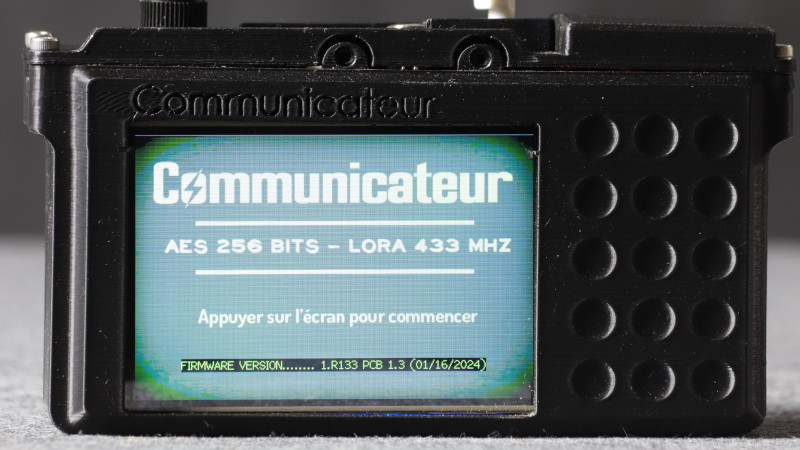
The conversation recently gained fresh flavor thanks to a Hackaday-covered LoRa communicator project using a Raspberry Pi Pico, a small screen, a keyboard-friendly design, and a one-time-pad-style encryption approach. In plain English: it is the kind of device that makes hardware hackers smile, privacy fans lean forward, and everyone else ask whether it also comes in “less apocalypse, more weekend camping” mode.
Why Secure Messaging Matters More Than Ever
Secure messaging is not just about hiding gossip, dramatic family updates, or the exact location of the good tacos. It protects conversations from interception, data harvesting, telecom breaches, stalkers, scammers, and surveillance. The key idea behind modern encrypted messaging is end-to-end encryption, which means a message is readable on the sender’s device and the recipient’s device, but not by the service carrying it in between.
That distinction matters. Traditional SMS and regular phone calls were built for reliability and reach, not privacy. They travel through networks that can be logged, intercepted, subpoenaed, breached, or mishandled. End-to-end encrypted messaging apps reduce that exposure by making the message content unreadable to the middleman. The delivery service can still help move the package, but it should not be able to open the box and admire your typos.
The push toward encrypted communications became especially visible after major telecom security incidents. Public guidance from U.S. cybersecurity officials has emphasized the use of end-to-end encrypted communications for high-risk users, including officials, political figures, and others who may be targeted. The logic is simple: if attackers compromise a network, encrypted message content is harder to exploit.
The LoRa Communicator: Off-Grid Messaging With a Hacker Soul
The Hackaday-highlighted project at the center of this topic is not another shiny chat app begging for your contacts. It is a physical LoRa communicator, the kind of device that looks like it belongs in a field kit, a maker lab, or the glove compartment of someone who owns both a soldering iron and a suspicious number of labeled storage bins.
LoRa, short for “long range,” is a low-power radio technology commonly used for sending small amounts of data over long distances. It is not designed for streaming movies, video calls, or sending your friend a 48-megabyte GIF of a raccoon stealing cat food. It is built for tiny packets, long battery life, and communication where regular infrastructure may be unavailable.
That makes LoRa interesting for emergency communication, outdoor groups, remote sensors, community networks, and hobbyist mesh systems. When paired with secure messaging concepts, LoRa becomes even more fascinating. Instead of depending entirely on cell towers or internet providers, users can exchange short messages over local radio links. It is not magic, and it is definitely not immune to physics, regulation, or bad planning, but it is a compelling reminder that communication does not have to live exclusively inside big corporate platforms.
One-Time Pads: Brilliant, Brutal, and Unforgiving
The project’s most intriguing feature is its one-time-pad-style encryption. A true one-time pad is famous in cryptography because, when used correctly, it can provide perfect secrecy. The catch is hiding in the phrase “used correctly,” which is doing enough work to deserve overtime pay.
A one-time pad requires a key that is truly random, at least as long as the message, used only once, and kept completely secret. Break any of those rules and the beautiful theory starts wearing clown shoes. Reuse a key, generate weak randomness, lose a key card, or let someone copy your storage media, and the whole system can collapse from “mathematically elegant” to “oops, the raccoon has the launch codes.”
That is why one-time pads are both admired and feared. They are conceptually simple but operationally demanding. In a practical LoRa communicator, the hard part is not merely encrypting a message. The hard part is safely generating, distributing, protecting, rotating, and destroying keys. The software may be clever, but key management is where many security dreams go to become cautionary conference slides.
Secure Messaging Is Not Just About Encryption
A common mistake is believing encryption automatically solves privacy. It does not. Encryption protects message content, but communication creates other clues. Who talked to whom? When? From which device? Through what network? How often? This surrounding information is called metadata, and it can be surprisingly revealing.
Imagine a sealed envelope. The letter inside may be private, but the outside still shows addresses, dates, and delivery routes. Modern secure messaging services try to reduce metadata exposure in different ways. Signal, for example, has worked on features designed to minimize retained user data and hide more sender information from the service itself. That is important because privacy is not only about the words in the message; it is also about the pattern your life leaves behind.
Backups are another sneaky weak point. A chat may be end-to-end encrypted in transit, but if the message history is backed up to a cloud account without equivalent protection, the privacy model changes. WhatsApp offers end-to-end encrypted backups using a password, key, or newer passkey options. Apple’s Advanced Data Protection expands end-to-end encryption for many iCloud data categories, including backups, when enabled. Google Messages supports end-to-end encryption for eligible RCS conversations between Google Messages users. The main lesson is boring but essential: settings matter.
Signal, WhatsApp, iMessage, Google Messages, and the Real-World Tradeoffs
Secure messaging is not one product. It is an ecosystem of tradeoffs. Signal is widely praised for its privacy-first design and minimal data collection. WhatsApp brings end-to-end encryption to a massive global user base, which is a big deal because security only works socially if the people you need to reach are actually there. Apple’s iMessage is smooth inside the Apple world, while Google Messages has pushed encrypted RCS for compatible conversations.
The best secure messaging app depends on the threat model, a phrase security people use when they want to ask, “Who are you worried about, and what can they realistically do?” A teenager avoiding creepy spam has a different threat model than a journalist protecting a source. A family during a storm has a different need than a government official targeted by a foreign intelligence operation. A backpacker beyond cell service has different problems than an office worker trying not to click phishing links before coffee.
This is where people sometimes get silly. They ask, “Which app is unhackable?” That is like asking which umbrella is volcano-proof. No app can protect against every scenario. If someone tricks you into sharing a verification code, steals your unlocked phone, compromises your device with spyware, or screenshots your conversation from the other end, the encryption did not “fail.” The attack simply walked around it wearing a fake mustache.
When Attackers Don’t Break Encryption, They Break People
Recent public warnings about attacks on users of encrypted messaging apps show an important pattern: attackers often do not need to crack the encryption. Instead, they target accounts, devices, verification codes, cloud backups, notifications, or human trust. Social engineering remains popular because it works. Why spend years attacking cryptography when you can impersonate support and ask someone for a code?
That is why secure messaging should be paired with basic account security. Use strong device passcodes. Keep apps and operating systems updated. Turn on registration locks or two-step verification where available. Be skeptical of urgent messages asking for codes. Avoid unofficial app versions. Do not treat public Wi-Fi like a cozy privacy blanket. And remember that your phone is not a sacred temple; it is a glass rectangle full of microphones, radios, sensors, and apps that all want a snack.
For high-risk users, the bar rises even higher. They may need hardware security keys, safer device practices, careful contact verification, reduced cloud exposure, and strict rules around what can be discussed on consumer apps. Secure messaging is powerful, but it is not a substitute for formal classified systems, legal compliance, or operational discipline.
Off-Grid Messaging: Useful, But Not a Hollywood Force Field
LoRa-based communicators and mesh systems like Meshtastic add another layer to the secure messaging conversation. They are especially appealing because they can work without traditional internet access. In a storm, remote area, festival, farm, search-and-rescue practice, or community preparedness event, off-grid text messaging can be useful.
Meshtastic, for example, uses encryption for packet payloads and has evolved its approach to direct messages and authentication. Still, its own documentation is clear that mesh security involves tradeoffs. Headers may remain visible for routing. Shared keys can create trust problems. Public meshes are different from closed groups. In other words, the network is not a wizard; it is a set of design choices.
Radio also comes with rules. Different regions regulate frequencies, power levels, licensing, and encryption differently. Anyone experimenting with LoRa, amateur radio, or off-grid communication should follow local regulations. “But the apocalypse looked at me funny” is generally not a legal defense, and it looks terrible on paperwork.
What Makes a Secure Messaging Setup Actually Secure?
A good secure messaging setup is boring in the best possible way. It uses trusted apps from official stores. It keeps software updated. It enables end-to-end encrypted backups when needed or avoids cloud backups when privacy matters more than convenience. It verifies contacts for sensitive conversations. It uses disappearing messages thoughtfully, not as a magic eraser. It protects the device itself, because an encrypted app on a compromised phone is like putting a bank vault door on a tent.
The human part matters too. A secure group chat is only as strong as its least careful participant. If one person backs everything up insecurely, leaves notifications on a shared tablet, or forwards screenshots to a random email account named “definitely_not_a_hacker,” the whole group inherits the problem.
Good security is not paranoia. It is maintenance. You lock your door not because you believe ninjas are coming for your cereal, but because doors have locks and cereal deserves dignity. Secure messaging follows the same principle. Make privacy the default before trouble arrives.
Specific Examples: Everyday Secure Messaging Choices
For Families
Families can use encrypted messaging apps for everyday coordination, especially when sharing addresses, travel plans, medical updates, school details, or financial information. The goal is not secrecy for secrecy’s sake. It is reducing unnecessary exposure. A family group chat does not need to become a public bulletin board with emojis.
For Journalists and Activists
Journalists, activists, and civil society groups should be more deliberate. They may need Signal, disappearing messages, contact verification, safer backup settings, and separate devices for sensitive work. They should also train participants not to share verification codes or install suspicious apps. The strongest encryption in the world cannot save a conversation from a participant who treats every pop-up like a trusted life coach.
For Outdoor and Emergency Groups
Outdoor clubs, neighborhood emergency teams, and remote workers may benefit from off-grid messaging tools, including LoRa-based systems. These are best used for short, practical messages: location check-ins, supply updates, route changes, and safety confirmations. They should be tested before they are needed, because discovering your emergency network does not work during an emergency is a very committed form of bad timing.
The Bigger Privacy Lesson
Secure messaging is part of a broader shift. People are realizing that privacy is not suspicious. Privacy is normal. A locked diary is not evidence of criminal masterminding. Curtains are not a declaration of war against the neighborhood. Encryption is the digital version of closing the door before having a private conversation.
The best future is not one where only experts can communicate safely. It is one where end-to-end encryption is ordinary, understandable, and available by default. Messaging apps have made progress, but the same expectation should extend to backups, notes, photos, health data, smart devices, and cloud storage. The modern world collects enough data to make a filing cabinet cry. Encryption is one of the few tools that gives some control back to users.
Experience Notes: Living With Secure Messaging When Everything Feels Slightly On Fire
The first experience most people have with secure messaging is not dramatic. There is no cinematic soundtrack, no hacker in sunglasses, no green code raining down the wall. Usually, it starts when someone says, “Can we move this to Signal?” or “Turn on encrypted backups,” and everyone in the group chat reacts as if they have been asked to assemble furniture with missing screws.
But after a few days, secure messaging feels normal. You open the app, send a message, make a call, share a photo, and continue your life. The big difference is not in the user interface; it is in the confidence. You begin to understand that privacy does not have to be difficult. It just has to be chosen before convenience quietly chooses something worse for you.
I have seen how secure messaging changes the tone of serious conversations. People are more willing to discuss sensitive logistics, personal worries, family plans, or work concerns when they know the platform is designed to protect content. That does not mean users become reckless. In fact, good tools often encourage better habits. Someone who learns why encrypted backups matter may also start updating their phone, using stronger passcodes, and ignoring suspicious links with the icy confidence of a cat refusing cheap food.
Off-grid messaging has a different feeling. A LoRa communicator or mesh device is slower, more limited, and less polished than a phone app. Yet that limitation can be refreshing. You stop thinking in endless media streams and start thinking in essentials. “Arrived.” “Need water.” “Trail blocked.” “Meet at gate.” Short messages become useful again. It is communication stripped down to the bones, wearing a tiny backpack and pretending it does not enjoy camping.
Testing these systems also teaches humility. Range depends on terrain, antennas, battery levels, interference, and setup. Encryption depends on keys, settings, and user discipline. Group coordination depends on people actually reading instructions, which remains one of humanity’s most ambitious unsolved problems. The experience is valuable because it reveals the gap between owning a tool and having a working plan.
The best secure messaging experience is layered. Use a strong encrypted app for daily life. Review backup settings. Protect your device. Keep a simple plan for emergencies. Consider off-grid tools only where they fit the real situation. Do not chase spy-movie fantasies. Chase reliability, clarity, and habits that survive stress.
In the end, secure messaging is not about pretending the world is ending. It is about admitting that the world is complicated, networks fail, companies overcollect, attackers adapt, and humans still need to talk. If the world burns, secure messaging will not put out the fire. But it may help you find your people, coordinate calmly, and send one last perfectly encrypted message: “Bring snacks.”
Conclusion
“As The World Burns, At Least You’ll Have Secure Messaging” is funny because it is painfully close to how modern life feels. Between telecom breaches, spyware campaigns, cloud backup loopholes, and infrastructure worries, secure communication has moved from niche concern to everyday necessity. End-to-end encryption, careful backup choices, device security, and even off-grid LoRa messaging all serve the same human goal: keeping private conversations private and useful messages moving when the usual systems get weird.
Secure messaging is not a silver bullet. It will not fix bad passwords, careless screenshots, compromised phones, or poor planning. But used wisely, it is one of the most practical privacy tools available. The world may be noisy, messy, and occasionally on metaphorical fire, but your messages do not have to be handed to every network, server, and data broker along the way. That is not paranoia. That is common sense with a lock icon.