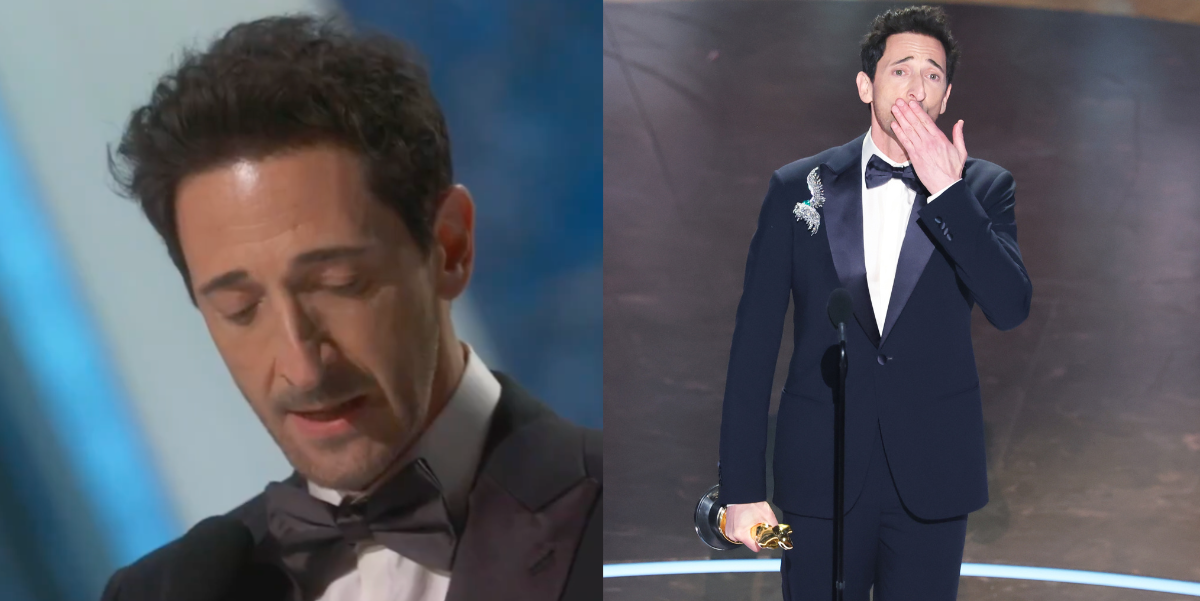
Every Oscar night promises glamour, suspense, and at least one speech that makes the internet collectively sit up straighter. In 2025, that moment belonged to Adrien Brody. After winning Best Actor for The Brutalist, Brody stepped onto the Dolby Theatre stage and delivered an acceptance speech that felt less like a polished awards-season sound bite and more like a real-time exhale. It was grateful, shaky, funny, serious, a little chaotic, and deeply human. In other words, it was catnip for anyone who thinks celebrity speeches are usually as natural as a wax apple.
What made Adrien Brody’s Oscar speech so memorable was not just the win itself. Yes, a second Oscar is a huge deal. Yes, The Brutalist had built serious momentum all season. And yes, it is hard to ignore a speech that ran long enough to make the orchestra tap the brakes. But the emotional power came from something more personal: Brody sounded like a man fully aware that success can vanish, fame is fickle, and meaningful work does not arrive on command just because someone once stood on this same stage holding gold.
That awareness gave the speech weight. It turned what could have been a victory lap into something more reflective. Brody did not simply celebrate. He took stock. He looked back at his career, acknowledged the uncertainty that comes with being an actor, thanked the people who steadied him, and used the biggest microphone in Hollywood to speak about war, hate, and the danger of treating people as outsiders. Not bad for a night that also included a flying piece of gum and a mini showdown with exit music.
Why Adrien Brody’s Oscar Speech Hit So Hard
Brody’s speech landed because it carried the emotional texture of someone who knew exactly what the moment meant. He was not behaving like a first-time winner swept away by surprise, nor like a seasoned veteran pretending awards are no big deal. Instead, he spoke like someone who had lived through both the thrill of early triumph and the long, uneven road that can follow it. That combination gave the speech a rare emotional balance: humble, but not false; confident, but not smug.
One of the most powerful themes in the speech was his reflection on acting as a precarious profession. Brody openly described the business as fragile, noting that success can disappear no matter where someone is in their career. That sentiment resonated because it cut through the shiny mythology of the Oscars. In a room built on image, he talked about instability. In a profession obsessed with momentum, he talked about how quickly momentum can evaporate. That kind of honesty tends to wake people up.
It also gave his Oscar win emotional context. This was not just a trophy for one performance. It felt like recognition for endurance, patience, and continued artistic ambition. Brody made it clear that winning was not simply an ending or a crowning achievement. He framed it more like an opportunity to begin again. That idea gave the speech a moving undercurrent. Instead of sounding like a final chapter, his acceptance felt like someone opening a new one.
The Comeback Angle Made the Moment Bigger
A Second Oscar, But a Very Different One
Adrien Brody first won Best Actor in 2003 for The Pianist, becoming the youngest winner in the category at the time. That victory made him a permanent part of Oscar history. But history can be tricky. It preserves your name while refusing to guarantee your future. Brody’s 2025 win for The Brutalist carried a very different emotional flavor because it arrived after more than two decades of work, reinvention, and career wandering.
That is part of why the speech felt so emotional. A second Oscar can sometimes look like effortless dominance from the outside. Brody’s remarks suggested the opposite. He spoke like someone who understood how rare meaningful roles really are and how hard it is to find work that connects on the highest level. That honesty added dimension to the moment. He was not presenting himself as a king reclaiming a throne. He sounded more like an artist who never stopped hoping for another great shot.
And The Brutalist gave him exactly that. The film, a major Oscar contender that earned 10 nominations and won three awards, gave Brody the kind of expansive, demanding role actors wait years for. His performance as a haunted immigrant architect carried both historical trauma and personal ambition. It was the sort of part that invites not just acting, but excavation. When he stood at the podium, the speech felt emotionally connected to that role’s themes of survival, displacement, and dignity.
Why The Brutalist Was the Right Film for This Moment
The Brutalist is not exactly a light, breezy movie you toss on while folding laundry. It is a large-scale postwar drama with serious thematic muscle, and Brody’s Oscar speech reflected that seriousness. He linked the performance to broader issues of war, systemic oppression, antisemitism, racism, and the harm caused by “othering.” That made the speech feel like more than standard awards gratitude. He was connecting the story he told on screen to the world outside the theater.
That connection mattered. In the best Oscar speeches, the award is only one part of the story. The bigger part is what the winner chooses to say when the whole industry is listening. Brody chose to widen the frame. He moved from personal gratitude to moral urgency, which gave the speech emotional reach. It was not just about his comeback. It was about what art can remember, what history can warn against, and why stories like The Brutalist still matter.
The Most Emotional Parts of the Speech
His Vulnerability About the Business
The line that seemed to hit people in the chest was Brody’s reflection that acting is a fragile profession. That idea was the emotional core of the speech. He did not talk like someone protected by prestige. He talked like someone who knows the business can be glamorous one minute and brutally indifferent the next. For aspiring actors, longtime fans, and frankly anyone who has ever had a career wobble beneath them, that message rang painfully true.
It is easy to see why the speech spread so quickly. Plenty of acceptance speeches thank agents, co-stars, and the Academy. Far fewer admit that success is unstable. Brody’s candor made the moment more relatable than many Oscar speeches ever manage to be. Under the tuxedo, under the bright lights, under the giant televised machine of Hollywood, he sounded like a working person talking about uncertainty. That vulnerability made the win feel earned in a way that statistics alone never could.
His Tribute to Georgina Chapman and Her Children
Another reason the speech felt so emotional was the deeply personal way Brody thanked his partner, Georgina Chapman, and her children. He credited Chapman with restoring his sense of self-worth and strengthening his values, which is the kind of statement that does not sound tossed in for applause. It sounded lived-in. Then came his shoutout to Dash and India, along with the delightfully odd and instantly memorable line that “Popsy” was coming home a winner.
That section of the speech worked because it was not stiff or over-rehearsed. It had warmth. It had intimacy. It had just enough weirdness to feel real. Oscar speeches are often polished into oblivion. This one was emotional without becoming syrupy. Brody’s gratitude toward his family did not read like brand management. It read like a person visibly aware that love and stability offscreen can make the work onscreen possible.
His Call for a More Inclusive World
The speech took another turn when Brody addressed the lingering trauma of war and oppression, then urged viewers not to let hate go unchecked. That pivot gave the speech moral heft. He was not treating the Oscar stage as a place to simply cash in on applause. He used it to say something serious about the world. In a ceremony where political commentary can be cautious, vague, or carefully sanded down, Brody’s remarks stood out because they were direct enough to matter while still rooted in the themes of his film.
That choice elevated the entire moment. Emotional speeches are not always important speeches, and important speeches are not always emotional ones. Brody managed to make his speech both. He tied his personal victory to a broader plea for empathy and vigilance. That is one reason the moment felt bigger than celebrity news. It touched on memory, prejudice, and the responsibility to keep compassion active rather than decorative.
The Tiny Chaos That Made It Even More Memorable
The Gum Toss Heard Around Hollywood
No discussion of Adrien Brody’s emotional Oscar speech would be complete without the absurd little prelude that made social media lose its mind. On the way to the stage, Brody realized he was still chewing gum. He solved the problem in the most unexpectedly theatrical way possible: by tossing it toward Chapman. It was a split-second bit of chaos that instantly became one of the most talked-about visual moments of the night.
And weirdly, it helped the speech. Not because chewing gum is a path to greatness, but because the incident made the entire scene feel unscripted. It reminded viewers that even on Hollywood’s grandest stage, people still have awkward human moments. The gum toss loosened the atmosphere just enough that when Brody began speaking from the heart, the emotion felt even less manufactured. One second: comedy. The next second: vulnerability and moral seriousness. That contrast made the whole thing more alive.
The Orchestra Tried. Brody Said, “Not So Fast.”
Then came the speech’s second comic subplot: the orchestra trying to wrap him up. Brody, clearly unwilling to sprint through a moment he had waited years to reclaim, pushed back and kept going. In another context, that might have come off as self-important. Here, it felt strangely fitting. His speech was about perspective, endurance, and the rarity of getting to stand there again. Of course he was not eager to be nudged off after a few sentimental seconds and a quick thank-you to the valet.
The result was historic. His acceptance became the longest Oscar speech on record. And while that fact is amusing on its own, it also reflects something deeper about why the speech connected. Brody did not deliver a tidy, media-trained highlight reel. He gave the audience a full emotional arc, and he refused to let the moment be flattened into a neat little television package. For once, the long version was the right version.
Why This Speech Stood Out in a Crowded Awards Season
Brody had already built strong momentum by winning major awards during the season, including the Golden Globes, Critics Choice Awards, and BAFTAs. By the time the Oscars arrived, he was hardly an underdog. But momentum alone does not guarantee an unforgettable speech. Plenty of expected winners still deliver perfectly fine remarks that vanish into the content blender by breakfast.
This one lingered because it had shape. It began with gratitude, moved into vulnerability, opened into family, widened into social conscience, detoured through comic chaos, and ended with a plea for love, rebuilding, and basic human decency. That is not a speech. That is practically a three-act structure wearing a bow tie.
It also stood out because Brody’s emotional register never felt fake. He was not trying to cry on cue. He was not forcing drama. He seemed genuinely overwhelmed, but still sharp enough to articulate why the moment mattered. That balance is hard to fake and even harder to sustain under pressure. It made the speech feel less like performance and more like revelation.
Experiences Related to Adrien Brody’s Emotional Oscar Speech
For viewers, the experience of watching a speech like this in real time is surprisingly powerful. Even people who do not follow every stop on the awards circuit can feel when a moment becomes bigger than celebrity pageantry. There is a distinct sensation when an acceptance speech stops sounding like publicity and starts sounding like a person telling the truth while millions happen to be watching. Brody’s speech created that kind of experience.
First, there is the feeling of recognition. Many people know what it is like to work for years without clear validation, to wonder whether their best chance has already passed, or to question whether their profession still has room for them. When Brody talked about the fragility of acting and how everything can disappear, audiences were not just hearing an actor describe Hollywood. They were hearing a version of anxiety that exists in almost every field. Teachers feel it. Designers feel it. Small business owners feel it. Students feel it. That is why the speech traveled beyond movie fans.
Second, there is the emotional experience of seeing gratitude expressed with specificity. Generic thank-yous are easy to forget. But when someone clearly understands who helped rebuild them, the audience leans in. Brody’s words about Georgina Chapman and her children gave viewers a glimpse of emotional grounding rather than image maintenance. For many people, that kind of public tenderness feels especially moving because it is rare. The room gets quieter. The internet gets temporarily less snarky. Even cynics lower the shield for a minute.
There is also a strange thrill in witnessing imperfection. The gum toss, the extra length, the orchestra interruption, the refusal to rush offstage like a politely apologetic robot all of it contributed to the feeling that this was a live human event rather than a prepackaged content segment. Modern audiences are extremely good at spotting overmanaged emotion. A messy little detail often makes sincerity easier to believe. Oddly enough, the gum may have done more for authenticity than a thousand publicists ever could.
Another common viewer experience is reflection. After a speech like this, people do not just talk about the winner. They start thinking about their own delayed victories, their own almosts, their own fears about being forgotten, and their own need to be seen again. That is what strong public moments can do. They act like mirrors. Brody’s Oscar speech reflected ambition, gratitude, survival, and the hope that one meaningful opportunity can reopen a life. That makes the moment memorable in a deeper way than gossip ever could.
Finally, there is the experience of relief when someone uses a huge platform to say something humane without sounding hollow. Brody’s call for a more inclusive world and his warning against unchecked hate gave the speech a seriousness that many viewers found grounding. In a culture full of noise, people often remember the moments that sound morally clear without becoming preachy. His speech managed that balance. It entertained, moved, and reminded people that art can still point back to conscience. For an Oscars speech, that is a pretty remarkable hat trick.
Conclusion
Adrien Brody’s emotional Oscar speech worked because it did not rely on one thing alone. It was not just a comeback story, though it had the force of one. It was not just a family tribute, though that section gave it heart. It was not just a political message, though his call to reject hate gave it weight. It was all of those things at once, held together by the unmistakable feeling that Brody knew exactly how rare and fragile the moment was.
In the end, that is why the speech will be remembered. It captured something audiences crave but do not always get from awards shows: genuine emotion with real stakes. Brody turned a victory into a reflection on art, uncertainty, love, and responsibility. He made the night feel a little less like a machine and a little more like life. Also, let history note that he somehow managed to do all that while beginning with a gum emergency and ending with a world record. That, friends, is range.