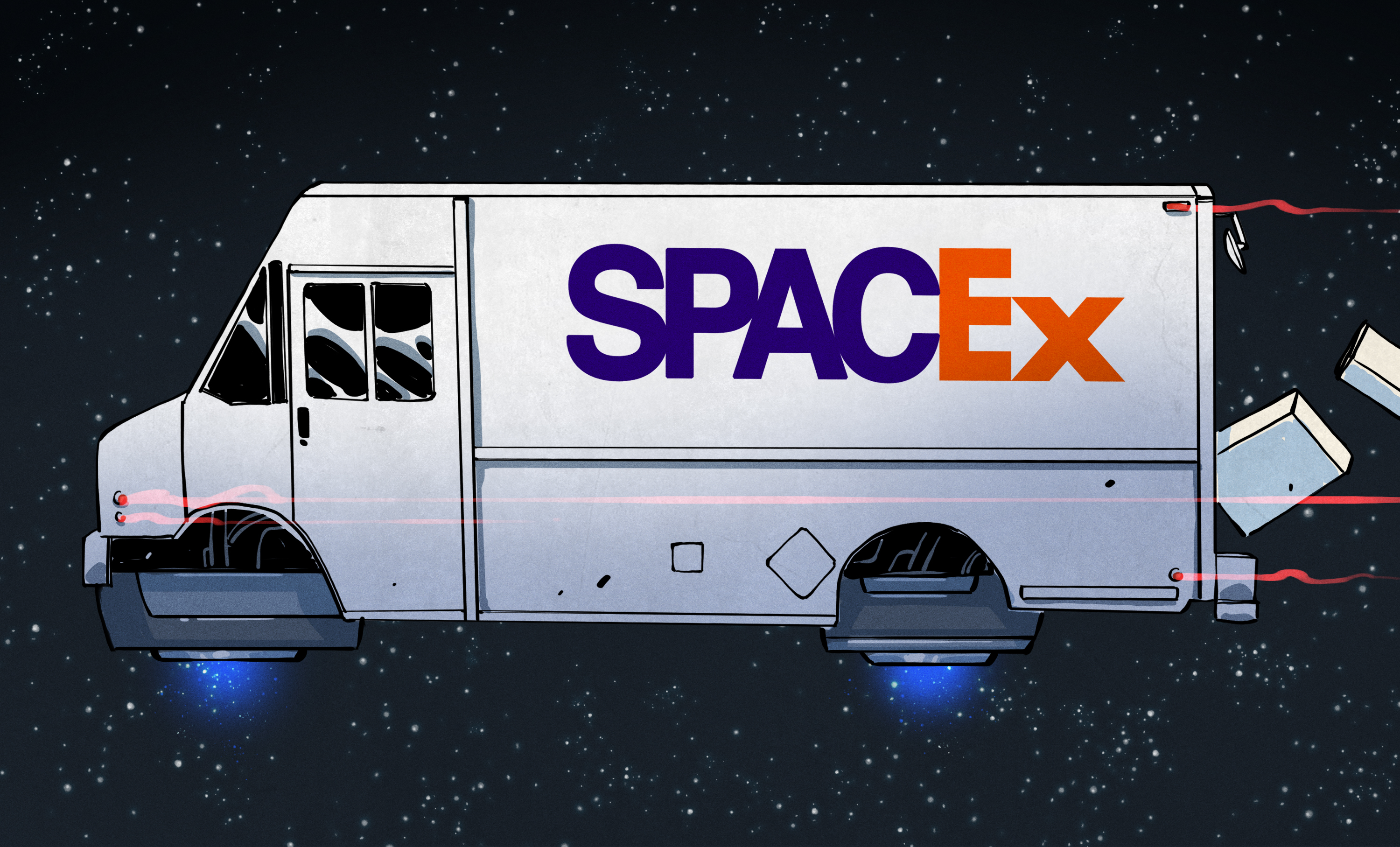
Space used to be the land of giant bets, giant budgets, and giant headaches. A spacecraft would take forever to design, cost enough to make accountants develop a distant stare, and then launch on a schedule written in pencil, crossed out in pen, and eventually updated with a sigh. When it finally reached orbit, the science was often spectacular, but getting there could feel like waiting for a pizza order placed during the Jurassic period.
That model is changing. A new era of spacecraft is arriving, and it is not defined by one miracle gadget or one flashy launch company. It is defined by a smarter system. Space agencies, scientists, and commercial partners are increasingly building missions around modular buses, smaller satellites, hosted payloads, rideshare launches, distributed constellations, faster data pipelines, and mission designs that emphasize speed without tossing science overboard. The result is simple but powerful: more science, delivered sooner, often at lower cost, and in formats researchers can actually use before their coffee gets cold.
This shift matters because modern science is not just about reaching space. It is about getting answers while those answers still matter. Climate researchers need updated Earth observations. Heliophysicists need real-time and near-real-time solar data. Planetary scientists want flexible missions that can ride the next available launch rather than wait for the celestial equivalent of a chauffeured limousine. In short, the spacecraft of today are being asked to do something previous generations were not always built for: move like modern technology, not like museum restoration.
The Old Spacecraft Problem: Great Science, Slow Delivery
For decades, flagship missions dominated the public imagination, and for good reason. Big spacecraft have produced some of humanity’s most important discoveries. But large, bespoke missions come with a familiar problem: every subsystem is tailored, every interface is custom, every test campaign is complex, and every delay has a way of breeding two more delays in captivity.
That approach still has a place. Some questions absolutely require large observatories or deep-space probes built for a singular purpose. But not every scientific objective needs a custom cathedral in orbit. Many missions work better when spacecraft are treated less like one-off sculptures and more like reliable scientific platforms. That distinction is quietly transforming space science.
The real breakthrough is not that spacecraft are becoming smaller. It is that they are becoming more repeatable. Engineers now have access to more mature commercial buses, better simulation tools, more standardized interfaces, improved smallsat technology, and launch opportunities that are far more frequent than in earlier eras. In plain English, scientists no longer have to start from a blank sheet of paper every time they want to fly an instrument.
From One-Off Masterpieces to Modular Science Machines
One of the clearest signs of this new era is the rise of the spacecraft bus as a flexible, reusable platform. Think of the bus as the mission’s body: power, propulsion, communications, thermal control, guidance, and other core systems. The science instrument is the brainy passenger. When the body is mature and well understood, the instrument can get to work faster.
NASA’s own studies reflect how far this idea has progressed. The agency’s work on commercial persistent platforms and hosted payload opportunities shows a growing marketplace of American commercial buses capable of hosting one or more payloads. That means researchers are increasingly able to place instruments onto existing or adaptable spacecraft instead of financing a full custom vehicle from scratch. It is the orbital version of renting a furnished apartment instead of building a house because you need a desk by Tuesday.
This modular approach reduces development risk in several ways. First, teams can select hardware with flight heritage. Second, integration can move faster because standard interfaces are becoming more common. Third, the mission can focus resources on the scientific payload rather than re-solving every spacecraft engineering problem known to humankind. That is how science starts arriving on time: not through magic, but through fewer reinventions.
Small Satellites Are No Longer Science Sidekicks
For years, small satellites were treated like adorable interns: enthusiastic, cheap, and not always trusted with the important stuff. That era is over. Small spacecraft now carry serious scientific ambitions, and they are doing it with increasing sophistication.
NASA’s Small Spacecraft and Distributed Systems efforts capture the mood perfectly. Small spacecraft are no longer just educational demos or secondary passengers along for the ride. They are becoming core scientific tools. The annual state-of-the-art reports on small spacecraft show a market that is maturing quickly, with advances in hosted payload services, orbital transport, autonomous operations, formation flying, communications, and deorbit systems. In other words, these are not toys. They are highly capable research platforms that just happen to skip the dramatic cape.
A good example is PUNCH, a heliophysics mission made up of four suitcase-sized satellites that work together as a virtual instrument. Instead of relying on one giant observatory, PUNCH uses a distributed architecture to study how the Sun’s corona becomes the solar wind. That is more than a clever engineering trick. It is a scientific strategy. Multiple spacecraft can provide a wider field of view, gather different vantage points simultaneously, and produce data that would be far harder for a single spacecraft to capture alone.
Then there is SPARCS, a tiny NASA astrophysics mission that recently returned first-light images, proving that even a compact spacecraft can begin producing meaningful science quickly after launch and commissioning. Missions like this reveal the new normal: smaller spacecraft can move from launch to usable data with impressive speed when the mission scope is well matched to the platform.
Commercial Delivery Is Changing the Tempo
Another big change is that agencies are increasingly buying services instead of owning every vehicle. The Commercial Lunar Payload Services program is one of the clearest examples. Rather than designing every lunar lander itself, NASA buys lunar delivery services from commercial providers. The goal is rapid, frequent, and affordable access to the Moon.
That model changes the rhythm of science. Researchers can think in terms of payload opportunities and delivery windows rather than waiting for a monolithic government-built mission to materialize sometime between now and the heat death of the universe. The science can be more iterative, more frequent, and more responsive to evolving priorities.
This service-based mindset is spreading beyond the Moon. Hosted payloads, rideshares, commercial buses, and orbital transport services are all part of a broader shift: science missions are becoming customers in a developing ecosystem, not just isolated engineering kingdoms. That is enormously important because frequency matters. A scientist usually learns more from five good missions in five years than from one perfect mission after fifteen years of PowerPoint.
Science Starts Faster When Data Flows Faster
There is another reason this era feels different: spacecraft are not just launching faster. They are sharing science faster. Modern space science lives or dies by the speed of data access. If a mission produces exquisite measurements but takes forever to process, archive, and distribute them, the timeline of discovery still drags.
That is why missions like SPHEREx feel so modern. The observatory is designed to map the entire sky in 102 infrared wavelengths, collect data on more than 450 million galaxies and over 100 million stars, and make processed observations available to the public on a short delay. That matters. A mission becomes far more scientifically productive when its data pipeline is built for openness from day one.
NISAR offers another excellent case. The Earth-observing mission launched in July 2025 and is built to monitor nearly all land and ice surfaces with regular repeat coverage. Just as important, the data releases are structured to get large volumes of products into researchers’ hands quickly. That is not a side feature. It is part of the mission’s scientific architecture. In the modern era, data delivery is science delivery.
And the communications revolution is still accelerating. NASA’s Deep Space Optical Communications demonstration proved that laser-based systems can return data at rates far beyond conventional radio systems of similar size and power. If that kind of capability becomes routine, future missions will not have to choose so harshly between collecting high-value science and actually sending it home in useful quantities. For scientists, that could be the difference between a few postcards from deep space and a full documentary series.
Constellations, Swarms, and the Rise of Teamwork in Orbit
Older missions often treated a spacecraft as a solitary hero. Modern missions are increasingly comfortable with ensemble casts. Distributed systems, constellations, and swarms allow spacecraft to cooperate, compare measurements from multiple points, and respond more flexibly to dynamic environments.
NASA’s Starling mission is a glimpse of that future. Its CubeSats have demonstrated autonomous navigation, coordination, and information sharing with limited ground intervention. That may sound abstract, but it has huge scientific implications. Cooperative spacecraft can gather multipoint data, reduce operational burden, and eventually support mission designs that would overwhelm a traditional ground-controlled architecture.
This matters especially for heliophysics, Earth science, and planetary environments where change happens across space and time simultaneously. One spacecraft sees a moment. A coordinated group can see a system. That is how future science missions will grow more capable without always growing larger or slower.
Real Missions Prove the Point
Recent and current missions make the trend hard to ignore. PUNCH shows how several small satellites can act as one scientific instrument. SPHEREx shows how a mission can combine ambitious survey science with aggressive public data sharing. NISAR shows how a major observatory can pair advanced measurement capability with a steady rhythm of products for real-world users. IMAP shows how large instrument suites can move through integration on a more disciplined pathway. ESCAPADE shows that smaller twin spacecraft can head toward Mars using creative trajectory strategies instead of waiting for a perfect traditional mission slot.
Taken together, these missions suggest that the new era of spacecraft is not one single model. It is a spectrum. Some missions are still substantial and technically demanding. Others are lean, focused, and fast. What ties them together is a philosophy: use modern spacecraft architectures to shorten the time between idea, launch, data, and discovery.
But Let’s Not Pretend Speed Solves Everything
This is the part where the space article takes off its party hat and becomes an adult for a minute. Faster and cheaper missions are not automatically easier. Smallsat missions, commercial partnerships, and rapid development cycles can absolutely fail. Lunar Trailblazer is a recent reminder. The mission was intended to map water on the Moon, but controllers lost contact shortly after launch and the spacecraft could not be recovered.
That failure does not disprove the new era. It explains it. Faster science missions often operate in a high-risk, high-reward environment. They accept narrower margins in exchange for lower cost and shorter timelines. Sometimes that trade works beautifully. Sometimes it does not. The lesson is not “go back to giant custom missions forever.” The lesson is that space remains hard, and good program design means knowing when to accept risk, when to hedge it, and when to pay more for robustness.
Even large NASA projects still live under serious cost and schedule pressure. Oversight reports continue to show that delays and overruns remain a real concern across the agency’s most complex portfolio. So the phrase “delivers science on time” should not be read as a victory lap. It should be read as a challenge the space community is getting better at meeting, mission by mission.
Why This New Era Matters Beyond Space Nerd Circles
It is tempting to think this is all inside baseball for engineers who argue about buses, downlinks, and thermal margins. But the benefits spill outward. Faster spacecraft development means quicker climate observations, better hazard monitoring, more responsive solar weather forecasting, and more opportunities for universities, startups, and smaller research teams to participate in serious science. It also means public data can reach the wider scientific community sooner, multiplying the return on every mission.
There is also a cultural shift underway. Space science is becoming less about waiting for rare heroic moments and more about building a steady pipeline of discovery. That may be less cinematic than a single dramatic flagship launch, but it is often better science. Discovery thrives on cadence. Scientists do their best work when missions arrive often enough to let one result shape the next question instead of becoming a historical footnote before the follow-up ever flies.
The Experience of Living Through This Spacecraft Shift
For researchers, engineers, students, and even the science-loving public, this new era changes the emotional experience of space exploration. Older mission cultures often trained people to think in decades. You joined a project, watched it survive budget negotiations, reviewed design milestones, waited through slips, and hoped to still be around when the first data arrived. It was noble work, but it demanded the patience of a saint and the scheduling optimism of a fantasy novelist.
Today, the experience feels more immediate. A graduate student can see a mission conceived, launched, and producing usable data within the arc of a degree program. A young engineer can work on a spacecraft that rideshare-launches on a commercial rocket, begins commissioning quickly, and then supports a public release cycle that brings outside researchers into the mission while it is still fresh. That changes morale. It changes recruitment. It changes who gets to participate in discovery.
Mission teams also experience a different kind of pressure. Faster schedules mean fewer opportunities to hide behind bureaucracy and fewer excuses for vague planning. Interfaces must be defined earlier. Operations concepts must be leaner. Data systems must be built with users in mind, not patched together after launch like a panicked group project. The work can be intense, but it is also energizing because decisions have visible consequences in a shorter window.
There is something deeply motivating about watching science move at modern speed. Imagine being on a team that sees first-light data come down not as a distant dream but as a near-term milestone. Imagine designing a payload for a commercial lunar delivery instead of spending years waiting for a unique spacecraft architecture to crystallize. Imagine building tools for a distributed mission where multiple spacecraft act together, and then seeing that coordination happen in orbit with limited ground control. That is not merely technical progress. It is a transformation in how space work feels day to day.
For scientists who use mission data rather than build spacecraft, the experience has changed just as dramatically. Public archives, faster release schedules, and more open mission planning mean researchers can plug into active science sooner. They do not always need to be in the inner circle to contribute. A mission like SPHEREx promises wide scientific reuse because its data strategy assumes a broader community from the start. Earth science missions like NISAR do something similar for users who care about hazards, ecosystems, agriculture, infrastructure, and environmental change. The emotional shift here is subtle but important: scientists are no longer only waiting for access. Increasingly, they are expecting it.
Even the public experience is evolving. Space missions used to arrive as isolated headline events. Now they appear more like a living stream of capability: new maps, new data products, new smallsat launches, new lunar deliveries, new optical communication milestones, new swarm demonstrations. That steady cadence builds a healthier relationship between society and space science. It reminds people that exploration is not just one giant leap. Sometimes it is a thousand well-timed steps, each carrying instruments, questions, and maybe a little less drama than Apollo, but often a lot more usable knowledge.
So yes, there is still room for grand, once-in-a-generation observatories. There always will be. But the lived experience of space exploration is shifting toward something more agile, more democratic, and more connected to real scientific timelines. The new era of spacecraft is not just delivering science on time. It is delivering a new feeling about what space science can be: frequent, focused, collaborative, and refreshingly alive.
Conclusion
A new era of spacecraft is delivering science on time because the industry is finally aligning hardware, software, launch, operations, and data systems around the needs of modern research. Modular buses reduce reinvention. Small satellites expand access. Commercial services increase launch opportunities. Distributed missions multiply scientific reach. Faster data pipelines make discoveries usable sooner. Optical communications and autonomous operations promise even more acceleration ahead.
Not every mission will succeed, and not every scientific problem can be solved with a smallsat or a commercial rideshare. But the broader trajectory is unmistakable. Spacecraft are becoming more flexible, more frequent, and more connected to the pace of real-world science. And that may be the most exciting development of all: the future of discovery is no longer just farther away. It is arriving sooner.