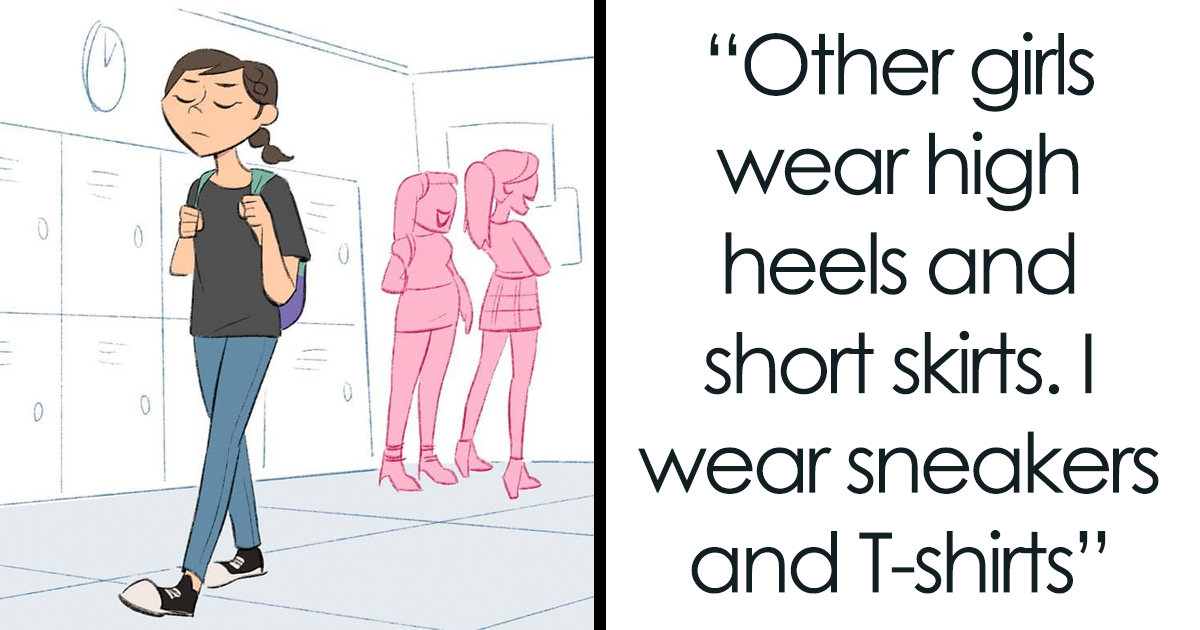
Some comics make you laugh. Some make you wince. And then there are the rare ones that do both at the exact same time, which is honestly rude and impressive. A comic about the “I’m not like the other girls” attitude lands in that sweet spot because it pokes at something many people recognize immediately: the strange pressure to be different from other women in order to feel more valuable, more interesting, or more worthy of attention.
At first glance, the attitude can seem harmless, even funny. It often shows up as a joke, a meme, a movie trope, or a dramatic inner monologue that sounds suspiciously like, “I don’t like makeup, shopping, gossip, or anything pink, therefore I have transcended womanhood.” But under the glitter-free surface, the idea carries a sharp message: ordinary femininity is embarrassing, and being associated with other girls is somehow a downgrade. That is where the joke stops being cute and starts becoming revealing.
What makes a comic on this topic work so well is that comics are built for contrast. A few panels can show the gap between what someone says and what they really feel. They can reveal insecurity without turning it into a lecture. They can also expose the absurdity of competing against an imaginary crowd of “other girls” who are usually reduced to stereotypes: vain girls, shallow girls, dramatic girls, trendy girls, needy girls, girly girls. In reality, those “other girls” are just people. They contain multitudes. They might love football and floral dresses, physics and lip gloss, hiking and romance novels. Human beings are annoyingly complex that way.
Why This Comic Idea Hits So Hard
The reason this kind of comic travels so quickly online is simple: it taps into a real social experience. Many girls grow up receiving mixed messages about femininity. Be pretty, but not high-maintenance. Be confident, but not arrogant. Be attractive, but not attention-seeking. Be smart, but not intimidating. Be unique, but not too weird. It is basically a full-time internship in contradiction.
Within that pressure cooker, the “I’m not like the other girls” mindset can feel like a shortcut to identity. Instead of trying to fit every impossible standard, a person may decide to reject the category entirely. She is not one of those girls. She is cooler. Easier. Less dramatic. More low-maintenance. More “one of the guys.” The problem is that this identity often depends on belittling other women, especially women who visibly enjoy feminine things.
A smart comic can capture this in one devastating image: a girl trying so hard to escape a box that she accidentally builds a new one around herself. She is not free. She is performing difference. She is still being judged by the same system, only now she is helping it do the judging.
What “I’m Not Like The Other Girls” Really Means
It often starts as self-protection
Not every version of this attitude begins with cruelty. Sometimes it starts with anxiety, exclusion, or insecurity. A shy girl who struggles to make friends may convince herself she is fundamentally unlike everyone around her. A teenager who feels out of place may turn that discomfort into identity. It can feel safer to say, “I’m different on purpose,” than to admit, “I’m afraid I won’t be accepted.”
That is one reason a thoughtful comic on this topic matters. It reminds readers that the mindset is often less about confidence than about defense. Beneath the sarcasm is vulnerability. Beneath the superiority is fear. Beneath the punchline is a person trying to explain her loneliness in a way that hurts less.
It is also a backhanded compliment wrapped in social conditioning
Here is the dirty little secret of the phrase: it sounds flattering only if being like other girls is considered bad. That is the trap. “You’re not like the other girls” pretends to praise one woman while insulting women as a class. It rewards distance from femininity and frames similarity to other women as ordinary, silly, or inferior.
That message does not stay in conversation bubbles. It spills into media, dating culture, workplace behavior, school social hierarchies, and online discourse. It teaches girls to compete for the prize of exceptionality instead of questioning why the category of “girl” is being treated as lesser in the first place.
How Pop Culture Helped Build The Trope
Popular culture has spent years feeding this attitude protein shakes and sending it to the gym. Movies, television, novels, and internet humor have long celebrated the girl who is “different” because she is not interested in what other girls supposedly like. She reads books instead of flirting. She wears sneakers instead of heels. She eats burgers instead of salad. She hates shopping. She has male friends. She likes sports. She is sarcastic. She is awkward. She is therefore, apparently, a rare mystical creature.
The problem is not that female characters can be sporty, nerdy, blunt, introverted, or uninterested in conventional femininity. Of course they can. The problem comes when those traits are only framed as admirable because they separate a character from other women. That storytelling move quietly turns femininity into the joke and other girls into background props.
A comic about this attitude can slice through that nonsense with precision. It can ask the obvious question pop culture has dodged for too long: why does a woman’s individuality so often need a female punching bag?
Why The Attitude Can Be So Damaging
It encourages contempt disguised as personality
Once someone adopts the attitude, everyday preferences start becoming moral categories. Wearing makeup is shallow. Caring about clothes is fake. Enjoying romance is weak. Being emotional is embarrassing. Liking trendy things is proof you have no mind of your own. The result is not individuality. It is a hierarchy.
And hierarchies are exhausting. They force women to constantly prove they are not too feminine, too loud, too polished, too sexy, too soft, too ambitious, too basic, too much. There is always a new test. There is always a new panel in the comic of modern gender expectations, and spoiler alert: everyone looks tired.
It isolates the very person using it
The cruel irony is that this mindset often produces the loneliness it claims to explain. If you approach other women assuming they are shallow, dramatic, or beneath you, genuine connection becomes difficult. Friendship requires curiosity. The “not like other girls” attitude runs on assumptions.
That is why the strongest comics on this subject do not just mock the trope. They reveal the cost of it. The girl who distances herself from other girls may miss the comfort, support, humor, and solidarity that come from female friendship. She may also deny parts of herself that do not fit her carefully curated identity. Maybe she actually likes lipstick. Maybe she enjoys dressing up. Maybe she wants softness without shame. Maybe the prison bars are pastel.
What The Comic Understands About Internalized Misogyny
At the heart of the issue is internalized misogyny, which sounds like a graduate seminar but shows up in everyday life with alarming casualness. It appears whenever women absorb sexist ideas and repeat them back at themselves or at each other. It can sound like judging a woman for being “too girly,” dismissing female-coded interests as lesser, or assuming male approval is the most meaningful kind of validation.
A comic can explain this faster than a thousand think pieces because images make contradiction visible. One panel can show a girl mocking another woman for wearing pink. The next can show her desperately trying to win approval from people who still do not respect her. Suddenly the entire structure becomes clear: rejecting women does not protect you from sexism. It just makes sexism more efficient.
That is the emotional intelligence behind the best comics on this theme. They do not simply say, “Be nice to girls.” They say, “Look at the system teaching you that girlhood is something to outrun.” That is a much sharper message.
A Better Alternative: Be Like Yourself, And Let Other Women Be Themselves Too
The healthiest response to this attitude is not forced sameness. No one is arguing that every woman must like the same things, dress the same way, or move through the world with identical tastes. Individuality is real. Difference is real. Preferences are real. The point is that your uniqueness does not become more legitimate by insulting women whose choices look different from yours.
You can love motorcycles and manicures. You can hate dresses and still respect women who adore them. You can be introverted, outdoorsy, glamorous, messy, academic, athletic, shy, theatrical, practical, tender, blunt, artsy, high-femme, low-femme, or no-femme-at-all without turning your identity into a referendum on other women’s worth.
That is why this comic idea is more than internet commentary. It is a cultural correction. It calls out the fake rebellion of saying, “I’m not like the other girls,” and replaces it with something stronger: “There are many ways to be a girl, and none of them need to come with a superiority complex.”
Why Readers Keep Sharing This Kind Of Comic
People share comics like this because they recognize themselves in them, whether with relief or embarrassment. Some readers see their younger selves: the teen who rolled her eyes at popular girls, avoided anything coded feminine, and thought detachment made her deeper. Others see their friends, their dating history, their favorite fictional heroines, or the version of themselves they built when belonging felt impossible.
And many readers share the comic because it offers something rare on the internet: accountability without total cruelty. It says, “Yes, this attitude is harmful.” But it also leaves room for growth. It suggests that people can unlearn the script. They can trade comparison for curiosity. They can stop treating womanhood like a competition with a single winner and a suspicious number of losers.
Honestly, that is the kind of plot twist the internet could use more often.
Experience-Based Reflections: What This Mindset Looks Like In Real Life
In real life, the “I’m not like the other girls” attitude rarely arrives with a dramatic soundtrack. It tends to show up in ordinary moments. A middle school girl insists she would rather hang out with boys because “girls are too much drama,” even though no one has actually been dramatic except the entire cafeteria. A high school student mocks classmates for caring about makeup, then secretly watches beauty tutorials at night because she is curious but ashamed to admit it. A college freshman prides herself on being the chill girlfriend who is “nothing like those needy girls,” only to realize she has trained herself to ignore her own feelings in exchange for approval.
These experiences are common because the mindset often grows in environments where girls feel watched and ranked. Someone is always too pretty, too plain, too loud, too quiet, too ambitious, too emotional, too sexual, too prudish, too polished, too messy. When every trait can be used against you, it becomes tempting to build an identity around contrast. If “girls like that” are mocked, then maybe safety lies in becoming the opposite.
But the opposite is not always freedom. Sometimes it is just another performance. A woman may spend years announcing that she hates pink, romance, trends, selfies, brunch, celebrity gossip, or anything else coded feminine, only to discover that she never really hated those things. She hated what she thought they represented. Or more precisely, she hated the possibility that liking them would make people take her less seriously.
Another familiar experience is realizing how much female friendship was missed while trying to stay above it all. Many women can point to a season of life when they assumed other girls were shallow before getting to know them. Then adulthood arrives, and suddenly the women once dismissed as “basic” turn out to be funny, loyal, thoughtful, creative, and carrying their own complicated histories. The supposed divide was never about depth. It was about stereotype.
Workplaces provide their own version of the lesson. Some women learn to distance themselves from female coworkers because they believe aligning with men will look more professional or less emotional. Later they notice that being “one of the guys” does not necessarily protect them from sexism, nor does it build the kind of support network that helps people grow. The performance may win temporary approval, but it can also leave a person isolated, guarded, and strangely disconnected from herself.
Dating culture magnifies the pattern too. There is a certain kind of praise that sounds flattering until you replay it later: “You’re not high-maintenance.” “You’re not dramatic like other girls.” “You’re so easygoing.” In the moment, it can feel good. Later, it may become clear that the compliment was really a request: be convenient, be undemanding, be the exception, and do not ask me to rethink my assumptions about women.
The most hopeful real-life experiences are the ones where people outgrow the script. A woman lets herself enjoy the things she once mocked. A friend apologizes for the way she used to judge other women. Someone realizes she can be smart without sneering at softness, stylish without surrendering substance, strong without pretending she is above femininity. Growth in this area often feels less like becoming a new person and more like putting down heavy baggage you did not realize you were carrying.
That is why a comic on this subject resonates so deeply. It reflects not just a joke or a trope, but a recognizable emotional journey. It shows how insecurity can masquerade as superiority, how social pressure can disguise itself as personality, and how healing sometimes begins with an embarrassingly simple revelation: other girls were never the problem.
Conclusion
A comic on the “I’m not like the other girls” attitude works because it compresses a huge cultural conversation into something immediate and human. It exposes the insecurity beneath the superiority, the sexism beneath the compliment, and the loneliness beneath the performance. More importantly, it offers a better way forward. You do not have to be unlike other women to be valuable. You do not have to reject femininity to be intelligent, interesting, or original. And you definitely do not need to treat “other girls” like a cautionary tale just to feel special.
The strongest takeaway is not that everyone should be the same. It is that women should be allowed to be different without turning difference into a ranking system. That is the real power of the comic: it turns a familiar attitude inside out and shows that freedom does not come from being above other women. It comes from no longer needing to be.