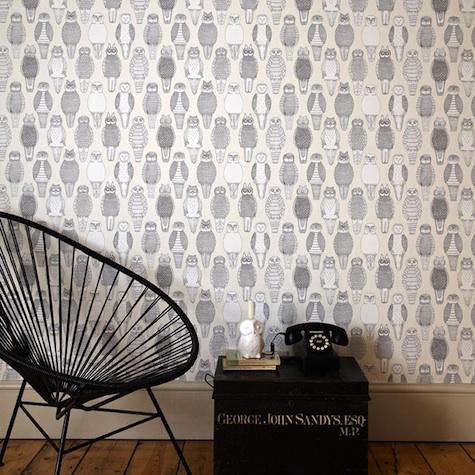
If wallpaper could wink at you from across the room, Owls of the British Isles by Abigail Edwards would absolutely do it. This beloved design has earned a lasting place in the interiors world because it manages a rare trick: it feels whimsical without being childish, decorative without being fussy, and nature-inspired without turning the room into a fake woodland gift shop. In other words, it is charming, but it still knows how to behave at dinner.
Originally introduced as part of Abigail Edwards’ early wallpaper collection, Owls of the British Isles has become one of those patterns that designers, decorators, and homeowners keep returning to. The appeal is easy to understand. The wallpaper celebrates owl imagery through hand-drawn illustration, fine linework, and a restrained palette that gives it a timeless, slightly storybook quality. It does not shout. It perches.
For anyone interested in memorable wallcoverings, British design, or nature-led interiors, this pattern deserves a closer look. And yes, despite the title’s mention of walls, windows, and floors, this is a wallpaper story that spills into the larger language of a room: textiles, trim, mood, scale, and the quiet drama that makes a space feel fully considered.
What Is Owls of the British Isles?
Owls of the British Isles is a hand-drawn wallpaper design by British designer Abigail Edwards, whose work often draws on nature, folklore, fairytale imagery, and soft, atmospheric storytelling. The pattern is known for featuring a lineup of owl species associated with the British Isles, arranged in a graphic but elegant repeat that feels both illustrative and architectural.
Rather than relying on loud color or oversized motifs, the design uses delicacy and rhythm. The owls appear poised and observational, as though they know your decorating budget and are judging it kindly. This gives the paper an unusual emotional texture. It is decorative, yes, but also deeply evocative.
That balance is part of what has made the wallpaper so enduring. It can work in a powder room, a bedroom, a hallway, a reading nook, a guest room, or even a pool house. It has the versatility of a neutral, but the personality of a conversation starter.
Why This Wallpaper Still Stands Out
1. It turns natural history into decoration
Many wallpapers borrow from nature, but not all of them feel informed. Owls of the British Isles stands out because it is not just vaguely “bird themed.” It specifically references owl species, giving the design identity and a point of view. That specificity makes it feel thoughtful rather than generic.
2. It mixes whimsy with restraint
This is where the design gets clever. Owl imagery could easily become overly cute, overly rustic, or overly theatrical. Edwards avoids all three traps. Her drawing style is refined, the composition is disciplined, and the palette remains calm. The result feels sophisticated enough for adult interiors, but playful enough to keep a room from taking itself too seriously.
3. It plays beautifully with old and new interiors
Because of its hand-drawn quality, the wallpaper suits traditional spaces with original millwork, fireplaces, or antique furniture. At the same time, its graphic repeat gives it enough structure to work in more contemporary homes. That flexibility is gold in interior design. A pattern that can sit happily beside a vintage chest, a modern pendant, and a plain oak floor is a pattern with range.
The Design Language of Abigail Edwards
Abigail Edwards has built a reputation around wallpaper and textiles that feel artistic, tactile, and rooted in the natural world. Her work often leans into hand-drawn detail, narrative charm, and an appreciation for British flora and fauna. You can see that clearly in Owls of the British Isles, which reflects an illustrator’s eye rather than a trend forecaster’s mood board.
That matters. The wallpaper does not feel like it was manufactured to satisfy a passing appetite for cottagecore, maximalism, grandmillennial style, or any other label that the internet may lovingly overfeed for six months. Instead, it feels like a real design object with a clear authorship. That sense of authorship is a major reason the pattern has remained relevant well beyond its launch era.
There is also a craft-forward dimension to the work. Over the years, the design has been described as hand-drawn and made in the UK, with versions offered in wallpaper and fabric. Today’s product details emphasize an eco non-woven, paste-the-wall wallpaper format, which gives it modern practicality without sacrificing its old-soul charm.
Walls, Windows, and Floors: How the Pattern Shapes a Room
The title Walls, Windows & Floors suggests more than a surface treatment. Great wallpaper does not stop at the wall. It changes how the room’s other elements behave. That is especially true with Owls of the British Isles.
On walls
This pattern brings vertical drama without heaviness. Because the owl illustrations are detailed but not overly dense, the paper can cover an entire room without making it feel claustrophobic. In smaller spaces such as powder rooms and entryways, it creates intimacy and surprise. In bedrooms, it adds mood and softness. In a hallway, it can turn a pass-through space into a destination.
At windows
Although the wallpaper is the star, nearby window treatments matter. Simple linen drapes, Roman shades, or wooden shutters tend to work best. The pattern already carries enough visual interest, so windows benefit from restraint. Soft natural fabrics, gentle neutrals, and matte finishes help the wallpaper remain the lead performer rather than forcing the whole room into a decorative shouting match.
Across floors
Flooring acts as the wallpaper’s grounding force. Wide-plank wood, painted floorboards, natural sisal, muted rugs, and old stone all pair beautifully with the design. Highly glossy floors or aggressive modern patterns can compete with the owl motif, but natural textures tend to make it sing. The paper seems to especially love oak, aged pine, and quietly textured woven rugs.
Where It Works Best
Powder rooms and small baths
This may be the wallpaper’s most obvious victory lap. A small room allows the pattern to feel immersive and theatrical in the best way. Guests remember it. They may also linger suspiciously long, pretending to admire the wallpaper while actually reading the back of your hand soap, but that is not the paper’s fault.
Bedrooms
Because the palette is often soft and the imagery carries a nighttime association, owls make intuitive sense in bedrooms. The pattern can feel cozy, literary, and slightly magical without becoming theme-heavy.
Reading corners and studies
There is something wonderfully bookish about the design. It suits spaces lined with shelves, stacked with novels, or anchored by an old chair and a lamp that makes everyone look smarter.
Hallways and transitional spaces
If a hallway feels dull, this paper can give it personality in a single move. Since corridors are typically experienced in motion, a repeating owl pattern offers interest from multiple angles and distances.
How to Style Owls of the British Isles
The best styling approach is to support the wallpaper rather than over-explain it. You do not need an owl figurine army. In fact, please do not assemble one unless irony is the entire point.
Color palette ideas
Soft whites, stone, warm gray, mushroom, muted black, weathered wood, olive, and dusty blue all play well with the pattern. These tones echo the natural world without turning the room muddy.
Furniture pairings
Vintage and antique pieces are an easy match, especially painted wood, dark timber, cane, rattan, iron, and upholstered seating in linen or velvet. Simpler contemporary furniture can also work, particularly if the shapes are clean and the materials feel honest.
Lighting choices
Warm lighting flatters this wallpaper. Picture lights, shaded sconces, ceramic lamps, and soft-glow pendants help bring out the drawing’s detail. Harsh cool lighting can flatten the mood, which is a crime against ambiance.
Why Designers and Homeowners Keep Coming Back to It
Part of the wallpaper’s success comes from its emotional range. It can feel nostalgic, dramatic, comforting, eclectic, literary, or gently eccentric depending on the room around it. Few patterns can do that.
It also benefits from real-world usability. The modern non-woven, paste-the-wall format is easier to work with than older wallpaper systems, which broadens its appeal beyond design obsessives and brave DIY veterans. Samples are available, and the design has also been offered in coordinating or related textile formats, making it easier to build a layered room rather than a one-note statement.
Just as important, the pattern has been shown in actual interiors rather than only styled product shots. That matters to people making real decorating decisions. Seeing the wallpaper installed in lived-in, layered, characterful spaces proves that it is not just photogenic. It is livable.
A Closer Look at the Owls Themselves
One of the most distinctive aspects of the design is that it features multiple owl types rather than a single repeated bird silhouette. Reports about the wallpaper consistently note a group of ten owls, including the barn owl, eagle owl, hawk owl, snowy owl, Tengmalm’s owl, scops owl, little owl, short-eared owl, long-eared owl, and tawny owl.
That species-based approach adds richness to the pattern. Even if most visitors cannot identify each owl on sight, they can feel the variation. Some birds seem alert, others solemn, some almost comic in profile, others noble and still. The overall effect is a pattern with movement and personality, but also order.
In a market full of wallpaper that aims for instant visual impact, there is something refreshing about a design that reveals itself more slowly. The more time you spend with it, the more detail you notice.
on the Experience of Living With the Pattern
Living with Owls of the British Isles is not like living with a trend piece. It is more like living with a room that slowly develops a personality of its own. At first, people notice the obvious thing: the owls. Then, after a few days, they begin noticing the linework, the spacing, the way the illustrations create rhythm around a door frame or behind a bedside table. After a few weeks, the pattern becomes part of the room’s emotional climate. That is when you know a wallpaper is doing more than decorating.
In the morning, the design can feel crisp and graphic, especially when daylight catches the outlines and makes the repeat read almost like pen-and-ink art on a page. In the evening, it softens. Lamps cast shadows that make the owls seem quieter and more watchful. The room becomes a little more atmospheric, a little more enclosed, a little more cinematic. It is not spooky. It is simply aware of itself.
One of the most satisfying experiences with this wallpaper is how often it changes character depending on what surrounds it. Pair it with old pine, a rumpled linen curtain, and a stack of books, and it feels poetic. Place it near a clean marble sink, polished nickel fittings, and a simple mirror, and suddenly it feels tailored and crisp. Add a worn leather chair and dark-painted trim, and it leans moody and scholarly. The paper does not force one strict identity on a room; it collaborates.
There is also a deeply human pleasure in using a pattern that invites close looking. Guests step nearer. Children point out favorite owls. People ask where it came from. That kind of response is increasingly rare in interiors dominated by safe beige surfaces that never offend but also never inspire. This wallpaper gives a home a voice. Not a loud voice. More of a beautifully educated whisper with excellent taste.
Another real pleasure is that the design feels seasonal without becoming seasonal decor. In autumn and winter, the owls feel especially at home, pairing beautifully with candlelight, wool, darker woods, and layered textures. In spring and summer, the natural imagery keeps the paper from feeling heavy. Open a window, let in fresh air, and the pattern still feels alive rather than overly formal.
Perhaps the biggest experience people report, at least indirectly through the way the wallpaper continues appearing in admired interiors, is that it stays interesting. It does not exhaust the eye. It does not feel embarrassing six months later. It grows familiar in the best way, like a favorite illustrated book or a garden path you never quite stop admiring. That is a hard quality to engineer and an even harder quality to fake.
Ultimately, living with Owls of the British Isles feels a bit like inviting art, storytelling, and natural history into the room, then asking them all to behave themselves. Miraculously, they do. The result is a space that feels layered, memorable, and unmistakably personal.
Final Thoughts
Owls of the British Isles by Abigail Edwards remains a standout in the world of decorative surfaces because it offers more than pattern. It offers atmosphere, authorship, and genuine decorative intelligence. Its hand-drawn owls, restrained palette, and adaptable mood make it one of those rare wallpapers that can feel special on day one and still feel right years later.
For homeowners who want a room with character, for designers who value illustration and storytelling, and for anyone tired of soulless walls that seem to be waiting for permission to exist, this wallpaper is a compelling choice. It proves that nature-inspired design can be elegant, playful, and grown-up all at once.
And really, if your walls are going to watch you, they may as well be this stylish about it.