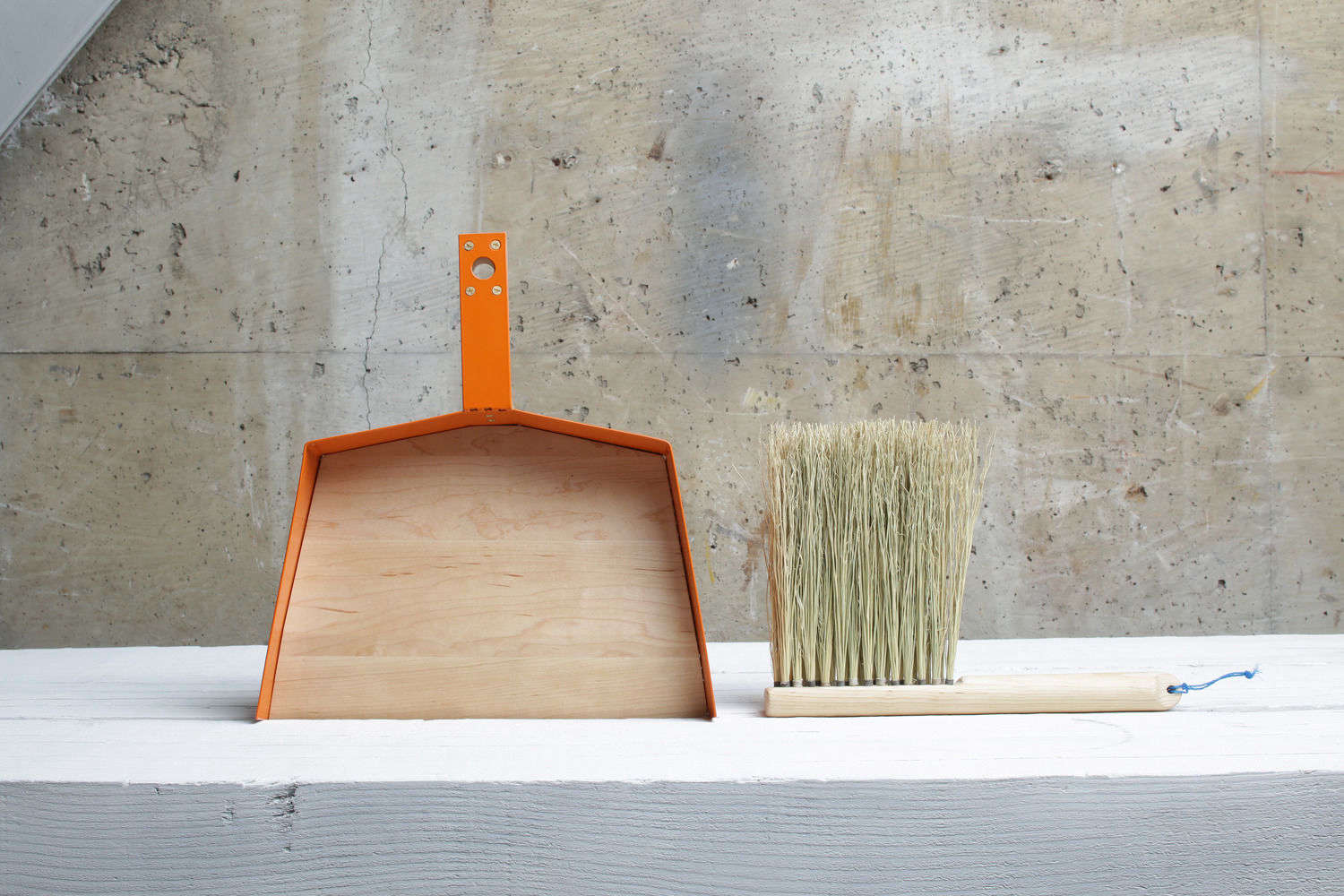
Most dustpans live quiet, underappreciated lives. They sit in utility closets, collect side-eye, and only get noticed when someone has dropped coffee grounds, flour, or the mysterious crumbs that appear in kitchens like they pay rent. Then along comes the Hannah Quinn Dustpan and suddenly the humble cleanup tool gets a glow-up worthy of a standing ovation. Not a dramatic Broadway standing ovation, maybe, but at least a respectful golf clap from people who appreciate good design.
The Hannah Quinn Dustpan matters because it turns a neglected household object into something intentional, tactile, and surprisingly beautiful. Designed by Hannah Beatrice Quinn, an American artist, designer, and maker known for transforming everyday tools into functional art, the dustpan sits at the intersection of domestic utility, craftsmanship, and visual joy. In a market full of flimsy plastic tools that crack, bend, and age like bad avocados, Quinn’s work offers another path: make the ordinary object so well that people want to keep it, use it, and maybe even leave it out in plain sight.
Who Is Hannah Beatrice Quinn?
To understand the Hannah Quinn Dustpan, it helps to understand the person behind it. Hannah Beatrice Quinn is an artist-designer whose work centers on everyday objects, especially domestic tools. She graduated from California College of the Arts in 2014 and built a practice shaped by wood, metal, color, craft, and the idea of play. That combination is not random. It explains why her work never feels cold or purely conceptual. Even when the object is simple, it still has personality.
Quinn’s background in furniture design shows up clearly in the way she treats proportion, balance, and materials. She is not just decorating household tools; she is rethinking them. Her practice has long focused on helping people reconnect with the histories and materials behind the things they use every day. That is a big idea wrapped inside a very approachable object. A dustpan may not sound philosophical, but Quinn’s work gently asks a serious question: why do we accept ugly, disposable tools for the tasks that make a home feel cared for?
From Bay Area Maker to Santa Fe Studio
Quinn’s story also carries a strong sense of place. Earlier coverage connected her with San Francisco and the Bay Area maker scene, where her work appeared in design media, gift guides, local markets, and creative collaborations. Today, her studio is based in Santa Fe, New Mexico. That evolution matters because it reinforces the handmade, studio-driven nature of her work. This is not a mass-market brand pretending to be artisanal after slapping kraft paper on the packaging. It is the real thing: a maker with a clear point of view, a material vocabulary, and a long-running fascination with daily-use objects.
What Makes the Hannah Quinn Dustpan Special?
The obvious answer is that it looks great. The better answer is that it looks great because it is well resolved. Quinn’s dustpan is known for combining wood, metal, and leather in a way that feels warm rather than industrial and refined rather than fussy. Product descriptions and design coverage consistently point to hardwood elements such as walnut, a metal pan with a clean finish, and a leather tie for hanging and storage. Those ingredients sound simple, and that is exactly why they work. There is no gimmick here. Just honest materials, handled with care.
Material Honesty That Does the Heavy Lifting
Walnut brings visual depth and a subtle sense of luxury without becoming flashy. Metal adds durability and precision. Leather introduces a soft, lived-in detail that makes the object feel personal. Put those together and you get a tool that feels substantial in the hand and visually calm in the room. That calm is part of the appeal. The Hannah Quinn Dustpan does not scream for attention. It quietly behaves like the grown-up in the room while cheaper cleaning tools are out there wearing neon sneakers and falling apart after six months.
The best handmade housewares usually respect the natural qualities of their materials instead of forcing them to imitate something else. Quinn’s work follows that rule. The wood looks like wood. The metal looks like metal. The leather looks like leather. There is no plastic pretending to be stone, no fake grain, no fake industrial chic. That honesty gives the dustpan a timeless feel, which is important when you are asking people to invest in a cleaning tool instead of buying the usual bargain-bin special that expires before the receipt does.
A Dustpan Designed to Be Seen
One of the most interesting things about the Hannah Quinn Dustpan is that it rejects the idea that cleaning tools should be hidden. Design writers have repeatedly treated Quinn’s brooms and dustpans as display-worthy objects, and that framing is not accidental. Her work sits in the same category as well-made cutting boards, hand-thrown mugs, or a beautifully crafted stool: useful enough for daily life, attractive enough to keep in view. In other words, this dustpan has escaped the broom closet and is not sorry about it.
That shift in attitude is bigger than one product. When a household tool becomes something you do not mind seeing, you are more likely to use it, care for it, and keep it longer. The result is a small but meaningful improvement in daily life. Good design rarely changes the universe in one dramatic burst. More often, it quietly improves routines you were already doing. Sweep, gather, done. Only now it feels a little better.
The Dustpan’s Design Story
The Hannah Quinn Dustpan is not an isolated one-off. It grew out of a larger body of work around domestic tools, including brooms, brushes, ironing boards, and dustpan block sets. Editorial coverage has traced some of these pieces back to Quinn’s 2014 thesis work, where she explored household essentials through the lens of craft and personal meaning. That origin story matters because it explains why the dustpan feels so fully considered. It was not designed as a trendy accessory for a home store shelf. It emerged from a sustained interest in how people interact with ordinary objects.
That phraseordinary objectsis doing a lot of work here. Quinn has described a desire to understand what makes an object feel precious to an individual. The word precious can sound a little precious, honestly, but in this case it means something useful: worthy of care, worthy of repair, worthy of attachment. A dustpan that achieves that is doing more than collecting debris. It is changing the emotional category of the object itself.
How the Hannah Quinn Dustpan Fits Into Her Broader Collection
The dustpan makes the most sense when seen alongside Quinn’s other handmade tools. Her studio and stockists have featured walnut brooms, horsehair brushes, colorful dustpan block sets, and matching broom-and-dustpan combinations. These pieces share a common language: strong silhouettes, tactile materials, thoughtful finishes, and a playful balance between utility and art. Some matching tools in her line use soft broom corn, and certain wooden parts are finished with natural oil-based treatments that protect the surface while highlighting grain and tone.
The Matching Broom Situation Is Very Good
Quinn’s brooms are especially relevant here because they help explain why the dustpan feels so complete. Design coverage has noted that the broom line includes custom wooden handles and, in some cases, collaboration with a third-generation broom maker. Some brooms are even signed, which is a delightful detail. Signing a broom sounds ridiculous until you remember that people sign prints, pottery, and chairs all the time. A handmade broom is not less meaningful because it sweeps; if anything, it earns the signature more honestly.
When paired with one of Quinn’s brooms, the dustpan becomes part of a domestic toolset that feels coordinated without being precious or overdesigned. The set reads as useful, grounded, and well loved. It says, “Yes, I clean my kitchen, but I also have standards.” That is a pretty solid identity for a dustpan.
Why Design Lovers Care About This Dustpan
There is a reason the Hannah Quinn Dustpan has shown up in design publications, local gift guides, maker profiles, and stylish homes. It appeals to people who care about craftsmanship, of course, but it also appeals to people tired of throwaway culture. We live in a time when home goods are often designed to be replaced rather than cherished. Quinn’s work moves in the opposite direction. It is handmade, materially specific, and rooted in the idea that useful things can also be long-lasting and emotionally resonant.
That anti-disposable spirit connects with broader themes in American craft culture. Quinn’s earlier residency and exhibition work also explored utilitarian forms, repair, reuse, and the life of handmade objects. Even outside the dustpan itself, the values are consistent: use good materials, respect process, and make things that invite interaction rather than passive consumption. That is not just good branding. It is a coherent philosophy.
Who Should Buy a Hannah Quinn Dustpan?
Not every product is for every person, and that is fine. The Hannah Quinn Dustpan is not the right choice for someone who wants the cheapest possible tool and plans to replace it whenever it cracks. This is a better fit for people who see the home as a collection of long-term objects rather than temporary props.
- People who love handmade American design
- Homeowners and renters building a more intentional kitchen or utility space
- Shoppers who prefer natural materials over plastic-heavy tools
- Gift buyers looking for a housewarming present that is both useful and memorable
- Anyone who wants cleaning tools that do not look like punishment
That last category may be the most honest one. A beautiful tool does not make chores disappear, sadly. No dustpan has yet figured out how to sweep by itself and also file your taxes. But it can make maintenance feel less annoying, and that counts for something.
How to Style and Care for a Hannah Quinn Dustpan
The phrase “style a dustpan” sounds like something a very enthusiastic home editor would say before frightening normal people, but stick with me. The Hannah Quinn Dustpan works best when treated as part of the room rather than clutter in the room. Hang it on a wall hook in the kitchen, pantry, mudroom, or studio. Pair it with a broom in matching or complementary wood tones. Let the materials do the work. Because the form is restrained and the palette is grounded, it can live comfortably in modern, Scandinavian, rustic, Japanese-inspired, or eclectic interiors without starting an argument.
As for care, common sense wins. Keep the wood dry, wipe the metal clean, and avoid treating it like a hockey puck. The appeal of a handmade object is that it ages with character, but character and neglect are not the same thing. A quick wipe-down and respectful storage go a long way. The leather tie is not just decorative, either. Hanging the dustpan helps preserve its shape, keeps it accessible, and reinforces the idea that it deserves a real place in the home.
What the Hannah Quinn Dustpan Says About Modern Living
The popularity of artisan-made cleaning tools might seem niche, but it actually says a lot about modern home culture. People increasingly want objects that feel slower, better, and more human. They want products that carry evidence of touch, skill, and thoughtful design. They want to buy fewer things and like those things more. The Hannah Quinn Dustpan lands right in that sweet spot. It is not trying to be high tech. It is not promising disruption. It is just exceptionally good at being a dustpan, which is refreshingly rare.
There is also something satisfying about reclaiming beauty for the tasks that keep a home running. Cooking gets beautiful knives and cutting boards. Coffee gets beautiful kettles and grinders. Why should sweeping get stuck with sad plastic? Quinn’s answer appears to be: it should not. A dustpan can have dignity too. Frankly, it has earned it.
Experience: What Living With a Hannah Quinn Dustpan Feels Like
Living with a Hannah Quinn Dustpan is less about dramatic transformation and more about subtle upgrades to everyday rhythm. The first thing you notice is that it does not behave like a throwaway object. When you pick it up, the combination of hardwood and metal gives it a grounded, deliberate feel. It feels made, not manufactured into oblivion. That matters. The difference is immediate, even before the first breadcrumb gets swept into it.
In practical use, the dustpan changes the mood of small cleanup moments. Instead of grabbing a flimsy plastic pan that slides around and somehow still misses the dirt, you reach for something that feels stable and intentional. Sweeping flour off a counter after baking, tidying up coffee grounds, corralling pet hair in a corner, or catching the aftermath of one overconfident spice jar all become slightly less annoying. No angelic choir appears in the kitchen, but the routine gets smoother, quieter, and oddly more satisfying.
There is also the visual experience. Because the Hannah Quinn Dustpan is attractive enough to leave out, it stays visible, and visible tools get used. That sounds obvious, yet it is one of the smartest aspects of the design. When a cleaning tool is buried behind random reusable shopping bags and a rogue extension cord, you are less likely to grab it for a quick reset. When it hangs neatly on a hook and actually looks good, the barrier to tidying drops. Five-minute cleanups happen more often. Tiny messes stop turning into dramatic little crime scenes.
Another part of the experience is emotional, and yes, that sounds suspiciously poetic for a dustpan, but here we are. Handmade objects have a way of reminding people that domestic life is made up of repeated gestures. Sweep. Wipe. Put away. Begin again tomorrow. Quinn’s dustpan takes that cycle seriously. It suggests that maintenance is not a failure of life, but part of life. The tool does not mock the chore. It dignifies it.
If you pair the dustpan with one of Quinn’s brooms or brushes, the experience becomes even more cohesive. The set feels less like a random assortment of cleaning supplies and more like a considered kit. That sense of order is deeply appealing in a home. It makes ordinary upkeep feel connected to the rest of your space instead of visually interrupting it. In homes where every visible object is chosen carefully, a poorly designed dustpan can feel like a loud wrong note. Quinn’s design solves that problem elegantly.
There is also a quiet pleasure in using a tool that ages well. Small marks, softened leather, and a mellowed wooden surface do not necessarily diminish the piece; they can make it feel more lived with and more yours. That is a very different relationship from the one most people have with disposable cleaning products. Instead of waiting for it to break, you expect it to stay. Instead of hiding it, you give it a place. Instead of replacing it on autopilot, you keep reaching for it. In the end, that may be the clearest expression of the Hannah Quinn Dustpan experience: it turns a minor household tool into an object of ongoing, everyday respect.
Final Thoughts
The Hannah Quinn Dustpan is compelling because it proves that usefulness and beauty are not rivals. It reflects Hannah Beatrice Quinn’s larger design philosophy: everyday objects deserve intelligence, craft, and joy. With its thoughtful mix of wood, metal, and leather, its roots in studio practice and domestic-tool design, and its ability to make even routine cleanup feel a little more intentional, this dustpan earns its place in conversations about handmade American home goods.
In a world crowded with disposable products and forgettable design, the Hannah Quinn Dustpan offers something better: permanence, personality, and practical elegance. It will not change your life in the way internet ads promise a blender or mattress will change your life. It will do something more believable. It will make a very ordinary part of home life feel better, look better, and last longer. For a dustpan, that is a pretty heroic résumé.