Note: Publish-ready HTML body only. SEO tags are included at the end in JSON format.
If you have ever tapped a singing bowl and thought, “Wow, that sounded profound,” you are not alone. Singing bowls have a talent for making even a random Tuesday feel slightly more enlightened. They are widely used in meditation, yoga, and sound-based relaxation practices, and beginners are usually drawn to them for one simple reason: they are beautiful, calming, and surprisingly fun to learn. The tricky part is that your first attempt may sound less like cosmic harmony and more like a spoon arguing with a cereal bowl.
The good news is that learning how to use a singing bowl is not complicated. It just takes the right setup, a little patience, and a willingness to stop bullying the rim with the mallet. In this beginner guide, you will learn what a singing bowl does, how to hold it, how to strike it, how to make it sing with the rimming technique, and how to use it in a simple meditation practice. You will also learn the common mistakes that make new players want to blame the bowl, the mallet, the moon phase, and possibly modern society.
Whether you bought a small metal Himalayan-style bowl, inherited one from your aunt who loves incense, or found one in a yoga shop and felt spiritually peer-pressured, this guide will help you use it with confidence.
What Is a Singing Bowl?
A singing bowl is a resonant instrument that produces sustained tones and vibrations when it is struck or played around the rim with a mallet. In beginner-friendly language, it is a bowl that hums when treated properly and sulks when handled like kitchenware. Some bowls are metal, often called Himalayan or Tibetan singing bowls, while others are crystal. Their tone depends on size, thickness, shape, and material.
People often use singing bowls to support meditation, breathwork, relaxation, yoga, and sound bath practices. That does not mean a singing bowl is magic in a bowl-shaped suit. It means the sound can help many people focus, settle their breathing, and create a calm ritual around quiet time. Research on singing bowls is still developing, but some studies and health organizations note possible benefits related to relaxation, mood, tension, and stress support. That said, a singing bowl is best viewed as a complementary wellness tool, not a replacement for medical care.
What You Need Before You Start
Before you play, gather the basics:
- A singing bowl: Small to medium bowls are usually easiest for beginners.
- A mallet or striker: Some are wood, some are padded, and some do both jobs.
- A cushion or ring: This helps the bowl resonate instead of wobbling around like it drank too much herbal tea.
- A quiet space: Not mandatory, but highly recommended unless you enjoy competing with televisions, barking dogs, and blenders.
- A comfortable posture: Sit upright but relaxed, either on a chair or on the floor.
If your bowl came with one generic-looking mallet, that is perfectly fine. Beginners do not need a suitcase full of sound-healing accessories. You need steady hands, relaxed shoulders, and a reasonable expectation that skill comes before cinematic enlightenment.
How to Use a Singing Bowl: Beginner Playing Guide
1. Set the bowl up properly
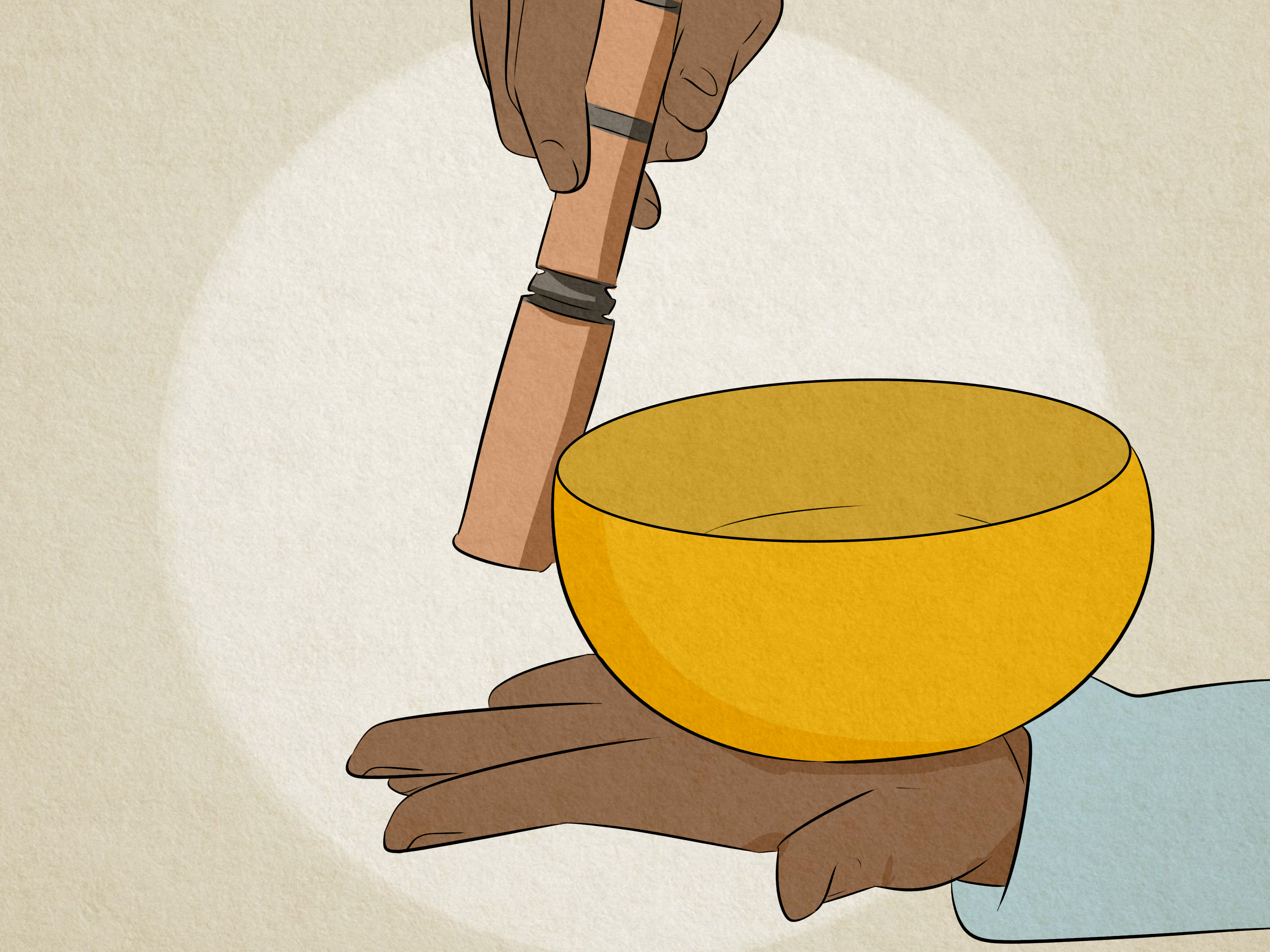
Start by placing the singing bowl on a cushion, ring, or the open palm of your non-dominant hand. If you hold it, avoid gripping the sides. Touching too much of the bowl can dampen the vibration and mute the sound. Think of it like trying to ring a bell while hugging it. The bell will not appreciate your enthusiasm.
If you place the bowl directly on a hard table, the sound may be thinner, harsher, or slightly awkward. A cushion gives the bowl room to resonate more freely. For many beginners, using a cushion is the easiest way to get a stable, clean sound.
2. Hold the mallet the right way
Grip the mallet in your dominant hand. For striking, hold it like a small baton. For rimming, many teachers recommend holding it more like a pen or with a relaxed, balanced grip near the center. Do not choke up on it like you are about to challenge the bowl to a duel. A tense grip usually creates a tense sound.
Your wrist and forearm should stay relaxed. The best tone usually comes from smooth, controlled motion rather than force. Singing bowls respond better to consistency than aggression.
3. Begin with a simple strike
If you are brand-new, do not jump straight into making the bowl sing continuously. Start by striking it gently. Use the padded side of the mallet if your mallet has one, and tap the outer wall or rim lightly. One clean strike is better than five panicked pokes in a row.
Listen carefully to how long the tone lasts. Let the vibration fade before striking again. This teaches you how the bowl responds and helps you hear its natural voice. Every bowl is a little different. Some sound warm and mellow. Some are brighter and more bell-like. Some sound like they are wiser than you, which is frankly rude for an object.
4. Move to the rimming technique
Once you are comfortable striking the bowl, try the classic rimming method. This is what most beginners picture when they think about how to use a singing bowl.
First, lightly strike the bowl to wake up the vibration. Then place the mallet on the outside rim at a slight angle, keeping it mostly vertical. Begin moving it around the rim in a smooth circular motion. Use your whole arm, not just your wrist. Imagine stirring a pot slowly and evenly. If your motion is jerky, the sound will probably stutter or cut out.
The secret is steady pressure. Too little pressure and the mallet skates around without building sound. Too much pressure and the bowl may screech at you like a tea kettle with opinions. Aim for firm but gentle contact. After a few revolutions, you should hear the tone grow and the bowl begin to “sing.”
If nothing happens, congratulations: you are having the standard beginner experience. Slow down, relax your shoulders, keep the mallet vertical, and make sure the bowl is not being smothered by your grip or the surface beneath it.
5. Control the tone and volume
Once the bowl is singing, you can experiment with speed and pressure. A slightly faster motion may help start the tone, while a steadier, slower circle often helps sustain it. Firmer contact can build volume, but too much force usually ruins the sweetness of the sound.
This is where listening matters more than technique. The bowl will tell you what it likes. It just does so in vibrations instead of words, which honestly is a healthier communication style than most group chats.
6. End the sound intentionally
Do not just drop the mallet and wander off spiritually. To end your playing, gradually reduce the motion and let the sound fade naturally. You can also gently dampen the bowl by lightly touching it if needed. Ending with intention makes the practice feel complete, whether you use the bowl for one minute or twenty.
Common Beginner Mistakes
If your bowl sounds scratchy, weak, or stubborn, one of these issues is usually to blame:
- Holding the bowl too tightly: This mutes vibration.
- Using only the wrist: A fuller arm motion gives better control.
- Pressing too hard: More force does not equal better sound.
- Moving too fast too soon: Speed without steadiness creates chatter, not tone.
- Skipping the warm-up strike: Many beginners get a smoother start by striking first.
- Playing on a hard surface: A cushion often improves resonance.
- Expecting instant mastery: The bowl is not the problem every single time.
A useful rule: if the sound gets harsh, simplify. Reset your posture, relax your hand, strike once, and begin again. Skill develops faster when you stop trying to win and start trying to listen.
How to Use a Singing Bowl for Meditation
One of the easiest ways to use a singing bowl is as a meditation anchor. Instead of forcing your mind to “be quiet,” which usually makes it louder, let the sound give your attention somewhere gentle to rest.
Try this simple beginner practice:
- Sit comfortably with your spine upright and shoulders relaxed.
- Take three slow breaths.
- Set a simple intention, such as calm, focus, gratitude, or just “please let my brain stop writing grocery lists.”
- Strike the bowl once and listen until the sound fully disappears.
- Repeat for five to ten rounds.
- If your mind wanders, return to the sound and your breathing.
You can also use the bowl at the beginning and end of meditation, yoga, journaling, or bedtime breathing. Some people prefer one strike every minute or two. Others like a few minutes of continuous rimming. There is no single perfect method. The best beginner practice is the one you will actually do more than once.
A Simple 5-Minute Daily Singing Bowl Routine
If you want structure, here is a beginner-friendly routine:
Minute 1: Sit down, breathe slowly, and settle your posture.
Minute 2: Strike the bowl three times, allowing full fade-out between each tone.
Minute 3: Practice rimming slowly around the outer edge.
Minute 4: Return to single strikes and listen carefully to the decay of each sound.
Minute 5: Sit in silence and notice how your body feels.
That is it. No incense diploma required. The consistency matters more than the length of the session.
How to Choose Your First Singing Bowl
If you are still shopping, a small-to-medium bowl is usually the best starting point. It is easier to hold, easier to hear in a regular room, and less intimidating than a giant bowl that looks like it belongs in a temple or a fantasy movie. Look for a bowl with a tone you genuinely enjoy. This is not the time to buy based only on appearance. A gorgeous bowl with a dull, cranky sound is basically decorative disappointment.
Whenever possible, listen before buying. Beginners often do well with a bowl that responds easily to both striking and rimming. A high-quality bowl should produce a clear, resonant tone rather than a flat clunk. Handcrafted or hand-hammered bowls are often prized for richer sound, though the most important factor is how the bowl actually responds in use.
Safety, Expectations, and a Tiny Reality Check
Singing bowls are generally used as wellness tools for relaxation and meditation, but they are not a substitute for licensed medical or mental health care. If you are pregnant, have epilepsy, are prone to headaches triggered by sound, or live with a serious psychiatric condition, it is smart to check with a clinician before using intense sound-based practices regularly.
Also, do not expect every session to feel mystical. Sometimes a singing bowl session feels deeply calming. Sometimes it just feels like five decent minutes in a chaotic day. Both count. The goal is not to levitate emotionally. The goal is to build a simple, repeatable practice that helps you slow down and pay attention.
Beginner Experiences: What It Often Feels Like in Real Life
The first experience many beginners have with a singing bowl is surprise. Not because the bowl makes sound, obviously, but because the sound seems to hang in the room longer than expected. It is not just heard; it is noticed in the body. A new player may strike the bowl once and suddenly become aware of their breathing, their shoulders, their jaw, and the fact that they have apparently been clenching every muscle since 2019. That moment of noticing is one reason singing bowls appeal to people who struggle with traditional meditation. The sound gives the mind something specific to follow.
There is also a very normal stage of mild annoyance. This is the phase where you try to rim the bowl and it produces a wobbling squeak that sounds like a shopping cart with emotional baggage. Most beginners go through this. It does not mean you are bad at it. It means you are learning the relationship between motion, pressure, and resonance. Once that relationship clicks, the experience shifts. The bowl starts responding more consistently, and the practice becomes less about technique and more about attention.
Another common beginner experience is that the bowl changes the mood of a room surprisingly fast. A single tone can make a bedroom, office corner, or yoga mat feel more intentional. It is a small ritual cue that tells your nervous system, “We are doing something different now.” For some people, that “different” feeling is calm. For others, it is focus. For others, it is simply a pause between one obligation and the next. The bowl does not need to create a dramatic spiritual event to be useful. Sometimes it just needs to interrupt mental noise for a minute or two.
Many beginners also notice that their listening improves. In everyday life, sound is often background clutter. With a singing bowl, sound becomes the main event. You begin to notice the attack of the strike, the swell of the tone, the shimmer of overtones, and the gradual decay into silence. That kind of listening can be grounding. It teaches patience in a sneaky way. You cannot rush the fading note without missing the point. The sound ends when it ends. Honestly, that is a pretty decent life lesson from a bowl.
Over time, the experience often becomes less performative and more personal. Beginners usually start out wondering, “Am I doing this correctly?” Later, the question becomes, “What helps me feel steady today?” That is where the singing bowl becomes most useful. It can mark the beginning of a meditation, close a workday, support a breathwork practice, or simply offer a reset after stress. Some days the sound feels rich and immersive. Some days it just feels pleasant. Both are valid experiences. The practice works best when it is allowed to be simple, consistent, and real instead of constantly auditioning for a mystical documentary.
Final Thoughts
If you want to know how to use a singing bowl as a beginner, remember this: start simple. Strike first. Listen closely. Then learn the circular rimming motion with patience and steady pressure. Use the bowl on a cushion or in an open palm, relax your grip, and let sound become part of a short daily ritual rather than a performance.
A singing bowl does not ask for perfection. It asks for presence. That is probably why so many beginners keep coming back to it. It turns a few quiet minutes into something intentional, calming, and maybe even a little beautiful. Not bad for a bowl.