Subtraction has a bit of a branding problem. Addition gets to be the cheerful one that brings numbers together. Subtraction shows up like the stricter cousin who takes things away and asks everyone to stay calm about it. But when it’s taught well, subtraction is not scary, random, or a pile of crossed-out digits. It is logical, visual, and surprisingly satisfying.
If you are teaching young learners at home or in the classroom, the goal is not to make kids memorize a bunch of mysterious steps and hope for the best. The goal is to help them understand what subtraction means. Once that clicks, the procedures make much more sense. Better yet, students become more confident, more flexible, and far less likely to treat every subtraction problem like a surprise attack.
Below are four effective ways to teach subtraction, along with practical examples, common mistakes to watch for, and ideas for making lessons stick. Whether your learner is just starting with “take away” stories or wrestling with regrouping, these subtraction strategies can help turn confusion into confidence.
Why Subtraction Can Feel So Hard
Before jumping into methods, it helps to know why subtraction can be tricky. For many children, subtraction is harder than addition because it asks them to think in multiple ways at once. Sometimes subtraction means taking away. Sometimes it means comparing two amounts. Sometimes it means finding a missing number. And sometimes it is really about distance on a number line.
That is a lot for one operation to carry around.
Students also run into trouble when subtraction is introduced too quickly as a procedure instead of a concept. If a child is told to “borrow from the tens place” before they understand place value, the whole thing sounds like numbers are doing shady financial transactions behind the scenes. That is why strong subtraction instruction usually moves from concrete objects to pictures to numbers and symbols. Kids need to see it, model it, draw it, and only then solve it abstractly.
1. Start With Hands-On Objects and Visual Models
The first and often best way to teach subtraction is with real objects. Counters, cubes, buttons, toy cars, crackers, pencils, and even dramatically stolen goldfish crackers all work beautifully. Children learn best when they can touch and move quantities before being asked to work only with numerals.
How it works
Say you want to teach 8 – 3. Place 8 counters on the table. Ask the student to remove 3. Then ask, “How many are left?” This physical action helps them connect the idea of subtraction with removing part of a set.
You can also use ten frames, connecting cubes, base-ten blocks, and drawings. These tools help students see quantity, notice patterns, and understand that subtraction changes an amount.
Why it matters
Visual and hands-on subtraction activities build number sense. Instead of seeing 14 – 6 as a line of symbols, students begin to recognize it as a problem they can model and solve. This is especially helpful for children who need more support, including learners who struggle with math language, working memory, or abstract thinking.
Example
Try this progression:
Give a child 12 cubes. Ask them to break the cubes into a stick of 10 and 2 ones. Then solve 12 – 5 by taking away 2 ones first and 3 more from the group of 10. Suddenly, subtraction is not magic. It is place value in action.
Helpful tip
Do not rush students away from manipulatives just because they are “supposed” to be doing mental math. Concrete tools are not babyish. They are brain-friendly.
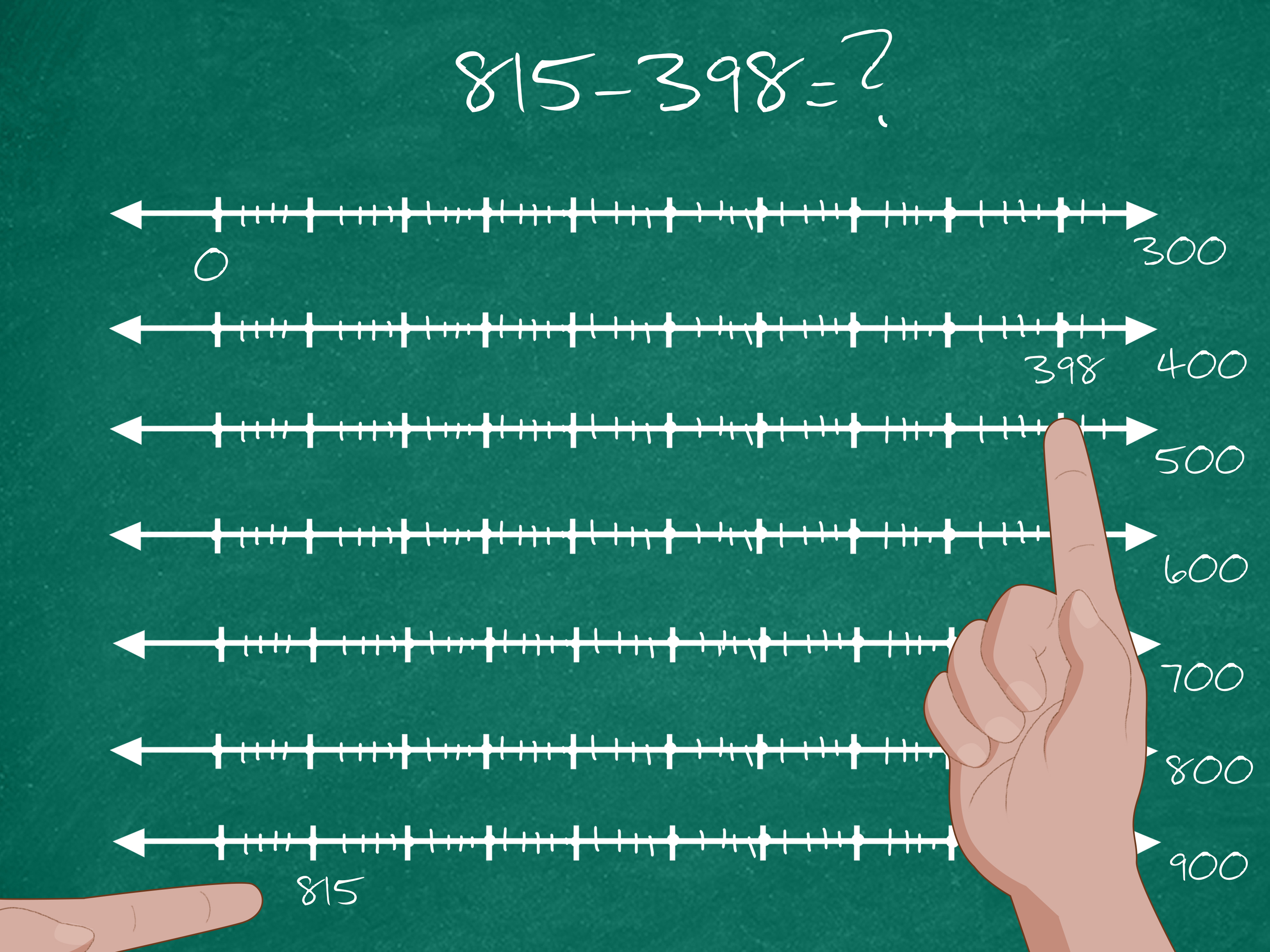
2. Teach Subtraction on a Number Line
A number line is one of the most powerful subtraction tools because it helps students see numbers as positions and subtraction as movement or distance. That is a big upgrade from memorizing isolated facts.
Two useful number-line approaches
Counting back
For simple problems like 9 – 2, students can start at 9 and jump back 2 spaces to land on 7.
Counting up
For problems like 42 – 29, it is often easier to start at 29 and count up to 42. Students can hop from 29 to 30, then 30 to 40, then 40 to 42. Add the jumps: 1 + 10 + 2 = 13.
This approach is fantastic because it teaches subtraction as finding the difference, not just taking away. It also helps students use friendly numbers like 10, 20, 30, and 40 to make mental math easier.
Why it works
The number line builds magnitude sense. Students begin to understand that numbers have order, spacing, and distance. They also become more flexible thinkers. Instead of one rigid method, they learn to choose a smart strategy.
Example
Use an open number line for 58 – 29:
- 29 to 30 = 1
- 30 to 50 = 20
- 50 to 58 = 8
Total difference = 29
This method feels less intimidating than lining up digits and regrouping right away, especially for students who panic when they see larger numbers.
Helpful tip
Ask, “Would you rather count back or count up?” That simple question encourages strategy choice, which is one of the best signs that real learning is happening.
3. Show the Relationship Between Addition and Subtraction
One of the smartest ways to teach subtraction is to stop treating it like it lives alone on a math island. Addition and subtraction are related. When students understand that relationship, subtraction facts become much easier to learn and remember.
Use fact families
Take the numbers 5, 7, and 12:
- 5 + 7 = 12
- 7 + 5 = 12
- 12 – 5 = 7
- 12 – 7 = 5
This helps students see that subtraction can be thought of as a missing-addend problem. In other words, 12 – 7 can also be understood as, “What number goes with 7 to make 12?” That is often easier for children than imagining a dramatic number heist.
Use part-part-whole models
Draw a bar model or number bond. If the whole is 15 and one part is 9, the missing part must be 6. This is a great bridge between pictures and equations.
Why it matters
Students who understand the connection between operations are better at mental math and fact fluency. They also become less dependent on finger counting for every single problem, which is a major relief for everyone involved.
Example
If a student knows 8 + 6 = 14, then they can solve:
- 14 – 8 = 6
- 14 – 6 = 8
That is efficient, logical, and much more durable than memorizing subtraction facts in isolation.
Helpful tip
Use sentence stems like:
- “I know __ + __ = __, so __ – __ = __.”
- “The whole is __. One part is __. The missing part is __.”
These frames support math language and help students explain their thinking clearly.
4. Use Real-World Word Problems and Problem Types
If subtraction never leaves the worksheet, students may start to believe it is a school-only invention, like hallway passes or mystery glue sticks. Real-world subtraction gives the operation meaning.
But here is the important part: do not teach word problems as a hunt for keywords only. Words like “left,” “more,” or “fewer” can help, but they are not enough. Students need to understand the structure of the problem.
Three common subtraction situations
Take away
“Jada had 10 stickers. She gave 4 away. How many does she have now?”
Compare
“Leo has 12 marbles. Nina has 8. How many more marbles does Leo have?”
Missing part or change
“A shelf holds 15 books. There are 9 on it now. How many more books are needed?”
These all involve subtraction, but they feel different. Teaching students to identify the problem type helps them choose the right strategy.
Make it real
Use examples from everyday life:
- Scoreboards in sports
- Money and making change
- How many cookies are left after snack time
- How much taller one student is than another
- How many minutes remain before recess, the holiest of elementary goals
When kids can act out, draw, or discuss a problem, subtraction becomes something they can reason through rather than guess at.
Helpful tip
Ask students to explain why they chose subtraction. That question reveals much more than whether they got the answer right.
Common Mistakes to Watch For
Even strong subtraction lessons can hit a few bumps. Here are some common issues:
Students count every object from the beginning
This is normal at first, but over time encourage more efficient strategies like counting on, counting back, or using known facts.
Students think subtraction only means take away
If they never see compare problems or missing-part problems, they may get stuck later.
Students memorize regrouping without understanding place value
If “borrow from the tens” is the whole lesson, confusion usually follows. Use base-ten blocks and drawings first.
Students rely on keywords only
Word problems are about structure, not just signal words. “How many more” might involve subtraction, but students still need to understand what is being compared.
Quick Tips for Teaching Subtraction Successfully
- Move from concrete to visual to abstract.
- Let students solve the same problem in more than one way.
- Use math talk often: “How did you know?” and “Can you show me another strategy?”
- Keep number lines, ten frames, and counters available.
- Mix fact practice with meaning, not just speed drills.
- Use short, playful practice regularly instead of one giant subtraction marathon.
Teaching Subtraction in Real Life: What the Experience Usually Looks Like
Here is the funny thing about teaching subtraction: the progress rarely looks dramatic from day to day, but then one afternoon a child casually solves 52 – 28 by counting up and you feel like confetti should fall from the ceiling.
In real classrooms and homes, subtraction growth often starts with hesitation. A student sees 13 – 5 and immediately reaches for fingers, eyes wide, as if the problem has arrived with emotional baggage. That does not mean the child is “bad at math.” It usually means they are still building meaning. Once adults slow down and use objects, drawings, or a number line, the mood changes. The same child who froze at the equation may happily solve a story about 13 toy dinosaurs with 5 stomping off the table.
Another common experience is that students seem confident with one version of subtraction and completely baffled by another. They can solve “take away” problems all day, but “How many more?” feels like it came from another galaxy. This is why compare problems matter so much. The breakthrough often comes when students physically line up two sets, or jump between two numbers on a number line, and suddenly realize subtraction is not always about removing. Sometimes it is about measuring the gap.
Teachers also notice that children become much more flexible when they are allowed to share strategies. One student counts back. Another counts up to a friendly ten. Another uses a known addition fact. A fourth draws circles and crosses some out with dramatic flair. That discussion is not wasted time. It is where students learn that subtraction is not one narrow hallway but a whole building with several doors.
At home, parents often report that short, casual practice works better than formal “sit down and do twenty problems” sessions. Kids may resist a worksheet but eagerly solve subtraction questions while setting the table, splitting snacks, keeping score in a board game, or figuring out how many minutes are left before a favorite show. Real life gives subtraction a job to do, and children tend to remember math that feels useful.
There is also a very real emotional side to subtraction. Some learners develop math anxiety early, especially if they think speed is the same as intelligence. A child who needs a visual model may assume everyone else “just gets it.” Good subtraction teaching quietly fixes that. It sends the message that using tools is smart, thinking aloud is valuable, and getting to the answer in a thoughtful way matters more than racing there in a panic.
Over time, the little signs of growth start piling up. Students stop recounting every object. They choose efficient jumps on a number line. They recognize that 15 – 9 can be solved by thinking, “9 plus what makes 15?” They begin to trust their own reasoning. And that trust is the real win. Once students feel that subtraction makes sense, they stop seeing it as a trap and start seeing it as something they can handle. That is the moment subtraction changes from a frustrating school task into a skill they actually own.
Conclusion
If you want to teach subtraction well, focus less on speed and more on understanding. Start with objects students can move. Use number lines so they can see distance and difference. Connect subtraction to addition through fact families and missing parts. And ground everything in real-world problem solving so the math has a purpose.
The best subtraction instruction is not flashy. It is clear, visual, thoughtful, and consistent. Give students tools, language, and time to reason. When you do, subtraction stops being the grumpy cousin of elementary math and becomes a skill students can explain, apply, and even enjoy. Yes, enjoy. Stranger things have happened in math class.