The internet has a lot of hobbies: arguing about pineapple on pizza, diagnosing celebrities from 10-second clips, andapparentlydoing advanced math on newborns. So when a mom posted about delivering a baby so big he broke a hospital record, the comment section did what it always does: gasped, joked, and spiraled into a mix of awe and panic. One person summarized the vibe in two words: “Absolutely horrifying.”
But behind the viral punchline is a real (and surprisingly common) medical topic: “big babies,” also known as fetal macrosomia. Most of the time it’s not a horror storyit’s just biology doing biology things, plus a little uncertainty because estimating a baby’s weight before birth is… let’s call it “educated guessing with a cute ultrasound photo.”
The viral “big baby” momentwhat actually happened?
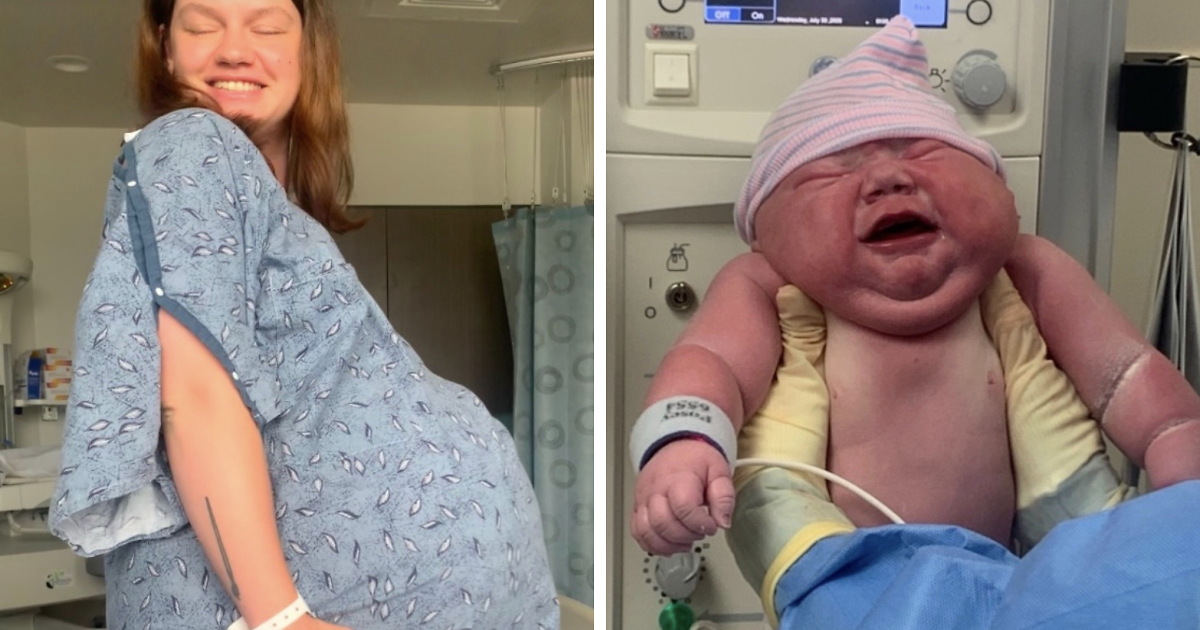
The headline-making story that lit up social media centered on a Tennessee mom, Shelby Martin, who delivered her son Cassian at TriStar Centennial Women’s Hospital in Nashville. Cassian weighed 12 pounds, 14 ouncesa size that made him the largest newborn delivered at that hospital in the past three years. Martin’s post took off online not because she was chasing clout, but because the situation was both wildly relatable (pregnancy surprises!) and completely unbelievable (a newborn who looks like he already has a gym membership).
It also came with the part the internet often skips: the medical decision-making. Martin originally hoped for a vaginal birth, but her care team recommended a C-section due to the risks that can come with delivering a very large baby. After birth, Cassian spent time in the NICU for monitoringsomething that can happen with larger newborns, especially when blood sugar and breathing need a closer look. The happy ending: he went home and became the newest (and biggest) member of a busy household.
And she’s not alone. In another widely shared U.S. story, a New York hospital celebrated a record-setting newborn who weighed 13 poundsdelivered the same day as a baby weighing only 4 pounds, a reminder that childbirth covers a truly dramatic range of “normal.”
How big is “big,” medically speaking?
Let’s get some perspective. The average weight for full-term babies (born around 37–41 weeks) is about 7 pounds. Babies vary, and plenty of healthy newborns arrive lighter or heavier than average. What grabs clinicians’ attention is when birth weight crosses thresholds associated with higher delivery risks.
Macrosomia vs. “large for gestational age” (they’re related, but not identical)
- Fetal macrosomia is usually defined by an absolute weightoften above 8 lb 13 oz (4,000 g), and sometimes above 9 lb 15 oz (4,500 g).
- Large for gestational age (LGA) means a baby is larger than expected for their specific gestational age (often ≥90th percentile), even if they’re not over the macrosomia cutoff.
Babies like Cassiannear 13 poundsare far beyond typical macrosomia thresholds, which is why hospitals sometimes call these births “record-breaking.” It’s not just “a big baby.” It’s “the swaddle is fighting for its life” big.
Why do some babies get so big?
There isn’t one single cause of fetal macrosomia. It’s more like a recipe with multiple possible ingredientssome you can influence, some you can’t. The key is understanding risk factors so you and your care team can plan safely.
1) Blood sugar (gestational diabetes and preexisting diabetes)
Diabetes is one of the most important risk factors for having a larger baby. When a pregnant person’s blood sugar runs high, extra glucose can cross the placenta. The baby responds by producing more insulin, and insulin is a growth-promoting hormoneso babies may build more body fat and have broader shoulders. This is why clinicians watch glucose closely and why gestational diabetes screening matters.
2) Genetics and body size
Some families simply make bigger babies. Taller parents, larger body frames, and a family history of large newborns can raise the odds. That doesn’t mean anyone did anything “wrong.” Sometimes the blueprint is just… spacious.
3) Weight gain and pre-pregnancy weight
Higher pre-pregnancy weight and gaining more weight than recommended during pregnancy are associated with a higher chance of macrosomia. This is not about shamepregnancy is hard enough without moralizing calories. It’s about risk management and giving your care team a clearer picture of what might happen at delivery.
4) Going past your due date
More time in the uterus can mean more time to grow. Pregnancies that go beyond the due date (especially more than a week overdue) can increase the chance of a larger baby.
How doctors estimate baby size (and why it’s not an exact science)
If you’ve ever tried to guess the weight of a watermelon by looking at it, congratulationsyou’re emotionally prepared for estimated fetal weight. Clinicians use several methods, but none are perfect.
Common ways size is assessed
- Fundal height: measuring the belly from the pubic bone to the top of the uterus.
- Ultrasound estimates: using measurements (like head and abdominal circumference) to estimate weight.
- Clinical exam: hands-on assessment by an experienced OB or midwife.
Here’s the twist: ultrasound weight estimates can be offsometimes by a lotespecially at higher weights. That’s why clinicians often speak in ranges and probabilities rather than promises. The only truly accurate birth weight is the one you get after delivery when the baby is weighed.
Delivery decisions: when a “birth plan” turns into a “safety plan”
Social media loves the dramatic “I planned an unmedicated water birth with whale sounds, and then… SURPRISE C-SECTION!” Real life is usually less cinematic and more practical: you plan for your preferences, then you plan again for safety.
Vaginal birth can still be possible
Many people deliver larger babies vaginally without major complications. A suspected big baby does not automatically mean a C-section. Your care team considers multiple factors: your pelvis, your previous births, your baby’s estimated size, and whether diabetes is involved.
When C-section becomes the safer route
Clinical guidance often discusses offering a planned C-section when estimated fetal weight is extremely highespecially when diabetes is present. One widely cited approach recommends considering prophylactic C-section when estimated fetal weight is above about 5,000 g (no diabetes) or 4,500 g (with diabetes). These are not “automatic” rulesjust risk-based decision points discussed between clinician and patient.
The big concern: shoulder dystocia and birth injuries
One of the most serious delivery complications associated with very large babies is shoulder dystocia, when the baby’s shoulder gets stuck behind the pelvic bone after the head is delivered. It’s unpredictable and can happen even without classic risk factors, but size increases the odds.
When shoulder dystocia occurs, there can be risk of injuries such as brachial plexus injury (nerve injury affecting arm movement), which is one reason clinicians are cautious about very large estimated weightsparticularly when diabetes is involved.
After delivery: why big babies sometimes get extra monitoring (or a NICU stay)
A “big baby” doesn’t automatically mean a sick baby, but it can mean a baby who needs more checks early on. Common reasons a larger newborn might get extra monitoring include:
- Low blood sugar (hypoglycemia) in the first hours or days
- Breathing issues, especially if the baby is born early
- Birth injuries that need evaluation
- Higher red blood cell count (polycythemia), which can require observation
This is where viral stories can be misleading: the internet sees “NICU” and assumes catastrophe. In many cases, NICU time is precautionarymonitoring, stabilizing blood sugar, and making sure the baby transitions well.
Going viral can be funny… until it makes people unnecessarily afraid
The jokes write themselves. A newborn who “skipped straight to 3-month clothes.” A baby who looks like he’s ready to file taxes. Humor helps people cope with the sheer absurdity of pregnancy surprises.
But fear spreads fast tooespecially for expecting parents already anxious about labor. So here’s the grounded takeaway: most pregnancies do not result in record-breaking babies, and even when babies are large, safe delivery is absolutely possible with good prenatal care and planning.
Practical takeaways if your doctor says, “This might be a big baby”
- Ask what they mean by “big.” Are we talking LGA? Macrosomia thresholds? Or just “above average”?
- Confirm your diabetes screening status. If gestational diabetes is diagnosed, managing blood sugar can reduce risks for both parent and baby.
- Discuss delivery scenarios early. Ask what would make your team recommend induction, a planned C-section, or a trial of labor.
- Plan for flexibilitynot perfection. A “successful birth” is one where parent and baby are cared for safely, even if the plan changes.
- Prep for postpartum realities. Bigger babies may need larger diapers and clothes immediately (yes, that’s a real thing).
- Know that estimates are estimates. Ultrasound numbers are helpful, but they’re not a crystal ball.
Conclusion
A record-breaking baby makes for viral content because it feels like nature’s version of an over-the-top plot twist. But the medical story underneath is more practical than sensational: fetal size is influenced by blood sugar, genetics, timing, and maternal health factorsand clinicians weigh those risks carefully when planning delivery.
If you’re expecting and someone mentions “big baby,” don’t panic-scroll TikTok at 2 a.m. Instead, bring your questions to your OB or midwife, ask about your specific risk factors, and make a plan that prioritizes safety and flexibility. The goal isn’t to “win” childbirth with the perfect aestheticit’s to get everyone through the door healthy… even if your newborn enters the world looking like he could bench-press the swaddle.
Experiences and Lessons From Real “Big Baby” Births (Extra )
If you read viral big-baby stories and immediately thought, “Cool, new fear unlocked,” you’re not alone. But when you zoom out from the headline, the experiences parents share tend to follow a few familiar, human patternssurprise, adjustment, a little grief over the original plan, and then a whole lot of relief when baby is okay.
Experience #1: The ‘Wait… how big did you say?’ appointment.
Many parents describe a moment late in pregnancy when a provider says something like, “Your baby is measuring ahead,” and suddenly every scan feels like a pop quiz. Some people laugh it off. Others go straight into research mode, comparing numbers and hunting for certainty. The most helpful shift is moving from “Tell me the exact weight” to “Tell me what risks you’re watching and what choices we have.” That turns anxiety into a plan.
Experience #2: Grieving the birth plan (and making peace with a new one).
Viral stories often skip the emotional middle: the part where someone realizes their dream birth might not be the safest option. Parents who end up scheduling a C-section for suspected macrosomia sometimes describe feeling tornrelieved to have a clear plan, disappointed that things changed, and guilty for feeling disappointed at all. It helps to name it: you can be grateful for a healthy baby and still mourn the plan you hoped for. Both feelings can coexist without canceling each other out.
Experience #3: The “baby’s going to the NICU for monitoring” whiplash.
When a large newborn gets extra checksoften for blood sugar or breathingparents frequently describe the emotional snap from “We did it!” to “Why is this happening?” What many say helped most wasn’t a perfect explanation of lab values; it was a care team that translated the situation into plain language: “We’re being cautious. This is common. Here’s what we’re watching. Here’s what needs to happen for discharge.” If you ever face that moment, don’t hesitate to ask for the plan in simple steps, even if you have to ask twice.
Experience #4: The internet comments are louder than the recovery.
Going viral can feel supportivethousands of congratulations!and also exhausting. Parents report that the jokes (“future linebacker!”) can be funny until they turn into invasive questions about someone’s body or delivery. A good rule is to decide early what you’ll share, what you’ll ignore, and who gets access to your energy in the postpartum period. Your job is recovery and bonding, not managing strangers’ curiosity.
Experience #5: Practical surprises (aka the “nothing fits” era).
Parents of bigger babies often laugh afterward about the very real logistics: newborn diapers that don’t stand a chance, onesies that look like crop tops, and swaddles that require Olympic-level technique. Many recommend packing one or two larger sizes “just in case,” and keeping an open mind about feeding and soothingbecause a bigger baby can still be a sensitive baby, and hunger cues don’t care about internet jokes.
The consistent theme from these experiences is comforting: record-breaking size may be rare, but adapting to the unexpected is incredibly common. A “big baby” story doesn’t have to be terrifying. With good prenatal care, thoughtful decision-making, and compassionate support, it can be exactly what it often becomes in the endan intense moment, a healthy outcome, and a family joke that lasts forever.