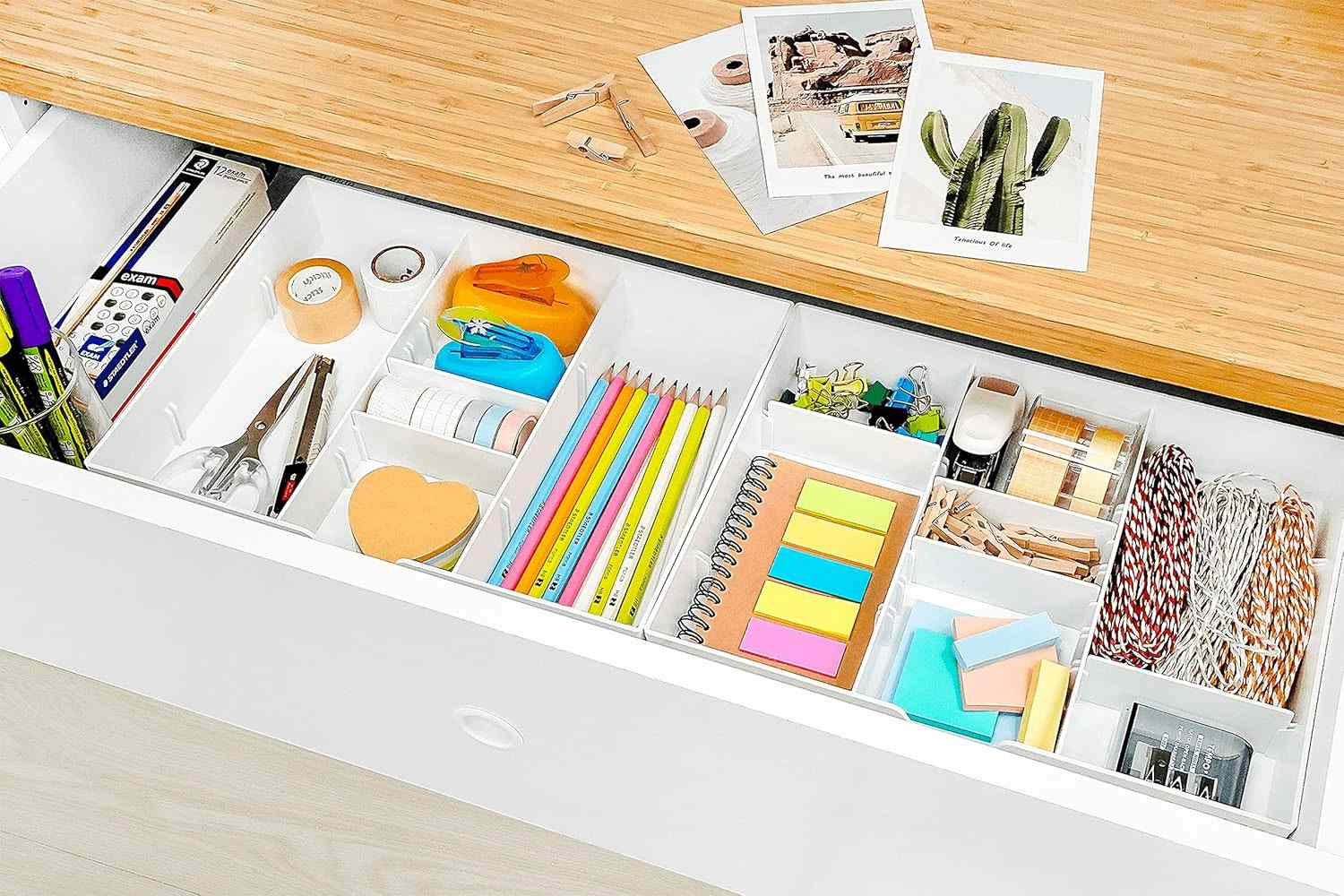
Every home has one: the junk drawer. It is the tiny, chaotic kingdom where pens go to dry out, rubber bands go to multiply, and one lone birthday candle from 2019 somehow survives every cleaning spree. The good news is that you do not need a full weekend, a custom cabinet system, or a dramatic reality-show makeover to fix it. In many cases, a handful of affordable Amazon organizers under $20 can turn that drawer from a clutter trap into a genuinely useful grab-and-go zone.
Professional organizers and home editors keep coming back to the same advice for messy drawers: empty everything out, measure the space, sort similar items together, and use compartments so nothing is left roaming around like a confused tourist. That approach works because junk drawers do not need to disappear. They just need rules. Once you give the contents boundaries, the whole drawer starts behaving like it was raised better.
Below, you will find a practical, budget-friendly guide to choosing the best Amazon junk drawer organizers, setting them up in a way that actually lasts, and deciding what deserves precious drawer real estate. Spoiler: dried-up pens and mystery screws may not make the final cut.
Why Junk Drawers Turn Into Mini Disasters
A junk drawer usually begins with good intentions. You need a quick place for tape, scissors, a spare battery, or a notepad, and suddenly the drawer becomes the household equivalent of “I’ll deal with it later.” The problem is not that the drawer exists. The problem is that it becomes a catch-all with no categories, no layout, and no limit.
That is why organizing experts often suggest thinking of the junk drawer less as a trash holding pen and more as a utility drawer. In other words, it should hold the small, useful things you reach for often, not every random object that wandered through your kitchen, entryway, or desk area. Once the drawer has a job description, shopping for the right organizers gets a whole lot easier.
The Best Amazon Organizer Types Under $20
You do not need one fancy organizer that promises to solve your entire life in a single click. What works better is choosing the organizer style that matches the stuff you actually keep. These are the under-$20 categories that make the biggest difference.
1. Clear Modular Tray Sets
If you want the most flexible option, clear plastic drawer trays are the MVP. These sets usually include multiple sizes, which means you can create custom little neighborhoods for paper clips, batteries, lip balm, stamps, charging bricks, and whatever else has been free-range in the drawer. Clear trays also make it easier to see what you have, so you are less likely to buy your fifth roll of tape because the other four were hiding under a coupon from three tax seasons ago.
These organizer sets are especially smart for shallow kitchen or desk drawers because you can rearrange them anytime your habits change. Recent Amazon roundups have highlighted multi-piece tray sets from brands like Vtopmart, Wowbox, SpaceHacks, and Kutesna as budget-friendly favorites. Translation: the internet has spoken, and it would really like your junk drawer to calm down.
2. Expandable Inserts
Expandable organizers are ideal when your drawer size is a little awkward or when you want to use every inch without leaving weird dead space at the sides. Many have adjustable widths or multi-tiered layouts, which makes them handy for small essentials like batteries, sticky notes, spare keys, and beauty tools. If your drawer is narrow but deep, this style can stretch to fit the space instead of forcing you to play organizer Tetris.
3. Adjustable Divider Trays
Some people do not want a bunch of loose bins. Fair enough. Adjustable divider trays offer a nice middle ground. You get one stable organizer base with movable dividers inside, which lets you resize compartments for longer items like pens and scissors or smaller items like thumbtacks and twist ties. It feels a bit more streamlined and less “tiny plastic boxes throwing a party in your drawer.”
4. Cable and Charger Boxes
If your junk drawer is where phone chargers, USB cords, earbuds, and mystery adapters go to wrestle each other in the dark, a cable organizer box is worth every penny. These boxes create individual sections for cords and often include ties or removable dividers. Suddenly your tech drawer stops looking like a basket of spaghetti that majored in electrical engineering.
5. Mesh or Metal Desk Organizers
For office-style junk drawers, metal mesh organizers are a practical pick. They work well for pens, pencils, envelopes, sticky notes, scissors, and small tools. The structure is rigid, the sections are obvious, and the material is durable. If your junk drawer leans more “command center” than “kitchen chaos,” this is a smart and affordable option.
6. Small Bamboo Bins
If you care about looks as much as function, bamboo drawer organizers bring a warmer, more polished feel than clear plastic. They are great for households that want the drawer to look tidy every time it opens, not just technically organized in a way only the owner understands. Bamboo bins also pair nicely with neutral kitchens and home offices where plastic can feel a little utilitarian.
7. Drawer Liner or Museum Gel
This is not the glamorous part, but it may be the secret sauce. One reason junk drawers get messy again so quickly is that bins slide every time the drawer opens. A non-slip liner or a bit of removable museum gel can help keep organizers in place. It is a tiny upgrade that makes the whole system feel built in rather than improvised five minutes before guests arrive.
How to Organize a Junk Drawer Without Losing Your Mind
Step 1: Empty the Drawer Completely
Yes, completely. Not “move things around with one hand while holding a coffee in the other.” Pull everything out. Crumbs, receipts, broken pen caps, all of it. Starting with a blank slate makes it easier to see what belongs and what has clearly been freeloading.
Step 2: Clean and Measure
Wipe out the drawer and grab a quick measurement of the width, depth, and height. This takes maybe two minutes and saves you from ordering organizers that are either hilariously tiny or one-quarter inch too large, which is the exact kind of problem that inspires muttering.
Step 3: Sort by Category
Create simple groups: writing tools, mail supplies, light tools, batteries, cords, first-aid basics, spare keys, and so on. When you sort like with like, you start seeing duplicates immediately. Do you really need nine pens that do not write and three box cutters in one drawer? Probably not unless your junk drawer is opening its own hardware store.
Step 4: Edit Ruthlessly
Throw away obvious trash. Recycle outdated papers and takeout menus. Remove dried-out markers, dead batteries, expired coupons, broken chargers, and unidentified objects that look important but clearly have not been important since the previous presidential administration. If something belongs somewhere else, move it there.
Step 5: Match the Organizer to the Category
Long narrow items do well in slim trays. Tiny loose items need smaller bins. Cords need either a box or their own designated zone. This is where affordable Amazon organizers shine: you do not need a one-size-fits-all solution. You need a few right-size solutions.
Step 6: Leave a Little Empty Space
This is the part most people skip. If every inch is packed, the drawer will rebel. Leave a small buffer area for the occasional new item, and your system will last longer. A junk drawer that is 85 percent full is functional. A junk drawer that is stuffed to the edges is a cry for help.
What Actually Belongs in a Functional Junk Drawer
The most useful junk drawers tend to hold small, everyday items that are handy to grab but do not have a better dedicated home elsewhere. Think scissors, tape, a measuring tape, stamps, paper clips, sticky notes, a notepad, spare keys, a small screwdriver, rubber bands, and maybe a flashlight. That is the sweet spot.
What does not belong there? Expired medicine, piles of loose paperwork, random beauty products you never use, giant tools, and loose batteries rolling around like they pay rent. If you keep batteries in the drawer, store them in a container made for that purpose. If you keep cords, give them a box or tie them neatly. The goal is not just tidiness. It is also preventing the drawer from turning into a snaggy, tangled mess again.
Easy Under-$20 Amazon Shopping Strategy
If you are trying to keep this budget-friendly, here is the simplest approach: buy one organizer style based on your biggest drawer problem. If the issue is mixed small objects, get a modular tray set. If the issue is cords, get a cable organizer box. If the issue is wandering items and shifting bins, add a non-slip liner or museum gel. If the drawer is weirdly sized, go with an expandable tray.
You also do not need to overbuy. A lot of affordable organizer sets include more pieces than one drawer needs, which is actually useful because the leftovers can migrate to a bathroom vanity, desk, or nightstand. Suddenly you are not just organizing one drawer. You are becoming the kind of person who has systems. Dangerous, powerful stuff.
How to Keep the Drawer Organized for More Than Four Days
Maintenance is where most junk drawer glow-ups quietly fall apart. The fix is simple: make the reset ridiculously easy. Once every couple of weeks, do a two-minute scan. Toss trash, return misplaced items, and test pens. Every few months, do a slightly deeper reset and check whether the categories still match your life.
Another smart rule is “one in, one out” for clutter-prone items. Add a new charger? Remove an old one. Toss a new roll of tape in the drawer? Get rid of the empty core and the broken dispenser you have been emotionally supporting for months. Your junk drawer does not need to be minimalist. It just needs boundaries.
Why These Small Organizers Make a Big Difference
There is something oddly satisfying about opening a drawer and immediately finding the thing you need. It saves time, lowers stress, and keeps one tiny area of your home from feeling like a low-grade mystery. And because many Amazon drawer organizers under $20 are simple, modular, and easy to adapt, they offer a realistic solution for real homes, not just photo-styled kitchens where nobody owns loose batteries.
The best part is that this kind of organization does not require perfection. Your drawer can still be a little miscellaneous. It can still house the odd collection of daily-life objects that make a home run smoothly. The difference is that now the tape is with the tape, the cords are not trying to strangle the scissors, and you no longer need to dig like an archaeologist every time you need a stamp.
Experience: What Happened When I Finally Tamed My Own Junk Drawer
I used to think my junk drawer was normal. Not cute normal. More like “I know this is bad, but I also know exactly where the one decent pen might be if I dig for 90 seconds” normal. The drawer had everything: expired coupons, tangled charging cords, loose batteries, random screws, three rolls of tape, and enough paper clips to start a tiny office supply museum. Every time I opened it, I felt personally judged by a drawer.
Then I tried the simplest version of the fix. I pulled everything out, cleaned the drawer, and sorted the contents into little piles on the counter. That was the moment I realized the drawer was not full of essentials. It was full of delayed decisions. Once I saw it all at once, it became embarrassingly obvious that half the stuff did not belong there at all.
I ordered a basic set of clear organizer trays from Amazon, the kind with several sizes that fit together like puzzle pieces. Nothing fancy. Nothing that required assembly, a degree in engineering, or a personal breakthrough. I also added a cheap cable organizer for the chargers and a non-slip liner because I already knew I would get irrationally annoyed if the bins slid around every time I opened the drawer.
The setup took less time than I expected. Pens went in one section, tape and scissors in another, batteries in a contained box, and little odds and ends in the smallest trays. I even gave the drawer a small empty section on purpose, which felt wildly mature. The result was not just prettier. It was easier. I stopped rebuying things I already had. I could find a postage stamp in seconds. I was no longer elbow-deep in chaos looking for a twist tie.
The funny part is that the drawer changed how the rest of the room felt. One organized drawer did not magically transform my whole house into a magazine spread, but it did create momentum. I looked at nearby clutter and thought, “Oh, you are next.” That is the sneaky power of small organizing projects. They make order feel possible.
Now the drawer is still a junk drawer, technically. I am not pretending it holds color-coded linen napkins and perfectly aligned labels at all times. But it is useful junk, the kind that earns its space. And every time I open it and see those little compartments doing their job, I get the same tiny thrill. It is the domestic version of finding money in your coat pocket, except instead of twenty bucks, you get peace, convenience, and a pair of scissors that are exactly where they should be.
If your own drawer is currently one rubber band away from total collapse, take heart. You do not need a massive budget or a personality transplant. You probably just need a few smart Amazon organizers under $20, a trash bag, and the willingness to say goodbye to the dried-up pen collection. Your future self, reaching for tape without a scavenger hunt, will be deeply grateful.