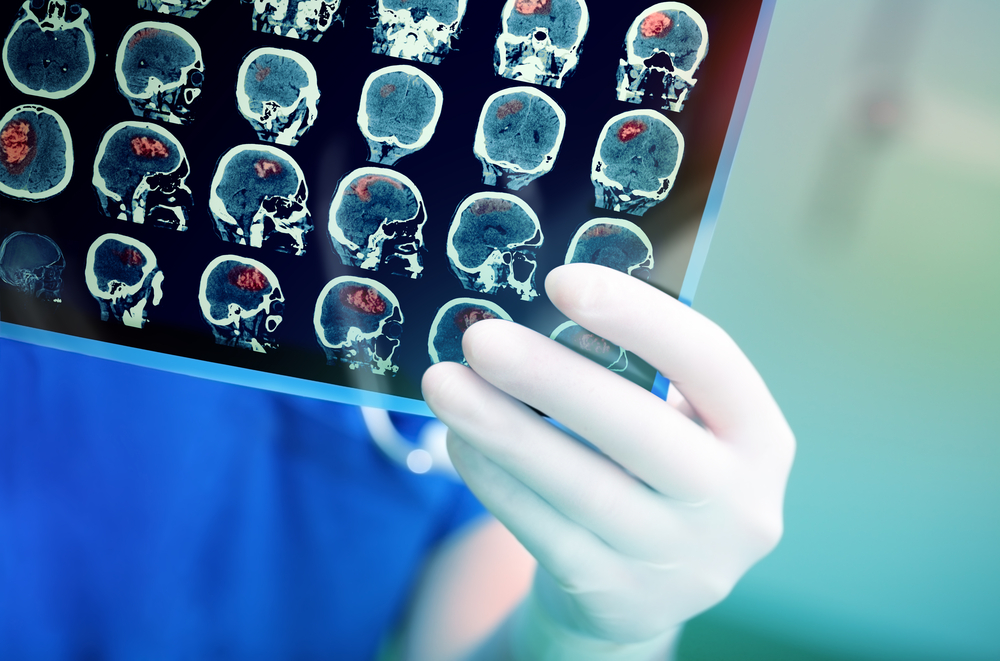
Modern medical imaging is one of medicine’s greatest hits. A good scan can find a stroke, reveal internal bleeding, confirm a broken bone, guide cancer treatment, and answer a terrifying question with impressive speed. That is the miracle part. The problem starts when the miracle turns into a reflex. When every ache gets a scan, every headache gets a tunnel ride, and every “just to be safe” becomes a habit, medicine stops being sharp and starts being noisy.
That is the real message behind the phrase “too many scans is bad medicine.” It is not anti-technology. It is anti-unnecessary technology. In the same way that owning six fire extinguishers does not make you a firefighter, ordering more imaging does not automatically make care better. Sometimes it makes care messier, more expensive, more stressful, and in certain cases, physically riskier.
The smartest view is also the least dramatic: scans are wonderful when they answer the right question for the right patient at the right time. They are bad medicine when they are ordered out of habit, fear, convenience, poor communication, or unrealistic expectations. In other words, the issue is not imaging itself. The issue is imaging without a solid reason.
The Problem Is Not Scanning. It Is Over-Scanning.
Medical imaging includes a big family of tools: X-rays, CT scans, MRI, ultrasound, and nuclear medicine studies. They do not all carry the same risks. CT scans and standard X-rays use ionizing radiation. MRI does not use ionizing radiation, but it still comes with costs, practical limitations, and the possibility of finding things that were never going to matter. Ultrasound is often one of the safest options because it does not use ionizing radiation, but even a safe test can still be unnecessary if it does not change what happens next.
That last point matters. A scan should not be ordered because it feels productive. It should be ordered because the result is likely to change diagnosis, treatment, or immediate decision-making. If the answer will not change what anyone does, then the test may be giving the illusion of action rather than the benefit of action.
This is why so many experts in the United States have spent years warning about medical imaging overuse. More care is not always better care. In some situations, it is simply more care. And medicine should not hand out extra risk, cost, and confusion like free mints at the front desk.
Why Too Many Scans Can Hurt Patients
1. Radiation Exposure Is Small Per Scan, but Repetition Changes the Story
Let’s start with the obvious concern: radiation exposure from CT scans and X-rays. A single medically necessary scan usually brings far more benefit than harm. That is important to say clearly, because people should not panic over needed imaging. But repeated exposure is a different conversation. The risk from one scan may be small, yet repeated scans can gradually raise lifetime exposure. Children are especially important here because their tissues are more sensitive and they have more years ahead in which radiation-related harm could theoretically show up.
This does not mean every CT scan is dangerous. It means every CT scan should earn its keep. If a scan is justified, fine. If it is a duplicate, low-value, or ordered without clear clinical reasoning, then the “small risk” becomes an unnecessary risk. Bad medicine often sneaks in wearing a tiny risk and carrying a giant shrug.
2. Incidental Findings Can Turn One Test Into a Parade of Extra Tests
Many unnecessary scans do not cause trouble because they miss disease. They cause trouble because they find too much. A tiny cyst, a benign nodule, a harmless shadow, a spot that looks odd but means nothing serious. These are called incidental findings, and they are the medical equivalent of opening a junk drawer and then deciding every rubber band needs a full criminal investigation.
Once an incidental finding appears, the cascade begins. Follow-up imaging. Specialist referrals. Repeat scans in six months. Maybe a biopsy. Maybe more blood work. Maybe a lot of waiting and Googling at 2:13 a.m. None of this is imaginary. It is one of the most well-documented downstream harms of excessive imaging. A scan that was not clearly needed can create a whole new medical storyline that the patient never needed in the first place.
3. Overdiagnosis Is a Real Harm, Not Just a Fancy Academic Word
Overdiagnosis happens when a scan finds a condition that meets the definition of disease but would never have caused symptoms, disability, or death in that patient’s lifetime. That sounds impossible until you remember how good modern imaging is. Today’s scanners can spot tiny abnormalities that older generations of doctors never saw. Some of those findings matter. Some do not. The challenge is that once a label appears in the chart, people often feel compelled to act on it.
That can lead to overtreatment: more testing, more procedures, more surgery, more fear, and more side effects in people who may never have been harmed by the original finding. This is one reason screening and imaging guidelines can be so careful. A test can detect more and still help less. Medicine does not get bonus points for making healthy people feel like walking spreadsheets.
4. Anxiety and Cost Are Side Effects Too
Patients do not experience imaging only in biological terms. They experience it emotionally and financially. There is the stress of the scan itself, the fear of what it might show, the confusion of borderline results, the burden of follow-up appointments, missed work, surprise bills, and the psychological wear-and-tear of living under medical surveillance for something that may be trivial.
Low-value care is not cheap care in disguise. It is expensive care pretending to be reassurance. The bill may arrive by mail, but the worry shows up instantly.
Which Scans Carry Which Risks?
CT and X-Ray: Fast, Useful, and Not Risk-Free
CT is fantastic for many urgent questions. It is quick, widely available, and often exactly the right tool in trauma, stroke, severe infection, suspected internal bleeding, kidney stones, or surgical planning. But CT also uses more ionizing radiation than a plain X-ray. That is why unnecessary repeat CT imaging deserves special caution. When used well, CT saves lives. When used casually, it can become a habit with a dose meter.
MRI: No Ionizing Radiation, but Not a Free Pass
MRI often gets treated like the angelic cousin in the imaging family because it does not use ionizing radiation. That is true and important. But “no ionizing radiation” does not mean “no downside.” MRI can be expensive, time-consuming, uncomfortable for claustrophobic patients, difficult for people with certain implants or devices, and prone to revealing incidental findings that trigger more testing. Sometimes MRI is the best choice. Sometimes it is just the fancier way to overdo things.
Ultrasound: Often Safe, Still Not Automatically Necessary
Ultrasound has an excellent safety profile and can be tremendously useful for pregnancy, gallbladder disease, blood clots, thyroid evaluation, and many soft-tissue questions. It is often an ideal first-line option. But even ultrasound should not be ordered just because the machine is nearby and someone has a billing code ready to stretch its legs.
Why Unnecessary Scans Get Ordered
If too many scans are bad medicine, why do they keep happening? Because modern health care is full of pressures that quietly reward overtesting.
Defensive Medicine
Some clinicians worry about missing a rare but dangerous diagnosis, or about being second-guessed later. The scan becomes a legal comfort blanket.
Patient Expectations
Many patients understandably think more testing means more thorough care. It can feel disappointing to leave a visit with advice, observation, and a follow-up plan instead of a dramatic machine-based answer.
Fragmented Records
When hospitals and clinics do not share images well, repeat scanning becomes easier than tracking down prior studies. That is not good medicine. It is bad logistics disguised as clinical urgency.
Time Pressure
Explaining why a scan is unnecessary takes time. Ordering one takes seconds. Busy systems often reward speed over conversation, even when conversation is the better treatment.
Technology Temptation
When a hospital has advanced tools, people tend to use them. Availability can quietly become a reason of its own. That is not evidence. That is just expensive enthusiasm.
When Scans Clearly Help
To be fair, the answer is not “scan less no matter what.” The answer is “scan wisely.” Imaging can be essential when a patient has red flags, sudden severe symptoms, trauma, cancer concerns, new neurologic deficits, suspected organ damage, or a condition in which the result will directly guide urgent treatment.
For example, imaging is often appropriate for suspected stroke, major head injury, severe abdominal pain with concerning features, unexplained weight loss with alarming symptoms, a possible blood clot, worsening neurologic changes, or cancer staging. In these situations, delaying imaging would not be clever. It would be dangerous. Good medicine knows the difference between restraint and hesitation.
The best clinicians are not the ones who avoid scans at all costs. They are the ones who know when a scan will genuinely help and when it will simply decorate the chart.
Classic Situations Where More Imaging Is Not Better
Two of the most famous examples in U.S. guidance are uncomplicated low back pain and uncomplicated headache. If there are no red flags, no neurologic deficits, no trauma, and no clinical signs suggesting a serious underlying condition, early imaging often does not improve outcomes. What it can improve is the chance of finding age-related changes, harmless abnormalities, or vague “degenerative” language that sends a perfectly functional human into a spiral.
That spiral can lead to more specialist visits, more procedures, more pain-focused identity, and sometimes interventions that offer little benefit. In other words, the scan may not just fail to help. It may actively reshape the patient’s experience in an unhelpful way.
Questions Patients Should Ask Before a Scan
Patients do not need to become amateur radiologists, but they should feel comfortable asking good questions. A short conversation can prevent a long cascade.
- What specific question is this scan trying to answer?
- Will the result change what we do next?
- Is there a safer or lower-risk option, such as ultrasound or watchful waiting?
- Do I already have a recent scan that makes this one unnecessary?
- What are the risks of not scanning right now versus scanning right now?
These are not rude questions. They are grown-up health care questions. A good clinician should welcome them.
What Better Medicine Looks Like
Better medicine is not anti-scan. It is pro-judgment. It uses appropriateness criteria, evidence-based guidelines, and shared decision-making. It checks prior imaging before repeating it. It chooses the lowest-risk test that can answer the question. It respects a patient’s fear without feeding it. It understands that reassurance should come from clinical reasoning, not just from a machine that hums dramatically.
Better medicine also accepts uncertainty. Not every symptom needs an immediate image. Sometimes the right next step is a recheck, a physical exam, a trial of treatment, or a short interval of watchful waiting. That may feel less satisfying than a glossy set of cross-sectional pictures, but it is often more intelligent.
In a culture that loves more, restraint can look lazy. In reality, restraint is often the higher skill.
Experiences Related to “Too Many Scans Is Bad Medicine”
One of the most common experiences behind this topic is the patient who walks into urgent care with a frightening symptom and walks out with a scan, a stack of paperwork, and a bigger knot in the stomach than when they arrived. Imagine someone with mild back pain after lifting boxes during a move. The pain is real, annoying, and worth evaluating, but it is not paired with weakness, fever, trauma, or other red flags. An early MRI gets ordered anyway. The result shows “disc bulge,” “degenerative changes,” and a few other phrases that sound like a retirement home for spines. Suddenly the patient feels broken. The pain that probably needed time, movement, and conservative care now comes with fear, internet doom-scrolling, and a fast-track referral culture. The scan did not simply photograph the back. It changed the story the person tells about the back.
Another familiar experience is the accidental discovery that becomes a full-time hobby. A CT scan done for one reason reveals a tiny lung nodule, a benign-looking cyst, or a thyroid spot no one was planning to discuss. The physician may correctly say, “This is probably nothing serious,” but the word “probably” has terrible bedside manners. Now the patient has follow-up scans scheduled every few months. Family members weigh in. Search engines become dangerous. Vacation plans are interrupted by the emotional math of “What if this is the thing?” Even when the finding never causes harm, the surveillance itself can become a burden. That is one of the quiet ways overtesting injures people: not always through disease, but through prolonged uncertainty.
Clinicians experience the pressure too. Many doctors know perfectly well that a scan is unlikely to change management, but they also know the patient is scared, the visit is short, and saying “not yet” takes confidence. It can feel safer to order the image than to explain restraint. In crowded emergency departments and busy clinics, the scan can become the fastest way to move the visit forward. That does not make the clinician careless. It shows how systems can nudge good people toward low-value decisions.
Families often remember the emotional sequence more than the technical details: first the relief that “something is being done,” then the confusion over a vague result, then the waiting, then the call-back, then the extra appointment, then another scan, and eventually the awkward conclusion that the whole chain may not have been necessary. By that point, the costs have already arrived. So has the stress.
That is why the phrase “too many scans is bad medicine” rings true for so many real-world experiences. It is not because imaging is the villain. It is because unnecessary imaging can turn ordinary symptoms into complicated journeys. Patients do better when the question comes before the machine, when prior images are reviewed before repeating them, and when reassurance is based on judgment instead of reflex. Good medicine should leave people clearer, calmer, and better cared for. Too many scans often do the opposite.
Conclusion
Medical imaging is one of the most valuable tools in modern care, but its value depends on judgment. A needed scan can save a life. An unneeded scan can add radiation, trigger incidental findings, create overdiagnosis, raise costs, and stir up anxiety without improving outcomes. That is why too many scans are bad medicine: not because technology is bad, but because careless use of good technology is still careless medicine.
The goal is not fewer answers. The goal is better questions. When a scan is justified, patients should feel confident getting it. When it is not, patients should feel confident asking why. The future of smarter care is not built on doing less for the sake of less. It is built on doing what matters and skipping what merely looks impressive under fluorescent lighting.