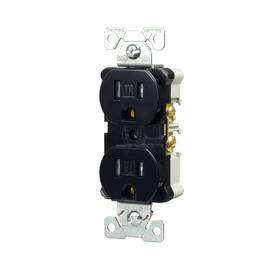
The humble wall outlet doesn’t look like a high-drama character in your home… until you remember it’s basically a tiny doorway to 120 volts. And for years, that doorway had a pretty obvious problem: if you can poke something into it, someone eventually will. (Kids. Curious adults. That one friend who “just wants to see if it fits.”) Enter the tamper-resistant duplex receptacle: the outlet that quietly says, “Nice try,” and refuses to energize anything that isn’t an actual plug.
In standard American homes, the tamper-resistant (TR) duplex receptacle has gone from “nice upgrade” to “expected safety baseline” thanks to electrical code expansion and broader safety awareness. It looks like a normal duplex outlet, but it adds internal shutters that block foreign objects from reaching live partswithout you having to remember those flimsy plastic caps that disappear faster than spare socks.
What Is a Tamper-Resistant Duplex Receptacle?
A duplex receptacle is the common two-outlet device you see everywhere: two places to plug things in, one yoke/strap, one gang box. A tamper-resistant duplex receptacle is that same devicetypically a 15-amp (NEMA 5-15R) or 20-amp (NEMA 5-20R “T-slot”)but with an added safety feature: spring-loaded internal shutters that stay closed unless a plug is inserted properly.
The goal is simple: reduce shock hazards from “tampering”like a paper clip, key, hairpin, bobby pin, or whatever tiny metal object decides it wants a career in electrical engineering. Safety organizations have long pointed out TR receptacles as a practical, permanent option compared with removable caps.
How TR Outlets Work (Without Being Annoying… Most of the Time)
The Shutter Mechanism: “Both Prongs or Bust”
Inside a TR receptacle are shutters covering the hot and neutral openings. The shutters are designed to open only when simultaneous pressure is appliedmeaning both blades of a two-prong plug (or the blades plus ground of a three-prong plug) push in together. If someone tries to insert a single object into one slot, the shutters generally remain closed.
Think of it like a bouncer at a club: you can’t get in with one shoe. Show up with the full outfit (a real plug), and the doors open. Show up with a lone paper clip, and the bouncer doesn’t even make eye contact.
Why TR Beats Plastic Outlet Caps
- Always on: TR protection is built in, not something you install and forget to replace.
- No choking hazards: Loose caps can become “tiny floor treasures.”
- Less user error: A safety feature that doesn’t rely on perfect human behavior is usually the best kind.
Consumer safety guidance commonly recommends tamper-resistant receptacles especially during replacement or childproofing projects.
Where TR Duplex Receptacles Are Required (And Why You Keep Seeing “TR”)
Tamper-resistant receptacles became a major part of modern electrical safety partly because code requirements expanded over time. NEC language has required TR receptacles in many dwelling-unit locations, and later editions broadened the scope and clarified applications.
Commonly Required Areas
While you should always follow your locally adopted electrical code (and edition), the broad pattern is: most nonlocking-type 15A and 20A receptacles in living spacesplus other occupancies like child care and guest roomsoften need to be tamper-resistant.
The “TR” Marking
Most listed tamper-resistant receptacles are marked with “TR” on the face or strap for quick identification, which is useful for inspectors, electricians, and homeowners trying to figure out what’s what behind the couch.
Picking the Right Tamper-Resistant Duplex Receptacle
Not all outlets are created equal. Some are built for a guest bedroom; others are built for a hallway that gets abused by vacuum plugs, phone chargers, space heaters (please don’t), and the occasional mystery device someone bought online at 2 a.m.
15 Amp vs 20 Amp (Know Your “T-Slot”)
- 15A (NEMA 5-15R): The standard duplex outlet found in most rooms on 15-amp circuits.
- 20A (NEMA 5-20R): Has a T-shaped neutral slot to accept 20-amp plugs. Used where a 20-amp receptacle is required or desired.
A common real-world example: kitchen small-appliance circuits are frequently 20 amps, and you may see 20A TR receptacles installed, especially where local practice, load expectations, or design preferences call for it.
Residential, Commercial Spec Grade, and Hospital Grade
If you’ve ever plugged in a phone charger and watched the plug droop like a sad wilted flower, you’ve met a worn-out receptacle. Higher-grade receptacles typically use stronger materials and better contact design to improve long-term grip and durability. Industry training materials and manufacturer literature commonly distinguish “residential grade” from “spec/commercial grade” and “hospital grade” options.
- Residential grade: Budget-friendly, fine for many standard home uses.
- Specification/commercial grade: Often sturdier with better clamping/back-wiring options and stronger strap construction.
- Hospital grade: Built to stricter performance expectations for healthcare environments (and often color-coded/marked accordingly).
TR + GFCI + WR: The Outlet Alphabet Soup That Actually Matters
Many locations require more than one safety feature:
- GFCI: Helps protect people from ground-fault shock hazards in areas like bathrooms, kitchens, garages, outdoors, and more.
- WR (Weather-Resistant): Designed for damp/wet locations with materials that resist corrosion and UV exposure.
- TR (Tamper-Resistant): Helps prevent insertion of foreign objects into energized parts.
It’s common to select combination deviceslike TR/WR receptacles for exterior installations or a TR GFCI for kitchens/bathsdepending on what the location requires. Manufacturers explicitly document TR shutter behavior and combined WR/TR product families.
Installation Notes (A.K.A. How to Avoid “Why Doesn’t This Work?”)
If you’re a homeowner: electrical work can be dangerous, and rules vary by jurisdiction. In many areas, replacing a receptacle is allowed for homeowners; in others, it’s restricted. If you’re not fully confident, hiring a licensed electrician is usually cheaper than replacing drywall (or explaining to your family why the lights went out when you “fixed” an outlet).
Backstab vs Back-Wire Clamp vs Side Screw
Receptacles commonly offer different wiring methods:
- Side wiring: Traditional screw terminals; reliable when properly torqued.
- Back-wire clamp: A plate-and-screw clamp system that grips the conductor; common on better-grade devices.
- Backstab (push-in holes): Often limited to certain wire sizes and more common on budget devices; many pros avoid it for longevity.
In plain terms: solid connections matter. Loose terminations can cause overheating, intermittent power, and that delightful smell of “something electrical is cooking.” If you’re using a device designed for back-wire clamp termination, it can be both faster and more consistent than wrapping conductors around screwsassuming you follow the manufacturer’s instructions.
Grounding, Polarity, and the Famous “TR Is Hard to Plug Into” Complaint
Two common pain points show up in the real world:
- Polarity/ground issues: Miswired hot/neutral or a loose ground can create safety hazards and nuisance problems. A simple plug-in tester can catch common errors, but it’s not a magic wand for every wiring problem.
- Stiff insertion: TR shutters can feel “tight,” especially with cheap plugs, bent blades, or extra-wide molded heads. NEMA guidance notes that properly made plug blades should not require dramatically different force, and “damaged plug blades” are a known cause of difficulty.
Pro tip that’s not actually a “hack”: if a plug won’t go in, check the plug. If the blades are bent or uneven, the shutters may not open smoothly because they’re not receiving balanced pressure.
Safety, Reliability, and What “Listed” Really Means
You’ll often see TR receptacles described as “listed” and “tested.” In everyday language: the device design is evaluated against relevant safety requirements, including performance expectations for the tamper-resistant shutter system. Industry materials reference TR designs as UL-listed and subjected to documented testing.
This matters because not all “childproof outlet” products are equal. A listed TR receptacle is engineered as a system: shutter geometry, spring force, and contact access are designed together to reduce the likelihood that a foreign object reaches energized parts.
Real-World Examples: Where TR Duplex Receptacles Shine
1) Living Rooms and Bedrooms: The Cable Jungle
Behind TVs and nightstands is where safety goes to get messy. Between phone chargers, smart speakers, lamps, and power strips, outlets see constant use. A TR duplex receptacle adds protection without adding an extra “step,” which is exactly what you want in a high-traffic area.
2) Child-Accessible Areas: Permanent Protection
In homes with young kids (or visiting nieces, nephews, cousins, or your friend’s toddler who treats your home like a science museum), TR receptacles help reduce the chance that curiosity turns into an emergency. Safety organizations describe TR receptacles as a “permanent solution” compared with removable caps.
3) Kitchens and Baths: TR + GFCI Team-Up
These areas often need GFCI protection for shock risk mitigation, and many modern GFCI receptacles include TR shutters as a standard feature.
4) Outdoors: TR/WR for Weather and Wandering Curiosity
Outdoor outlets should handle moisture and corrosion and also discourage tampering. TR/WR receptacles are commonly marketed for this exact combo, with documentation explaining both weather-resistant construction and TR shutter behavior.
Maintenance and Troubleshooting
“My Plug Won’t Go In!”
Before you blame the receptacle, check these:
- Plug blades bent? Even slight misalignment can prevent the shutters from opening smoothly.
- Angle of insertion: Push straight in with even pressure on both blades.
- Molded plug head too bulky? Some oversized plugs make alignment awkward in tight spaces.
- Device damage or paint/debris? Renovations can leave paint in the face openings; replace any damaged device.
“My Outlet Feels Loose”
Loose grip can indicate worn contactscommon in high-use locations. Upgrading to a better-grade TR receptacle can improve retention. If you see discoloration, smell burning, or experience intermittent power, treat it as urgent and get it checked.
Conclusion: Small Upgrade, Big Peace of Mind
A tamper-resistant duplex receptacle is one of those rare home upgrades that is: inexpensive, invisible, and genuinely meaningful. It helps prevent accidental contact with energized parts, reduces reliance on removable plastic caps, and aligns with modern code expectations in many settings. If you’re remodeling, replacing worn outlets, or childproofing, TR receptacles are an easy “future-you will be grateful” decisionright up there with labeling your breakers and buying the good trash bags.
Extra: of Real-World Experiences With Tamper-Resistant Duplex Receptacles
The first time many homeowners encounter a tamper-resistant duplex receptacle, it’s usually not during a peaceful moment with tea and a good book. It’s during a high-stakes event like “the vacuum won’t plug in,” “the Christmas lights are fighting me,” or “why is this phone charger suddenly acting brand new and stubborn?”
One common experience in older homes is the “mixed outlet zoo.” You replace a worn receptacle in a bedroom with a shiny new TR device, then notice the next outlet across the room is a loose, decades-old standard receptacle that holds plugs like it’s doing you a favor. Suddenly, the TR outlet feels “tight” by comparison. But after a few days of normal use, it tends to feel less like a prank and more like what a healthy outlet should feel likefirm, consistent, and not secretly planning a dramatic failure.
Another real-world moment: discovering that the TR outlet is not the villainyour plug is. People often keep using chargers with slightly bent blades (especially after they’ve been yanked sideways from behind a dresser). Standard receptacles sometimes tolerate that bad behavior. TR shutters are less forgiving because they’re designed to open when both blades apply pressure evenly. Swap the charger or straighten/replace the plug, and suddenly the “problem outlet” becomes a “problem solved.”
In family spaces, the benefit is quieter. Parents who previously used plastic outlet caps often describe the same cycle: install caps, remove caps to plug something in, set caps somewhere “safe,” lose caps to the void, then repeat. TR receptacles are basically the anti-void solution: the safety feature stays put and doesn’t depend on perfect routines. That’s why many people who start with one TR replacement end up doing a whole-room upgradeespecially in play areas, bedrooms, and any spot where curious hands (or pet noses) can reach.
Electricians and experienced DIYers also talk about TR receptacles as a “good excuse to fix the whole situation.” If you’re already swapping an outlet, you might also re-check wire terminations, replace a cracked cover plate, and confirm the box is solidly mounted. The TR feature is the headline, but the hidden win is that the outlet replacement becomes a mini safety audit. And that’s a very adult kind of thrilllike finding the stud on the first try.
Finally, there’s the “guest test.” If visitorsespecially families with kidssee the TR marking, it signals that the home is set up with modern safety in mind. It’s a small detail, but it communicates care. The outlet doesn’t get applause. It just quietly does its job, day after day, refusing to energize anything that isn’t supposed to be there. Which, honestly, is the best kind of household drama: none at all.