If you have ever wandered through a digital movie store at midnight, coffee in one hand and questionable judgment in the other, you know that streaming-era shopping can feel less like commerce and more like archeology. One minute you are browsing Oscar winners. The next, you are staring at a forgotten 1994 Saturday Night Live spinoff and wondering why the universe seems to be charging prestige-cinema money for a movie widely remembered as a punch line.
That is exactly why fans lost it over the idea that It’s Pat was somehow “the most expensive movie on all of Apple.” The phrase was obviously exaggerated for comic effect, but the shock was real. How did a famously disastrous SNL adaptation, one with a spectacularly rough reputation, end up getting treated like rare collector’s vinyl in the digital marketplace? And why did that absurd price become the perfect excuse for a brand-new round of Pat discourse?
The answer is not just that the internet loves a good joke. It is that It’s Pat has always lived in a strange cultural neighborhood. It began as a recurring sketch built around social discomfort and ambiguity. It became a movie almost nobody wanted. It flopped with historic efficiency. Then, instead of fading away quietly, it returned years later as a case study in nostalgia, embarrassment, queer interpretation, and the weird economics of online storefronts. Basically, the film did not become a classic. It became a curiosity with Wi-Fi.
How a Critical Dud Turned Into a Digital Storefront Punch Line
It’s Pat arrived in 1994, spun out from Julia Sweeney’s recurring SNL character Pat Riley, whose entire gimmick was that nobody could determine Pat’s gender. On sketch comedy television, that premise produced fast laughs, escalating awkwardness, and the kind of repeatable catchphrase logic that can survive on pure momentum. In a feature film, though, the bit had to stretch to 77 minutes. That is where the whole machine started making noises that sounded expensive.
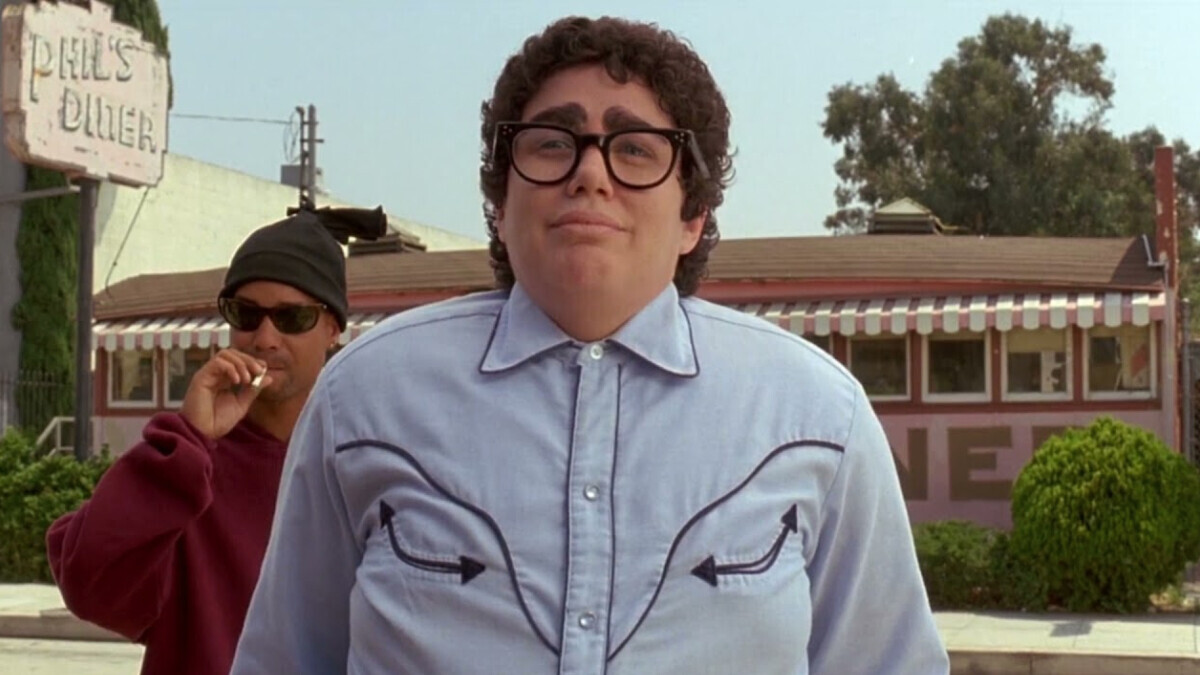
The movie starred Sweeney as Pat, with Dave Foley as Chris and Charles Rocket as the increasingly obsessed neighbor Kyle. Directed by Adam Bernstein, the film tried to blow a one-joke premise up to movie size by surrounding it with romance, chaos, eccentric side characters, and enough side glances to stock an entire eye-roll factory. The result was not exactly embraced as a misunderstood masterpiece. Critics pounced, audiences shrugged, and the box office basically whispered, “No thank you.”
The numbers are still brutal. It’s Pat: The Movie grossed just $60,822 domestically, opening to $31,370 and topping out at 33 theaters. Among films spun off from Saturday Night Live sketches, that performance left it sitting at the absolute bottom like a sad folding chair at a reunion picnic. Entertainment reporting at the time and in later retrospectives pegged the budget around $8 million, which means the film did not merely underperform. It face-planted in broad daylight and stayed there long enough for everybody to take notes.
Then there is the critical record, which is the cinematic equivalent of being booed by a room full of librarians. The movie has long carried a 0 percent Tomatometer on Rotten Tomatoes, while Metacritic registers a bleak 18. That kind of score does not whisper “cult hit.” It practically sends a certified letter marked miscalculation. For decades, It’s Pat has been remembered less as a beloved oddball and more as a cautionary tale about what happens when Hollywood hears one recurring TV laugh and decides it has franchise energy.
Why Fans Could Not Believe the Apple Price
That is what made the Apple pricing story so funny. When people saw It’s Pat carrying a buy price that seemed out of sync with both its reputation and its cultural standing, the reaction was immediate: absolutely not, and also, of course. The internet has a special affection for disasters that refuse to act embarrassed. A notorious flop charging premium digital-store money is not just a pricing oddity. It is performance art.
Part of the joke came from comparison. This was not some newly restored silent classic. It was not a boutique 4K package with a six-hour documentary, a velvet slipcase, and a curator whispering solemnly about its historical importance. This was It’s Pat, the movie adaptation of one of SNL’s strangest characters, floating through Apple storefront discourse like it had suddenly decided it was luxury goods.
And yet that disconnect is exactly why the story traveled. Digital pricing often feels disconnected from prestige, popularity, or common sense. Rights deals, catalog agreements, and store mechanics can create bizarre outcomes, and users only see the final insult. They do not see the spreadsheet. So when fans noticed It’s Pat sitting at a price point that looked comically inflated, they treated it the way the internet treats all great modern mysteries: with memes, disbelief, and the emotional tone of someone finding a bologna sandwich behind museum glass.
What makes the story even better is that the outrageous price appears to have been temporary rather than eternal. More recent U.S. watch-price listings now show the movie back around regular catalog territory. In other words, It’s Pat may not have remained the crown jewel of Apple movie commerce. It just briefly wandered into that role like a confused mall shopper who accidentally entered the VIP lounge and was too awkward to leave.
The Problem With Turning Pat Into a Feature Film
The core issue with It’s Pat was not simply that people disliked the character. It was that the premise was built for sketch structure, not cinematic endurance. On television, Pat worked as an engine for social panic. Every sketch asked the same basic question: why are other people so desperate to classify this person? The discomfort belonged to the observers as much as to Pat. That compact loop was quick, odd, and effective.
But feature films demand expansion. They need emotional range, narrative momentum, and enough thematic oxygen to survive a full runtime. According to a 1994 Los Angeles Times account from co-writer Steve Hibbert, the creative team imagined something more offbeat and screwball than the broader commercial approach studios initially hoped for. He even contrasted the sensibility with Wayne’s World, joking that where that movie had Queen and broad pop-cultural familiarity, It’s Pat had Camille Paglia references and Ween. That tells you almost everything you need to know about why the movie was destined to confuse the wrong executives and the wrong audience at the same time.
In other words, the filmmakers were not necessarily trying to make the next slick SNL smash. They were trying to make something weirder, more niche, and more specific. Unfortunately, weird and specific still has to be funny, and the critical consensus was that It’s Pat just was not. Even sympathetic observers tended to describe it as a curiosity rather than a success. The movie was released in a limited fashion, quickly treated like damaged goods, and left to become one of those titles people cite when they want to explain that not every sketch deserves a passport to feature-film land.
Pat’s Legacy Became More Complicated With Time
If the Apple pricing story were only about a bomb from the ’90s, it would have been a nice little curiosity and then gone back to sleep. But Pat has not stayed culturally still. Over time, the character became part of a larger conversation about gender ambiguity, queer readings, and how older comedy ages in a world that now has much more language for identity than mainstream television had in 1990.
That shift matters. Julia Sweeney has spoken in recent years about her complicated relationship with Pat, explaining that she never intended the character to be intersex, nonbinary, or transgender, and that she did not initially anticipate that some viewers would identify with Pat or feel hurt by the material. Later conversations changed that. In interviews and festival-related coverage, she has described meeting transgender and nonbinary comedians who helped her see the character’s impact in a new way. That does not erase the earlier criticism, but it does make the story more layered than a simple “this aged badly” headline.
That reevaluation found a major new expression in We Are Pat, the documentary that premiered at the 2025 Tribeca Festival and revisits the character through the lens of modern trans visibility. Rather than simply defending the old sketch or condemning it from orbit, the documentary explores how people in the queer and trans comedy community have engaged with Pat in complicated, sometimes contradictory ways. Some see the character as offensive. Some see accidental representation. Some see both at once. Culture loves tidy verdicts, but Pat keeps refusing to sit still for one.
That helps explain why the Apple pricing story resonated beyond cheap laughs. People were not only reacting to a weird digital purchase tag. They were also reacting to the bizarre endurance of a cultural object that keeps resurfacing in new contexts. First it was a sketch. Then a flop. Then a relic. Then a discourse magnet. Then a documentary subject. At this point, Pat’s true genre may be less “comedy character” and more “American media boomerang.”
Why the Story Hit Such a Nerve With SNL Fans
SNL fans are a very particular breed of historian. They do not just remember sketches. They remember eras, vibes, cast chemistry, production myths, and the exact point at which a recurring bit either became iconic or wore out its welcome. So when a headline announces that It’s Pat is somehow commanding premium Apple-store attention, longtime fans immediately understand the layers of absurdity.
First, they remember that SNL has produced some wildly uneven movie adaptations. Wayne’s World worked. The Blues Brothers became a landmark. Others landed with more of a hallway thud. It’s Pat occupies a special place in that history because it is not just one of the weakest performers. It is the kind of title that instantly makes people say, “Wait, they made a whole movie out of that?”
Second, fans understand the joke of overvaluation. Digital stores often flatten prestige, trash, cult oddity, and forgotten studio leftovers into the same bland shopping interface. That means a famous failure can suddenly appear with the same visual dignity as an award-winning epic. No sticky note warns you that one film changed cinema and the other changed the meaning of the phrase limited release. They are just two thumbnails in a row, both pretending they belong at the same fancy dinner.
And third, the story scratches a deeper nostalgia itch. People who grew up with ’90s SNL remember Pat not just as content but as atmosphere. The character belongs to a specific comedy moment when mainstream television pushed ambiguity as a punch line, but also occasionally stumbled into stranger territory than it fully understood. Looking back, fans are not just rewatching jokes. They are rewatching an entire cultural operating system.
The Experience of Discovering It’s Pat in the Streaming Age
There is something uniquely modern about stumbling across a movie like It’s Pat in a polished digital storefront. The experience is almost surreal. You are browsing in a sleek interface built to make every title look equally important, and then suddenly there it is: a notorious SNL flop from 1994, staring back at you as if it has been waiting all these years to demand one last impossible conversation.
For older viewers, that moment can feel like opening a time capsule that also somehow sends push notifications. You remember the Pat sketches, or at least remember the feeling around them. Maybe you remember classmates quoting the character. Maybe you remember seeing the movie title in a video store and thinking, “They really stretched this into a whole film?” Then life moved on. Tastes changed. Language changed. Comedy changed. And yet here comes Pat again, not as a rerun on cable, but as a purchasable digital artifact with a neat thumbnail and a price that briefly made it look like premium merchandise.
For younger viewers, the experience is different but just as strange. They do not come to It’s Pat through memory. They come through context collapse. One person posts a screenshot. Another makes a joke. A third explains the movie was a catastrophic bomb. A fourth says, actually, the character now has a complicated queer afterlife and there is a documentary about that. Suddenly this little relic is no longer just a bad movie. It is a conversation starter, a generational culture lesson, and a case study in how the internet turns old media into new arguments.
There is also the oddly emotional experience of watching a film that is famous for failing. Sometimes people stream notorious bombs because they want to see a disaster. Sometimes they want to test whether the reputation is fair. Sometimes they are looking for camp, or historical context, or accidental brilliance hidden under terrible reviews. And sometimes they just want to know what kind of movie could possibly inspire this much mockery while also hanging around long enough to be reclaimed, debated, and rediscovered.
That is why the Apple pricing story felt bigger than a simple joke about eighteen bucks. It captured the full weirdness of modern fandom. We do not just consume media anymore. We excavate it, compare it, reframe it, ironize it, and then get into arguments about what it meant and what it means now. A movie can bomb in 1994, become shorthand for a bad adaptation in the 2000s, reenter debate in the 2020s, and briefly trend because a storefront price made people laugh in horror. That is not a normal afterlife. That is digital-age folklore with a shopping cart button.
And maybe that is the real reason people were astounded. Not because It’s Pat was temporarily expensive, but because it was still there at all, still capable of provoking nostalgia, irritation, curiosity, and a little baffled affection. Some movies remain famous because they are great. Others remain famous because they are disasters. But only a rare few survive long enough to become something stranger: a piece of comedy history that keeps getting reinterpreted every time culture upgrades its software.
Conclusion
The funniest part of the whole “most expensive movie on all of Apple” uproar is that it accidentally reminded everyone what It’s Pat has always been: not a triumph, not a hidden gem, but a stubbornly fascinating artifact. It is a movie born from a famous sketch, rejected by critics, abandoned by the box office, and somehow still alive enough to cause discourse three decades later. That is almost impressive in its own chaotic way.
For SNL fans, the story was irresistible because it combined all the ingredients of great pop-culture nonsense: a remembered flop, a ridiculous price, a little nostalgia, a little secondhand embarrassment, and a larger conversation about how comedy ages. The Apple-store oddity gave people a reason to laugh, but the movie’s ongoing afterlife gave them a reason to keep talking.
So no, It’s Pat is probably not the crown jewel of Apple’s movie ecosystem, and the extreme price that sparked the joke does not appear to have lasted. But as a piece of cultural weirdness, it may still be one of the best values on the internet. Not because it is good. Because it refuses to stop being interesting.